
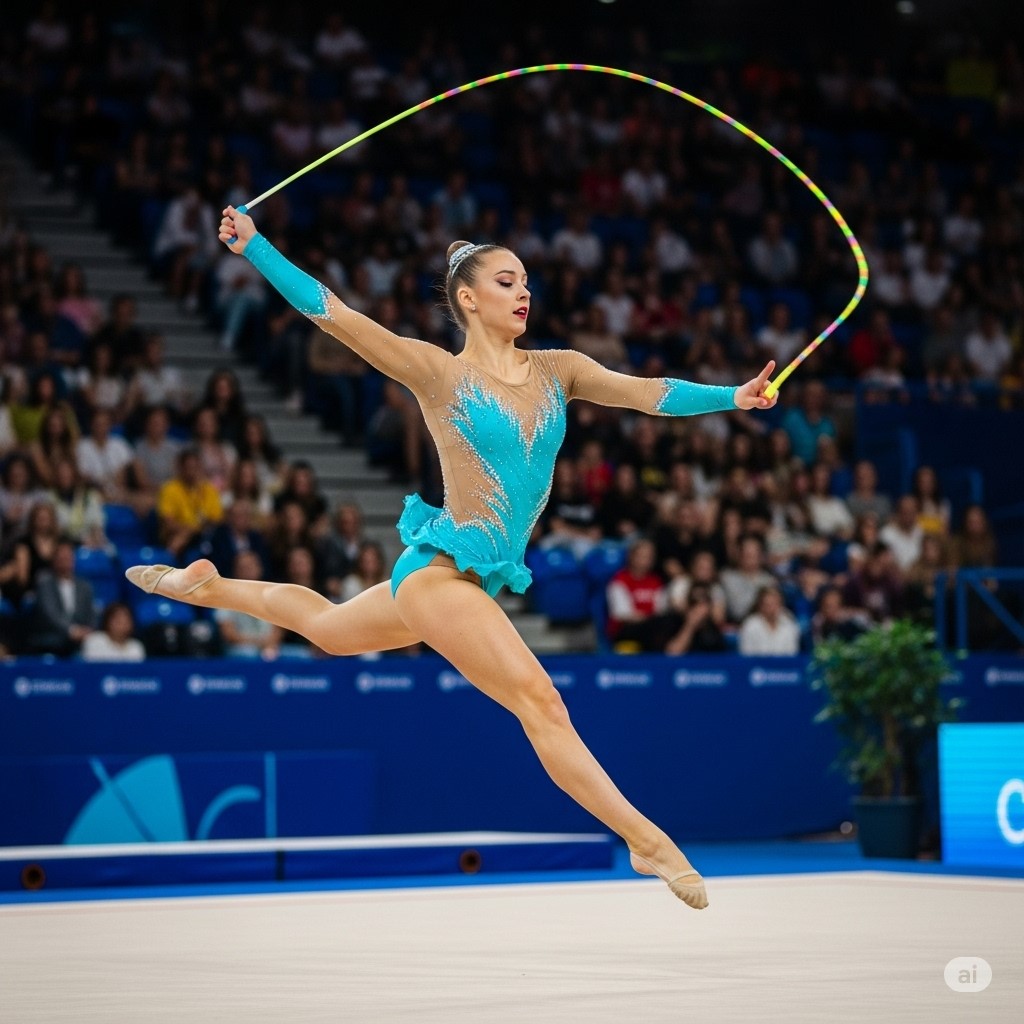
The Fascinating World of Rhythmic Rope Gymnastics
Rhythmic Rope Gymnastics is a captivating sport that blends athleticism, artistry, and precise coordination. Known for its elegance and energy, this discipline requires athletes to perform choreographed routines using a rope. Though rhythmic gymnastics includes several apparatuses, the rope event holds unique challenges and traditions. Rhythmic Rope Gymnastics has carved out a vibrant space in the gymnastics world. Athletes from all continents train rigorously to master the complex routines.
The Origins and History of Rhythmic Rope Gymnastics
The sport traces its roots to early 19th-century Europe. It emerged from the ideas of physical educators like Pehr Henrik Ling of Sweden. He believed in blending movement with rhythm to enhance physical and mental health. These ideas later influenced gymnastic programs in Germany and Russia.
Rhythmic gymnastics as a formal sport began in the Soviet Union in the 1940s. It was initially called “rhythmic sport gymnastics.” The rope was one of the original apparatuses used in early competitions. Soviet athletes incorporated ballet and acrobatics, creating mesmerizing performances. The International Gymnastics Federation (FIG) recognized the sport in 1963. That year, the first World Championships took place in Budapest.
The rope remained a key apparatus until the early 2010s when the FIG began rotating apparatuses more frequently. Today, the rope is featured at specific levels of competition and remains a core component of the sport’s history. Coaches and athletes still train with the rope for its foundational benefits in coordination, speed, and endurance.
Global Popularity of Rhythmic Rope Gymnastics
While rhythmic gymnastics enjoys broad appeal, the rope event holds special popularity in certain regions. Russia, Ukraine, and Bulgaria lead in rhythmic gymnastics excellence. These nations consistently produce world champions. In Asia, countries like China, Japan, and South Korea have invested heavily in training programs. Their athletes are now among the world’s best.
Western Europe also values rhythmic gymnastics, with Italy and Spain nurturing strong youth and senior teams. Canada and the United States continue to develop the sport, especially at the amateur level. In Latin America, Brazil and Mexico show growing interest, often blending rhythmic routines with local dance styles.
Africa and Oceania are newer to the sport. However, countries like South Africa and Australia have made significant strides. Continental championships and exchange programs are helping to globalize rhythmic gymnastics. Online platforms now make it easier for fans and young athletes to access training and competition footage from anywhere in the world.
Youth and School-Level Rhythmic Rope Gymnastics
Young athletes begin training in rhythmic rope gymnastics as early as age five. Schools and community centers often offer beginner classes. These programs focus on coordination, flexibility, and rhythm. Many children start with basic rope exercises to develop timing and spatial awareness.
At the youth level, competitions are structured by age and skill. Gymnasts perform short routines that emphasize clean technique rather than difficulty. Coaches use ropes to teach jumps, skips, and spirals. The rope enhances agility and builds muscle control.
In many countries, rhythmic gymnastics is included in school physical education programs. National federations support talent identification through school competitions. Regional clubs then offer more focused training. By the time gymnasts reach adolescence, they may compete in national events or join elite development squads.
Clubs often serve as pipelines for national teams. These organizations provide advanced coaching and access to better facilities. Summer camps and international workshops further enrich training. As a result, many young gymnasts view rhythmic rope gymnastics as both a sport and an art form.
Professional Leagues and Elite Competitions
Although rhythmic rope gymnastics does not have a standalone professional league, it is integral to major international competitions. The FIG governs all official rhythmic gymnastics events. These include the World Championships, World Cup Series, and the Olympic Games.
The Olympic Games include rhythmic gymnastics but have not featured the rope since 2011. However, in World Cup and Grand Prix competitions, the rope appears periodically. Events alternate apparatuses every season. This system ensures that the rope remains relevant and showcased at a high level.
In Russia and Eastern Europe, domestic leagues offer high-level meets with rope routines. Clubs like Gazprom (Russia) and Deriugina School (Ukraine) host invitationals that feature rope events. These meets attract international athletes and judges.
The Asian Gymnastics Union and the European Gymnastics Union also host championships that include rope performances. These continental meets serve as stepping stones to world events. Elite athletes train year-round, often practicing six days a week to perfect their routines.
While there is no franchise-style league similar to basketball or soccer, rhythmic rope gymnastics thrives in club and federation systems. Sponsorships and national funding support top athletes. These systems promote competition at both grassroots and elite levels.
Political and Social Significance of Rhythmic Rope Gymnastics
Rhythmic rope gymnastics, like all sports, carries political and social dimensions. In Soviet-era Eastern Europe, the sport was a tool for promoting national pride. Success in rhythmic gymnastics symbolized discipline, grace, and cultural superiority. Governments heavily invested in training facilities and coaching.
Today, the sport continues to reflect national values. For example, in Japan and South Korea, rhythmic gymnastics promotes harmony, precision, and respect. These cultural values are embedded in training and performance.
Socially, the sport empowers young girls. It provides a platform for self-expression and physical development. In many countries, rhythmic gymnastics is one of the few sports where female athletes receive high visibility. Media coverage of championships inspires the next generation.
Inclusion efforts are also expanding. Programs now reach children from disadvantaged communities. Adaptive rhythmic gymnastics programs are emerging for athletes with disabilities. These developments showcase the sport’s versatility and inclusiveness.
Rhythmic rope gymnastics can also serve diplomatic purposes. International meets foster cultural exchange and goodwill. Athletes form friendships across borders. These human connections often transcend political differences.
Rules and Scoring in Rhythmic Rope Gymnastics
The rope is one of five apparatuses used in rhythmic gymnastics. The others are hoop, ball, clubs, and ribbon. Each apparatus has unique rules and techniques. For the rope, athletes must demonstrate leaps, jumps, skips, swings, and figure-eight movements.
The rope must be made of hemp or synthetic material and be the correct length for the gymnast. Judges assess routines on difficulty, artistry, and execution. Difficulty includes body elements like balances, pivots, and jumps. It also includes apparatus handling such as throws and catches.
Artistry measures choreography, musicality, and expressiveness. Execution focuses on precision and form. Deductions occur for rope tangling, incorrect catches, or imprecise movements. Gymnasts must use the entire floor area and synchronize with music.
In group routines, synchronization becomes even more important. Athletes must pass ropes, perform formations, and maintain unison. Judges assign scores out of 20, combining difficulty, artistry, and execution. Ties are broken by the highest execution score.
Penalties also apply for time violations, apparatus drops, and boundary errors. Athletes and coaches study the Code of Points thoroughly. This guide, published by FIG, outlines all scoring criteria. Mastery of the rules is essential for competitive success.
Conclusion
Rhythmic Rope Gymnastics captivates audiences with its blend of grace, athleticism, and creativity. Rooted in European physical culture, the sport has evolved into a global phenomenon. From youth programs to elite competitions, it offers a rich pathway for personal and athletic growth.
Countries across the world invest in developing rhythmic gymnastics talent. While the rope apparatus has a rotational presence at the professional level, it remains foundational to training and performance. It strengthens skills that are vital across all apparatuses.
Socially and politically, rhythmic rope gymnastics carries deep significance. It empowers athletes, reflects national values, and fosters international connections. As the sport grows, it continues to inspire awe and admiration.
With structured rules and scoring, the discipline challenges gymnasts to achieve excellence in every performance. Rhythmic Rope Gymnastics is more than a sport—it is a celebration of human movement and artistic expression.