
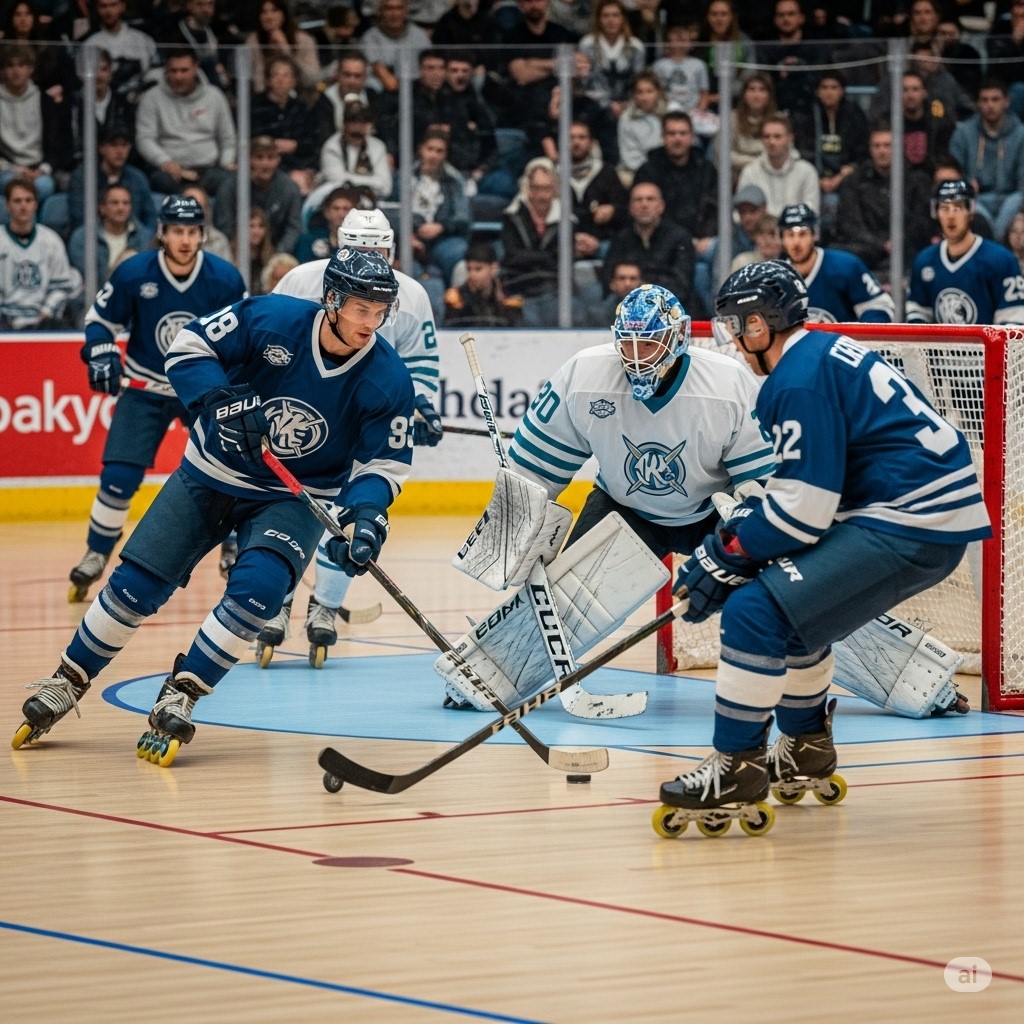
Roller Hockey: A Thrilling Global Sport with Deep Roots
Roller Hockey is a dynamic and fast-paced sport played on roller skates. Unlike ice hockey, it takes place on a dry surface. The game has a rich history and is gaining fans across the globe. From its origins to professional leagues, it continues to evolve. This blog will explore the origin, global popularity, amateur levels, professional leagues, social impact, and rules of the sport. The term “Roller Hockey” will appear multiple times to emphasize its importance.
The Origins and History of Roller Hockey
The roots of Roller Hockey can be traced back to the 19th century. It started as a variation of field hockey played on roller skates. The first recorded game occurred in London in 1878. Skaters used sticks and a ball to replicate the action of hockey on a smooth surface.
Soon after, the sport spread across Europe. Spain and Portugal quickly adopted it in the early 1900s. They created formal rules and established clubs. In 1924, the Fédération Internationale de Patinage a Roulettes (FIPR) was founded. It was later renamed World Skate, the global governing body for Roller Hockey.
By the mid-20th century, the sport had reached Latin America. Argentina, Brazil, and Chile embraced it with passion. North America saw a slower adoption. However, it gained traction in the 1990s thanks to inline skates and youth leagues.
The sport has two major forms: quad and inline. Quad Roller Hockey uses traditional four-wheel skates and is more popular in Europe and South America. Inline Roller Hockey features skates with wheels in a single line. This version is more common in North America.
Global Popularity and Presence
Roller Hockey enjoys international appeal. Spain and Portugal lead in terms of skill and fanbase. Their domestic leagues attract thousands of spectators. Clubs like FC Barcelona and SL Benfica have won numerous international titles.
Italy also has a strong presence. The Italian Serie A1 is highly competitive. Matches often appear on national TV. Argentina is another hotbed. The country has a deep history and consistent youth participation.
In Africa, Angola and Mozambique have embraced the sport. Angola, in particular, has developed elite players. Their national team ranks among the best globally.
Asia is witnessing growth in countries like India and Japan. Roller Hockey is included in events like the Asian Games. Australia maintains a small but passionate community.
In the United States, the sport is popular at the amateur and youth levels. The National Collegiate Roller Hockey Association (NCRHA) organizes university competitions. Inline leagues exist in California, Texas, and Florida.
Amateur Roller Hockey: Youth and School Levels
Amateur Roller Hockey serves as the foundation for professional play. Across the globe, youth leagues introduce kids to the sport. Europe leads with well-structured programs. Spain and Portugal begin training children as young as five.
Schools often host interscholastic tournaments. Clubs offer coaching, equipment, and tournament opportunities. These programs emphasize discipline, teamwork, and physical fitness.
In Argentina and Brazil, schools and local clubs work together. They provide coaching and competitive games for all age groups. Weekend tournaments are common. Families often travel city to city to support young athletes.
In the U.S., amateur Roller Hockey is managed by organizations like AAU Inline Hockey and USA Roller Sports. Many kids start with recreational leagues. As skills improve, they move to travel teams and state championships.
Roller Hockey camps offer intensive training. Clinics focus on skating skills, stickhandling, and game strategy. Summer tournaments attract teams nationwide. These events build community and friendships.
Professional Leagues Around the World
Several professional leagues give players a chance to compete at the highest level. Spain’s OK Liga is widely regarded as the best. Teams like FC Barcelona and Reus Deportiu dominate the competition. Their players often represent national teams.
Portugal’s 1ª Divisão is equally prestigious. SL Benfica and FC Porto lead the standings. Their matches draw huge crowds. Italy’s Serie A1 provides a high level of competition. Clubs from cities like Lodi and Forte dei Marmi compete fiercely.
In South America, Argentina’s Liga Nacional showcases top talent. The national team includes many local stars. Brazil has a smaller league but continues to develop.
The United States hosts the Professional Inline Hockey Association (PIHA). Though not as large as European leagues, it promotes the sport across various states. Players often have day jobs but remain committed to the game.
Inline Hockey is featured in the World Games and the World Roller Games. These international events give elite athletes a chance to shine. National teams from Canada, the Czech Republic, and France often compete for medals.
Political and Social Significance
Roller Hockey holds cultural importance in many countries. In Spain and Portugal, it is a source of national pride. Games between rival clubs can influence local politics. Towns rally around their teams.
In Argentina, the sport is a symbol of unity. Communities support their youth teams with enthusiasm. Local businesses often sponsor gear and travel. Players are seen as role models.
In Angola, Roller Hockey has helped unify the country post-conflict. Investments in sports infrastructure have promoted peace and youth engagement. It gives children a positive outlet.
Socially, the sport encourages inclusivity. Boys and girls play together at early ages. Many countries have separate women’s leagues. This helps promote gender equality.
Volunteers, parents, and coaches form the backbone of the sport. Their support helps players develop both on and off the rink. Events foster camaraderie and international friendship.
Roller Hockey also provides career paths. Athletes become coaches, referees, or sports administrators. This cycle strengthens the sport’s ecosystem.
Rules of Roller Hockey
While variations exist, most Roller Hockey games follow similar rules. Games usually consist of two 25-minute halves. Each team has five players: four skaters and a goalie.
The puck or ball must stay within the rink’s boundaries. Players use curved sticks to control it. Body checking is limited or prohibited, depending on the league. Penalties are given for rough play, high sticking, or tripping.
Power plays occur when one team is short-handed due to penalties. This creates scoring opportunities. Offsides and icing do not apply in most formats.
Substitutions happen on the fly. This keeps the game fast and fluid. Goalie equipment includes pads, blocker, glove, and helmet. Skaters wear helmets, gloves, shin guards, and elbow pads.
Faceoffs restart play after goals or stoppages. Overtime rules vary. Some leagues use shootouts to determine a winner. Others play sudden-death periods.
Referees enforce the rules strictly. Video review is used in major competitions. Sportsmanship is highly valued.
Coaches use strategies like forechecking and zone defense. Power play formations include umbrella and diamond. Practice focuses on teamwork and situational awareness.
Final Thoughts
Roller Hockey is a vibrant, international sport with deep historical roots. From youth leagues to professional stages, it continues to grow. Its cultural and social impact is undeniable.
More people are discovering the thrill of playing and watching Roller Hockey. Countries are investing in facilities and youth programs. This ensures a strong future for the sport.
With its exciting pace, inclusive nature, and global reach, Roller Hockey offers something for everyone. Whether you are a fan or a player, the sport provides a unique and rewarding experience.