
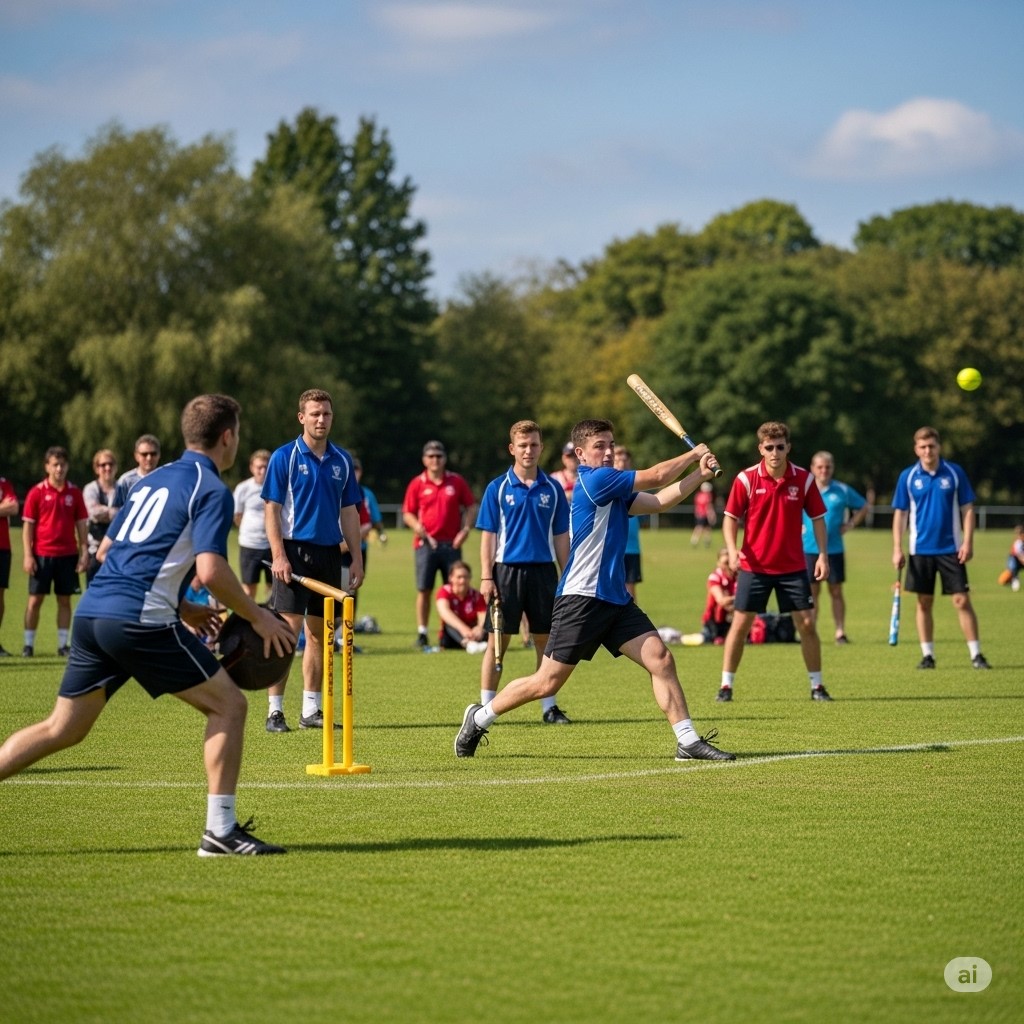
The Sport of Rounders: A Global Game Rooted in Tradition
Rounders is a bat-and-ball game rich in tradition and fast-paced excitement. Though often overshadowed by similar sports like baseball and softball, it boasts its own unique identity. The game is especially popular in the United Kingdom and Ireland, where it has deep cultural roots. Across the world, children play Rounders in schoolyards, and adults compete in amateur and professional leagues. Beyond fun and fitness, the game holds political and social significance in several communities. This blog explores the complete story of Rounders, from its ancient origins to its modern influence on the global stage.
Origins and History of Rounders
The origins trace back to Tudor England in the 16th century. Early versions of the game were known as “Base-Ball” or “Rounde Ball.” Children played the game using homemade bats and balls. It quickly became a common activity during village festivals and school holidays.
By 1744, a version of the game was described in a British publication titled A Little Pretty Pocket-Book. This book included a rhyme and an illustration showing boys playing a game very similar to today’s Rounders. It is one of the earliest literary records of the sport.
In 1884, the Gaelic Athletic Association (GAA) in Ireland formally codified the rules of the game. Their version was called “Irish Rounders,” and it slightly differed from the British version in field layout and team size. Meanwhile, in England, the game continued to evolve with official rules set by the National Rounders Association (NRA) in the 1940s.
Both the GAA and NRA versions still exist today. While they share many similarities, the rule sets and gameplay experiences remain distinct. Despite this, both associations aim to grow the sport and promote international cooperation.
Global Popularity of Rounders
Although it originated in the British Isles, it has spread to several continents. The game enjoys the most popularity in the United Kingdom and Ireland. Every year, thousands of schoolchildren play it as part of their physical education curriculum.
In the United Kingdom, Rounders England governs the sport and supports thousands of clubs and amateur leagues. Their focus on youth development and community programs has helped sustain the game’s popularity.
Ireland also plays a significant role in the sport’s growth. The GAA continues to support Rounders as one of its official sports, alongside Gaelic football, hurling, and handball.
In recent years, expat communities have helped spread Rounders to new countries. Canada, Australia, and New Zealand all report amateur leagues growing in schools and summer camps. Some parts of India and Pakistan have also introduced the game, largely due to colonial history and educational exchange programs.
Even in the United States, where baseball dominates, educators have begun to reintroduce Rounders as a way to diversify gym classes and connect students to historical roots.
Efforts by Rounders England and the GAA to promote international tournaments have also contributed to the game’s rise in visibility. Although not yet an Olympic sport, Rounders continues to gain momentum.
Amateur Rounders: Youth, Schools, and Communities
Most players first encounter Rounders during childhood. Schools across the UK and Ireland include the sport in physical education programs. It teaches teamwork, agility, coordination, and quick decision-making. Boys and girls of all ages enjoy the sport, which helps break gender barriers in athletics.
Teachers often find the game easy to set up and manage. Equipment is affordable and minimal—usually just a bat, a ball, and bases. This accessibility makes it ideal for schools with limited budgets.
Youth clubs and local councils often organize Rounders matches during the summer. Community centers also host events that promote social inclusion and physical wellness. Parents and children frequently participate in family tournaments, further enriching the community bond.
In England, the “Rounders England Youth Programme” trains coaches and teachers in the sport. They offer certifications and educational resources that ensure consistent quality in instruction. Similarly, the GAA supports youth development with regional clubs that hold weekly practices and seasonal competitions.
Universities and colleges in both countries run competitive intramural leagues. These often act as feeder programs into local amateur leagues or even semi-professional teams. Graduates continue playing long after their school years, either in workplace leagues or community clubs.
Professional Leagues and Competitive Play
While Rounders is most widely played at the amateur level, it does have organized competitive leagues. Rounders England oversees the national league system. Teams are divided by region and skill level. Players often progress from local clubs to regional tournaments and, eventually, national championships.
Each summer, the Rounders England National Championships bring together the best teams in the country. Matches are fiercely contested, with high levels of skill and strategy on display. Scouts and coaches often use the event to identify talent for international competition.
Ireland’s GAA Rounders division also hosts annual All-Ireland Championships. These include men’s, women’s, mixed, and underage categories. The finals are typically held in prestigious venues and attract enthusiastic crowds.
Internationally, the World Rounders Federation (WRF) was established in the early 2000s. Its goal is to unify the different national associations and promote international matches. While still in its early stages, the WRF has hosted friendly competitions between England, Ireland, and a few other countries.
The WRF also aims to standardize rules across countries to facilitate global growth. Collaborative workshops and coaching exchanges have begun taking place to align playing styles and regulations.
Although professional salaries in Rounders are rare, top players often receive sponsorships and travel allowances. A small but dedicated group of athletes continues to push the boundaries of what is possible in the sport.
Social and Political Significance of Rounders
Rounders plays an important social role in many communities. The game brings people together across age groups, genders, and cultures. Local tournaments often serve as community-building events, strengthening neighborhood ties.
The sport also supports gender equality. Both boys and girls play under the same rules, often on the same teams. This inclusive approach fosters mutual respect and equal opportunity. In many ways, Rounders sets an example for other sports.
Rounders has played a role in education reform as well. Teachers and school administrators recognize the game’s value in promoting physical activity and teamwork. Its adaptability makes it ideal for students with varying athletic abilities.
Politically, the sport has received support from government bodies. In the UK, Sport England provides funding to Rounders England. These funds help run programs in underprivileged areas, where sports access might otherwise be limited.
Ireland’s GAA Rounders program also receives government support. As part of the broader Gaelic games, it contributes to cultural preservation. The Irish government sees the sport as a tool for promoting national identity.
In multicultural societies, Rounders acts as a bridge between communities. Events hosted by immigrant organizations often include the game, allowing newcomers and locals to interact in a relaxed setting. Sports diplomacy at the grassroots level has never been more important, and Rounders plays its part well.
Rules of Rounders: How the Game is Played
It is played between two teams, typically of nine players each. The game consists of two innings per team. One team bats while the other fields. The goal is to score as many “rounders” (runs) as possible.
Equipment and Field Layout
- A bat, usually round and made of wood or metal.
- A small, hard ball.
- Four bases arranged in a diamond shape.
- The playing area must be at least 12 meters wide and 12 meters long.
The batter’s square is one meter across. Bases are marked with poles or cones. The bowler stands inside a small square near the batting square.
Basic Gameplay
The bowler pitches the ball underhand to the batter. The batter must hit the ball and run to as many bases as possible. A full rounder is scored if the batter reaches the fourth base after a legal hit. Half-rounders are awarded for reaching the second or third base.
Fielders try to catch the ball or tag bases to get batters out. A batter is out if:
- The ball is caught before hitting the ground.
- A base is tagged before the batter reaches it.
- The batter misses three legal balls.
Each team has two innings. At the end, the team with the most rounders wins.
Key Differences in Versions
- England Rules (Rounders England): The bat must be no longer than 46 cm. Balls must be between 65 and 85 grams.
- Irish Rules (GAA): The bat may be slightly longer, and teams often have larger rosters.
Despite differences, both versions emphasize fair play, sportsmanship, and athletic skill.
Conclusion: Why Rounders Deserves More Attention
Rounders may not receive as much global attention as other bat-and-ball sports, but its significance runs deep. The game has rich historical roots and a growing international presence. Schools, youth organizations, and professional associations all contribute to its ongoing development.
With strong community involvement, Rounders builds social bonds, promotes gender equality, and fosters physical health. Its simple setup and inclusive rules make it accessible to all.
As Rounders continues to expand beyond the UK and Ireland, more people will discover the joy and benefits of the game. With growing support from international federations, the future looks bright for this beloved sport.
Whether played in a schoolyard or on a championship field, Rounders reminds us that tradition, teamwork, and fun are always in style.