
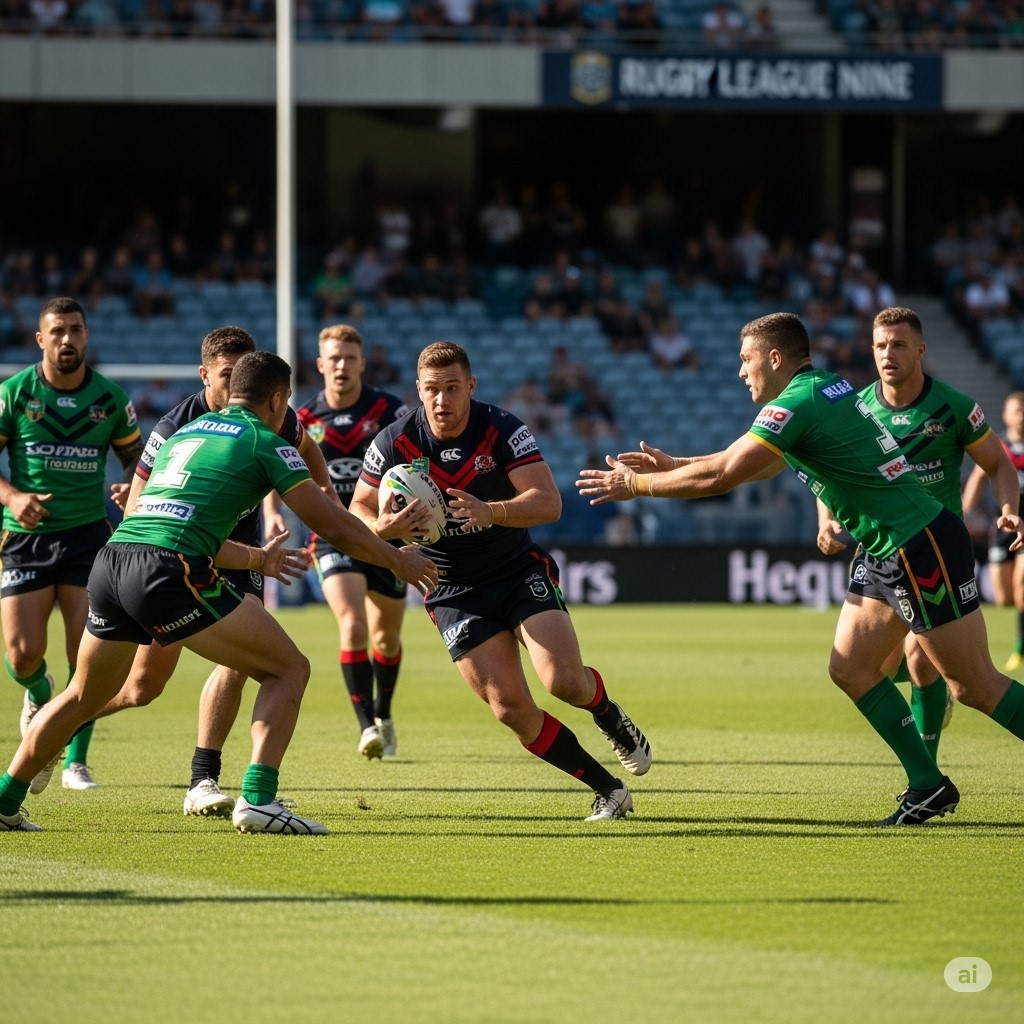
The Global Rise and Power of Rugby League Nines Football
Rugby League Nines Football is an electrifying, fast-paced version of the traditional 13-a-side rugby league. This short-sided format has quickly grown into a global sensation. With nine players per team and shorter halves, it offers a thrilling spectacle for fans and players alike. Whether it’s the pulse-pounding hits, breakaway runs, or creative offloads, the game delivers excitement from start to finish.
The sport has evolved dramatically from its roots. Today, it’s played in youth leagues, amateur circuits, and elite international competitions. While some view it as a development tool for the full version of rugby league, others see it as a standalone spectacle deserving of its spotlight. As more nations embrace this format, Rugby League Nines Football continues to break new ground in popularity, political influence, and social reach.
The Origin and History of Rugby League Nines Football
To understand Rugby League Nines Football, we must explore its roots in the rugby league code. Rugby league itself was born in 1895, when clubs in Northern England split from the Rugby Football Union. This break was primarily about compensating working-class players for time off work.
Over the next century, rugby league developed into a fiercely competitive and professional sport. However, by the late 20th century, administrators realized the need for a more compact format. They aimed to attract new audiences, particularly in non-traditional rugby regions.
In the early 1990s, the idea for a shorter version of rugby league took shape. The Nines format was introduced as a way to provide a quicker, more dynamic game. The first major tournament to showcase the format was the 1996 World Nines. This international competition brought together teams from across the globe. Held in Suva, Fiji, it demonstrated the appeal of the short-form game.
Following that event, Nines began to appear in preseason club competitions, charity events, and development camps. The format was further popularized by the Auckland Nines, which launched in 2014 and featured NRL teams from Australia. Its success showed the potential of Nines as a commercial product and fan favorite.
Global Popularity and Where It’s Played
The global popularity of Rugby League Nines Football is growing rapidly. Originally confined to Australia, New Zealand, and the UK, it has expanded into North America, the Pacific Islands, Africa, and parts of Europe and Asia.
In Australia, Nines gained massive attention thanks to the NRL Auckland Nines. Fans were treated to two days of non-stop action, with all 16 teams competing. This festival of footy drew crowds in the tens of thousands and was televised across the Southern Hemisphere.
New Zealand embraced Nines with equal enthusiasm. Their domestic competitions now feature Nines tournaments at multiple levels. Schoolboys, clubs, and even Māori cultural teams have adopted the format to develop players and showcase skills.
In England, the Rugby Football League (RFL) runs Nines as a preseason fixture and youth development tool. The UK Super League has tested Nines in various tournaments, giving young and fringe players a chance to shine.
The Pacific Islands, especially Fiji, Papua New Guinea, Samoa, and Tonga, have adopted Nines as a grassroots phenomenon. With smaller squad sizes and minimal infrastructure needed, Nines is more accessible than the full version of the game.
North America is a new frontier. The USA and Canada have hosted Nines tournaments in cities like Toronto, Chicago, and Philadelphia. Organizers see the format as a gateway to building broader rugby audiences.
European countries like France, Serbia, and Greece have also embraced the game. Many national federations include Nines as a part of their development pathways. International tournaments, such as the European Nines Championship, highlight the growing reach of the sport.
Amateur and Youth Participation Worldwide
Rugby League Nines Football thrives in amateur leagues and youth settings. Its shorter games and fewer players make it perfect for schools, community clubs, and talent identification programs.
In Australia, school programs often use Nines to teach kids rugby league basics. It’s safer, with fewer collisions and less time on the field. That makes it ideal for physical education curriculums and after-school sports.
The UK has implemented Nines in college and university rugby league. Many students prefer the high pace and open play. Tournaments often take place in a carnival atmosphere, with music, food, and multiple games happening simultaneously.
Pacific Island communities use Nines to build rugby talent from a young age. In remote villages, where full-size teams are hard to form, kids can still play Nines. This accessibility has helped nations like Fiji and PNG become rugby powerhouses.
Canada and the US have introduced Nines through junior development clinics. The sport is often taught alongside flag football and soccer to expose kids to different types of movement and strategy.
In France and Eastern Europe, youth academies use Nines to promote creativity. The format encourages players to run more, pass more, and communicate constantly. Coaches value these aspects when preparing young athletes for elite play.
Additionally, women and girls benefit from the simplicity of Nines. Many federations start their female programs with Nines, building skill sets before transitioning to full rugby league.
Professional Leagues and Tournaments
At the professional level, Rugby League Nines Football has found its niche. While not as widespread as the full 13-a-side game, several major competitions highlight its potential.
The NRL Auckland Nines was the gold standard. Hosted annually in New Zealand, it featured all National Rugby League (NRL) teams. Star players took part, and fans packed the stadium in colorful outfits. The format allowed clubs to test tactics and give young players exposure.
The RFL 9s Series in England has served a similar role. Super League clubs participate in mini-tournaments that showcase emerging talent. These events attract thousands of fans and offer clubs marketing opportunities.
The World Cup Nines, launched in 2019, represents the sport’s global ambitions. Hosted by Australia, it featured 12 men’s and four women’s teams from around the world. Nations like Lebanon, Wales, and the Cook Islands competed alongside heavyweights like Australia and New Zealand.
The European Rugby League Nines Championship is another step toward global integration. It includes national teams from across the continent, helping build rivalry and recognition.
The Asia-Pacific Nines showcases developing rugby nations like Japan, the Philippines, and Thailand. These tournaments introduce new fan bases to the sport in its most exciting form.
In the United States, the USA Rugby League (USARL) and independent leagues have held Nines events in major cities. These tournaments are short, affordable, and fan-friendly, making them ideal for a sport looking to grow its American footprint.
Political and Social Significance
The political and social impact of Rugby League Nines Football should not be underestimated. In many places, the sport empowers communities and promotes inclusion.
In the Pacific Islands, rugby—especially Nines—has political value. Success in the sport brings national pride and international attention. It can unify countries across tribal and regional lines. Governments often support rugby programs as tools of diplomacy and youth engagement.
Indigenous communities in Australia and New Zealand use Nines tournaments to celebrate culture and identity. Events like the Koori Knockout and Māori Nines blend sport with tradition. They include cultural performances, food festivals, and inter-tribal connection.
Women’s participation in Nines is another powerful social driver. The shorter format creates a smoother entry into the sport. National teams like the Australian Jillaroos and Kiwi Ferns have helped raise the profile of women in rugby.
In conflict zones or areas recovering from disaster, sport can heal. Organizations like Rugby League Cares have used Nines tournaments to support mental health, community rebuilding, and social cohesion.
Nines also plays a role in immigration and integration. Ethnic communities in Europe and North America organize Nines tournaments for young people from diverse backgrounds. These events help newcomers connect with local cultures while maintaining links to their heritage.
Rules of Rugby League Nines Football
Although similar to traditional rugby league, Rugby League Nines Football has distinct rules that make it unique. These changes ensure faster, more open gameplay.
Here’s a breakdown of the core rules:
- Team Size: Each team has nine players on the field and up to four substitutes. Unlimited interchanges are allowed.
- Match Duration: Games consist of two nine-minute halves. There’s a one-minute halftime break.
- Scoring: A try earns four points. A conversion adds two. Some tournaments award bonus points for tries scored under the posts.
- Restarts: After a try, the conceding team kicks off. Drop kicks are used for restarts and conversions.
- Tackle Count: Teams get five tackles per set instead of the usual six. This change encourages quick movement and creative offense.
- Scrums: These are rare and often replaced by tap restarts to keep the game flowing.
- Sin Bin: Players shown a yellow card must leave the field for two minutes. A red card results in permanent dismissal.
- Defensive Line: Teams must retreat five meters at the play-the-ball, instead of the usual ten.
These rules emphasize speed, agility, and attacking flair. They reduce stoppages and reward players who can think and act quickly under pressure.
Conclusion
Rugby League Nines Football is more than just a variation of a great sport. It is a fast, vibrant game that appeals to a modern audience. With fewer players, shorter games, and high-scoring action, it captures the imagination like few other team sports.
Its origins are steeped in the traditions of rugby league, yet its future is all its own. Countries around the globe are embracing Nines for its accessibility, excitement, and developmental value. From youth programs in Fiji to professional leagues in England, Nines is making its mark.
The game’s influence extends far beyond the field. It fosters community pride, gender equality, and international unity. At every level, Rugby League Nines Football is changing lives, building bridges, and providing a thrilling stage for the next generation of players.
Whether you’re a lifelong rugby league fan or discovering the sport for the first time, Nines offers something special. It is a bold new frontier in the world of rugby, and its best days are still to come.