The Dynamic World of Sambo: A Deep Dive into the Global Sport
Sambo is a unique martial art and combat sport with deep historical roots and modern global reach. Originally developed in the Soviet Union, this discipline blends judo, wrestling, and various self-defense techniques. Known for its effectiveness in both sport and combat scenarios, Sambo has gained recognition as a formidable competitive practice. Over the years, it has evolved from a military defense system into a respected international sport.
The Origins and History of Sambo
It originated in the early 20th century. Its name is an acronym from Russian, roughly translating to “self-defense without weapons.” The Soviet Red Army commissioned its development in the 1920s. The goal was to create a combat system that combined the best techniques from multiple martial arts.
Two main figures pioneered the development of Sambo: Viktor Spiridonov and Vasili Oshchepkov. Spiridonov focused on creating a system suitable for smaller, weaker practitioners. His version emphasized efficiency and leverage over brute strength. Oshchepkov, who had trained in judo in Japan under Kano Jigoro, introduced judo principles into Sambo.
In 1938, the Soviet government officially recognized it as a sport. This milestone marked the beginning of organized competitions and formalized training systems. During the Cold War, Sambo became a symbol of Soviet strength and discipline. Soldiers, law enforcement, and athletes across the USSR practiced it.
By the 1960s, Sambo tournaments had spread to Eastern Europe and Asia. In 1981, the International Sambo Federation (FIAS) formed to promote the sport globally. Today, it boasts a well-documented and celebrated history, cementing its status in the martial arts world.
The Global Popularity of Sambo
Though born in Russia, it has steadily grown worldwide. Its global expansion reflects the sport’s adaptability and broad appeal. Countries in Eastern Europe, such as Belarus, Ukraine, and Bulgaria, maintain strong Sambo traditions. These nations produce world-class competitors and host major tournaments.
In recent decades, it has gained popularity in Western Europe, Asia, and the Americas. France, Italy, and Spain have invested in national Sambo federations. In the United States, several martial arts schools offer Sambo classes, often alongside judo or Brazilian jiu-jitsu.
Africa and South America are emerging markets for the sport. Nations like Venezuela and Morocco have begun to establish competitive programs. International events such as the World Sambo Championships and continental competitions have helped spread awareness and foster talent.
The International Olympic Committee (IOC) granted provisional recognition to FIAS in 2018. This recognition elevated the sport’s credibility and inspired increased global interest. More countries are now considering Sambo as part of their national sports initiatives.
Amateur Sambo and Youth Development
Amateur Sambo serves as the foundation for the sport’s growth. Schools, youth clubs, and university programs nurture young talent and introduce new generations to the discipline. Many countries have developed structured youth systems that mirror those in judo or wrestling.
In Russia and former Soviet countries, children start it as early as age six. These programs emphasize physical conditioning, discipline, and respect. Young athletes compete in local, regional, and national tournaments. Top performers may receive invitations to train with elite coaches at sports academies.
In Western countries, Sambo is often included in broader martial arts programs. Clubs affiliated with national federations host youth tournaments. These events foster sportsmanship, encourage cultural exchange, and provide competitive experience.
Several international youth competitions have been launched by FIAS. These include the Youth World Championships and continental tournaments. These platforms help identify rising stars and promote international camaraderie.
Universities in countries like Russia, Kazakhstan, and Belarus also support amateur Sambo. Collegiate competitions offer student-athletes a pathway to professional leagues or national teams.
Professional Sambo Leagues Around the World
While amateur Sambo forms the sport’s bedrock, professional leagues have elevated its profile. Russia hosts the most established professional circuit. The All-Russian Sambo Federation organizes events that draw large audiences and media coverage.
FIAS supports the development of professional leagues in other countries. These leagues often feature international fighters and are broadcast on sports networks. Events are staged with high production values to attract sponsors and fans.
In the United States, some MMA promotions have incorporated Sambo bouts. Athletes with Sambo backgrounds, such as Fedor Emelianenko and Khabib Nurmagomedov, have raised the sport’s visibility in the MMA world.
Professional Sambo athletes often transition to MMA careers. Their grappling, submission, and takedown skills give them an edge in the cage. Some countries now use it as a talent pipeline for professional MMA organizations.
Asia has also embraced professional leagues. Japan and South Korea feature events that blend traditional martial arts with Sambo rules. These tournaments attract fans who appreciate technical grappling and tactical strategy.
Political and Social Significance of Sambo
Sambo holds significant cultural and political importance in its native Russia. During the Soviet era, it served as a symbol of national pride and strength. Government officials promoted it as an embodiment of Soviet ideology—discipline, unity, and self-reliance.
The sport has long been used to build national identity and solidarity. In Russia today, it retains symbolic value. National leaders often attend competitions. President Vladimir Putin, a black belt in judo, has publicly supported Sambo development.
Sambo also plays a role in military and police training. Security forces in Russia, Belarus, and Kazakhstan use it for hand-to-hand combat instruction. This connection reinforces the sport’s image as both practical and patriotic.
Socially, it offers an inclusive and empowering community. It provides youth with a structured and healthy outlet. Programs in underprivileged areas have used it to reduce crime and foster discipline.
The sport encourages gender inclusion as well. Women compete at all levels, from youth tournaments to world championships. Female athletes have achieved success and serve as role models.
Cultural exchange is another important aspect. International competitions bring together diverse participants. These events foster understanding and friendship across borders.
Rules and Structure of Sambo Competitions
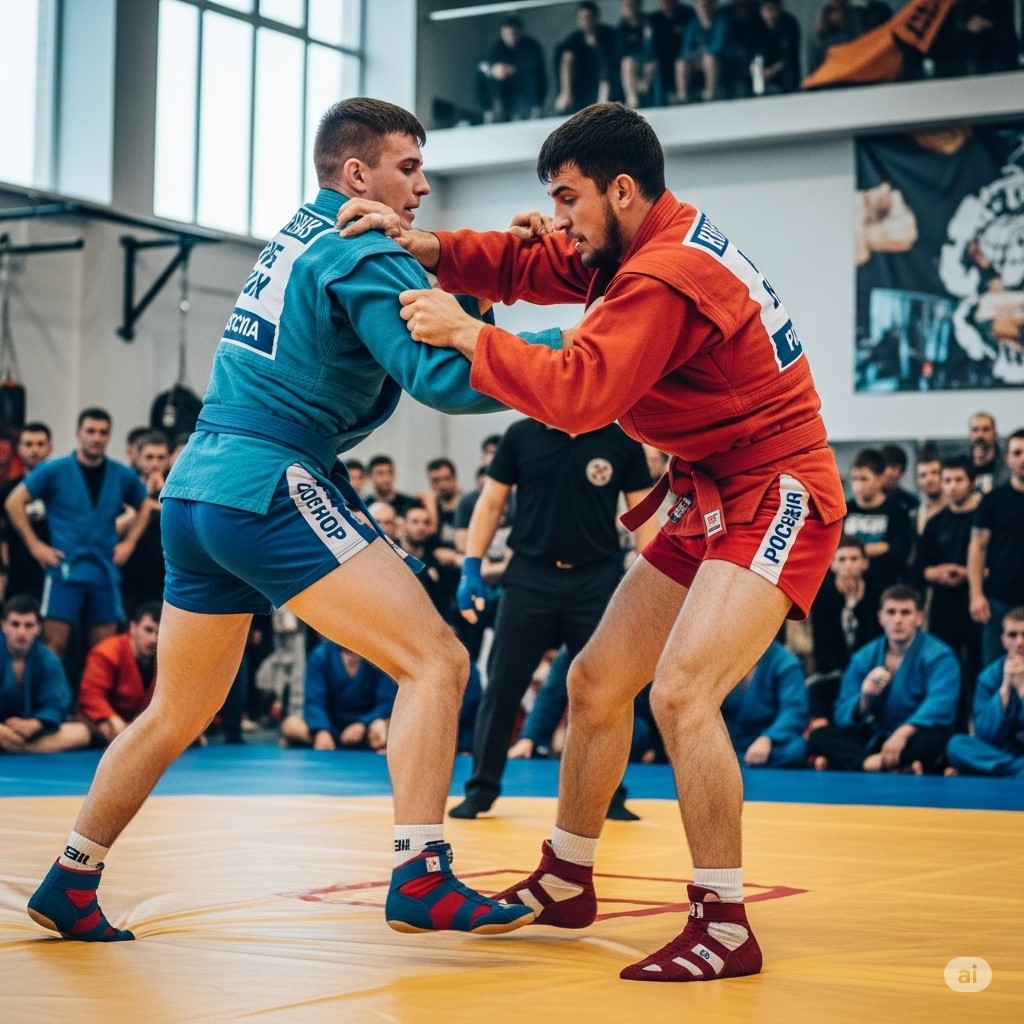
Matches are fought on a mat similar to those used in judo and wrestling. Bouts are conducted in a single round lasting five minutes for both men and women. Athletes wear a jacket called a kurtka, shorts, and wrestling shoes.
The objective is to score points or win by submission. Techniques include throws, holds, pins, and leg locks. Unlike judo, Sambo permits leg locks but not chokes. This distinction gives it a unique tactical flavor.
Victory can be achieved in several ways:
- Total Victory (clean throw with control)
- Submission (opponent taps out or verbally submits)
- Technical Superiority (12-point advantage)
- Point Decision (most points after time expires)
Referees monitor safety and enforce rules strictly. Illegal moves include strikes, chokes, and twisting joint locks. Repeat infractions result in disqualification.
Two main styles exist: Sport Sambo and Combat Sambo. Sport Sambo resembles judo and wrestling, focusing on throws and submissions. Combat Sambo adds striking techniques and is used by military and law enforcement personnel.
Competitors are divided by weight class and age group. International tournaments feature multiple divisions, ensuring fair matchups. Events follow standardized formats set by FIAS.
Judging criteria emphasize control, execution, and effectiveness. Points are awarded for clean throws, successful pins, and submission attempts.
Conclusion: Sambo’s Rising Global Influence
Sambo has grown far beyond its Soviet roots. It now thrives on every continent, supported by passionate practitioners and professional organizations. Its unique blend of technique, discipline, and history continues to captivate audiences.
Youth and amateur programs ensure a strong future for the sport. Professional leagues and international events bring global exposure. Political and social dimensions add depth and relevance.
As more countries adopt it, its reputation as a versatile and effective martial art will continue to rise. From humble beginnings to international acclaim, Sambo’s journey reflects the enduring appeal of martial arts grounded in tradition and innovation.
Whether you’re an athlete, a fan, or a newcomer, Sambo offers something truly compelling. Explore it, train in it, and experience a sport that blends heritage with modern excellence.