Savate: The Art of French Kickboxing
Savate, also known as French kickboxing, is a unique and fascinating combat sport. It combines elegance, precision, and technical finesse with raw power and strategy. Originating in France, Savate has evolved from a street-fighting method into a respected sport with global appeal. Practiced by both amateurs and professionals, Savate continues to gain popularity. In this blog post, we will explore the origin, rules, global spread, amateur and professional scenes, and the socio-political impact of Savate.
The Origins and History of Savate
The roots of Savate trace back to the streets of 19th-century France. It began as a form of self-defense used by sailors and dockworkers in Marseille. These early forms of fighting involved kicking and open-handed strikes. Over time, this street-fighting style began to merge with English boxing techniques.
In Paris, a variant called “chausson” developed. Chausson emphasized high kicks, balance, and grace. By the mid-1800s, Michel Casseux formalized the techniques into a codified system. Charles Lecour later added English boxing punches to the system. This marked the birth of modern Savate.
Savate became a recognized martial art by the late 19th century. The military adopted it for training purposes. Civilians, too, began practicing Savate for self-defense and sport. It was showcased at the 1924 Paris Olympics as a demonstration sport, which helped increase its visibility.
The Spread and Global Popularity of Savate
While Savate originated in France, it didn’t remain confined there. The French diaspora and military influence played a significant role in spreading the sport. By the mid-20th century, Savate clubs appeared in Belgium, Switzerland, and North Africa.
Today, Savate is practiced in over 60 countries. France remains the epicenter, but other nations have built strong followings. Canada, Italy, Russia, and the United Kingdom host numerous Savate schools. The sport also thrives in parts of Asia and South America.
The International Savate Federation (FISav) governs the sport globally. It organizes world championships and promotes standardization. National federations under FISav conduct local tournaments, fostering grassroots development.
Cultural exchange programs have helped further its reach. Seminars, online content, and international coaching have introduced Savate to new audiences. Although it’s less mainstream than Muay Thai or MMA, its community continues to grow.
Amateur Savate: Youth and School Programs
Amateur Savate provides a structured and inclusive environment for learning. Youth and school programs play a vital role in its development. Many French schools include Savate in physical education curricula. This early exposure helps foster lifelong interest.
Outside France, countries like Belgium and Italy offer youth leagues. These programs focus on discipline, respect, and technical proficiency. Children learn in a controlled, safe setting. Protective gear and strict rules prevent injuries and ensure a positive experience.
The FISav promotes youth development through international competitions. Events like the World Youth Cup provide global platforms. These experiences encourage cultural exchange and international friendships. Young athletes gain confidence, sportsmanship, and fitness.
Instructors follow a belt-ranking system, similar to karate. Beginners earn colored gloves as they advance. This system keeps young athletes motivated and goal-oriented. Training includes drills, sparring, and physical conditioning.
Savate is also accessible to people with disabilities. Adaptive programs exist for those with physical or intellectual challenges. These inclusive initiatives reflect the sport’s commitment to community and diversity.
Professional Savate Leagues Around the World
Professional Savate represents the highest level of competition. Although smaller in scale than some combat sports, it offers exciting opportunities. France leads the way with established professional circuits. Events are broadcast on television and attract sponsorships.
The most prominent league is the French National Championship. Winners often compete in the World Savate Combat Championships. These events follow the “Assaut” and “Combat” rule systems. “Assaut” focuses on technique and control, while “Combat” allows full-contact striking.
Other European countries also host professional tournaments. Italy, Russia, and the Netherlands have national leagues. These organizations work under FISav guidelines. Athletes earn rankings, titles, and sometimes prize money.
In Canada and the U.K., semi-professional circuits exist. These events prepare fighters for international competition. Cross-border tournaments increase visibility and raise the sport’s profile. Training camps and promotional events attract new talent and fans.
While Savate is not yet part of the Olympics, discussions continue. Gaining Olympic recognition would boost funding, participation, and viewership.
The Political and Social Significance of Savate
Savate holds deep social and political meaning. In France, it reflects cultural pride and historical identity. Its development coincided with the modernization of the French military and police forces. Savate became a tool of national cohesion and physical education.
During periods of civil unrest, Savate training helped instill discipline and resilience. Schools used it to promote character building and civic values. In urban areas, it provided an alternative to street violence.
Politically, Savate symbolizes resistance and self-empowerment. It began as a practice of the working class. Over time, it became a vehicle for social mobility. People from diverse backgrounds could excel and gain recognition.
Today, the sport supports social initiatives. Many clubs operate in underprivileged neighborhoods. They offer youth mentorship and life skills through sport. Programs target at-risk youth and marginalized communities.
Savate also plays a role in diplomacy. Cultural exchanges and tournaments foster international goodwill. Athletes from conflicting nations often find common ground in the ring. This demonstrates the power of sport as a unifying force.
Rules and Techniques of Savate
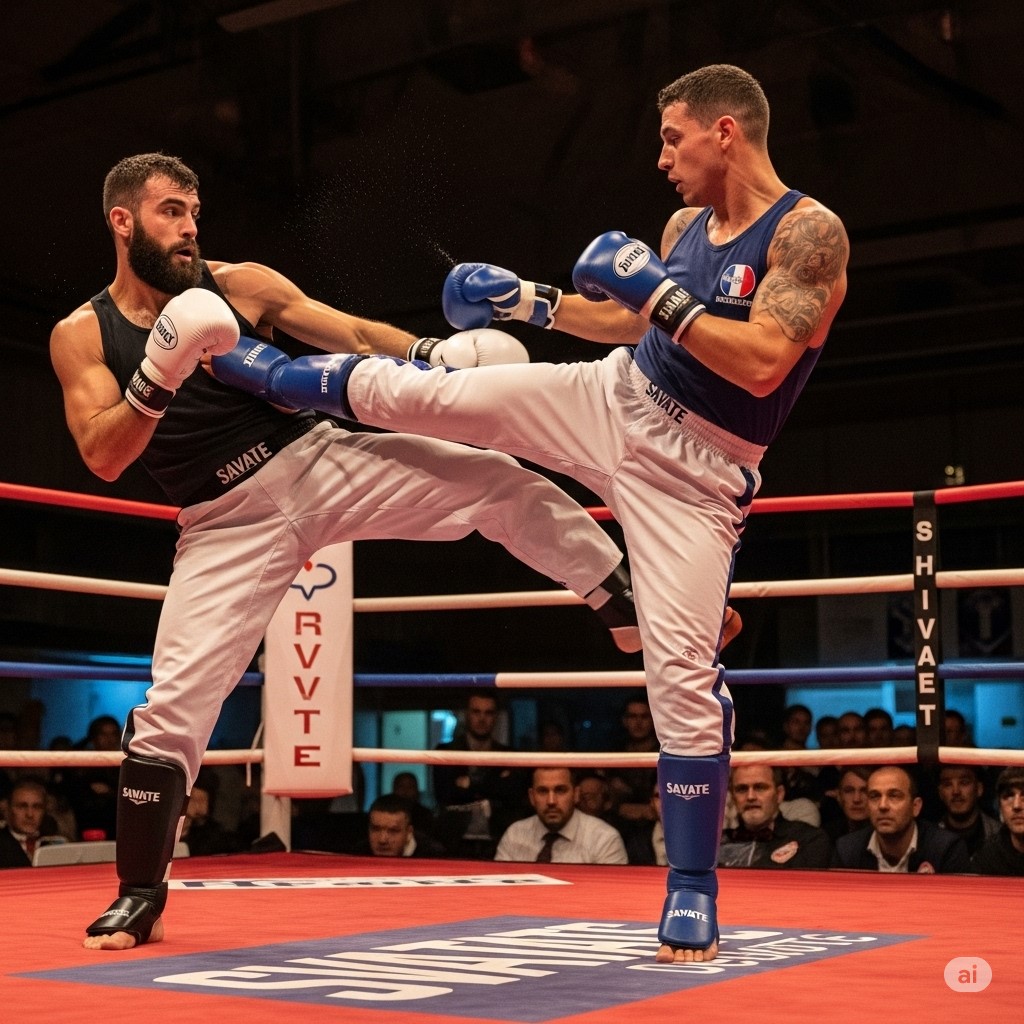
Savate follows a clear and structured rule set. Matches take place in a ring, typically three rounds long. Fighters wear gloves and specialized shoes, known as “chaussures.”
There are two main disciplines: Assaut and Combat. In Assaut, fighters must show control and technique. Excessive force results in penalties. Judges score based on precision, style, and strategy.
Combat allows full-contact strikes. Knockouts are legal, and judges also score on effectiveness. Both formats require discipline and athleticism.
Techniques include punches, kicks, and foot sweeps. Punches mirror boxing: jab, cross, hook, and uppercut. Kicks are elegant and varied. Common ones include fouetté (snap kick), chassé (thrust kick), and revers (hook kick).
Unlike other kickboxing forms, Savate emphasizes targeting. Fighters aim for legal zones only: head, torso, and legs. No strikes to the groin, back, or joints are allowed. Illegal moves result in warnings, point deductions, or disqualification.
Protective gear is mandatory, especially in youth and amateur bouts. Fighters wear mouthguards, groin protection, shin guards, and sometimes headgear.
Referees enforce rules strictly. Fair play and respect are core values. Competitors bow before and after matches. Sportsmanship is encouraged at all levels.
Conclusion
Savate stands out among martial arts for its history, elegance, and effectiveness. Its roots in French street culture and its rise to international sport highlight its enduring appeal. With structured rules, youth programs, and professional leagues, Savate continues to thrive.
From school gyms to world championships, Savate promotes discipline, respect, and community. Its social impact reaches far beyond the ring. As more people discover its value, Savate’s global presence will only grow stronger.