
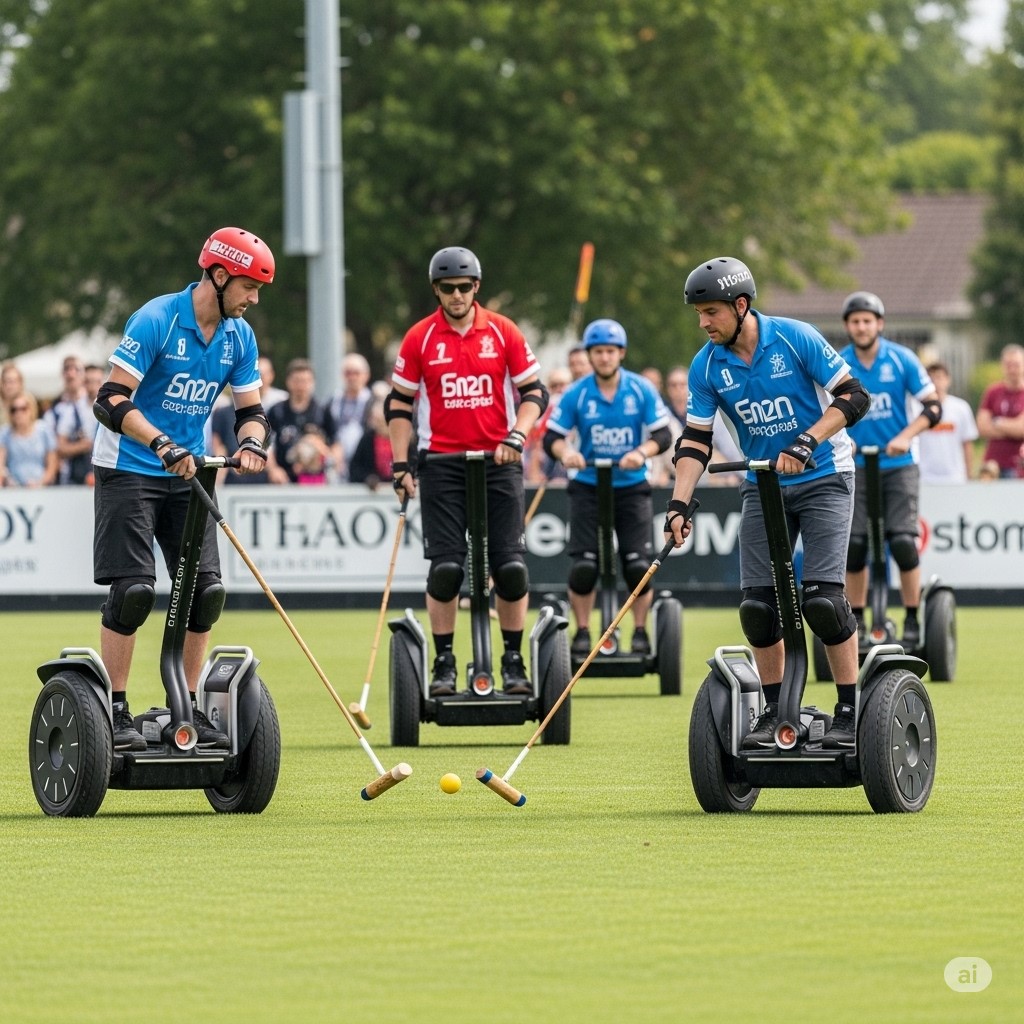
Segway Polo: The Fast-Growing High-Tech Sport Blending Fun and Strategy
Segway Polo is one of the most unique sports in the modern world. It combines the agility and speed of polo with the futuristic movement of Segways. First seen as a novelty, it has evolved into an organized sport with leagues, teams, and international championships. From its quirky origins to its global reach today, Segway Polo captures the attention of tech enthusiasts, athletes, and curious spectators alike. In this blog post, we’ll dive deep into its origins, growth, rules, and impact socially and politically. We’ll also explore how amateur and youth versions are taking off in schools and communities worldwide.
The Origin and History of Segway Polo
Segway Polo has its roots in innovation and curiosity. In the early 2000s, a group of tech professionals began experimenting with the idea of playing polo on Segways. The Segway, a self-balancing two-wheeled personal transporter, was invented by Dean Kamen and launched in 2001. Though originally designed for urban commuting, it quickly found alternative uses.
The earliest known match occurred in 2004 in the United States. Members of the Bay Area Segway Enthusiasts Group (commonly known as Bay Area SEG) organized informal games. Steve Wozniak, the co-founder of Apple, became a notable supporter and player. He helped attract attention to the sport, both through his participation and his high-profile connections.
As interest grew, formalized rules were drafted. By 2006, teams from other parts of the U.S. and Europe joined the movement. The first international Segway Polo match took place in 2006 in New Zealand, where the U.S. team played against the Kiwi team. That match was pivotal. It marked the beginning of global interest in the sport.
The Woz Challenge Cup, named after Steve Wozniak, became the premier international tournament for Segway Polo. Since 2006, teams from Germany, Sweden, the U.K., Barbados, and beyond have competed for the title. The International Segway Polo Association (ISPA) was founded to govern the sport’s development and maintain standardized rules.
The Global Popularity of Segway Polo
Segway Polo might not be as widely recognized as soccer or basketball, but its popularity is expanding. In Europe, Germany and Sweden lead the charge. Germany boasts several competitive clubs and has hosted multiple Woz Challenge Cups. The sport is particularly popular in cities such as Cologne and Frankfurt, where tech culture thrives.
In Sweden, the Stockholm Saints have helped promote the sport through community events and school demonstrations. The country’s tech-savvy culture makes it a natural home for the sport.
The United States continues to support Segway Polo, especially in California and Arizona. Teams often emerge from Segway enthusiast groups, but many have expanded to include traditional athletes.
Barbados provides one of the most surprising success stories. The Caribbean nation has embraced the sport passionately. Its national team regularly competes internationally and performs well. Their vibrant Segway Polo community also promotes tourism and public involvement.
New Zealand, the U.K., and Austria have growing numbers of players and teams. As equipment becomes more accessible and awareness grows, more countries are joining the ranks.
The Woz Challenge Cup and regional tournaments have helped bring international visibility. Social media coverage and streaming platforms have also expanded its reach.
Amateur and Youth Segway Polo Around the World
Amateur Segway Polo forms the backbone of the sport’s development. Across the globe, schools, colleges, and community centers are integrating the game into their recreational programs.
In the United States, youth programs are gaining momentum. STEM-focused schools often adopt Segway Polo as a way to combine physical activity with technology education. Kids learn balance, coordination, and teamwork while gaining exposure to robotics and innovation.
Some schools in Germany and Sweden have implemented after-school Segway Polo programs. Students participate in structured leagues and tournaments. Coaches provide training in safety, skill development, and game tactics.
In Barbados, youth outreach programs use Segway Polo to engage at-risk youth. It offers a constructive outlet and fosters discipline and social skills.
Several cities now host amateur leagues. Players range from teens to adults. These leagues emphasize community, inclusion, and fun, making the sport approachable to newcomers.
Universities are also joining the scene. Some engineering schools form competitive clubs that train regularly and attend intercollegiate tournaments. These amateur foundations are critical. They create a pipeline of future professional players and fans.
Professional Leagues and Teams
Segway Polo’s professional landscape, though small, is structured and growing. The International Segway Polo Association oversees the organization of competitive events and rankings. Teams from Europe, the U.S., and the Caribbean participate regularly in professional competitions.
Germany’s Balver Mammuts are one of the most successful and recognizable professional teams. They have dominated the Woz Challenge Cup in recent years. Known for their speed and teamwork, they represent the competitive spirit of the sport.
The Stockholm Saints from Sweden bring flair and strategy. Their professional training routines and youth academies are models for developing talent.
In the United States, the California GoldRush is among the prominent teams. Their players are active in organizing tournaments and promoting the sport nationally.
The Barbados Flyin’ Fish have become national icons. They combine athleticism with a joyful playing style that resonates with local fans and international audiences.
Though not as commercialized as major sports leagues, these professional teams maintain dedicated fanbases. Corporate sponsorship is emerging slowly. Some tech companies support teams or events as part of their marketing efforts. With continued exposure and structured development, professional Segway Polo may become more mainstream in the future.
Rules of Segway Polo
Understanding the rules of Segway Polo helps appreciate its blend of athleticism and strategy. Each team consists of five players. They ride Segways and use mallets to hit a ball into the opponent’s goal. A standard match is divided into four periods, called chukkers. Each chukker lasts eight minutes.
The game is played on a field about the size of a soccer pitch. Goals are set at either end, similar to hockey or soccer.
Only one hand is allowed on the mallet during play. Players must not strike the ball with both hands on the mallet. Contact between Segways is permitted to a degree, but dangerous collisions are penalized.
A “right of way” rule governs ball possession and movement. The player closest to the ball has the right of way, and others must yield to avoid accidents.
The ball used is typically a street hockey ball. It’s durable and visible on outdoor fields.
Segways must be stock models, although minor modifications for safety are allowed. Helmets are mandatory. Many players also wear knee and elbow pads.
Referees monitor the game and issue penalties for fouls. Common fouls include blocking, dangerous driving, and two-handed mallet use.
Overtime rules vary depending on the tournament. Most matches that end in a tie go to sudden death, where the first goal wins.
The blend of control, strategy, and balance makes Segway Polo a challenging sport. Players must think fast and act faster.
The Political and Social Significance of Segway Polo
Though niche, Segway Polo carries unique social and political implications. First, it symbolizes the merging of technology and physical sport. This challenges traditional views of athleticism and inclusivity. Players of all ages and body types can compete effectively.
In education, it promotes STEM learning through physical engagement. Students explore mechanical engineering, motion physics, and electronic control systems while playing. This fusion enhances both mind and body development.
Socially, the sport builds community. Enthusiasts often form clubs that welcome diverse members. Events create spaces for intergenerational and cross-cultural interaction. Local tournaments foster civic pride and healthy lifestyles.
Politically, Segway Polo has diplomatic potential. It promotes peaceful competition between nations. Friendly international matches help build goodwill. Barbados, for example, has used the sport to strengthen its cultural diplomacy with Europe and the U.S.
Cities that support the sport often invest in public fields and recreational equipment. This contributes to urban development and the promotion of eco-friendly transportation methods.
The sport also supports accessibility. Some disabled players compete using specially modified Segways. This promotes inclusion and breaks down barriers in the athletic world.
In summary, Segway Polo isn’t just a sport. It’s a platform for innovation, diplomacy, and community-building.
Challenges and the Road Ahead
Despite its growth, Segway Polo faces several challenges. Equipment cost is a major barrier. A standard Segway can cost thousands of dollars. This limits access in many communities.
Public awareness remains low. Without mainstream media coverage, it struggles to attract new fans.
Safety concerns also exist. Like any contact sport, injuries can happen. Segway training and proper supervision are critical for safe play.
However, opportunities abound. Advances in electric mobility are reducing costs. Lightweight alternatives to Segways are being explored. This could expand access to the sport globally.
Increased partnerships with schools and municipalities may further legitimize it. Broadcast rights and streaming deals could bring Segway Polo to a wider audience. Collaboration with tech companies could offer sponsorship and development support.
With continued innovation and outreach, Segway Polo may one day join the ranks of globally recognized alternative sports.
Conclusion
Segway Polo is a sport that blends excitement, technology, and strategy. Born from curiosity, it has grown into a globally played game with professional teams, youth leagues, and passionate communities. From the fields of Germany to the coasts of Barbados, its reach is expanding steadily.
The sport challenges norms and invites innovation. It offers a new way to stay active, build community, and enjoy friendly competition. Though challenges remain, the future looks promising.
If you’re a fan of tech, sports, or community building, Segway Polo might be your next passion. It’s more than a game—it’s a movement on wheels.