Shidokan: The Complete Guide to the Ultimate Triathlon of Martial Arts
Shidokan is more than just a martial art—it’s a global combat sport, a rigorous test of spirit, and a unique blend of disciplines. It fuses full-contact karate, Muay Thai, and grappling into one dynamic competition format. Developed in the 1980s, it has grown steadily in popularity across continents. Practiced by both amateurs and professionals, Shidokan challenges its fighters mentally and physically. Its rich history, international appeal, and multifaceted training style make it stand out in the world of martial arts.
In this article, you’ll learn about the origins, rules, global reach, amateur competitions, professional leagues, and the social and political impact of Shidokan. Whether you’re new to the sport or a long-time fan, this guide delivers a comprehensive overview.
Origins and History of Shidokan
Shidokan was created in 1981 by Yoshiji Soeno, a Kyokushin karate champion and one of the top students of Masutatsu Oyama. After mastering Kyokushin, Soeno believed in developing a more complete fighting system. He saw limitations in styles that focused on only one range of combat. His vision was to merge different martial arts into one competition.
He called his creation Shidokan Karate—a style that preserved the power of Kyokushin but added versatility. The name “Shidokan” roughly translates to “House of the Way of the Warrior.” It reflects a philosophy of constant growth, discipline, and the pursuit of balance in life.
Soeno’s innovation was groundbreaking. Shidokan fighters needed to master three areas: full-contact stand-up striking, clinching and knees (inspired by Muay Thai), and ground fighting and submissions from judo and wrestling. This new format tested the fighter’s ability across multiple dimensions.
In the late 1980s and 1990s, the first Shidokan tournaments took place in Japan. The format quickly earned a reputation as the “Triathlon of Martial Arts” due to its three-round structure—each round focusing on a different rule set. As MMA began to emerge globally, Shidokan was already offering a full-range combat system years earlier.
Rules and Competition Format
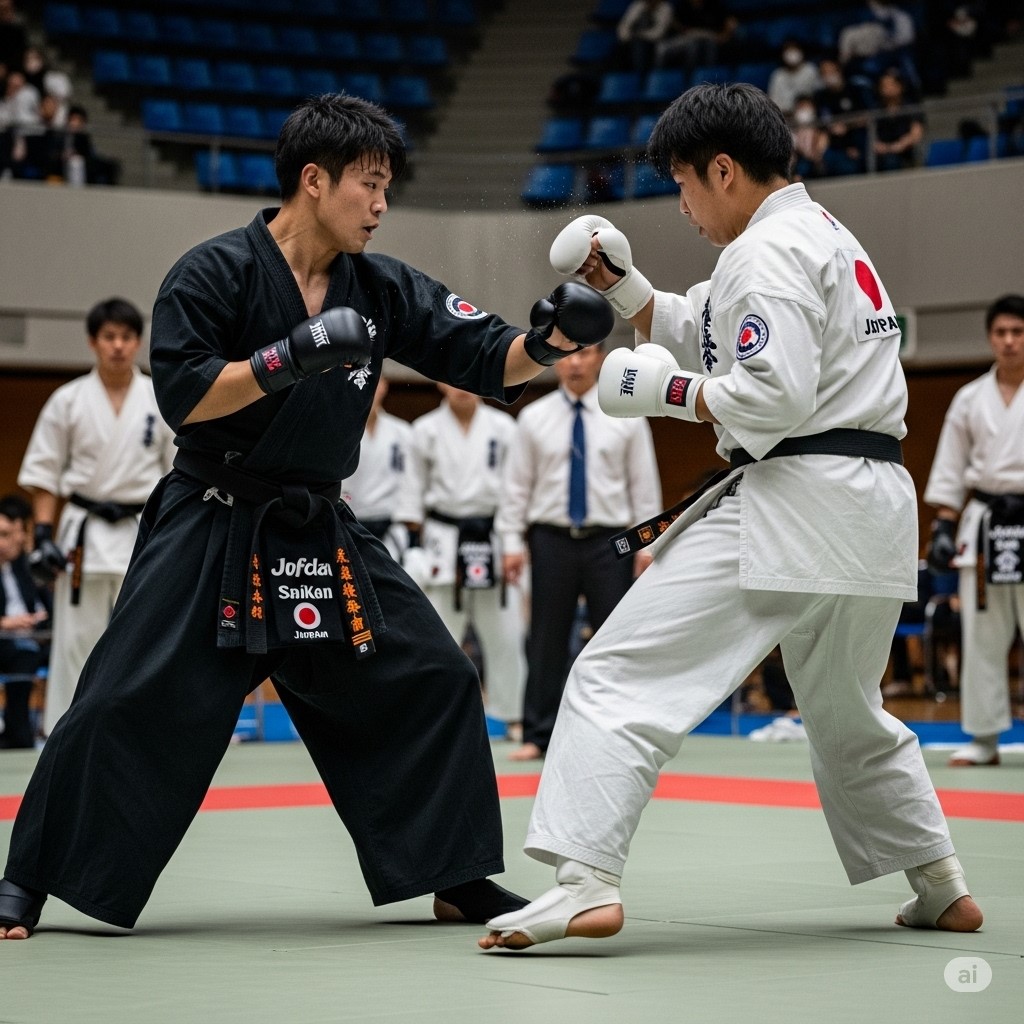
Shidokan fights are composed of three rounds. Each round represents a different martial arts discipline. This format makes it one of the most complete combat sports in existence.
Round 1: Karate Rules
The opening round uses traditional knockdown karate rules. Fighters wear no gloves. Punches to the head are not allowed, but kicks, knees, and body punches are permitted. Fighters must use speed, power, and precision.
Round 2: Kickboxing Rules
In the second round, the match transitions to kickboxing rules. Fighters wear gloves. Head punches, body punches, leg kicks, and knees are all allowed. The pace increases. Fighters must adapt quickly.
Round 3: Grappling Rules
The third round allows throws, clinches, submissions, and ground control. Grappling backgrounds, like judo or wrestling, become key. A well-rounded fighter can control the match and seek a submission or ground-and-pound finish.
Matches are judged by a panel if no knockout or submission occurs. Fighters must be conditioned to handle the variety and intensity of the format. This rule system forces athletes to train across all areas, avoiding specialization.
Global Popularity and Expansion
Shidokan started in Japan, but its philosophy and excitement soon crossed borders. Today, it is practiced in over 30 countries.
Asia
In Japan, Shidokan remains a respected full-contact martial art. Schools are found in Tokyo, Osaka, and other major cities. Regular tournaments attract thousands of fans.
In Thailand, fighters appreciate the Muay Thai elements in the sport. Shidokan gyms have opened in Bangkok and Chiang Mai. Thai fighters now train specifically for the triathlon-style format.
Europe
Europe saw rapid growth in the late 1990s. Countries like Germany, Ukraine, France, and Hungary embraced the sport. Tournaments are held annually, with large fan attendance. The Shidokan European Championships are one of the sport’s biggest events outside Japan.
Eastern Europe has especially welcomed the format. In Russia and Ukraine, fighters often cross-train in sambo, kickboxing, and karate—making them ideal for Shidokan rules. These countries regularly produce elite-level competitors.
North America
Shidokan arrived in the United States in the 1990s. Sensei Shihan Eddie Yoshimura helped spread it through dojos in Chicago and Los Angeles. The U.S. Shidokan Association was formed to support amateur and professional events.
Today, American fighters compete internationally and host regional tournaments. Canada and Mexico have also joined the Shidokan community, holding training camps and cross-border events.
Latin America and Africa
Countries like Brazil and Argentina have introduced the sport to their martial arts communities. Brazilian jiu-jitsu practitioners enjoy the grappling component, making for exciting matchups.
In South Africa and Nigeria, combat sports are growing rapidly. Shidokan has found a niche audience among martial arts schools and sports academies. Outreach and seminars are helping build awareness and participation.
Amateur Shidokan: Youth and Schools
Amateur Shidokan forms the backbone of the sport’s growth. It provides structure, discipline, and opportunity for young fighters.
Youth Programs
Many Shidokan dojos offer programs for children and teens. Training begins with karate fundamentals—stances, strikes, and footwork. As students progress, they learn kickboxing drills and basic grappling.
Youth tournaments use modified rules for safety. Headgear, shin guards, and lighter contact levels protect young athletes. These competitions focus on skill development rather than knockouts.
Children learn respect, confidence, and humility through the belt ranking system. Instructors emphasize character as much as fighting ability.
School and University Leagues
In Japan and parts of Europe, school-based Shidokan clubs exist. These clubs compete regionally. University teams also form part of intercollegiate tournaments, especially in Ukraine and Poland.
These school leagues feed into amateur circuits, creating a structured path to the professional level.
Women in Amateur Shidokan
Female participation continues to grow. Dojos welcome women of all ages. Women’s divisions are now included in many amateur tournaments. Women are excelling across all three rounds of the competition format.
Efforts to promote gender equality have led to mixed-gender training seminars, female instructor certifications, and scholarships for girls in underprivileged communities.
Professional Shidokan Leagues
The professional side of Shidokan has evolved into a global circuit. These events showcase the best fighters and generate growing fan interest.
Shidokan World Cup
The Shidokan World Cup is held every two years. Fighters from all continents compete under triathlon rules. Winners gain international recognition. The event is broadcast online and draws large live audiences.
Fighters train year-round to qualify. The preparation is brutal—cardio, striking, grappling, and mental focus are all essential.
Regional Leagues
Several countries operate professional leagues:
- Japan: Home of the original Shidokan World Championship. Matches are held in Tokyo, Saitama, and Osaka.
- Ukraine and Russia: Host elite-level events with strong local talent.
- Germany and France: Offer sponsorship deals for top fighters.
- United States: The U.S. Pro Shidokan League has launched pay-per-view events and regional tournaments.
Sponsorship and Media
Sponsorship is growing. Fitness brands, energy drinks, and equipment manufacturers back fighters. Some athletes gain followings on social media, building personal brands.
Streaming platforms now broadcast events, helping Shidokan reach new fans. Interviews, training videos, and fighter documentaries offer deeper insights into the sport.
Social and Political Significance
Shidokan has more than athletic value. It carries important social and political meanings in today’s world.
Discipline and Character Development
Dojo culture emphasizes discipline, respect, and personal growth. Students are taught to control aggression and develop a sense of justice. These lessons carry over into daily life—school, work, and community.
Shidokan dojos often become pillars in local neighborhoods. They offer a safe, structured environment for youth in high-risk areas. Parents praise the discipline and life skills the sport instills.
Cultural Exchange
Shidokan tournaments bring people from diverse backgrounds together. Competitors from Ukraine, Brazil, Thailand, and the U.S. may all share the same mat. Friendships form across language and culture.
This creates mutual understanding and global unity. Cultural demonstrations and shared rituals build respect among different martial arts traditions.
Gender Equality and Empowerment
Shidokan promotes equal opportunities for men and women. Female fighters compete at the highest levels. Women also serve as coaches, referees, and administrators. This visibility encourages girls to take up martial arts.
In regions where gender roles are rigid, Shidokan provides a platform for empowerment. Female athletes gain self-confidence and respect.
Peacebuilding Through Sport
In post-conflict regions, Shidokan offers a peaceful outlet. Fighters from opposing political groups or ethnicities train together. Shared struggle on the mat replaces division. Programs in parts of Africa and Eastern Europe use the sport for reconciliation.
Governments and NGOs have noticed. Some fund Shidokan programs as tools for youth engagement and violence prevention.
The Future of Shidokan
Shidokan’s future looks promising. It bridges traditional martial arts and modern combat sports. Its format is exciting, comprehensive, and viewer-friendly.
Growth strategies include:
- Digital Expansion: More streaming and online content.
- Grassroots Development: Youth programs and school partnerships.
- Professionalization: Improved marketing and fighter support.
- International Federations: Unifying rules and certifications globally.
As MMA and hybrid sports grow, Shidokan is well-positioned to lead. It already offers what many fans seek—a complete, disciplined, and intense form of combat.
Conclusion
Shidokan is not just a sport—it is a way of life, a global community, and a beacon of martial arts evolution. From its roots in Japanese karate to its modern triathlon format, it challenges fighters to be their best in every domain. It is practiced across continents, in schools and stadiums, by amateurs and professionals alike.
The sport has changed lives, united cultures, and created champions. Its influence stretches beyond the mat into schools, communities, and nations. The balance of tradition and innovation makes it unique in the martial arts world.
If you’re looking for a combat sport that tests every part of you—mind, body, and soul—Shidokan is where that journey begins.