The Martial Art of Shorinji Kempo: A Deep Dive into History, Rules, Popularity, and Global Influence
Shorinji Kempo is more than just a martial art. It is a philosophy, a discipline, and a path to physical and mental harmony. Originating in Japan, Shorinji Kempo blends the art of self-defense with teachings that foster personal development. It is practiced by people of all ages, from schoolchildren to seasoned martial artists, in over 30 countries. As both a sport and a way of life, Shorinji Kempo continues to shape individuals and communities worldwide.
Origins and History of Shorinji Kempo
The roots of Shorinji Kempo date back to 1947. Doshin So, a Japanese martial artist and former military intelligence agent, created the discipline. He returned to Japan after World War II and saw a society struggling to rebuild. Inspired by his studies of Chinese martial arts, particularly Shaolin Kung Fu, he developed a system to nurture both body and spirit.
Shorinji Kempo was born in Tadotsu, a small town in Kagawa Prefecture. Doshin So combined elements of Chinese fighting techniques with Japanese martial traditions. He also introduced principles of Zen Buddhism, emphasizing compassion, cooperation, and self-improvement. From its inception, Shorinji Kempo was not only about defeating opponents. It focused on building character, promoting peace, and helping others.
Throughout the 1950s and 60s, the martial art grew rapidly in Japan. Doshin So established the Kongo Zen Sohonzan Shorinji temple, which became the spiritual and administrative center of the discipline. As students became instructors, they opened dojos across the country and eventually overseas. The founding principles of discipline, humility, and mutual respect helped Shorinji Kempo flourish.
Global Popularity and Spread
Over the decades, Shorinji Kempo has expanded beyond Japan. Today, it is practiced in more than 36 countries. Nations such as the United Kingdom, France, Brazil, Sweden, Indonesia, and the United States have embraced the sport. Many universities and community centers offer Shorinji Kempo classes. Practitioners organize international seminars and tournaments regularly.
In Asia, countries like Indonesia and Malaysia have thriving Shorinji Kempo communities. The Indonesian Shorinji Kempo Federation is among the most active. It has produced world-class competitors and hosted international championships. European countries have also shown growing interest. France and Italy, in particular, have strong national federations.
In Africa, nations like Kenya and Madagascar have seen a rise in practitioners. These countries have formed national bodies affiliated with the World Shorinji Kempo Organization (WSKO). Global tournaments and seminars help foster a sense of unity among international followers. These gatherings also spread the martial art’s philosophy across cultures.
Amateur Practice and Youth Involvement
Shorinji Kempo appeals to a wide demographic, including children, teens, and adults. Many schools in Japan incorporate it into physical education programs. Youth programs emphasize discipline, teamwork, and non-violence. Through consistent training, students gain confidence and learn to handle conflict without aggression.
Outside Japan, community centers and clubs offer structured training programs for kids. The curriculum usually includes basic techniques, ethical teachings, and breathing exercises. Instructors place strong emphasis on personal growth. Students advance through ranks based on skill, knowledge, and attitude.
Amateur competitions are held regionally and nationally. These events showcase both solo demonstrations and partner techniques. Unlike some combat sports, Shorinji Kempo does not focus on domination. The aim is to perform techniques with precision, timing, and control. Tournaments serve as learning platforms rather than just venues for winning medals.
Universities often have Shorinji Kempo clubs. These organizations provide young adults a chance to continue training and connect with peers. Many practitioners continue beyond college, eventually becoming instructors themselves. This cycle ensures the art stays vibrant and dynamic.
Professional Leagues and Organizations
While Shorinji Kempo emphasizes personal growth over commercialization, it does have structured organizations. The World Shorinji Kempo Organization (WSKO), based in Japan, oversees international activities. It coordinates global events, certifies instructors, and sets standards for practice.
In Indonesia, professional leagues have emerged due to high public interest. Athletes often compete in national games and international meets. Although not as commercially prominent as sports like judo or karate, Shorinji Kempo has a strong presence in the region. National federations host annual championships and collaborate with local governments.
Japan maintains a well-organized network of dojos, university clubs, and regional federations. The All Japan Shorinji Kempo Federation helps regulate practice at the professional and amateur levels. Senior instructors frequently visit international branches to guide and assess practitioners.
Tournaments feature categories based on age, experience, and skill level. Events include embu (choreographed techniques), randori (sparring), and kata (forms). Judges evaluate technical execution, cooperation, and spirit. Although professionals may gain recognition, the sport remains rooted in personal betterment rather than financial reward.
Political and Social Significance
Shorinji Kempo has played a significant role in post-war Japanese society. Doshin So believed rebuilding society required strong individuals with a moral compass. His teachings emphasized justice, compassion, and nonviolence. The martial art became a tool for social change.
Throughout its history, the discipline has encouraged volunteerism and civic engagement. Practitioners often organize clean-up drives, community classes, and humanitarian missions. These efforts align with the philosophy of “half for self, half for others.”
In politically unstable regions, Shorinji Kempo has offered a constructive outlet for youth. Indonesia, for example, has used the sport to foster unity among diverse ethnic groups. Practitioners develop respect for cultural differences through shared values.
Women have found empowerment through practice. Shorinji Kempo promotes gender equality and does not separate techniques by gender. Female practitioners regularly achieve high ranks and become leaders in the community.
Internationally, the martial art serves as a form of soft diplomacy. Cultural exchanges and seminars foster goodwill among nations. These interactions help promote peace and understanding beyond borders.
Rules and Structure of Shorinji Kempo
Shorinji Kempo combines hard and soft techniques. It includes strikes, joint locks, throws, and counterattacks. Practitioners train in both goho (hard techniques) and juho (soft techniques). Goho involves punches and kicks. Juho focuses on controlling the opponent using minimal force.
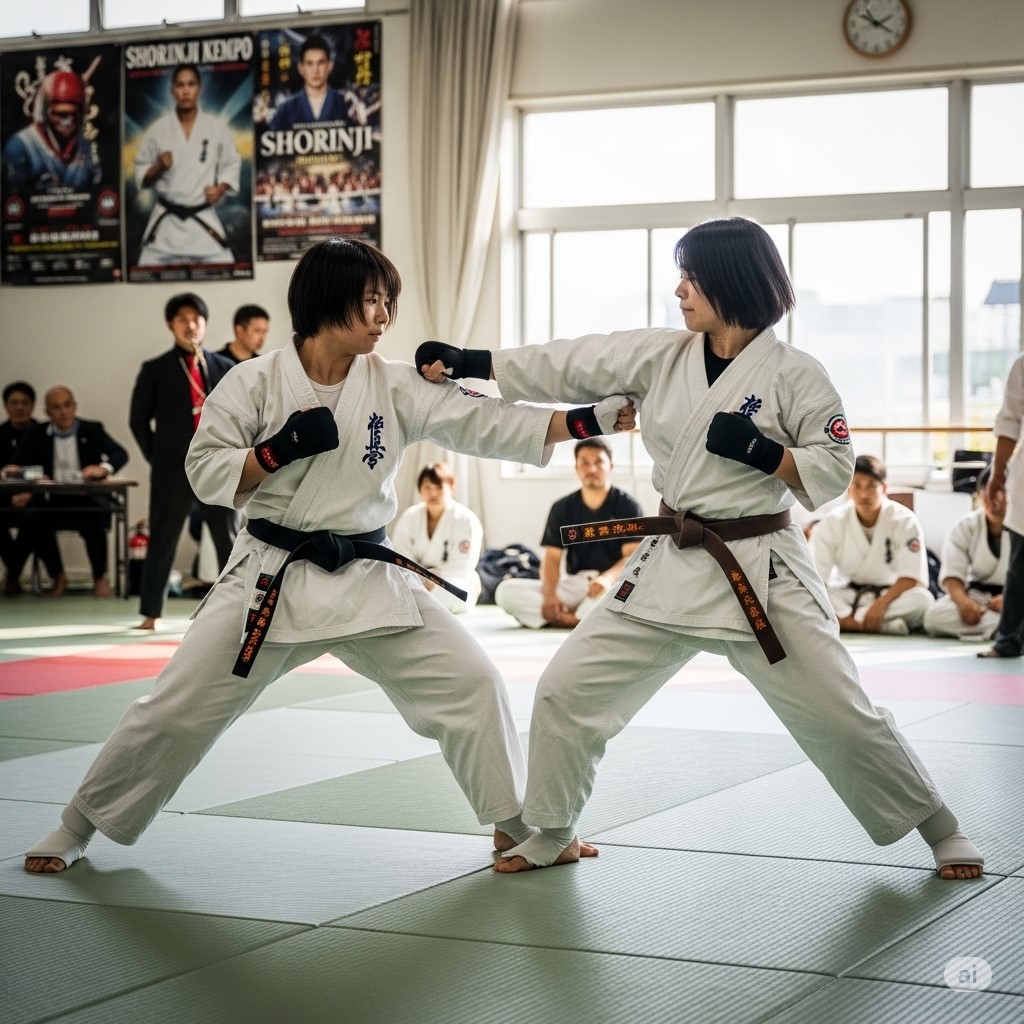
Training begins with kihon, or basic movements. These include stances, strikes, and defensive maneuvers. Gradually, students learn combinations and applications. Kata, or forms, teach sequencing and timing. Embu involves performing paired routines to demonstrate skill and harmony.
Randori is a form of sparring used for practical application. It helps practitioners respond to unpredictable attacks. Safety is prioritized. Protective gear is often worn, especially during sparring sessions.
Judging in competitions follows strict criteria. Techniques must be executed cleanly, with correct posture and timing. Cooperation between partners is vital in embu events. In randori, control and composure are more important than aggression.
Ranks are awarded through examinations. Each level requires demonstration of techniques, understanding of principles, and knowledge of philosophy. Students wear colored belts to indicate rank. Advancement depends not only on skill but also on character.
Ethical teachings are part of every class. Instructors discuss the meaning behind the techniques. Students recite creeds that promote justice, humility, and kindness. This holistic approach sets Shorinji Kempo apart from many other martial arts.
Conclusion
Shorinji Kempo stands as a powerful blend of martial arts and moral guidance. It began as a post-war philosophy to rebuild society and has grown into a global practice. From local dojos to international seminars, it brings people together through discipline, respect, and shared values.
As more people seek meaning through physical discipline, Shorinji Kempo offers a unique path. It fosters resilience, compassion, and confidence. Whether practiced in schools, universities, or community centers, it builds stronger individuals and societies.
By focusing on harmony over violence, character over conquest, Shorinji Kempo continues to inspire generations. It remains a testament to how martial arts can transcend sport and become a way of life.