
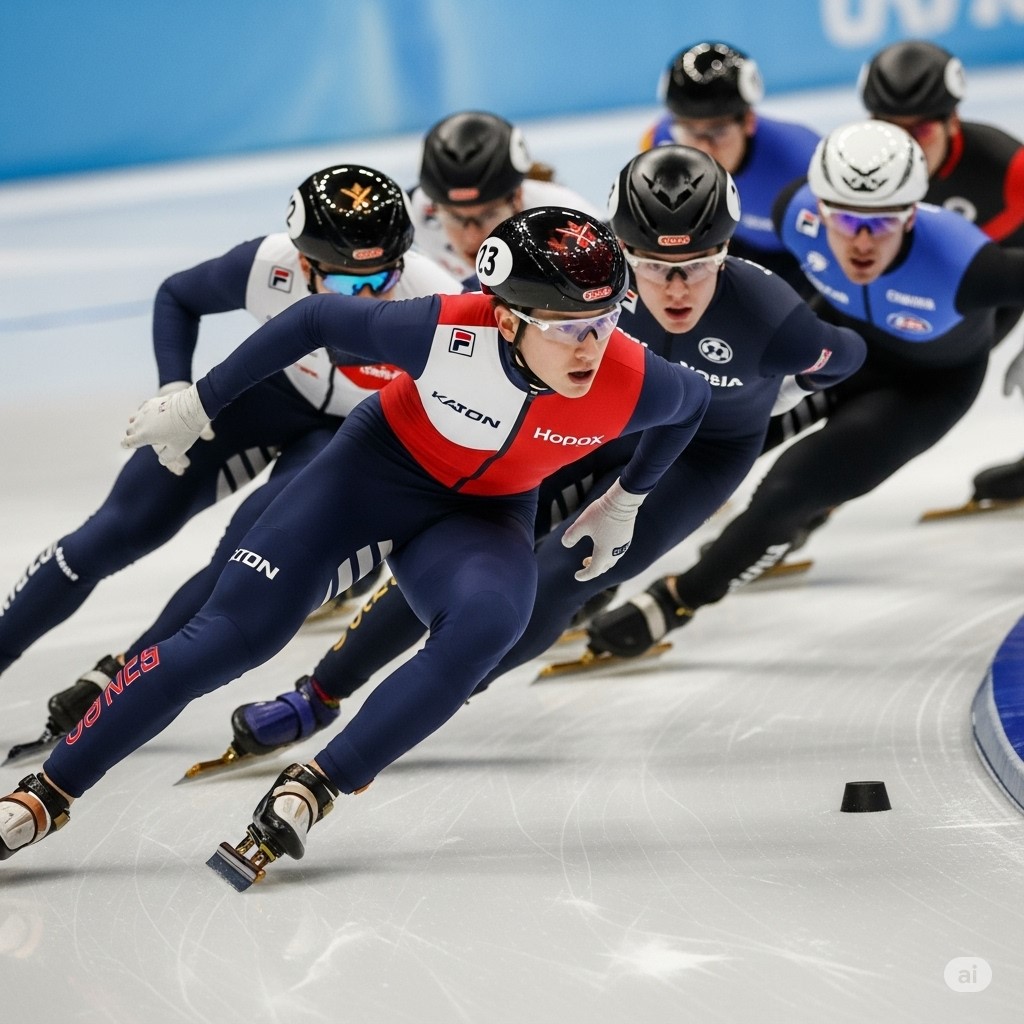
The Thrilling World of Short Track Speed Skating
Short Track Speed Skating is one of the fastest and most electrifying sports on ice. It combines strategy, speed, and precision in a compact oval rink. This sport has captured the attention of fans across the globe. From its humble origins to modern Olympic glory, Short Track Speed Skating has evolved into a dynamic international spectacle. Let us explore the rich history, global reach, amateur development, professional leagues, societal impact, and rules of this exhilarating sport.
The Origins and History of Short Track Speed Skating
Short Track Speed Skating traces its roots to the late 19th century. It originated as a variation of long track speed skating. While long track races took place outdoors on large ovals, short track races began on smaller indoor rinks. These indoor settings made the sport more accessible in urban areas. Skaters adapted to tight curves and required sharper technical skills.
In 1905, the first documented short track races were held in Canada and the United States. The sport grew in popularity in North America throughout the early 20th century. However, it remained overshadowed by long track skating for many decades.
A major turning point occurred in the 1960s and 1970s. Short Track Speed Skating began gaining international recognition. The International Skating Union (ISU) formalized competition rules in 1967. That move marked the sport’s transition into the global arena.
The sport made its Olympic debut as a demonstration event at the 1988 Calgary Winter Games. Its full inclusion came in 1992 at the Albertville Winter Olympics. Since then, Short Track Speed Skating has become a mainstay in the Winter Games.
Global Popularity and Where It’s Played
Short Track Speed Skating enjoys widespread popularity, particularly in East Asia and Europe. South Korea, China, Canada, and the Netherlands consistently dominate international competitions. These nations have established strong national programs that nurture talent from an early age.
In South Korea, Short Track Speed Skating is more than a sport. It is a cultural phenomenon. The country has produced numerous Olympic champions. Races often draw large television audiences. Skaters like Viktor Ahn and Choi Min-jeong have achieved superstar status.
China has invested heavily in winter sports infrastructure. As host of the 2022 Winter Olympics, China showcased its rising prowess in Short Track Speed Skating. Athletes like Wu Dajing have inspired a new generation.
Canada boasts a strong skating tradition. The country has developed a robust training system, producing top-tier skaters such as Charles Hamelin and Kim Boutin. Meanwhile, the Netherlands, traditionally dominant in long track, has expanded its presence in the short track discipline.
Beyond these powerhouses, countries like Hungary, Italy, Russia, and Japan have also achieved notable success. The sport is gradually expanding to regions like South America and Africa, although growth remains limited there.
Amateur Short Track Speed Skating Around the World
Amateur participation forms the backbone of Short Track Speed Skating. Youth development programs play a crucial role in feeding talent into elite pathways. Many children begin skating between ages four and eight. They start with basic skating skills before progressing to structured training.
In Canada and the U.S., local clubs are central to the sport’s amateur scene. These clubs offer developmental programs, local races, and regional championships. Skaters compete in age-based categories, gaining experience and exposure.
In South Korea and China, youth training is highly competitive. Specialized schools and sports academies identify talent early. These institutions provide rigorous training schedules alongside academic education.
Europe also offers robust amateur structures. In the Netherlands, youth skating receives strong community support. Clubs maintain close ties with national federations, ensuring smooth talent progression.
The ISU supports amateur development through its Development Program. This initiative provides funding, coaching education, and equipment grants to emerging nations. Countries like India, Brazil, and Kenya benefit from these programs, gradually establishing domestic structures.
School-level competitions are common in leading nations. South Korea holds interscholastic championships with nationwide participation. In Canada, the Canada Winter Games and provincial tournaments serve as stepping stones for young athletes.
University-level Short Track Speed Skating is especially prominent in North America. Collegiate teams participate in national and international events. Student-athletes often train with national programs, bridging the gap to professional ranks.
Professional Leagues and Competitive Circuits
Short Track Speed Skating lacks formal professional leagues like those seen in football or basketball. However, a well-established competitive circuit exists under the governance of the ISU.
The ISU Short Track Speed Skating World Cup is the sport’s premier seasonal competition. It consists of a series of events hosted in different countries. Athletes accumulate points across multiple distances. The skaters with the highest total points win the overall World Cup titles.
The ISU World Short Track Speed Skating Championships represent the sport’s most prestigious annual event. Winners receive global recognition and substantial endorsements.
Additionally, the Four Continents Championships offer skaters from the Americas, Asia, Africa, and Oceania a dedicated competition. European skaters compete in the European Short Track Speed Skating Championships.
While national federations pay stipends and bonuses, skaters also earn through sponsorship deals. Popular athletes often become brand ambassadors, further boosting the sport’s visibility.
Events like the Olympic Games remain the ultimate stage. Olympic success can transform a skater’s life, leading to financial security and national acclaim. Media coverage during the Games brings unparalleled exposure.
The lack of a full-time league structure means most elite skaters compete in seasonal events. Training remains centralized under national programs, with support from government sports ministries.
Political and Social Significance
Short Track Speed Skating carries deep political and social significance in several countries. In South Korea, it symbolizes national pride. Olympic victories in the sport have bolstered the country’s international image.
China views success in winter sports, including Short Track Speed Skating, as a measure of its development. Government funding has increased, aligning with national goals to become a winter sports powerhouse.
Tensions between countries sometimes spill onto the ice. Controversial disqualifications or race incidents have sparked diplomatic friction. Despite this, the sport often serves as a platform for unity. The shared respect among athletes can foster mutual understanding.
Socially, the sport promotes values like discipline, perseverance, and teamwork. Young skaters learn to handle pressure and overcome adversity. Communities rally around local clubs, creating bonds that extend beyond the rink.
Efforts to make the sport more inclusive are ongoing. Organizations are working to bring Short Track Speed Skating to underrepresented groups. Adaptive programs for athletes with disabilities are emerging, though still in early stages.
The sport also plays a role in gender equality. Women’s events feature alongside men’s in all major competitions. Female athletes receive equal recognition and opportunities.
Rules and Competition Format
Short Track Speed Skating races take place on a 111.12-meter oval track. The rink is typically installed inside an ice hockey arena. Standard races feature four to six skaters competing simultaneously.
Events vary by distance, commonly including 500m, 1000m, and 1500m races. Relay races occur over 3000m (women) and 5000m (men). Mixed gender relays have also been introduced.
Unlike long track, races are not time-trials. All skaters race together, making strategy crucial. Positioning, drafting, and overtaking are central tactics.
Races begin with a standing start. Skaters line up behind a starting line and await the referee’s signal. A false start results in a warning. Two false starts lead to disqualification.
Contact is common, but pushing, blocking, or impeding another skater is illegal. Infractions result in penalties or disqualifications. Referees monitor the race using multiple camera angles.
The top finishers in each heat advance to the next round. Finals determine the medalists. In relays, teams must exchange the lead skater by physical touch, usually a push.
Protective gear is mandatory. Skaters wear helmets, gloves, knee pads, neck guards, and cut-resistant suits. The risk of injury is high due to high speeds and close racing.
Photo finishes are used to resolve tight outcomes. The margin of victory can be milliseconds. Electronic timing systems ensure fairness.
Conclusion
Short Track Speed Skating combines breathtaking speed, razor-sharp tactics, and raw athleticism. Its rise from humble beginnings to Olympic glory reflects the dedication of athletes and organizers worldwide. Nations have embraced the sport, creating a global community that values competition and camaraderie.
Amateur systems continue to produce new talent, while elite circuits offer international acclaim. Politically and socially, the sport plays important roles in fostering pride and unity. As new generations take to the ice, the future of Short Track Speed Skating shines bright.
Whether watched from the stands or skated on frozen tracks, the sport delivers unforgettable moments. Few disciplines match its blend of intensity and finesse. That is why Short Track Speed Skating stands as a shining jewel in the crown of winter sports.