
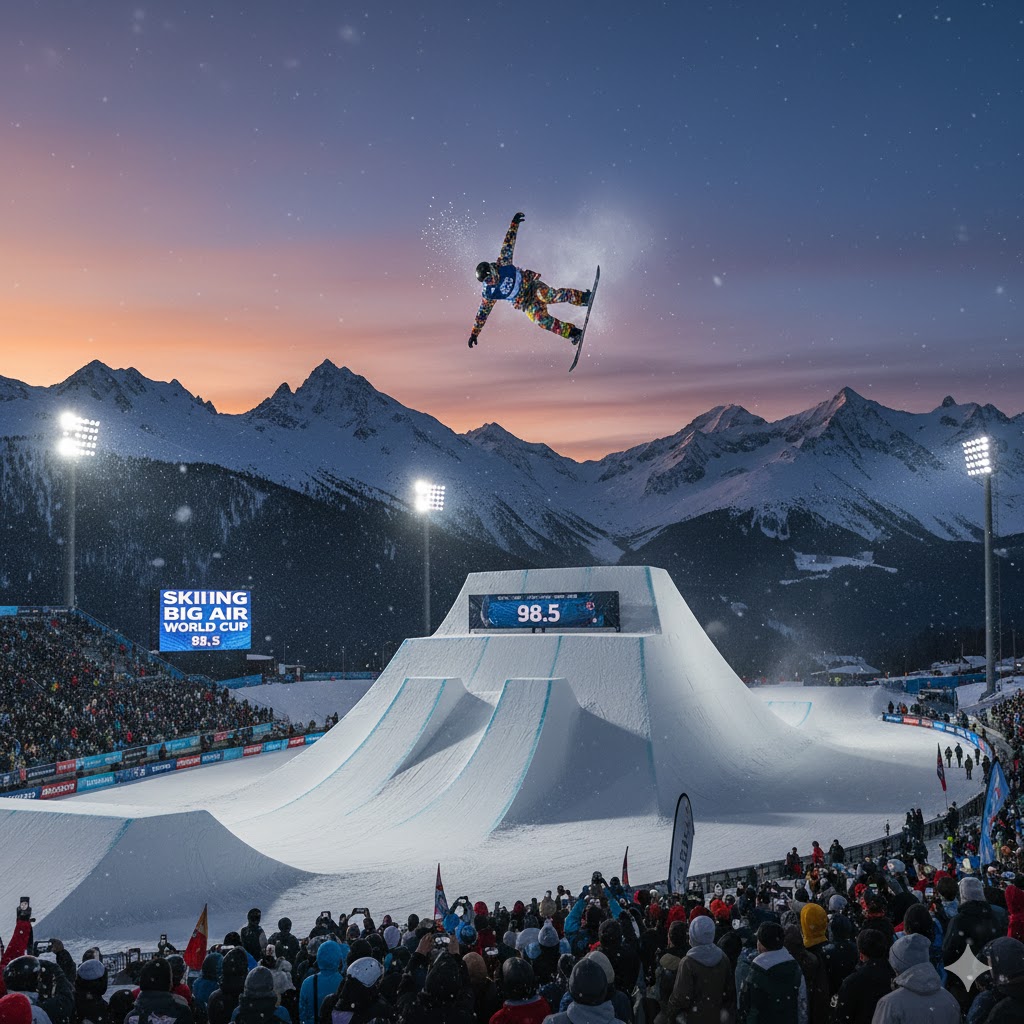
Skiing Big Air: The Ultimate Launch into Extreme Winter Sports
Skiing Big Air is one of the most electrifying and visually stunning events in winter sports. It blends courage, precision, and creativity into a single breathtaking moment. The sport challenges skiers to soar off massive jumps, twist and spin through the air, and land with flawless control. Over the past few decades, Skiing Big Air has evolved from a niche freestyle experiment into a globally recognized discipline that thrills millions. Fans love it for its intensity and its blend of art and athleticism. Competitors see it as the ultimate test of skill, bravery, and innovation.
The story of Skiing Big Air stretches back decades, tracing its roots through freestyle skiing culture, youth rebellion, and Olympic glory. Understanding its journey reveals why this gravity-defying spectacle captivates audiences worldwide.
The Origins and Early History of Skiing Big Air
The roots of Skiing Big Air began in the freeride and freestyle movements of the late 1960s and early 1970s. During this time, skiing was evolving beyond traditional alpine racing. Young skiers wanted freedom and creativity on the slopes. They began experimenting with aerial tricks, inspired by gymnastics and skateboarding.
In the early days, freestyle skiing events were informal. Enthusiasts gathered on mountain slopes, built makeshift jumps, and competed for fun and reputation. These pioneers performed flips and spins that shocked traditionalists but fascinated spectators. By the late 1970s, organized freestyle competitions began appearing in North America and Europe.
Aerial skiing soon became an official discipline. However, Big Air stood apart. It wasn’t about performing multiple jumps down a mogul course. It focused on one single, massive jump — the ultimate showcase of risk and precision. The earliest versions of Big Air competitions appeared in the 1980s at freestyle exhibitions and ski festivals.
In the 1990s, freestyle skiing gained structure. The International Ski Federation (FIS) began sanctioning events. The X Games, launched by ESPN in 1995, introduced Big Air skiing to a mainstream audience. It was a perfect fit for the event’s adrenaline-charged atmosphere. The first major Skiing Big Air competitions featured wild tricks and groundbreaking stunts that pushed the limits of physics.
Evolution into a Modern Sport
The sport continued to grow rapidly through the 2000s. Technological advances in skis, boots, and safety gear allowed athletes to attempt increasingly complex maneuvers. Twin-tip skis, which allow both forward and backward landings, revolutionized freestyle skiing. Ski parks around the world began constructing specialized Big Air ramps.
Video coverage and online sharing fueled the sport’s popularity even more. Clips of skiers launching skyward and performing gravity-defying tricks went viral. Fans could watch incredible jumps from around the world instantly. As social media grew, so did the sport’s audience. Skiing Big Air became one of the most-watched events at winter competitions.
The ultimate recognition came in 2018 when the International Olympic Committee added Big Air skiing to the Winter Olympics. It debuted at the 2022 Beijing Games, marking a milestone in the sport’s history. The inclusion validated decades of dedication from athletes who had long pushed for respect and recognition.
Global Popularity and Where Skiing Big Air Thrives
Today, Skiing Big Air enjoys immense popularity across continents. It thrives in regions with strong skiing traditions, advanced snow infrastructure, and vibrant youth culture.
North America
In the United States and Canada, the sport holds a dominant position in freestyle skiing communities. Colorado, Utah, British Columbia, and Quebec host world-class events. Resorts like Aspen, Whistler, and Park City feature purpose-built Big Air ramps. The Winter X Games in Aspen remains one of the most prestigious stages for athletes.
Europe
Europe’s influence is equally strong. Countries like Switzerland, Norway, Austria, and France produce many of the sport’s top competitors. The Air + Style competition, originally launched in Innsbruck, Austria, became a major international series that toured Europe and Asia. Scandinavia, in particular, has become a breeding ground for talent, combining skiing heritage with progressive freestyle culture.
Asia
In Asia, Skiing Big Air has grown rapidly since the 2018 Olympic announcement. China, Japan, and South Korea invested heavily in ski infrastructure and athlete development programs. The Shougang Big Air venue in Beijing, built for the 2022 Games, symbolizes this surge. It is now a year-round training and competition site for global athletes.
Oceania and South America
Australia and New Zealand, despite their smaller winters, have thriving freestyle scenes. New Zealand’s Cardrona Alpine Resort hosts summer training camps for elite Big Air skiers from around the world. South America, especially Chile and Argentina, also hosts events during the Northern Hemisphere’s off-season, allowing year-round training cycles.
How Amateur Skiing Big Air Is Played Worldwide
At the amateur level, Skiing Big Air provides an exciting gateway into freestyle skiing. Youth programs, school clubs, and community ski centers introduce young skiers to the fundamentals safely.
Youth and School Programs
Many ski resorts now offer freestyle training academies for children and teenagers. These programs focus on balance, control, and aerial awareness. Students begin on smaller jumps called “progression parks.” As they improve, they graduate to larger ramps. Coaches emphasize safety gear and responsible risk-taking.
High schools in ski-centric regions often sponsor competitive teams. These teams participate in regional Big Air contests or combined freestyle events. Students learn discipline, teamwork, and creativity. The structure mirrors traditional sports programs, but with an artistic twist.
Collegiate skiing also supports amateur Big Air competitions, especially in North America and Europe. University events showcase developing talent and sometimes serve as stepping stones toward professional careers.
Local Competitions
Community ski hills host amateur Big Air days that attract local riders. These grassroots contests celebrate style and fun rather than only technical difficulty. Judges reward creativity and smooth landings. Prizes often include ski gear or sponsor merchandise.
Social media also plays a role in amateur participation. Many young skiers post clips of their best jumps online. Friendly competition through video challenges has become common, connecting skiers from different countries.
Professional Leagues and Global Competitions
At the professional level, Skiing Big Air features structured competitions and world tours organized by major governing bodies and event promoters. These events attract elite athletes, corporate sponsorships, and massive audiences.
FIS Freestyle Ski World Cup
The International Ski Federation (FIS) manages the official World Cup circuit for freestyle skiing. Big Air became a permanent event within this tour, with points accumulating toward overall championships. Venues in Europe, North America, and Asia host annual World Cup Big Air competitions.
X Games
The Winter X Games remains the most iconic event in the sport. Held in Aspen, it combines high production value, global media coverage, and incredible athletic performances. Winning X Games gold is one of the sport’s top honors. Many of the most famous Skiing Big Air athletes made their names there.
Air + Style
Originally created by snowboard legend Shaun White, the Air + Style competition includes both skiing and snowboarding Big Air events. It has been hosted in cities like Innsbruck, Los Angeles, and Beijing. The event blends sport, music, and culture, creating a festival-like atmosphere that attracts thousands of fans.
Dew Tour and Red Bull Events
The Dew Tour and Red Bull-hosted competitions add diversity to the professional calendar. These events often feature unique jump designs, night competitions, and experimental scoring systems. Red Bull has sponsored some of the largest Big Air ramps ever built, including temporary structures in urban environments.
The Olympics and World Championships
The inclusion of Skiing Big Air in the Olympics elevated the sport to new prestige. Athletes now train specifically for the Games, representing their countries on the world’s biggest stage. The FIS World Championships also include Big Air categories, where national teams compete for gold.
The Social and Political Significance of Skiing Big Air
Beyond competition, Skiing Big Air carries social and political importance. It represents creativity, courage, and progress. The sport’s culture promotes individuality and freedom, making it stand out among more traditional athletic disciplines.
Social Impact
Skiing Big Air attracts a youthful, energetic audience that values authenticity. It has become part of modern youth culture, bridging sport, art, and lifestyle. Fashion, music, and film heavily influence the scene. Athletes often double as influencers, filmmakers, or designers.
The sport also inspires inclusivity. Women’s Big Air has grown rapidly, with female athletes achieving equal recognition. The Olympics and X Games now offer equal prize money and media coverage for men and women, helping promote gender equality in action sports.
Sustainability has also become part of the conversation. Many Big Air events use artificial snow or urban setups to reduce environmental impact on natural mountain ecosystems. The Beijing Olympic venue, built on a repurposed industrial site, symbolized this modern approach.
Political Dimensions
Politically, Skiing Big Air highlights international collaboration and friendly competition. Nations with vastly different climates and cultures come together through the sport. Government investment in ski infrastructure often reflects broader goals, such as tourism growth or youth engagement.
In some countries, hosting Big Air events demonstrates technological innovation and global presence. China’s rapid development of Big Air facilities before the 2022 Olympics showed how sport can align with national ambitions. Similarly, European nations use the sport to sustain mountain economies and cultural heritage.
The Rules and Scoring of Skiing Big Air
While the spectacle may appear chaotic, Skiing Big Air follows clear and precise rules. Every competition emphasizes safety, fairness, and creativity.
The Setup
Each event features a massive ramp, typically 40 to 60 feet high, with a steep in-run leading to the jump. The takeoff angle and landing slope are carefully engineered. Competitors get several practice runs before the event.
The Run
Athletes perform one jump per round. They accelerate down the ramp, launch off the kicker, and perform aerial tricks before landing. Competitors aim for maximum height, distance, and technical difficulty while maintaining style and control.
Scoring Criteria
Judges score each jump based on several key factors:
- Difficulty: The complexity of the trick, including spins, flips, and grabs.
- Execution: Smoothness, body control, and stability throughout the jump.
- Amplitude: The height and distance achieved.
- Landing: A clean, balanced finish is crucial.
- Style: Creativity and flow often separate the best from the rest.
Scores typically range from 0 to 100. The best single jump or the average of multiple runs may determine final rankings, depending on event rules.
Safety Regulations
All athletes must wear helmets and often back protectors. Event organizers inspect the jump structure daily. Weather conditions are closely monitored. If wind or visibility creates danger, runs are postponed.
Competition Format
Most competitions include qualification rounds followed by finals. The top scorers advance to later stages. In major events like the X Games or Olympics, skiers may have three runs in the final, with the best two counting toward their total score.
Training, Technique, and Equipment
Success in Skiing Big Air requires precision training and specialized equipment. Athletes spend years mastering aerial awareness and body control.
Training Methods
Off-season training often includes trampolines and foam pits. These allow skiers to practice spins and flips safely before taking them to snow. Water ramps also help athletes perfect new tricks without the risk of hard landings.
During the winter, skiers train on snow parks with progressively larger jumps. Video analysis helps refine technique. Strength and conditioning programs focus on leg power, core stability, and balance. Mental preparation is equally critical since fear management plays a huge role in high-risk sports.
Equipment
Modern Big Air skis are lightweight yet durable, featuring twin tips and reinforced edges. Boots and bindings provide both flexibility and strong support. Ski suits are designed for aerodynamics and protection.
GoPro cameras and motion sensors have become training tools, providing data for coaches and athletes. Equipment sponsors like Atomic, Salomon, and Red Bull continuously innovate gear to enhance performance and safety.
The Future of Skiing Big Air
Looking ahead, Skiing Big Air shows no signs of slowing down. Its global following continues to expand thanks to social media, livestreaming, and youth participation.
Technological Growth
Advancements in virtual reality and drone filming will likely redefine how fans experience the sport. Augmented reality training tools are already being tested. These innovations help skiers perfect timing and body rotation virtually before hitting the snow.
Expanding Opportunities
Countries without traditional winter climates are now investing in indoor ski facilities. These venues allow Big Air training year-round, broadening access for athletes worldwide. This democratization of the sport could lead to new stars emerging from unexpected regions.
Olympic Influence
The Olympic platform ensures ongoing investment and visibility. Young skiers dream of Olympic Big Air gold, motivating greater participation. Future Games will likely feature even more complex tricks, pushing the limits of human performance.
Sustainability Focus
As environmental awareness grows, Big Air events may increasingly use eco-friendly technologies. Renewable energy for snow production and recycled materials for jump construction are becoming priorities. The sport’s leaders are committed to maintaining both excitement and responsibility.
Conclusion
Skiing Big Air represents the bold heart of modern winter sports. It celebrates imagination, courage, and technical mastery. From its rebellious freestyle origins to its Olympic spotlight, the sport has carved a unique path. Its blend of athletic skill and artistic flair captivates both participants and spectators.
Around the world, young athletes take flight every winter, inspired by the thrill of soaring through the cold air. Whether in a small community event or under Olympic lights, they embody the fearless spirit that defines this remarkable sport.
Skiing Big Air will continue to rise, carrying with it a message of creativity, equality, and the boundless pursuit of excellence.