
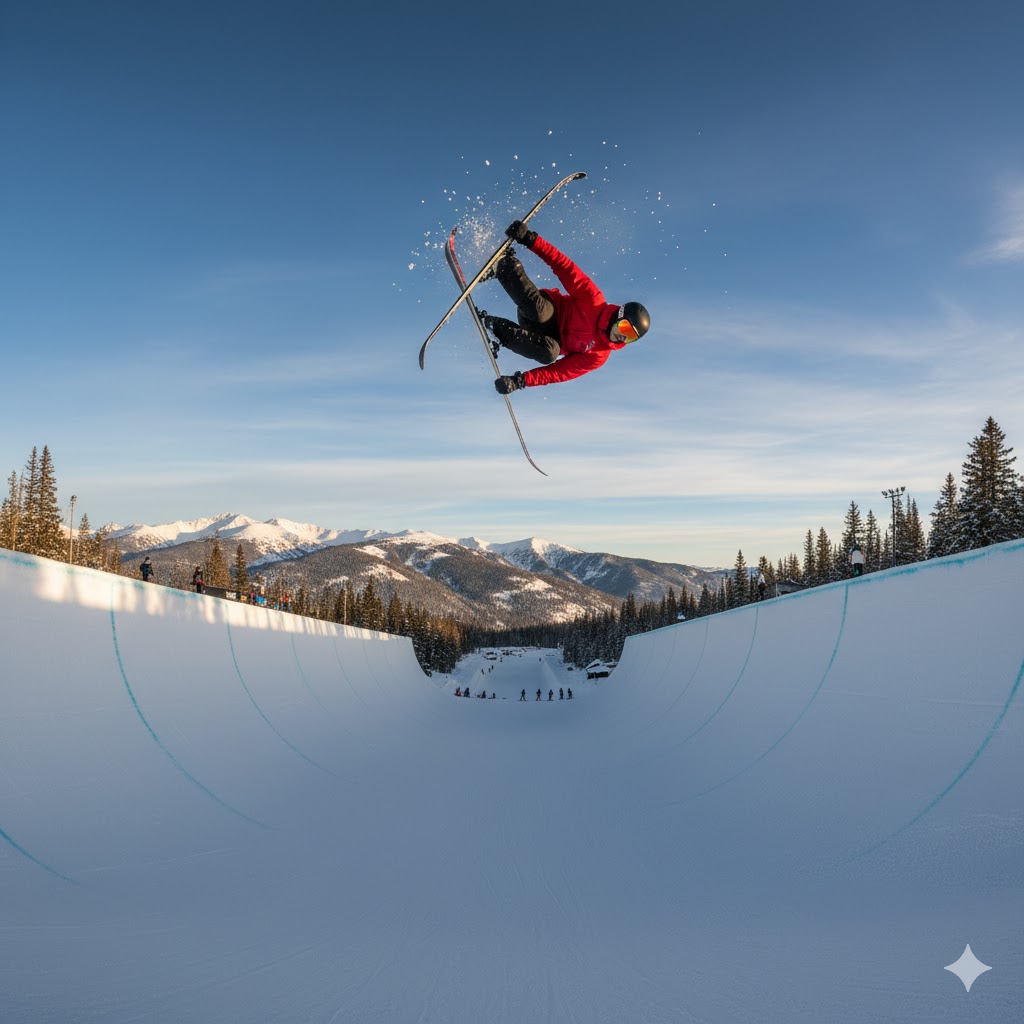
Skiing Superpipe: The Ultimate Blend of Skill, Style, and Airborne Brilliance
Skiing Superpipe is one of the most electrifying and visually stunning disciplines in winter sports. It combines speed, balance, and creativity with jaw-dropping aerial maneuvers. The sight of athletes soaring high above icy walls while twisting through the air captures the imagination of millions. In this post, we’ll explore everything about Skiing Superpipe—from its humble beginnings and rise to fame to the professional leagues, youth involvement, and its social and political impact. You’ll also learn the detailed rules that govern the sport and why Skiing Superpipe has become a symbol of modern snow culture.
The Origin and History of Skiing Superpipe
The story of Skiing Superpipe begins in the late 1980s, rooted in the freestyle skiing movement. Freestyle skiing itself emerged as a rebellious offshoot of traditional alpine skiing. Skiers wanted to express themselves creatively rather than just race down mountains. As snowboarding gained popularity in the 1980s, halfpipe events became a staple in snowboarding competitions. Skiers soon followed, adapting the concept to their sport.
The first halfpipes were rough and inconsistent, often carved by hand or snowcats. These early versions lacked the precision of today’s sculpted Superpipes. However, the enthusiasm of freestyle skiers transformed these makeshift courses into proving grounds for aerial creativity. Skiing halfpipe competitions appeared in the Winter X Games in 2002, cementing the discipline’s growing influence.
The term “Superpipe” refers to a larger, more technical version of the traditional halfpipe. Superpipes have higher walls—typically around 22 feet—and a longer, smoother transition zone. This design allows skiers to gain more speed and perform bigger tricks safely. The first official Superpipe competition for skiers was held at the 2003 Winter X Games in Aspen, Colorado. That event marked a turning point, showcasing the sport’s explosive potential and global appeal.
Over time, the sport evolved rapidly. Athletes began incorporating tricks borrowed from snowboarding, gymnastics, and aerial skiing. Spins, flips, and grabs became increasingly complex. Equipment technology also advanced—lighter skis, stronger bindings, and more flexible boots allowed greater control. By the late 2000s, Skiing Superpipe had grown from a niche pursuit into a mainstream winter spectacle.
Global Popularity and Where It’s Played
Today, Skiing Superpipe enjoys worldwide popularity, particularly in countries with well-developed winter sports cultures. North America and Europe remain the sport’s main hubs. The United States, Canada, Switzerland, France, and Norway host numerous Superpipe competitions each winter. These nations have built world-class ski resorts that attract both amateurs and professionals.
Aspen’s Buttermilk Mountain in Colorado and Breckenridge are two of the most famous Superpipe venues in the world. They host international events like the Winter X Games and Dew Tour. In Europe, Laax in Switzerland and Tignes in France feature meticulously crafted Superpipes that draw top athletes from around the globe.
Asia has also embraced Skiing Superpipe. Japan and China have invested heavily in ski infrastructure, aiming to nurture talent ahead of global competitions like the Winter Olympics. The 2022 Beijing Winter Olympics featured a state-of-the-art Superpipe at Genting Snow Park, inspiring a new generation of Asian freestyle skiers.
In the Southern Hemisphere, New Zealand’s Cardrona Alpine Resort and Australia’s Perisher Resort offer world-class Superpipes. Their opposite winter seasons make them ideal training grounds during the northern off-season. Many professionals travel there annually to maintain year-round training schedules.
Social media has further fueled the sport’s popularity. Platforms like Instagram and YouTube allow athletes to showcase their tricks, tutorials, and behind-the-scenes content. Fans worldwide can watch clips within seconds of a competition, helping the sport maintain year-round engagement.
Amateur Skiing Superpipe Around the World
Skiing Superpipe is not just for elite athletes—it thrives at the grassroots level. Across the world, youth programs, schools, and local clubs encourage young skiers to learn the art of freestyle. These amateur initiatives play a vital role in the sport’s growth and sustainability.
In the United States, ski schools in Colorado, Utah, and Vermont offer dedicated freestyle training programs for kids. Many resorts build smaller “mini pipes” where beginners can safely practice their first jumps. Coaches emphasize fundamentals like balance, edge control, and aerial awareness. These early lessons form the foundation for advanced Superpipe skills.
High school and college ski clubs have also adopted Superpipe as a competitive category. The U.S. Collegiate Ski and Snowboard Association (USCSA) includes freestyle events, giving young athletes opportunities to compete and progress toward professional ranks. Regional amateur circuits such as the Rocky Mountain Freestyle Series and the Vermont Open give local athletes valuable exposure.
In Canada, Freestyle Canada runs youth development programs designed to identify and nurture future stars. Athletes progress through levels of competition, from local to provincial to national championships. These events emphasize safety, sportsmanship, and creativity.
Europe follows a similar model. In France, the Fédération Française de Ski supports freestyle training centers across the Alps. Norway’s ski federation invests heavily in youth development, producing some of the world’s most stylish and technically skilled athletes.
Japan has also made remarkable strides. With its deep snow and strong ski culture, Japanese youth programs have flourished. Coaches there focus on technique and precision, values deeply rooted in Japanese sports tradition.
Schools and community ski clubs worldwide recognize the value of freestyle skiing. It teaches resilience, courage, and self-expression—skills that extend beyond the snow. As a result, amateur Skiing Superpipe has become a gateway to lifelong engagement with winter sports.
Professional Leagues and Global Competitions
Professional Skiing Superpipe has developed into a highly structured and respected sport. It’s governed by several international bodies and supported by major events that showcase the world’s best athletes.
The Winter X Games, held annually in Aspen, remains the sport’s crown jewel. It introduced Skiing Superpipe to a global audience and continues to define its competitive standards. The X Games’ format rewards amplitude, creativity, and technical difficulty. Athletes like Tanner Hall, Simon Dumont, and David Wise became household names through their performances there.
The FIS Freestyle Ski World Cup includes a Superpipe discipline, providing a structured, international circuit for elite athletes. This tour features stops across North America, Europe, and Asia. Competitors earn points toward overall standings, leading up to the World Championships.
Another major event is the Dew Tour, which blends sports and culture with music, lifestyle, and live entertainment. It attracts top athletes and large audiences, enhancing the sport’s mainstream visibility.
The Winter Olympics gave Skiing Superpipe its ultimate validation. The discipline made its Olympic debut at the 2014 Sochi Games. David Wise and Maddie Bowman, both from the United States, won the inaugural gold medals. The Olympic platform elevated the sport’s credibility and inspired new nations to invest in training programs.
Other notable events include the European Freeski Open in Laax and the New Zealand Winter Games at Cardrona. Both competitions attract a global mix of athletes and push the technical limits of the sport.
Professional skiers often balance multiple tours, sponsorships, and film projects. Brand sponsorships from companies like Red Bull, Monster Energy, and Atomic provide financial support and media exposure. These partnerships help athletes sustain their careers and inspire future generations to pursue the sport professionally.
Political and Social Significance of Skiing Superpipe
Skiing Superpipe represents more than athletic competition—it carries deep social and political significance. The sport’s roots in rebellion and creativity echo broader themes of freedom and individuality.
Freestyle skiing emerged as a response to rigid alpine traditions. Skiers wanted to express personality rather than conform to strict racing rules. This countercultural attitude mirrored youth movements of the late 20th century, where self-expression and innovation were prized over conformity.
Socially, the sport promotes inclusion and diversity. Unlike traditional racing, Superpipe rewards creativity over pure speed. That approach allows athletes from various backgrounds to shine based on skill, not just resources or heritage. As a result, the community is often more open-minded and supportive than in older skiing disciplines.
Skiing Superpipe has also influenced urban youth culture. Its imagery—bold colors, daring tricks, and energetic music—parallels skateboarding and BMX scenes. Many skiers cross-train in those sports, blurring the lines between winter and summer action sports.
Politically, the inclusion of Skiing Superpipe in the Olympics reflected a shift in how global institutions view youth culture. The International Olympic Committee sought to modernize its appeal by embracing action sports. This move attracted younger audiences and diversified the Olympic lineup.
Environmental awareness is another significant aspect. Many Superpipe athletes advocate for climate action. Since skiing depends on snow, they’ve become vocal about the effects of global warming. Organizations like Protect Our Winters (POW), supported by athletes, promote sustainability and climate activism within the winter sports community.
In mountain towns, Skiing Superpipe drives tourism and economic growth. Resorts hosting major events attract spectators, sponsors, and media coverage. These benefits often persuade local governments to invest in sports infrastructure and youth programs, strengthening community bonds.
Rules of Skiing Superpipe
Although Skiing Superpipe looks wild and spontaneous, it follows a detailed set of rules designed to ensure fairness and safety.
A Superpipe typically measures 22 feet high, with a slope angle between 16 and 18 degrees. The walls are symmetrical, and the length ranges from 160 to 200 meters. Each skier makes two or three runs, depending on the competition format. Judges evaluate each run based on five main criteria: amplitude, difficulty, variety, execution, and progression.
Amplitude measures how high the skier gets above the lip of the pipe. Bigger air earns higher scores, but control and landing are crucial.
Difficulty evaluates the complexity of tricks. Spins, flips, and grabs are categorized by rotation degrees and combinations.
Variety ensures athletes mix up their tricks rather than repeating the same moves. Judges want to see creativity and balanced runs.
Execution focuses on how cleanly the skier performs. Smooth transitions, solid landings, and symmetrical form increase scores.
Progression rewards innovation. New tricks or unique combinations receive bonus points for advancing the sport.
Competitors must stay within the pipe’s boundaries. If a skier falls, they can continue the run, but deductions occur. Safety gear—helmet, goggles, and appropriate padding—is mandatory. Competitors must also adhere to FIS safety standards for equipment and attire.
Scoring typically uses a 100-point scale. The best single run usually counts toward the final result, though some formats combine scores. Tie-breakers depend on highest single-judge marks or best trick scores.
Each event begins with qualifying rounds, followed by finals featuring the top performers. In the finals, skiers push boundaries, often attempting tricks never seen before. Spectators experience a thrilling mix of danger and artistry in every run.
For younger or amateur divisions, rules are modified for safety. Smaller pipes and softer landings allow progression without high risk. Coaches supervise closely, ensuring proper technique before advancing to full-scale Superpipe courses.
The Spirit and Culture of Skiing Superpipe
Beyond competition, Skiing Superpipe embodies a unique culture that values creativity, respect, and community. Athletes share a deep camaraderie. While they compete fiercely, they also celebrate each other’s successes. It’s common to see rivals cheering at the bottom of the pipe after a massive trick.
This spirit reflects the sport’s freestyle roots. Athletes view the pipe as a canvas for personal expression. Each run tells a story—a blend of artistry and athleticism. Style matters as much as difficulty. Judges and fans alike appreciate runs that flow seamlessly and showcase individuality.
Music plays a major role, too. Events pulse with high-energy soundtracks, matching the intensity of each run. The combination of rhythm, motion, and airborne spectacle creates an atmosphere unlike any other winter sport.
Film and photography also shape the culture. Ski movies and social media edits help athletes share their creativity with the world. Productions like Level 1, Matchstick Productions, and Teton Gravity Research highlight the artistry of the sport while inspiring global audiences.
The Future of Skiing Superpipe
The future of Skiing Superpipe looks bright. Technological advancements continue to enhance performance and safety. Better grooming machines produce perfectly shaped pipes. Modern skis allow greater flexibility, reducing injury risks. Virtual reality training tools help athletes visualize and refine tricks before hitting the snow.
Women’s participation continues to rise. Female athletes like Cassie Sharpe and Eileen Gu have shattered records and stereotypes, inspiring young girls worldwide. Equal prize money and increased media coverage have made the sport more inclusive than ever.
Sustainability is another growing focus. Resorts are implementing eco-friendly snowmaking and energy practices to reduce their carbon footprints. Athletes, sponsors, and fans increasingly demand responsible event management.
Global expansion is on the horizon. Countries like China, South Korea, and Russia continue to invest heavily in freestyle skiing infrastructure. As interest grows, we can expect more diverse talent pools and exciting rivalries on the world stage.
At the same time, digital media ensures year-round engagement. Fans no longer wait for winter to enjoy content. Social platforms keep the community active, connected, and inspired throughout the year.
Conclusion
Skiing Superpipe stands as one of the most dynamic sports on Earth. It merges athleticism, creativity, and courage in a breathtaking display of human potential. From its rebellious origins to its Olympic glory, the sport continues to evolve and inspire. Whether performed by young beginners in small local pipes or by professionals flying 20 feet above the snow, the essence remains the same—freedom, artistry, and passion.
Across continents, Skiing Superpipe connects people who share a love for challenge and expression. It’s not just about tricks or medals; it’s about pushing boundaries and embracing individuality. As the sport continues to grow, one thing is certain—the world will keep watching in awe as skiers defy gravity, spin through the sky, and land with unmatched grace.