
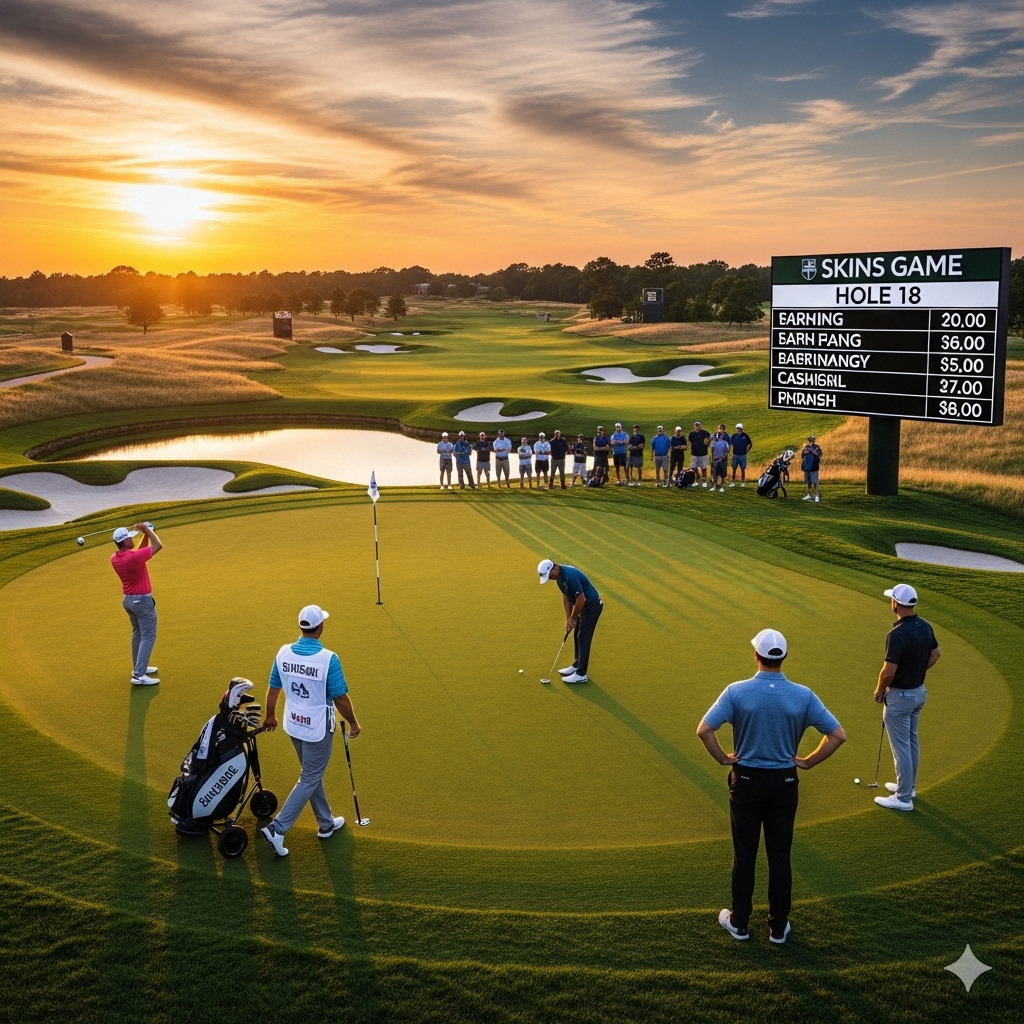
Skins Game Golf: A Unique Twist on Traditional Golf
Golf has always been a sport of skill, patience, and strategy. Yet one format continues to capture attention with its excitement and unpredictability—Skins Game Golf. Unlike traditional stroke play or match play, this format focuses on individual holes rather than total scores. That single difference adds drama and intensity to every shot. Fans and players alike celebrate it for its competitiveness and entertainment value. In this article, we will dive deep into the origins, growth, amateur and professional play, cultural impact, and the rules of Skins Game Golf.
The Origins of Skins Game Golf
The roots of Skins Game Golf trace back to North America. Although the exact date is debated, the format gained popularity in the 1950s and 1960s among casual players. Friendly wagers often inspired the game. Groups of golfers would assign a dollar value, or “skin,” to each hole. Winning the hole meant winning that skin, and the pressure mounted with every swing.
By the late 20th century, professional golfers embraced the format in exhibition matches. The first televised Skins Game took place in 1983 in Arizona. That broadcast introduced millions to this fast-paced version of golf. Legendary names such as Jack Nicklaus, Arnold Palmer, Tom Watson, and Gary Player competed in that inaugural event. The excitement of each hole being a fresh contest thrilled fans.
Unlike traditional tournaments, Skins Game Golf created a sense of suspense with every tee shot. Golfers knew that even if they struggled early, one great hole could shift momentum. This format made the game more accessible to casual fans who often found stroke play tournaments slow.
The Rise in Popularity Globally
Skins Game Golf soon spread far beyond the United States. As golf itself became more global, so did interest in alternative formats. Television coverage and global exhibitions in the 1980s and 1990s fueled its growth. Countries like Canada, Japan, South Korea, and the United Kingdom started hosting Skins matches.
Fans enjoyed the shorter, action-packed nature of these contests. Unlike long four-day tournaments, skins competitions delivered immediate excitement. The possibility of multiple players tying and carrying skins to the next hole kept viewers on edge.
By the 2000s, golf clubs across Europe and Asia adopted the skins format for local events. It appealed to recreational golfers who wanted fun competition without needing professional-level endurance. Today, you can find Skins Game Golf being played on nearly every continent. From small-town clubs in Scotland to high-tech courses in Dubai, the format continues to thrive.
Amateur Play: Skins in Schools and Communities
Amateur golf has long embraced the skins format. In local clubs, friends often organize weekend skins matches. The stakes vary—sometimes it is just for bragging rights, other times for small prizes. This flexibility makes it ideal for casual groups.
Youth programs have also integrated Skins Game Golf into their teaching strategies. Junior golfers benefit from the hole-by-hole focus. Instead of getting discouraged by a bad round, they learn to regroup quickly. Coaches highlight this as a key skill, both on the course and in life.
High schools in North America often include skins competitions in team practices. It adds variety and keeps players motivated. In Europe, golf academies use the format to sharpen competitive instincts. Asia has seen a rise in junior skins events, particularly in countries like South Korea and Japan where golf is booming.
Community tournaments frequently feature skins divisions. These events attract players of all skill levels. Beginners feel less pressure because each hole resets the challenge. Experienced golfers enjoy the opportunity to take risks. That blend of inclusivity and excitement explains why the format has such staying power at the amateur level.
Professional Leagues and Competitions
Professional golf organizations recognized the value of Skins Game Golf early. The PGA Tour popularized it through televised exhibition events. Although the official “Skins Game” ended in 2008, the format remains alive in many charity tournaments and special showcases.
Asian tours, particularly in Japan and South Korea, continue to host professional skins events. These competitions often draw large crowds eager for faster-paced play. The European Tour has also experimented with skins-style scoring in team events.
In addition to official tournaments, many professional golfers participate in skins matches for charity. These events raise significant funds while entertaining audiences. Corporate sponsors favor the format because it guarantees tension and excitement.
Golf’s global reach ensures that skins contests will remain a staple. Fans know that each hole is an opportunity for drama. Players appreciate the balance between competition and showmanship. Even though the major tours focus on traditional formats, the influence of skins remains undeniable.
Political and Social Significance
Beyond the fairways, Skins Game Golf holds cultural and social weight. The original televised Skins Games in the 1980s helped democratize golf viewing. They offered casual fans a format easier to follow. This broadened the sport’s appeal at a time when golf sought to grow beyond elite circles.
Politically, golf has often been tied to diplomacy and international goodwill. Skins matches between players of different nations highlighted the sport’s unifying power. Exhibition matches featuring golfers from the U.S., Europe, and Asia fostered connections that went beyond the course.
Socially, skins competitions continue to play a role in community building. Charity skins matches bring together celebrities, athletes, and local figures. These events raise awareness for causes while giving fans a chance to see their heroes in a relaxed setting.
Furthermore, the format emphasizes resilience and mental strength. Each hole represents a fresh opportunity, a lesson applicable in daily life. Many coaches and mentors use this principle when teaching young athletes about persistence and positivity.
The Rules of Skins Game Golf
Understanding the rules of Skins Game Golf is essential for both newcomers and seasoned players. The core idea is straightforward, but the details matter.
Each hole has a designated value, called a skin. The value can be money, points, or prizes. Players compete to win each hole outright. If one golfer scores lower than the others, they win the skin for that hole.
If two or more golfers tie, the skin carries over to the next hole. This creates growing stakes and rising tension. For example, if three holes in a row end in ties, the fourth hole could be worth four skins.
The match continues until all holes are played. In some versions, sudden-death playoffs decide unclaimed skins.
A key difference from traditional formats is the emphasis on winning individual holes rather than overall score. A golfer who plays inconsistently can still succeed by winning a few crucial holes.
Common variations exist. Some groups assign larger values to later holes to build drama. Others use handicap systems to make play fairer for beginners. Regardless of variation, the excitement remains the same.
Strategy in Skins Play
Strategy plays a major role in Skins Game Golf. Because each hole is a new battle, players often take more risks. Attempting an aggressive shot might backfire in stroke play, but in skins, it can pay off big.
Golfers must constantly assess risk versus reward. A birdie could secure several carried-over skins, but a mistake could hand the hole to a rival. This decision-making element adds depth to the competition.
Psychological pressure is also magnified. The knowledge that a single putt might secure multiple skins intensifies focus. Fans enjoy watching professionals handle these high-stakes moments.
The Future of Skins Game Golf
Looking ahead, Skins Game Golf appears poised for continued growth. The rise of short-form entertainment matches perfectly with the format’s pace. Golf streaming platforms are exploring ways to showcase skins competitions for younger audiences.
Emerging markets like India, China, and South America are beginning to adopt skins play in local tournaments. As golf’s popularity expands, skins will likely remain a key attraction.
Technology may also enhance the experience. Virtual reality and interactive broadcasts could allow fans to follow every shot in real time. Imagine tracking a skins match live and predicting outcomes hole by hole.
The format’s adaptability ensures its relevance. Whether played for fun among friends, used in junior programs, or featured in professional exhibitions, Skins Game Golf continues to excite players and fans alike.
Conclusion
Skins Game Golf has carved a unique identity within the broader sport of golf. From its informal beginnings among friends to its televised showcases featuring legends, it has grown into a global phenomenon. Amateur players embrace it for its fairness and fun, while professionals use it to entertain and inspire.
The format holds cultural importance as well, strengthening communities and contributing to charitable causes. Its rules create drama, its strategies challenge the mind, and its accessibility ensures ongoing popularity.
In every sense, Skins Game Golf embodies the thrill of competition and the spirit of resilience. Each hole brings a fresh chance at victory, reminding players and fans alike that the game is never truly over until the final putt drops.