
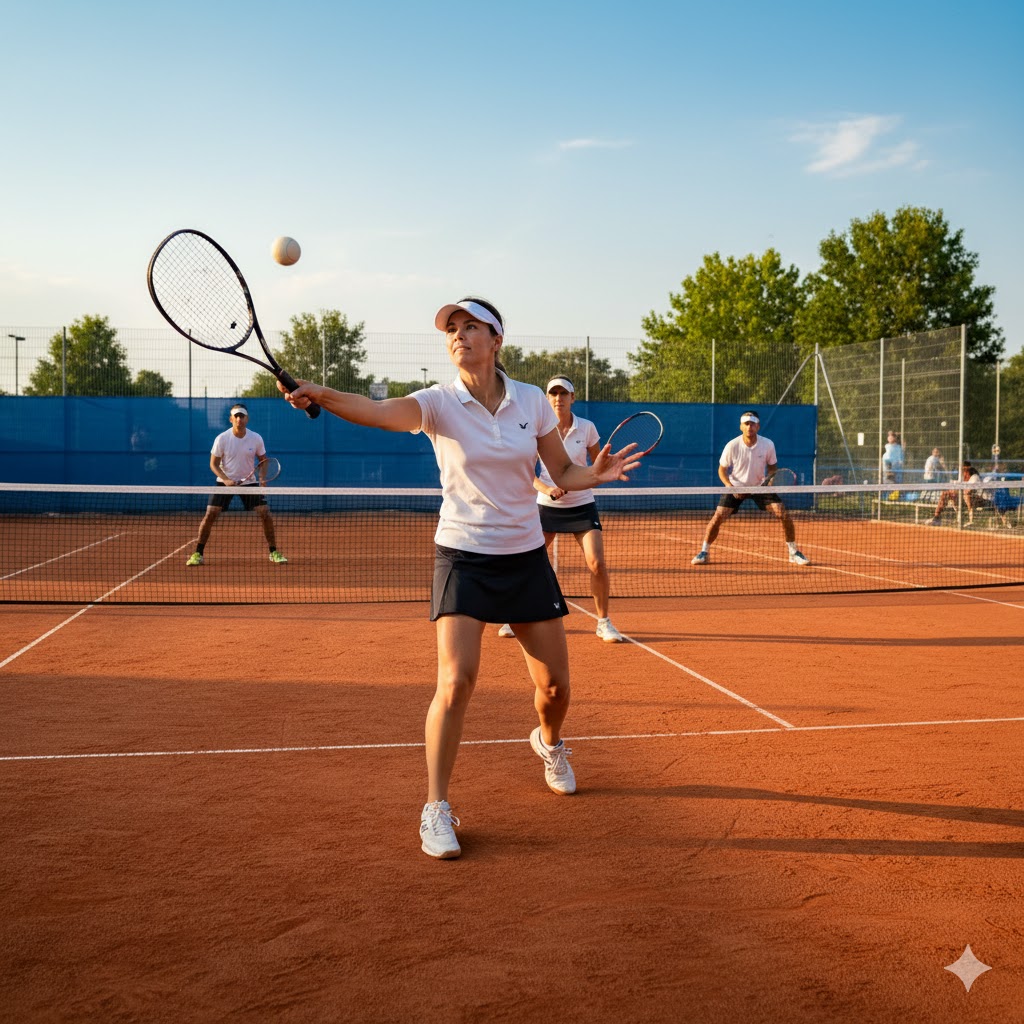
Soft Tennis is a fascinating racquet sport that blends agility, strategy, and finesse. Originating in Asia, it has evolved into a game enjoyed by millions worldwide. Though it shares similarities with traditional lawn tennis, Soft Tennis stands apart due to its distinctive ball, rules, and playing style. Players use a softer rubber ball instead of a hard pressurized one, leading to longer rallies and emphasizing control over raw power. The sport has grown far beyond its early roots, influencing schools, amateur leagues, and professional tournaments across the globe.
The Origin and History of Soft Tennis
The history of Soft Tennis dates back to the late 19th century. The sport began in Japan around 1884 when lawn tennis was first introduced from Britain. However, Japan’s humid climate caused the original tennis balls to deteriorate quickly. In response, Japanese players developed a rubber ball that could withstand the environment better. This simple innovation sparked the birth of Soft Tennis.
In the early 1900s, the sport spread through Japan’s educational system. Schools and universities adopted it as a physical education activity. Because the softer ball reduced the risk of injury, it became ideal for students. By 1920, tournaments were organized across Japan, and Soft Tennis started developing its unique identity separate from lawn tennis. The Japanese Soft Tennis Federation was established in 1923 to oversee official rules and competitions.
Over the next few decades, the sport continued to gain popularity. It became an official event in the Japan National Sports Festival in 1932. After World War II, Soft Tennis spread rapidly throughout East Asia, particularly in Korea, Taiwan, and China. The sport’s simplicity and accessibility made it popular in schools and community clubs. By the 1970s, Soft Tennis was being played across much of Asia, leading to the creation of the Asian Soft Tennis Federation in 1975.
A major milestone came in 1992 when the International Soft Tennis Federation (ISTF) was formed. This organization helped standardize rules globally and promote international competition. Two years later, Soft Tennis made its debut at the Asian Games in Hiroshima. The inclusion of the sport in a major international event marked its growing legitimacy and reach. Today, Soft Tennis continues to evolve, combining tradition with innovation.
The Global Popularity of Soft Tennis
While Soft Tennis originated in Japan, it has become a global sport with millions of participants. Asia remains the core region, but its influence has expanded to other continents. Countries such as South Korea, Taiwan, Thailand, and the Philippines have strong national programs and competitive leagues. In these nations, the sport is part of school curricula, and many universities sponsor competitive teams.
In South Korea, Soft Tennis is taken very seriously. The country has produced some of the best players in the world and consistently performs well in international tournaments. Taiwan also boasts an advanced training infrastructure, hosting multiple international events. Both nations view the sport as an opportunity for athletic development and international recognition.
Soft Tennis has also made progress in Europe. Countries such as Germany, France, and Russia have embraced the sport through national federations. In recent years, several European championships have attracted new audiences. The introduction of Soft Tennis into European schools has created grassroots enthusiasm that continues to grow.
In Africa and the Americas, the sport is still developing but gaining attention. Nations like Kenya and Brazil have begun forming local federations and hosting regional tournaments. The soft rubber ball and lighter equipment make the sport affordable and accessible, allowing it to spread in areas where traditional tennis can be expensive to maintain. Global participation now includes more than 30 countries, reflecting Soft Tennis’s steady expansion beyond its Asian roots.
Amateur Soft Tennis Around the World
Amateur Soft Tennis plays a vital role in sustaining the sport’s global growth. The amateur scene often begins at the school level. Many countries introduce the sport to children as a fun and safe way to develop coordination, teamwork, and discipline. Because the rubber ball is lighter, young players can practice without fear of injury. This accessibility helps promote lifelong participation.
In Japan, nearly every school offers Soft Tennis as part of physical education. Junior and high school tournaments are fiercely competitive, with thousands of teams vying for national titles each year. The All-Japan Junior High School Soft Tennis Championship and the All-Japan High School Tournament are key steppingstones for young athletes hoping to reach professional levels.
South Korea’s youth system mirrors Japan’s structure. Students participate in club teams supported by schools or local governments. National youth tournaments allow top players to advance into university or professional circuits. Taiwan also invests heavily in youth programs, producing some of the most technically gifted players in Asia.
In Europe, development programs focus on introducing the sport to beginners. Federations in Germany and France often collaborate with schools to provide coaching clinics. These initiatives help attract students who might not have access to traditional tennis facilities. The emphasis on teamwork and sportsmanship has made Soft Tennis appealing to educators.
Amateur leagues for adults thrive as well. Local clubs organize recreational matches, leagues, and regional tournaments. The flexibility of the sport allows people of all ages to participate, making it a lifelong pursuit rather than just a youth activity. Amateur tournaments often serve as qualifiers for national championships, ensuring a steady flow of talent into the higher ranks of competition.
Professional Leagues and International Competitions
Professional Soft Tennis has evolved into a well-structured global system. Japan leads the way with its Japan Soft Tennis League, which features both corporate and independent teams. These teams represent major companies that sponsor athletes as part of their sports programs. The league follows a seasonal format, culminating in national championships that draw large audiences.
In South Korea, the Korea Soft Tennis Association oversees professional tournaments throughout the year. The country’s top players compete in both singles and doubles formats. Korean players are known for their aggressive style and precision. Their success in the Asian Games and World Championships has raised the sport’s profile.
Taiwan also maintains a professional circuit that emphasizes both men’s and women’s events. The Taiwanese Soft Tennis Association organizes several high-level tournaments that attract international competitors. Many players from Japan and Korea travel to Taiwan for these competitions, strengthening inter-country ties and raising the overall level of play.
At the international level, the ISTF hosts the World Soft Tennis Championships every four years. This prestigious event brings together teams from around the world to compete in singles, doubles, and mixed doubles. The competition fosters camaraderie among nations and highlights the sport’s expanding diversity.
The Asian Games remain the pinnacle of the sport’s exposure. Since its debut in 1994, Soft Tennis has been a regular event, showcasing elite athletes from across the continent. The sport has also been featured in various regional games such as the East Asian Games and Southeast Asian Games. These international tournaments have played a crucial role in popularizing the sport and elevating it to professional standards.
Political and Social Significance of Soft Tennis
Soft Tennis has transcended sports to carry social and political meaning. In Japan, the sport represents discipline, respect, and harmony — core values in Japanese culture. Schools use the game to teach students about teamwork and perseverance. The sport’s emphasis on fair play aligns with traditional ideals of honor and respect.
In South Korea and Taiwan, Soft Tennis has become a symbol of national pride. Success in international competitions strengthens national identity and fosters unity. Players often serve as ambassadors of cultural exchange, bridging gaps between neighboring countries that have shared complex political histories. The cooperative nature of international tournaments promotes peace and mutual understanding in Asia.
Socially, Soft Tennis has helped build inclusive communities. Because it is easy to learn and inexpensive to play, people from diverse backgrounds can participate. In Japan and Korea, community centers host open tournaments for all ages and genders. This inclusivity has helped create stronger social bonds, especially among youth and seniors.
Globally, the sport has contributed to cross-cultural engagement. European and African countries that adopt Soft Tennis often collaborate with Asian federations for coaching and development programs. These partnerships foster goodwill and international friendship. In many developing regions, the sport offers youth a positive alternative to inactivity and social isolation, encouraging healthy lifestyles and community involvement.
Soft Tennis has even carried diplomatic significance. Sports exchanges between Japan, Korea, and China have often included Soft Tennis matches as symbols of goodwill. These events demonstrate how sport can unite nations despite political differences. The sport’s growth has shown that athletic competition can serve as a powerful tool for diplomacy and understanding.
The Rules of Soft Tennis
Understanding the rules of Soft Tennis reveals why it is such a dynamic and engaging sport. The game is typically played on a standard tennis court with a net slightly lower than that used in lawn tennis. The primary equipment includes a lightweight racquet and a rubber ball that is hollow and unpressurized. The ball’s softness allows for longer rallies and more tactical exchanges.
Soft Tennis can be played in singles or doubles formats. Matches follow a best-of-seven or best-of-nine game system depending on the level of play. Each game is played to four points, with the winner needing a two-point margin. If the score reaches 3–3, a deciding point determines the game.
The serve begins behind the baseline, and players must hit the ball diagonally into the opponent’s service box. Faults and double faults result in loss of point, similar to traditional tennis. However, due to the ball’s elasticity, serves require precision and control rather than sheer power.
During rallies, players can use forehand, backhand, or volley techniques. The ball must bounce within the court boundaries; if it lands outside, the point goes to the opponent. One unique feature of Soft Tennis is the emphasis on spin and placement. Because of the lighter ball, spins are more pronounced, and players rely heavily on tactical positioning.
Doubles play introduces additional strategic elements. Teams must communicate constantly, balancing offensive and defensive positioning. Mixed doubles add another layer of excitement, promoting gender equality and teamwork. The format encourages cooperation and showcases the sport’s inclusive spirit.
Umpires oversee matches to ensure fairness. Line judges assist in determining whether balls are in or out. The ISTF rulebook governs all aspects of competition, including scoring, equipment standards, and player conduct. Strict adherence to these rules maintains the integrity of the sport.
Training and Techniques
Training in Soft Tennis emphasizes agility, coordination, and tactical awareness. Players spend hours perfecting serves, footwork, and spins. Conditioning exercises improve speed and endurance, vital for long rallies. Coaches encourage athletes to develop quick reflexes and mental toughness.
Technical mastery separates elite players from amateurs. Controlling the rubber ball requires precise timing. Players must anticipate how the ball reacts to spin and air resistance. Because rallies are often longer than in lawn tennis, stamina and patience are critical. The mental aspect is equally important, as strategy often determines victory more than raw strength.
The Future of Soft Tennis
The future of Soft Tennis looks promising. As international awareness grows, more nations are joining the ISTF. The federation’s mission includes expanding into regions such as Africa, the Americas, and Europe. Efforts are underway to include the sport in multi-sport events beyond Asia, possibly paving the way for Olympic recognition.
Technological advancements are also influencing the sport. Improved racquet materials and refined ball designs enhance performance and consistency. Broadcasting and streaming services are helping Soft Tennis reach new audiences online, attracting young fans and future players.
Educational institutions continue to play a major role in developing talent. University research on biomechanics and training methods is helping athletes achieve new levels of precision and efficiency. Youth programs supported by national federations ensure that the next generation will carry the sport forward.
Conclusion
Soft Tennis is far more than an offshoot of traditional tennis. It is a vibrant sport with deep cultural roots, a strong global presence, and a spirit of inclusivity. From its beginnings in Japan to its spread across Asia, Europe, and beyond, it has connected communities and promoted international friendship. The combination of skill, strategy, and sportsmanship makes it both challenging and enjoyable for players of all ages.
Its amateur foundation and professional leagues continue to grow in harmony, creating opportunities for athletes worldwide. Socially and politically, the sport stands as a symbol of cooperation and cultural exchange. As more nations embrace it, Soft Tennis will undoubtedly continue to inspire unity, excellence, and respect on courts around the world.