
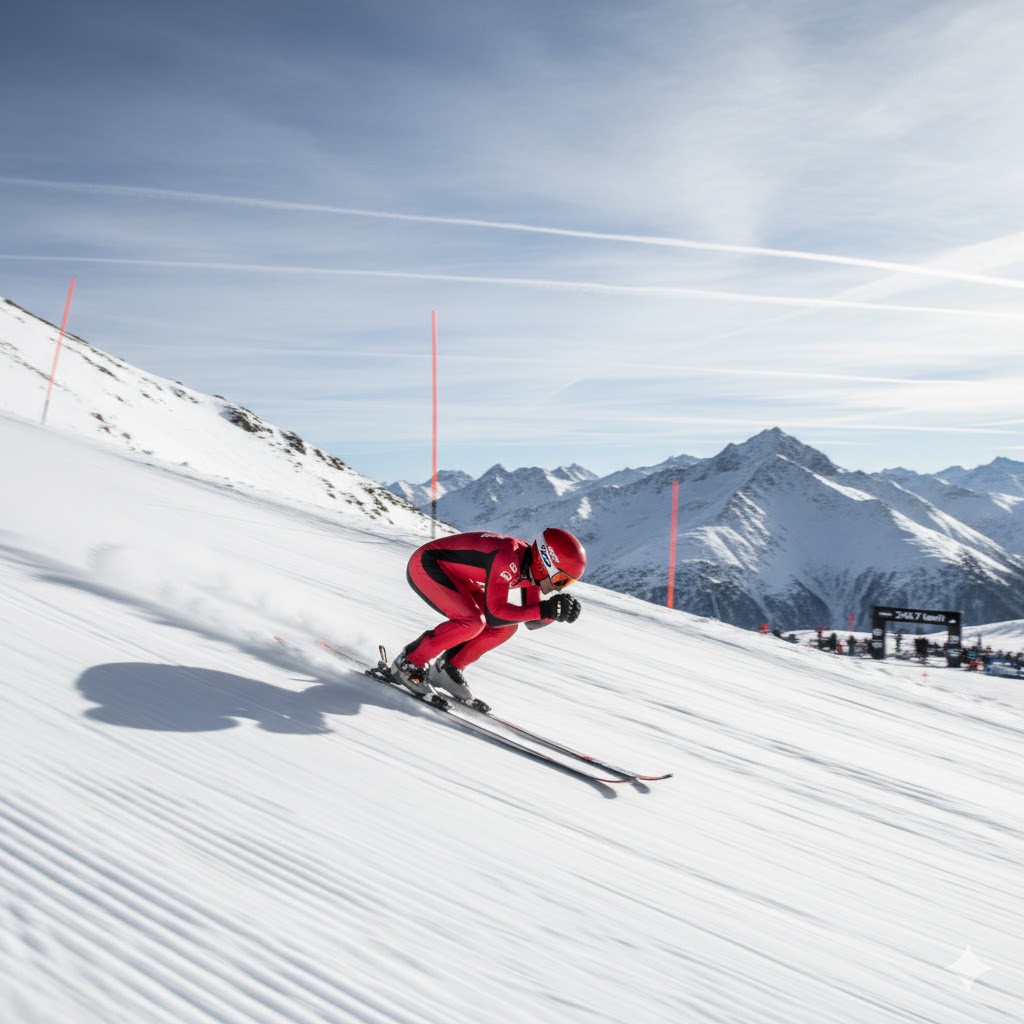
Speed Skiing: The Ultimate Pursuit of Velocity on Snow
Speed Skiing is one of the most thrilling and extreme winter sports ever created. It combines the beauty of alpine skiing with the danger and exhilaration of raw speed. Unlike traditional skiing events that test agility and endurance, Speed Skiing focuses on one pure goal—achieving the highest possible velocity downhill. This unique sport has fascinated both athletes and spectators for decades. Its mix of science, courage, and precision makes it one of the most captivating disciplines on snow. To understand Speed Skiing, it is important to explore its origins, global reach, amateur levels, professional leagues, political and social significance, and the strict rules that govern it.
Origin and History of Speed Skiing
The roots of Speed Skiing go back to the early 20th century, when skiers first began measuring how fast they could descend mountains. The first recorded attempt took place in 1930 at Saint-Moritz, Switzerland. A British skier named Lord Lindsay set an unofficial record, racing down a slope in a straight line without turns. It was the first time anyone had measured skiing purely by speed rather than skill or technique.
In the 1940s and 1950s, the sport gained more structure. Enthusiasts began organizing competitions in the European Alps, mainly in Italy, Austria, and Switzerland. The early events were informal, but as equipment improved, the speeds increased dramatically. Wooden skis gave way to metal-edged versions, and leather boots were replaced by plastic shells, improving stability.
By the 1960s, Speed Skiing became recognized as an official winter sport. Competitions were held in Les Arcs, France, and Cervinia, Italy. These sites became iconic venues for early world records. The International Ski Federation (FIS) took notice and began setting guidelines for safety and competition standards.
The 1970s and 1980s saw rapid evolution. New aerodynamic suits and helmets were developed to reduce drag. Skis grew longer, reaching over 2.4 meters to improve balance and minimize air resistance. Speed records climbed beyond 200 km/h. In 1984, the sport reached a major milestone when it was featured as a demonstration event in the Winter Olympics at Sarajevo. Although it was not adopted as a permanent Olympic sport, that exposure brought Speed Skiing global recognition.
During the 1990s, athletes pushed the limits even further. In 1995, the record surpassed 240 km/h, and specialized courses were developed to ensure safety. The sport became a blend of engineering, physics, and athletic courage. Today, the top speed record exceeds 255 km/h, achieved on meticulously designed slopes with precision equipment.
Global Popularity of Speed Skiing
Speed Skiing enjoys a dedicated following across Europe, North America, and parts of Asia. While it may not have the mass appeal of alpine skiing or snowboarding, it attracts an audience that appreciates the pursuit of pure velocity. The sport thrives in countries with strong winter sports traditions such as France, Italy, Austria, Switzerland, Sweden, and Norway. These nations maintain professional tracks and organize international tournaments each season.
In North America, Speed Skiing gained momentum in Canada and the United States during the late 20th century. Venues in British Columbia and Utah host major events, drawing elite athletes and amateurs alike. The steep slopes and stable weather conditions of these regions provide ideal racing environments.
The sport’s popularity in Japan has grown steadily since the 2000s. Resorts in Hokkaido and Nagano now feature designated courses for high-speed skiing events. Asian athletes have joined the international circuit, adding diversity and competition to the sport.
Social media has also played a key role in expanding awareness. Videos showcasing speeds exceeding 200 km/h fascinate viewers worldwide. The thrill of acceleration and the visual spectacle of sleek aerodynamic suits have turned Speed Skiing into a niche digital sensation.
Despite its limited number of participants, the community surrounding Speed Skiing is passionate and tight-knit. Fans appreciate the courage it takes to face slopes at breakneck speeds. For many, it represents the ultimate expression of human daring against nature’s challenges.
Amateur Speed Skiing: Youth and School Involvement
Amateur Speed Skiing plays a vital role in developing future champions. Many athletes begin by participating in alpine or downhill skiing before transitioning to high-speed racing. Junior programs across Europe introduce young skiers to the fundamentals of speed control, aerodynamics, and safety.
In countries such as France and Italy, specialized youth camps focus on technical training. Participants learn body positioning, balance, and aerodynamic posture. Safety is emphasized from the beginning, with strict rules about protective gear and course conditions. These programs aim to instill both skill and respect for the immense power of speed.
School-based ski programs also include speed-oriented competitions. For example, high schools in the French Alps and Swiss regions often organize regional downhill challenges. While these events may not reach professional velocities, they give students a foundation in disciplined skiing and the importance of aerodynamics.
Amateur competitions are carefully supervised. Speeds are typically limited to around 150 km/h for non-professionals. Courses are shorter, and coaches monitor weather and snow conditions closely. These safety measures help young athletes build confidence before attempting elite-level races.
In North America, ski clubs in Colorado, Utah, and British Columbia offer beginner speed racing opportunities. Here, students learn about equipment tuning, wax selection, and mental preparation. Many amateur skiers later progress to national development programs, eventually joining professional tours.
Through these grassroots efforts, the sport continues to grow steadily. Amateur Speed Skiing not only trains future stars but also promotes self-discipline, courage, and physical fitness among youth participants.
Professional Leagues and Competitions
Professional Speed Skiing is governed by the International Ski Federation (FIS), which organizes the annual Speed Skiing World Cup. This competition features multiple events held across Europe and North America. The World Cup ranks athletes based on their performance and top recorded speeds over the season. It is the sport’s premier professional circuit.
Each race is conducted on a course designed for extreme speed and safety. Les Arcs in France remains the most famous venue, known for producing record-breaking runs. Other notable locations include Vars (France), Sun Peaks (Canada), and Idre Fjäll (Sweden). These courses are meticulously prepared, with precise snow grooming and safety netting.
The World Championships, held every two years, bring together the top competitors from around the world. Events are categorized into Speed 1 (S1) and Speed Downhill (SDH). S1 athletes use custom equipment optimized for maximum velocity, while SDH competitors use standard downhill gear. This distinction ensures that both professionals and advanced amateurs can compete on a global stage.
National associations also host domestic championships. Italy, France, and Switzerland each maintain professional leagues that nurture homegrown talent. These leagues function as stepping stones toward international recognition. Sponsors, including ski manufacturers and aerodynamic gear companies, support these events to promote technological innovation.
Technological advancement has become central to professional Speed Skiing. Athletes and engineers collaborate to design skis that minimize drag and maximize stability. Suits are crafted from materials tested in wind tunnels to ensure optimal airflow. Even helmets feature elongated tails to reduce turbulence. The combination of athletic precision and scientific design defines modern professional competition.
Political and Social Significance
Beyond its thrilling nature, Speed Skiing holds interesting political and social implications. The sport symbolizes the human drive to push limits, reflecting values of courage, innovation, and ambition. Countries that excel in Speed Skiing often use it as a source of national pride. For example, France and Italy celebrate their champions as symbols of athletic daring and technical mastery.
Politically, Speed Skiing has influenced debates around safety regulations in high-risk sports. Governments and international organizations have worked with the FIS to develop safety standards for high-speed events. This collaboration underscores the balance between freedom of athletic pursuit and public safety oversight. Such partnerships highlight how sports can bring regulatory agencies and athletic federations together for shared goals.
Socially, the sport attracts individuals who value discipline, focus, and precision. Speed Skiers often serve as role models for younger athletes, demonstrating that success requires calculated risk-taking and respect for natural forces. In many mountain communities, Speed Skiing has boosted local economies by attracting winter tourism and global media attention.
Environmental concerns also play a role. As climate change affects snowfall patterns, ski resorts must adapt by managing snow production and course maintenance. Speed Skiing organizations have started supporting sustainability initiatives, including eco-friendly snowmaking and carbon-neutral events. These efforts show how even extreme sports can participate in global environmental responsibility.
The sport also fosters international friendship. Competitions bring together athletes from diverse backgrounds who share a passion for speed. This unity transcends politics and borders, promoting mutual respect and cultural exchange. In many ways, Speed Skiing acts as a metaphor for global cooperation under pressure.
Rules and Structure of Speed Skiing
Speed Skiing may appear simple—go downhill as fast as possible—but the rules are highly detailed. They are designed to ensure fairness, safety, and precision.
A standard course measures between 1,000 and 1,200 meters in length, with a vertical drop of 350 to 450 meters. The slope must be smooth, straight, and free from major obstacles. The upper part of the course serves as the acceleration zone, where skiers build speed before entering the timed section.
Timing begins when the skier crosses the entry gate of the measured section and stops at the exit gate. This section is typically 100 meters long. The skier’s average speed is calculated using electronic timing systems accurate to one-thousandth of a second.
Competitors wear specially designed aerodynamic suits, helmets, and back protectors. The suits fit tightly to minimize drag, while helmets include integrated visors and elongated tails. Each skier also uses long skis—up to 240 centimeters for men and 230 centimeters for women—to enhance stability.
Racers must follow strict safety protocols. Before each run, a jury inspects the slope, snow conditions, and weather. Wind speeds are monitored closely; excessive gusts can delay or cancel runs. Each athlete must complete training runs before competing to ensure readiness.
During races, skiers start individually. The goal is simple: achieve the highest top speed during the measured section. Penalties occur for missing equipment inspections or breaching safety regulations. Disqualification can result from leaving the course boundaries or using unauthorized modifications.
Judges and technical officials oversee every aspect. Medical teams remain on standby, and helicopters are often positioned nearby for emergencies. Though the sport is dangerous, modern safety measures have dramatically reduced injuries.
The Science of Speed Skiing
Achieving world-record speeds requires understanding aerodynamics and physics. Every detail—from body position to ski wax—affects performance. Skiers adopt a crouched posture known as the “egg position,” which minimizes surface area exposed to the wind. The angle of the skis, helmet shape, and even breathing patterns influence velocity.
Friction between the skis and snow must be minimized. Special waxes are applied to the ski bases to reduce resistance. The temperature of the snow determines the ideal wax formula. Engineers use high-tech materials such as carbon fiber and titanium to build lightweight yet stable skis.
Wind resistance is the biggest obstacle. At 200 km/h, air pressure on the skier’s body is immense. Even minor body movements can cause instability. That is why athletes spend hours practicing posture and balance. The blend of mental control and physical skill defines elite Speed Skiing performance.
Training and Preparation
Training for Speed Skiing involves a combination of physical conditioning, technical refinement, and psychological focus. Athletes must develop leg strength, balance, and reaction speed. Off-season training includes cycling, plyometric exercises, and balance drills. Mental preparation is equally important. Visualization and concentration techniques help athletes stay calm during high-speed descents.
Technical preparation involves constant equipment tuning. Athletes test different ski bases, binding settings, and aerodynamic suits. Coaches analyze wind tunnel data and video footage to perfect technique. Each small improvement can mean several kilometers per hour of speed gained.
Nutrition and recovery also play major roles. Proper hydration and muscle recovery are essential after each race. The intense physical and mental demands of the sport require complete commitment. Only those with exceptional discipline succeed at the highest levels.
Modern Challenges and the Future of Speed Skiing
The future of Speed Skiing looks promising but faces several challenges. Safety continues to be the top concern. As speeds increase, so does the risk of injury. Advances in equipment design aim to balance speed with protection. New helmet materials and improved slope barriers enhance safety without sacrificing performance.
Climate change poses another challenge. Shorter winters and unpredictable snow conditions affect race scheduling. Resorts at higher altitudes are becoming preferred venues due to more reliable snow. The sport’s governing bodies are exploring artificial snow technologies and sustainable course designs to ensure longevity.
Technology will continue to shape the sport. Smart sensors, digital monitoring systems, and AI-assisted aerodynamic modeling could further enhance performance and safety. Virtual reality training may help athletes simulate high-speed descents in controlled environments.
Despite these challenges, enthusiasm remains strong. The adrenaline rush and the human fascination with speed ensure continued interest. For athletes and fans alike, Speed Skiing embodies the spirit of adventure and the pursuit of perfection.
Conclusion
Speed Skiing stands as one of the purest expressions of athletic bravery and technical mastery. Its long history, from early experiments in the Alps to modern high-tech competitions, showcases human innovation. The sport’s global community thrives on passion, precision, and respect for nature’s power.
Amateur programs around the world nurture young talent, while professional leagues continue to set new records and inspire awe. Politically and socially, Speed Skiing reflects the balance between risk and regulation, freedom and responsibility. Its athletes remind us that progress comes from facing fear with preparation and courage.
As technology advances and global interest grows, Speed Skiing will continue to evolve. It will remain a symbol of determination, a test of limits, and a celebration of human speed on snow. For those who chase the thrill of velocity and the elegance of control, few sports capture the imagination quite like Speed Skiing.




