
The Complete Guide to Sporting Clays: History, Global Popularity, and Cultural Impact
Sporting Clays has become one of the most dynamic and challenging shooting sports in the world. Often described as “golf with a shotgun,” it combines precision, patience, and strategy. Originating as a way to simulate hunting in a controlled environment, the sport has evolved into a global competitive pastime. In this detailed guide, we’ll explore the origin and history of Sporting Clays, its global popularity, amateur participation, professional leagues, political and social influence, and the rules that govern it.
The Origin and History of Sporting Clays
The roots of Sporting Clays can be traced back to England in the early 20th century. Hunters wanted a way to practice shooting birds without relying on live game. Early forms of target shooting involved launching glass balls or clay discs to mimic the flight of game birds. These clay targets soon replaced live pigeons, leading to the birth of modern clay target sports.
By the 1920s, “clay pigeon shooting” had become a well-known pastime across Britain. However, these early games primarily featured repetitive target presentations. Shooters hit targets flying at similar speeds and angles, which didn’t fully simulate real hunting conditions. To solve this, British shooting enthusiasts developed a new concept. They designed courses with varied target angles, speeds, and trajectories to better mimic the unpredictable movements of birds and rabbits. This innovation became known as Sporting Clays.
In 1980, the first official Sporting Clays competition took place in England. The sport quickly gained attention for its realistic design and its ability to test every aspect of a shooter’s skill. Shooters faced diverse challenges, including crossing, incoming, and outgoing targets launched at different elevations. By the late 1980s, Sporting Clays had crossed the Atlantic to North America.
The United States embraced the sport enthusiastically. In 1985, the first Sporting Clays range was built in Houston, Texas. Soon after, the National Sporting Clays Association (NSCA) was founded to organize and standardize competitions. Over time, Sporting Clays grew from a niche pursuit into one of the fastest-growing shooting sports in America.
The Global Popularity
Today, Sporting Clays is played on nearly every continent. Its appeal lies in the combination of outdoor recreation, technical skill, and mental focus. The sport’s flexible format allows for participation by individuals of all ages and experience levels.
In Europe, the United Kingdom remains the traditional home of Sporting Clays. Thousands of shooters take part in weekly competitions across England, Scotland, and Wales. Italy and France also host strong shooting communities, with dedicated courses spread throughout the countryside. Scandinavian countries have incorporated Sporting Clays into their hunting culture, often using it as a training tool before the hunting season.
In North America, the sport’s popularity has exploded. The United States now hosts more Sporting Clays ranges than any other country. Annual events like the NSCA National Championship attract top shooters from around the world. Canada also has an active Sporting Clays scene, with clubs stretching from British Columbia to Nova Scotia. Mexican shooters have built a passionate following, blending the sport with local traditions and hospitality.
Australia and New Zealand have embraced Sporting Clays as part of their outdoor lifestyles. Both countries host national tournaments and field strong teams in international events. South Africa has also seen rapid growth in the sport, supported by its hunting culture and open landscapes. Even in regions where firearms regulations are strict, such as Japan and some parts of Europe, Sporting Clays maintains a dedicated base of enthusiasts.
The sport’s global governing body, the Fédération Internationale de Tir aux Armes Sportives de Chasse (FITASC), has played a crucial role in international growth. FITASC oversees world championships and maintains consistent standards for competition courses worldwide. Each year, shooters from dozens of countries gather to compete for top honors and national pride.
Amateur Sporting Clays Around the World
Amateur Sporting Clays thrives because it’s accessible, fun, and community-driven. Local clubs organize weekend shoots, charity events, and friendly competitions open to all skill levels. Many people discover the sport through introductory sessions at local ranges. These events emphasize safety, sportsmanship, and enjoyment.
Youth programs have become an essential part of the sport’s future. In the United States, high school and collegiate teams have emerged under organizations like the Scholastic Clay Target Program (SCTP). These programs teach firearm safety, discipline, and teamwork while introducing young people to competitive shooting. The emphasis on respect, patience, and confidence helps shape valuable life skills.
In the United Kingdom, shooting schools often integrate Sporting Clays into youth education. Young shooters learn to handle shotguns responsibly and develop an appreciation for outdoor sports. Similar initiatives exist in Australia, Canada, and South Africa. These programs not only promote the sport but also encourage responsible firearm ownership.
Amateur leagues provide a pathway for skill development. Local tournaments allow shooters to progress from novice to advanced levels. Many competitors participate simply for fun and camaraderie, while others aspire to reach the professional ranks. The inclusive nature of Sporting Clays ensures that everyone—from beginners to seasoned hunters—can enjoy the challenge.
Professional Leagues and Competitions
Professional Sporting Clays competitions showcase the sport’s highest level of precision and mental focus. The format may vary slightly between organizations, but the essence remains the same: challenging targets and intense competition.
The NSCA, headquartered in the United States, governs the largest professional Sporting Clays circuit in the world. The NSCA hosts regional and national events, including the U.S. Open and the National Championship. These tournaments feature multiple courses, each with unique target presentations designed to test every skill. Shooters compete in various classes based on ability, ensuring fair play across all levels.
FITASC oversees international competitions, including the World Sporting Championship and Continental Championships. These events attract elite shooters from more than 40 nations. FITASC courses are renowned for their complexity, often featuring natural terrain and unpredictable flight paths. Success in these tournaments requires sharp focus, quick reflexes, and adaptability.
Professional shooters often travel globally to compete for significant prize money and sponsorship deals. Brands in the firearm, optics, and outdoor industries support top athletes. These partnerships enhance visibility for both the sport and the sponsors. Major gun manufacturers also develop specialized shotguns for Sporting Clays, optimizing performance for the sport’s unique demands.
In Europe, the British Open and the Italian Grand Prix remain prestigious fixtures on the Sporting Clays calendar. Australia’s National Championship draws competitors from across the Asia-Pacific region. South Africa’s competitive scene continues to expand, producing world-class talent recognized by FITASC.
Although Sporting Clays is not an Olympic sport, it commands respect in the shooting world. The skill set required—timing, accuracy, concentration, and composure—places it among the most technically demanding shooting disciplines.
The Political and Social Significance of Sporting Clays
Sporting Clays extends beyond competition; it carries deep political and social meaning. In many countries, the sport embodies the balance between tradition and modern regulation. It represents responsible firearm use, conservation, and outdoor recreation.
Politically, Sporting Clays often intersects with debates about gun rights and public safety. Advocates emphasize the sport’s educational value and its strict adherence to safety protocols. Sporting Clays ranges are among the safest sporting environments in existence. Every participant learns the importance of handling firearms with respect and care.
In the United States, Sporting Clays plays a role in discussions surrounding the Second Amendment. Supporters view it as a demonstration of responsible gun ownership and an avenue for promoting positive firearm culture. Lawmakers and advocacy groups frequently recognize the sport’s contribution to outdoor heritage and economic growth.
In Europe, where gun control laws are more restrictive, Sporting Clays serves as a bridge between hunters, sportsmen, and the public. It demonstrates how shooting sports can exist harmoniously within legal frameworks while emphasizing safety and skill over aggression. In countries like France, Italy, and the UK, Sporting Clays clubs often collaborate with environmental organizations to preserve wildlife habitats and promote conservation.
Socially, Sporting Clays brings communities together. Clubs often host charity events to support local causes. Corporate outings, fundraisers, and youth programs all use the sport as a platform for connection. Many rural economies benefit from shooting tourism, as competitors travel for events and spend money on lodging, dining, and supplies.
The sport also fosters gender diversity. While historically male-dominated, Sporting Clays now attracts a growing number of women. Female shooters have earned respect on the international stage, proving that skill, not strength, defines success. Organizations worldwide are encouraging more women to participate through training and mentorship programs.
Veterans and first responders have also found healing and camaraderie through Sporting Clays. The sport offers mental relaxation, focus, and community—valuable tools for individuals coping with stress or trauma. This social dimension adds depth to the sport’s impact beyond the shooting range.
The Rules
It follows a structured set of rules designed to ensure fairness, safety, and consistency. Although variations exist between organizations, the core principles remain universal.
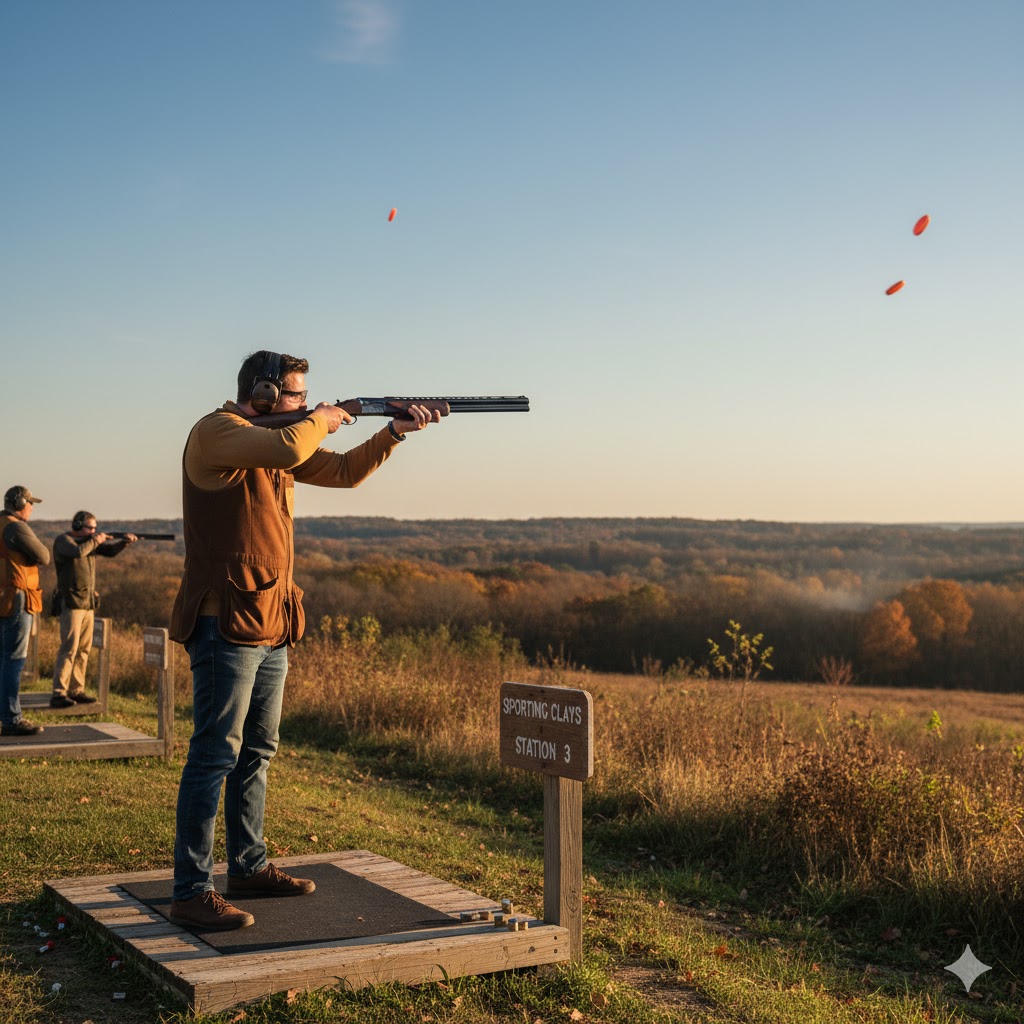
A typical Sporting Clays course consists of multiple “stations.” Each station presents a unique shooting challenge designed to replicate natural hunting conditions. Targets may simulate flushing birds, crossing ducks, or running rabbits. Course designers use natural terrain features like trees, hills, and water to create realistic scenarios.
Shooters usually face 8 to 15 stations per round, with each station offering several target pairs. A full competition round generally includes 50 to 100 targets. Targets are launched by mechanical traps that can throw them at varying angles, speeds, and heights. Some stations feature simultaneous doubles, where two targets launch at once. Others use report pairs, where the second target launches after the first shot is fired.
Shooters use a shotgun, typically 12- or 20-gauge, loaded with small birdshot shells. The sport emphasizes accuracy and technique rather than power. Each shooter begins with the gun in a “ready” position—stock below the shoulder—until the target appears. When the target is called, the shooter must quickly mount the gun, aim, and fire.
Scoring is simple: one point per target hit. Broken targets count as hits, while misses score zero. The shooter with the highest total wins. In team events, the combined scores determine the winners.
Safety remains the top priority. All firearms must remain unloaded until the shooter is in the designated station and ready to shoot. Eye and ear protection are mandatory. Range officers enforce all rules, ensuring that competitors maintain control and discipline at all times.
Sportsmanship also defines the culture of Sporting Clays. Shooters respect their competitors, follow range commands, and maintain honesty in scoring. The combination of competitive excitement and courteous behavior makes the sport both thrilling and honorable.
The Mental and Physical Challenge
Success in Sporting Clays requires more than just mechanical skill. Mental strength plays a huge role. Shooters must maintain focus over multiple stations and adjust to constantly changing conditions. Wind, light, and background can all influence target visibility. Each shot demands concentration and composure.
Physically, the sport demands endurance. Carrying a shotgun and shooting through multiple rounds requires upper-body strength and control. Many participants describe the sport as meditative. Each target becomes an exercise in focus, timing, and rhythm. Mistakes are common, but the best shooters stay calm and adapt instantly.
Training often includes drills for gun mounting, lead calculation, and eye-hand coordination. Some shooters even use visualization techniques to improve performance. Consistency and confidence separate the great from the good.
The Economic Impact of Sporting Clays
Beyond competition and recreation, Sporting Clays contributes significantly to local and national economies. Ranges generate income through memberships, events, and tourism. Major championships bring thousands of visitors to host regions. Hotels, restaurants, and retailers all benefit from this influx.
The firearm industry thrives on Sporting Clays as well. Manufacturers produce specialized shotguns, ammunition, and accessories for the sport. Equipment innovations continue to enhance performance and safety. Clothing brands design apparel tailored for comfort and protection during long shooting sessions.
In the United States alone, shooting sports contribute billions annually to the economy. Sporting Clays occupies a vital share of that total. This economic footprint strengthens the sport’s role in national recreation and business landscapes.
The Future of Sporting Clays
The future of Sporting Clays looks promising. Technological advances have made target machines more efficient and courses more creative. Virtual simulations and video analysis tools are helping shooters refine their techniques faster than ever before.
Youth engagement continues to grow, ensuring a strong pipeline of future competitors. Increased global cooperation between organizations like FITASC and NSCA will further expand international opportunities. As environmental awareness rises, Sporting Clays venues are adopting sustainable practices, from lead-free ammunition to eco-friendly course designs.
Media coverage is also improving. Online streaming of major events allows fans worldwide to follow the action. Social media has made it easier for shooters to share experiences and connect across borders. This digital evolution promises to make the sport even more inclusive and visible.
Conclusion
Sporting Clays combines tradition, skill, and challenge in a way few sports can match. From its early English origins to its global prominence, it continues to evolve while honoring its roots. The sport offers recreation, competition, and community to millions of participants worldwide.
Its social and political influence promotes safety, discipline, and respect. Amateur and professional shooters alike cherish the thrill of the chase—without harming wildlife. With its growing popularity and strong organizational support, Sporting Clays stands poised to inspire future generations of shooters for decades to come.