
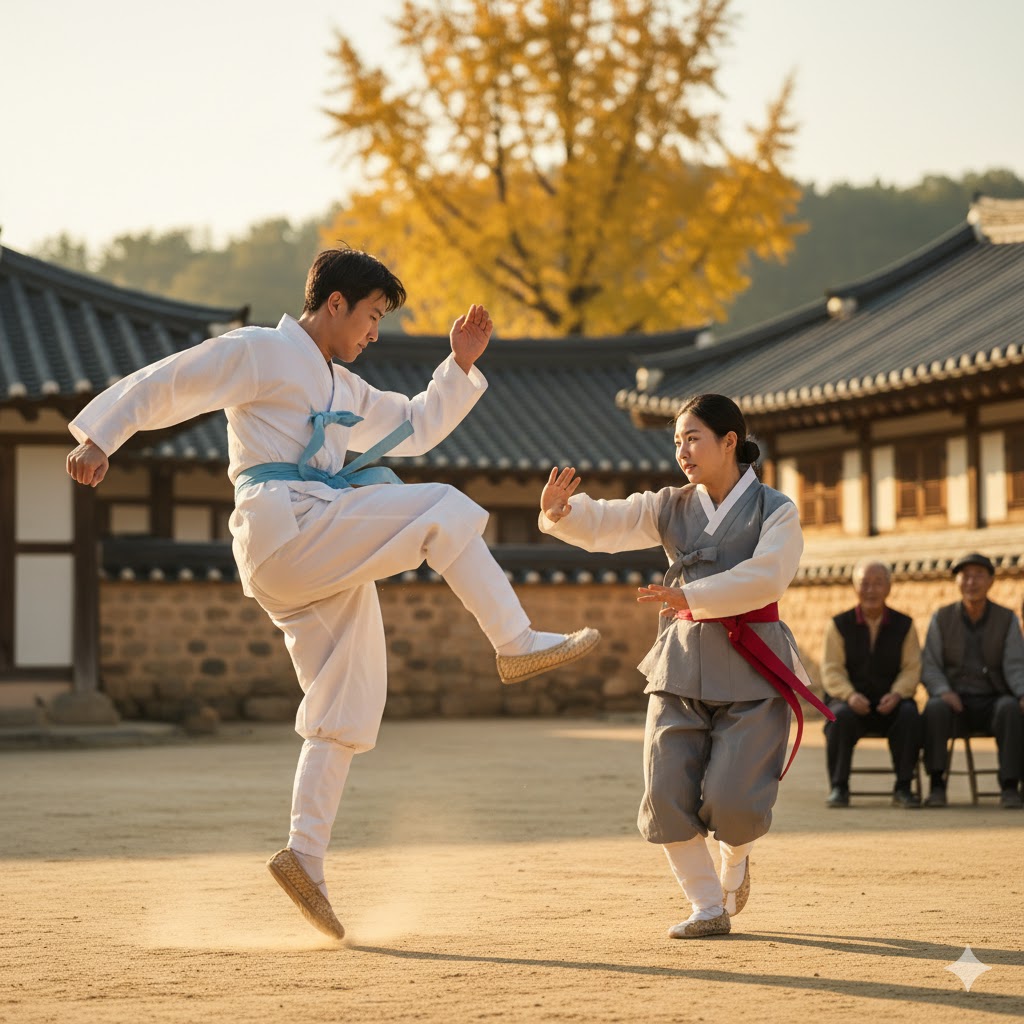
Taekkyeon: The Ancient Korean Martial Art Revived for Modern Times
Taekkyeon is one of the oldest known martial arts in Korea and one of the few recognized as a National Intangible Cultural Asset. This dynamic and graceful sport blends rhythm, balance, and strategy into a unique form of combat and cultural expression. Practiced for centuries, Taekkyeon has not only survived through Korea’s turbulent history but has also gained growing international attention. Its evolution from ancient self-defense to a modern sport symbolizes Korea’s enduring cultural strength and the global appeal of traditional martial arts.
The Origin and Early History of Taekkyeon
The origins of Taekkyeon date back more than a thousand years to the Three Kingdoms period of Korea, particularly during the Goguryeo dynasty. Ancient murals discovered in tombs from that era depict figures in combat poses that resemble modern Taekkyeon movements. These early representations suggest the art was both a martial discipline and a popular pastime among soldiers and civilians alike.
As centuries passed, Taekkyeon evolved during the Goryeo and Joseon dynasties. It became an essential part of Korean military training, helping soldiers develop agility, timing, and coordination. However, Taekkyeon wasn’t limited to warriors. Commoners also practiced it during festivals and village competitions, where it was viewed as both entertainment and sport. These community matches fostered respect, sportsmanship, and pride in local skill.
During the late Joseon period, Taekkyeon was widely practiced in the capital city of Hanyang (now Seoul). It often took place in courtyards, markets, and temple grounds. Participants would compete for honor, not violence, as the sport emphasized skill over brute strength. Yet, despite its popularity, Taekkyeon faced suppression during the early 20th century.
Suppression and Revival
The Japanese occupation of Korea (1910–1945) nearly destroyed many aspects of Korean culture, including traditional martial arts. Japanese authorities discouraged or outright banned Taekkyeon and other indigenous practices, promoting their own martial arts instead. Practitioners were forced underground, and for decades, the art survived only in secrecy.
The revival of Taekkyeon began after Korea regained independence in 1945. One man, Shin Han-seung, played a crucial role in preserving the art. He learned Taekkyeon from surviving masters and dedicated his life to restoring its traditional techniques. Through his teaching and documentation, Taekkyeon began to reemerge in the 1950s and 1960s as a respected martial art and cultural heritage.
In 1983, the Korean government officially designated Taekkyeon as Important Intangible Cultural Property No. 76. This recognition ensured that it would be preserved for future generations. Later, in 2011, UNESCO included Taekkyeon on its Representative List of the Intangible Cultural Heritage of Humanity. These acknowledgments elevated Taekkyeon’s status both nationally and globally, transforming it from a nearly lost art into a celebrated symbol of Korean identity.
Global Popularity and Modern Growth
Over the past few decades, Taekkyeon has expanded beyond Korea’s borders. While still lesser-known compared to Taekwondo, it has steadily gained a following among martial artists, cultural enthusiasts, and academics worldwide. Its fluid, dance-like movements, known as pumbalki, have attracted those seeking an alternative to rigid combat forms.
South Korea remains the heart of Taekkyeon practice, but dojos and cultural centers around the world now offer instruction. Countries such as the United States, France, Germany, and Japan have established Taekkyeon federations or affiliated clubs. Demonstrations at martial arts festivals and cultural expos have further boosted awareness. The sport’s aesthetic appeal and deep cultural roots have resonated with global audiences.
Korean cultural diplomacy has also played a major role. Through events organized by the Korean Cultural Centers and the Korean Foundation, Taekkyeon is promoted as both a sport and a traditional art form. The Korean government’s support for cultural exports has introduced Taekkyeon to new regions, where it often complements K-pop, Korean cinema, and cuisine as part of the nation’s soft power.
Amateur Taekkyeon Around the World
Amateur Taekkyeon serves as the foundation for its global community. In Korea, it is taught in community centers, universities, and even some elementary and high schools. Youth programs focus on developing coordination, respect, and discipline through movement. Because the sport emphasizes balance and rhythm rather than aggression, it is accessible to both boys and girls from a young age.
In amateur training, students first master basic stepping patterns before learning kicks, sweeps, and defensive maneuvers. Instructors emphasize controlled movements and respect for opponents. Sparring sessions are conducted in a lighthearted, musical rhythm, often accompanied by clapping or vocal cues to maintain tempo. This musical aspect differentiates Taekkyeon from most other martial arts and adds an element of performance.
Outside Korea, Taekkyeon has found a home in martial arts clubs and cultural institutions. Amateur practitioners in Europe and North America often study it alongside other disciplines like Capoeira or Tai Chi due to its rhythmic and flowing qualities. Workshops and seminars introduce beginners to its history, philosophy, and movement patterns. In France and Germany, annual Taekkyeon camps attract international participants who come to learn from Korean masters.
Youth participation is on the rise as well. Schools with Korean studies programs often include Taekkyeon demonstrations during cultural events. This exposure helps children appreciate both the athletic and artistic sides of the practice. Amateur tournaments, while less formal than professional ones, still promote discipline, creativity, and community bonding among participants.
Professional Leagues and Organized Competitions
While still developing, professional Taekkyeon leagues have emerged over the past two decades. The Korea Taekkyeon Federation (KTF) serves as the sport’s governing body, organizing national competitions, grading systems, and instructor certifications. These efforts have helped standardize rules and promote consistency in judging.
Each year, Korea hosts the National Taekkyeon Championship, where elite practitioners compete in sparring, forms, and demonstration categories. Competitors are judged on skill, rhythm, creativity, and adherence to traditional techniques. Victory depends as much on grace and timing as on offensive success.
Outside Korea, smaller professional tournaments have appeared in France, Japan, and the United States. These international events attract both native and Korean-born practitioners, creating a global exchange of techniques and ideas. Many competitors are martial artists from other disciplines who are drawn to Taekkyeon’s fluid combat style.
The professionalization of the sport continues to grow through media exposure. Television broadcasts of national championships and online streaming platforms have brought Taekkyeon to wider audiences. Documentaries and promotional videos emphasize its artistry, history, and philosophical depth. This visibility helps bridge the gap between traditional cultural performance and modern athletic competition.
The Rules of Taekkyeon
Taekkyeon’s rules set it apart from other martial arts. The sport prioritizes technique, rhythm, and control over sheer force. Matches take place on a circular mat, usually between six and eight meters in diameter. Two competitors face each other, bowing before the match begins.
Scoring is based on clean, controlled strikes, sweeps, or throws that demonstrate superior skill. Kicks and trips to the opponent’s legs are common, while punches are rarely used. Points are awarded for balance disruption, successful strikes to the torso or head, and graceful execution. Excessive force or reckless behavior can result in penalties.
One of the most distinctive aspects of Taekkyeon is its stepping pattern. Fighters move in a constant rhythmic motion known as pumbalki. This circular movement allows for seamless transitions between offense and defense. Competitors must remain light on their feet, maintaining flow and rhythm throughout the match.
Matches are typically divided into two or three rounds, each lasting one to two minutes. Judges evaluate not only the effectiveness of techniques but also their aesthetic quality. A successful Taekkyeon competitor displays harmony, control, and respect, blending athletic precision with artistic expression.
Protective gear is minimal. Competitors wear traditional uniforms and sometimes light padding. The emphasis on control minimizes injury risk, making Taekkyeon safer than many striking martial arts. Victory often depends on points rather than knockouts, reinforcing the importance of technique over strength.
Cultural and Social Significance
Taekkyeon represents far more than a physical sport—it embodies the spirit of Korean heritage. Its graceful movements and rhythmic energy reflect the balance and harmony valued in Korean philosophy. Historically, it served as a way for communities to come together during festivals, symbolizing unity and resilience.
In modern times, Taekkyeon serves as a bridge between generations. Older masters pass down ancient techniques and stories to younger students, ensuring continuity of tradition. Schools and cultural organizations often use Taekkyeon as a teaching tool to promote national pride and moral values such as respect, humility, and perseverance.
Socially, the sport fosters inclusion. Because of its flowing movements and nonviolent nature, Taekkyeon is accessible to people of all ages and fitness levels. It emphasizes cooperation and mutual respect, which helps build strong community relationships. Many practitioners describe their experience as both meditative and empowering.
Globally, Taekkyeon contributes to cultural exchange. Foreign practitioners not only learn the physical skills but also gain insight into Korean language, customs, and history. This cross-cultural interaction strengthens understanding and appreciation between Korea and other nations.
Political Significance and National Identity
Politically, Taekkyeon holds symbolic power. As one of the few martial arts recognized by UNESCO, it represents Korea’s resilience and cultural distinctiveness. During the 20th century, preserving Taekkyeon became a form of cultural resistance against colonization and foreign influence. Reviving it after Japanese occupation reinforced national pride and sovereignty.
The South Korean government has continued to promote Taekkyeon as part of its cultural diplomacy strategy. By showcasing it in international events and exhibitions, Korea presents itself as a nation deeply rooted in tradition yet open to global engagement. Taekkyeon performances at world expos, Olympic cultural festivals, and embassy events highlight this balance between history and progress.
Within Korea, Taekkyeon also supports domestic unity. It serves as a reminder of shared heritage and common values among citizens. Programs supported by the Ministry of Culture, Sports and Tourism encourage youth participation, linking physical education with cultural preservation. This connection between sport and identity reinforces the idea that modern Korea can thrive while honoring its past.
On a broader scale, Taekkyeon has become part of the global conversation about preserving intangible heritage. Its recognition by UNESCO symbolizes respect for non-material culture, emphasizing the need to protect traditions that define a people’s spirit and identity. Politically, it stands as a model for how a small nation can use cultural heritage to project influence and dignity on the world stage.
The Art of Movement and Philosophy
The philosophy behind Taekkyeon goes beyond combat. Practitioners learn to blend strength with grace, aggression with control, and speed with patience. The sport’s rhythmic motions mirror natural elements such as water flow and wind movement. This harmony between body and nature is central to Korean aesthetics and philosophy.
Traditional Taekkyeon teachings stress that victory is achieved through adaptability and awareness, not domination. Fighters are taught to respond fluidly, redirecting energy rather than opposing it. This mindset promotes calmness and mindfulness—qualities that extend beyond the training mat into daily life.
Masters often describe Taekkyeon as a “living dance.” Each technique expresses emotion and creativity, transforming combat into art. Unlike other martial arts that prioritize rigid form, Taekkyeon celebrates individuality. Practitioners are encouraged to develop personal rhythm and style, making each performance unique.
This artistic approach has influenced Korean dance, film choreography, and even modern fitness programs. The blend of culture and athletics reflects Korea’s holistic view of physical expression. As a result, Taekkyeon continues to inspire new generations to explore their cultural roots while embracing innovation.
Challenges and the Future of Taekkyeon
Despite its beauty and heritage, Taekkyeon faces challenges in gaining the same global prominence as Taekwondo or Judo. Limited exposure, language barriers, and small instructor networks have slowed its growth. However, interest is increasing through online media and international collaborations.
Younger practitioners are helping modernize Taekkyeon by creating digital tutorials, competition footage, and cultural documentaries. These efforts make learning accessible to a wider audience. Partnerships between Korean and foreign federations are also strengthening the sport’s infrastructure abroad.
Universities and sports organizations in Korea continue to research Taekkyeon’s biomechanics and training benefits. Studies show it improves flexibility, coordination, and cardiovascular health, adding scientific credibility to its practice. This research encourages schools and fitness centers to include it as part of their programs.
Looking ahead, Taekkyeon’s future appears promising. With continued government support, global outreach, and passionate practitioners, it will likely expand its international community. As a symbol of peace, culture, and discipline, Taekkyeon stands poised to inspire the world while preserving the legacy of Korea’s ancient spirit.
Conclusion
Taekkyeon embodies centuries of Korean culture, discipline, and artistry. From ancient battlefield techniques to modern sport, it has evolved while maintaining its core philosophy of balance and respect. Its rhythmic movements, cultural symbolism, and growing international presence make it a remarkable martial art that transcends physical combat.
In an era dominated by commercialized sports, Taekkyeon offers something different—a return to rhythm, mindfulness, and community. Its survival through history, recognition by UNESCO, and expanding global reach demonstrate its timeless relevance. Whether practiced by a child in Seoul or a student in Paris, Taekkyeon continues to unite people through the universal language of movement and tradition.