
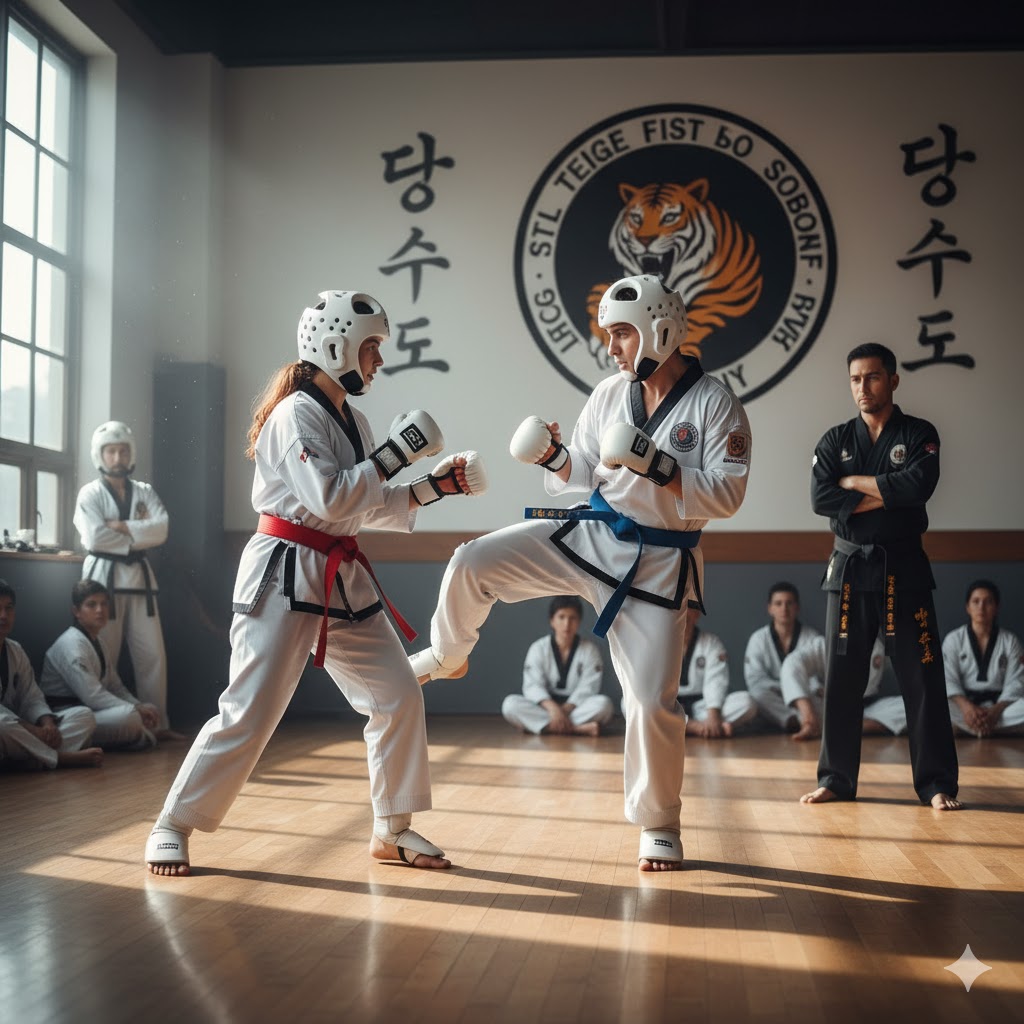
The Global Martial Art of Tang Soo Do: History, Rules, and Cultural Impact
Tang Soo Do is a dynamic Korean martial art known for its power, grace, and deep cultural roots. It blends self-defense, physical fitness, and personal discipline into one powerful practice. Over the decades, Tang Soo Do has spread worldwide, inspiring students of all ages. To understand why it remains so influential, it’s essential to explore its origin, evolution, global popularity, rules, and lasting significance.
Origin and History of Tang Soo Do
The story of Tang Soo Do begins in ancient Korea, long before the modern martial arts movement. Its roots trace back over 2,000 years to the time of the Three Kingdoms—Goguryeo, Baekje, and Silla. Warriors from these kingdoms practiced early combat systems like “Soo Bahk” and “Taekkyon.” These arts emphasized kicking, striking, and open-hand techniques that shaped the foundation of Tang Soo Do.
When Japan occupied Korea from 1910 to 1945, martial arts training was banned. However, many Koreans secretly continued to practice their native combat forms. Some traveled to Japan and China, where they learned karate and kung fu. Among these was Hwang Kee, the founder of Tang Soo Do. He studied traditional Korean movements along with Chinese martial arts and Japanese karate.
After World War II, when Korea regained independence, Hwang Kee opened the Moo Duk Kwan school in 1945. This marked the official birth of Tang Soo Do. The name combines “Tang” (referring to the Tang Dynasty of China), “Soo” (hand), and “Do” (way). Thus, it means “The Way of the Tang Hand.” The art symbolized a blend of Korean tradition with influences from Chinese and Japanese fighting systems.
During the 1950s and 1960s, Tang Soo Do spread rapidly across South Korea. Military personnel, police, and civilians learned it for self-defense and discipline. Hwang Kee emphasized respect, humility, and perseverance. These values helped distinguish Tang Soo Do as more than a combat style—it was a path toward personal excellence.
In the late 1960s, political pressures pushed many martial arts groups to unify under the Taekwondo name. Hwang Kee resisted, choosing to preserve Tang Soo Do’s traditional identity. His decision allowed the art to retain its philosophical depth and classical forms. Today, Tang Soo Do remains a proud reflection of Korean martial heritage.
Global Popularity of Tang Soo Do
As Korean martial arts expanded abroad, Tang Soo Do gained remarkable international attention. The U.S. military presence in Korea during the 1950s and 1960s played a key role in its global spread. American soldiers trained in the art and later opened schools in the United States. From there, it expanded throughout North America, Europe, Africa, and Asia.
The United States became one of the strongest centers for Tang Soo Do outside Korea. Grandmasters like Jae C. Shin and Chuck Norris helped popularize it. Norris, who studied under Hwang Kee’s system, introduced Tang Soo Do to Hollywood, inspiring millions through film and television. His success elevated public awareness of Korean martial arts in the West.
Europe followed closely, with strong federations established in the United Kingdom, Germany, and Italy. Tang Soo Do schools also appeared in South Africa, Brazil, and Australia. Each region added cultural flavor to the art while maintaining its traditional core. This balance between tradition and modern adaptation helped sustain its global reach.
Today, international organizations such as the World Tang Soo Do Association (WTSDA) and the International Tang Soo Do Federation (ITF) oversee tournaments and certifications. These groups unite practitioners from more than 100 countries. Annual world championships draw thousands of competitors, showing the sport’s broad appeal.
Despite differences in technique or emphasis, all Tang Soo Do schools share the same values—discipline, respect, and continuous improvement. This shared philosophy unites the global community and strengthens its cultural identity.
Amateur Tang Soo Do: Youth and Schools
Amateur Tang Soo Do programs play a vital role in shaping the next generation of martial artists. Children and teens around the world practice the art in dojangs (training halls) and schools. These programs focus on fitness, focus, and confidence rather than competition alone.
Training begins with basic stances, blocks, strikes, and kicks. Young students learn forms, called “hyung,” which develop coordination and balance. Instructors also teach respect—bowing before entering the dojang and addressing seniors with honor. These rituals build humility and discipline early on.
In many countries, Tang Soo Do has become part of after-school programs and youth development projects. Schools integrate martial arts with academic education, helping students manage stress and build social skills. The mental benefits are as valuable as the physical training. Students gain focus, patience, and leadership qualities that extend beyond the mat.
Competitions for amateurs encourage friendly rivalry. Youth tournaments focus on forms, sparring, and breaking. Safety equipment and controlled techniques keep the experience positive and educational. Winning is celebrated, but effort and spirit hold equal importance.
Many instructors emphasize community service. Youth practitioners often participate in charity events, demonstrations, and mentoring programs. Through these efforts, Tang Soo Do teaches responsibility and compassion—qualities that shape strong citizens.
Amateur Tang Soo Do is not about creating fighters; it’s about developing character. That mission keeps it popular in schools and community centers around the world.
Professional Leagues and Competitions
While Tang Soo Do is often practiced for personal development, it also features organized competition at the professional level. Professional leagues emphasize both sport and tradition, balancing athletic performance with respect for martial heritage.
The World Tang Soo Do Association hosts international tournaments each year. Competitors from different countries showcase their skills in forms, sparring, and weapon routines. Judges score based on precision, control, and spirit rather than sheer aggression. This approach maintains the integrity of traditional martial arts while promoting healthy competition.
The International Tang Soo Do Federation organizes regional and world championships. These events attract top-level practitioners who have trained for decades. Professional divisions often include master and grandmaster categories, highlighting the sport’s lifelong learning culture.
Tang Soo Do has also influenced other combat sports. Many professional martial artists and stunt performers began in this discipline before transitioning to mixed martial arts (MMA) or cinematic choreography. The art’s high kicks and flowing forms are visually stunning, making it popular in the entertainment industry.
Some countries, such as the United States and the United Kingdom, have professional schools that sponsor athletes for global tournaments. These competitors represent their countries much like Olympic athletes. Though Tang Soo Do is not yet an Olympic sport, it continues to grow in recognition, with advocates campaigning for future inclusion.
Professional leagues uphold strict codes of conduct. Fighters must show respect, integrity, and self-control at all times. This moral standard keeps Tang Soo Do distinct from purely competitive fighting styles. It reminds participants that the art is about harmony and personal evolution, not dominance.
Rules and Structure of Tang Soo Do
Tang Soo Do follows a structured system of techniques, ranks, and etiquette. Its rules preserve safety and respect while allowing effective combat practice. Training sessions combine traditional forms, sparring, self-defense, and mental focus exercises.
1. Belt System and Ranking
Students progress through color belts that represent stages of growth. Beginners wear white belts, symbolizing purity and potential. As they advance, they earn colors like yellow, green, blue, and red. Each step reflects mastery of new techniques and deeper understanding. The coveted black belt represents maturity and self-control rather than finality. Many students continue training long after earning it.
2. Forms (Hyung)
Forms are choreographed sequences of movements against imaginary opponents. Each form teaches balance, rhythm, and technique. Practicing hyung helps students internalize principles of timing and power. They also connect practitioners to centuries of martial tradition.
3. Sparring (Dae Ryun)
Sparring allows controlled combat between two practitioners. It teaches timing, distance, and composure under pressure. Competitions usually involve point-based systems. Judges award points for clean, controlled strikes to valid target areas. Excessive contact or unsafe techniques result in penalties.
4. Self-Defense (Ho Sin Sul)
Self-defense training focuses on practical applications. Students learn to counter grabs, strikes, and attacks with precise and efficient movements. These techniques emphasize control rather than harm, reflecting Tang Soo Do’s defensive philosophy.
5. Etiquette and Philosophy
Etiquette is central to every class. Students bow to instructors and fellow practitioners. They follow a strict code of conduct based on loyalty, respect, and humility. The five key principles of Tang Soo Do are courage, honesty, perseverance, respect, and self-control. Living by these values extends the art into daily life.
6. Tournament Rules
In competition, athletes wear protective gear such as headgear, gloves, and chest protectors. Matches usually last two or three rounds. Judges score points for strikes and kicks delivered with control and proper technique. Unsportsmanlike behavior or excessive force leads to disqualification. Competitors win through points, clean technique, or superior spirit.
Tang Soo Do’s rules are designed to preserve the safety of practitioners while testing skill and character. This combination of discipline and structure makes it one of the most respected martial arts in the world.
Political and Social Significance
Tang Soo Do holds deep political and social meaning. It represents the resilience of Korean culture and the spirit of unity through discipline. During the Japanese occupation, Koreans fought to preserve their identity. The creation of Tang Soo Do after independence became a symbol of national pride.
Socially, the art promotes equality and respect. Men, women, and children of all backgrounds train together. Instructors treat all students with fairness, regardless of status or age. This inclusive environment fosters mutual understanding and cooperation.
In Korea, Tang Soo Do remains a cultural ambassador. Government programs often feature martial arts demonstrations during festivals and national holidays. The sport helps preserve traditions while showcasing Korea’s heritage to the world.
Globally, Tang Soo Do unites people across cultures. Practitioners share a common language of respect and self-improvement. International seminars bring together students from diverse nations who bow to the same ideals. These gatherings promote peace and friendship beyond politics.
Many community programs use Tang Soo Do to combat social problems. Youth training programs reduce bullying, encourage positive behavior, and improve mental health. In disadvantaged areas, dojangs serve as safe spaces where young people build discipline and confidence. The art’s emphasis on moral character makes it a tool for social progress.
Veterans, police officers, and first responders also train in Tang Soo Do. They value its focus on control and ethical strength. The art reinforces honor and duty—qualities essential in service professions.
Politically, Tang Soo Do has strengthened ties between Korea and the nations where it thrives. Cultural exchanges and martial arts diplomacy highlight Korea’s contributions to global peace and cooperation. These relationships enhance understanding between East and West.
Cultural Legacy and Modern Evolution
Tang Soo Do continues to evolve while staying true to its roots. Modern practitioners balance ancient philosophy with new training methods. Technology, biomechanics, and sports science enhance performance and safety. Yet the core remains unchanged—the pursuit of self-mastery through discipline and respect.
In today’s fast-paced world, Tang Soo Do offers stability. Practitioners find peace through meditation and movement. The structured routines and mental focus provide relief from daily stress. Many students describe it as both exercise and therapy.
Culturally, Tang Soo Do bridges generations. Parents often train alongside their children, creating family traditions. Grandmasters who trained under Hwang Kee still teach, passing down wisdom from decades of experience. Their guidance ensures that the art’s original values survive modern pressures.
Films, tournaments, and social media continue to expand its global visibility. Demonstration teams perform at international festivals, inspiring new students. As martial arts gain popularity in fitness and entertainment, Tang Soo Do maintains its distinct identity—a blend of art, sport, and philosophy.
Conclusion
Tang Soo Do stands as more than a martial art—it is a living philosophy. Born from Korea’s ancient combat traditions and refined through modern discipline, it continues to inspire millions. Its spread around the world demonstrates the power of respect, courage, and perseverance.
From youth programs to professional tournaments, the art builds character and unity. Its rules preserve honor and safety, while its spirit promotes peace and cultural pride. Politically, it serves as a symbol of resilience. Socially, it builds bridges between people of all backgrounds.
Even after decades of evolution, Tang Soo Do remains true to its mission—to strengthen the body, sharpen the mind, and uplift the spirit. Its practitioners embody these principles every time they bow, train, and live by its code. That timeless blend of tradition and transformation ensures that Tang Soo Do will continue shaping lives for generations to come.