
Three Cushion Billiards: A Complete Guide to the World’s Most Demanding Cue Sport
Three Cushion Billiards is one of the most fascinating cue sports in the world. It combines precision, patience, and creativity. The game has a rich history that dates back centuries. Three Cushion Billiards is not only played by professionals but also by amateurs and youth programs across the globe. Today, Three Cushion Billiards enjoys cultural, social, and political significance in many regions. To understand the sport completely, it is important to examine its origin, its global reach, its rules, and its impact on society.
The Origins of Three Cushion Billiards
Billiards has roots stretching back to the 15th century in Europe. Originally, it evolved from lawn games played on grass. Players moved indoors during colder months and used wooden tables covered with cloth to mimic the lawn.
By the 18th century, carom billiards had developed in France. In carom, the goal was to strike two object balls with the cue ball. Early carom versions were simpler than what we know today. However, skilled players quickly mastered the basic shots.
As talent increased, new variations emerged to raise difficulty. Three Cushion Billiards appeared in the mid-19th century. The concept was brilliant. Instead of simply contacting two object balls, the cue ball also had to strike at least three cushions before the second object ball. This innovation transformed billiards from a casual game into a cerebral sport.
The earliest recorded games of Three Cushion Billiards took place in the United States in the 1870s. It spread rapidly among elite players seeking greater challenges. Newspapers from the late 19th century reported on competitive matches in Chicago and New York. By the early 20th century, Three Cushion Billiards had established itself as the premier test of cue skill.
Growth and Popularity Worldwide
The sport gained followers across Europe, Asia, and Latin America. France, Spain, and Belgium embraced it early due to their love for cue sports. In these nations, Three Cushion Billiards became a fixture in billiard halls and clubs.
In Asia, South Korea and Vietnam developed passionate communities around the sport. Korea, in particular, emerged as a powerhouse. Televised matches attract huge audiences, and players are national celebrities. Vietnam also showcases a thriving amateur scene, with billiards halls in nearly every city.
Latin America’s enthusiasm is equally strong. Countries like Colombia, Mexico, and Ecuador support both amateur and professional play. Crowds gather for tournaments, and local champions are treated with respect.
The United States played a key role in the sport’s origin but later shifted attention to pool. Even so, dedicated Three Cushion Billiards clubs remain in cities like Los Angeles, Chicago, and New York.
Global governing bodies, such as the Union Mondiale de Billard (UMB), organize international tournaments. These events highlight the sport’s broad reach. Today, professional players travel worldwide to compete, representing a truly global community.
Amateur Play and Youth Development
Amateur Three Cushion Billiards thrives in many countries. Clubs often serve as community hubs where enthusiasts gather. The sport demands patience and concentration, which makes it a popular recreational activity.
Youth programs are increasingly important. In South Korea, high schools and colleges include billiards training. Students learn fundamentals, develop focus, and compete in junior tournaments. This structured approach builds future champions.
In Europe, federations support grassroots development. Belgium and Spain run youth leagues to nurture young talent. Coaches emphasize technique and mental discipline. These programs show that Three Cushion Billiards is not just a pastime but a pathway to personal growth.
Latin American countries also promote amateur participation. In Colombia, billiards schools train young players. Local tournaments provide opportunities for youth to showcase skills. Families often support children’s involvement as a positive social outlet.
The amateur level is crucial for the sport’s survival. Without steady growth among beginners, professional leagues would struggle to find future talent. Fortunately, Three Cushion Billiards maintains strong amateur traditions worldwide.
Professional Leagues and Competitions
The professional scene is well-organized and fiercely competitive. The UMB oversees global tournaments, including the World Championship in Three Cushion Billiards. This event crowns the best player annually and attracts international attention.
Europe hosts prestigious competitions such as the European Championship. Top players from Spain, Belgium, and Turkey often dominate. These events are highly respected within the community.
In Asia, professional leagues are booming. South Korea’s PBA League has transformed the sport’s visibility. Matches are broadcast nationwide, and sponsorship deals provide financial stability for athletes. Vietnam also organizes major tournaments that draw large audiences.
Latin America contributes with international events in Colombia and Mexico. These competitions showcase local stars and attract players from Europe and Asia.
Professional players enjoy recognition and sponsorships in many countries. Stars like Torbjörn Blomdahl of Sweden and Dick Jaspers of the Netherlands have become legends. Their precision and creativity inspire new generations of players.
Social and Political Significance
Beyond competition, Three Cushion Billiards holds social and political meaning. The sport often serves as a bridge between cultures. International tournaments bring together players from diverse backgrounds. Respect and sportsmanship create bonds that transcend borders.
In countries like South Korea, the sport boosts national pride. Success in international tournaments enhances the nation’s global reputation. Governments sometimes support federations to promote national achievements.
Socially, the game provides community spaces. Billiard halls are gathering places where people connect. Friendships are formed over long evenings at the table.
Politically, Three Cushion Billiards has occasionally intersected with diplomacy. Friendly matches between nations have symbolized goodwill. Shared love for the sport has eased tensions in certain contexts.
The cultural value cannot be overstated. It combines intellectual challenge with artistry, making it a respected pursuit worldwide.
Rules of Three Cushion Billiards
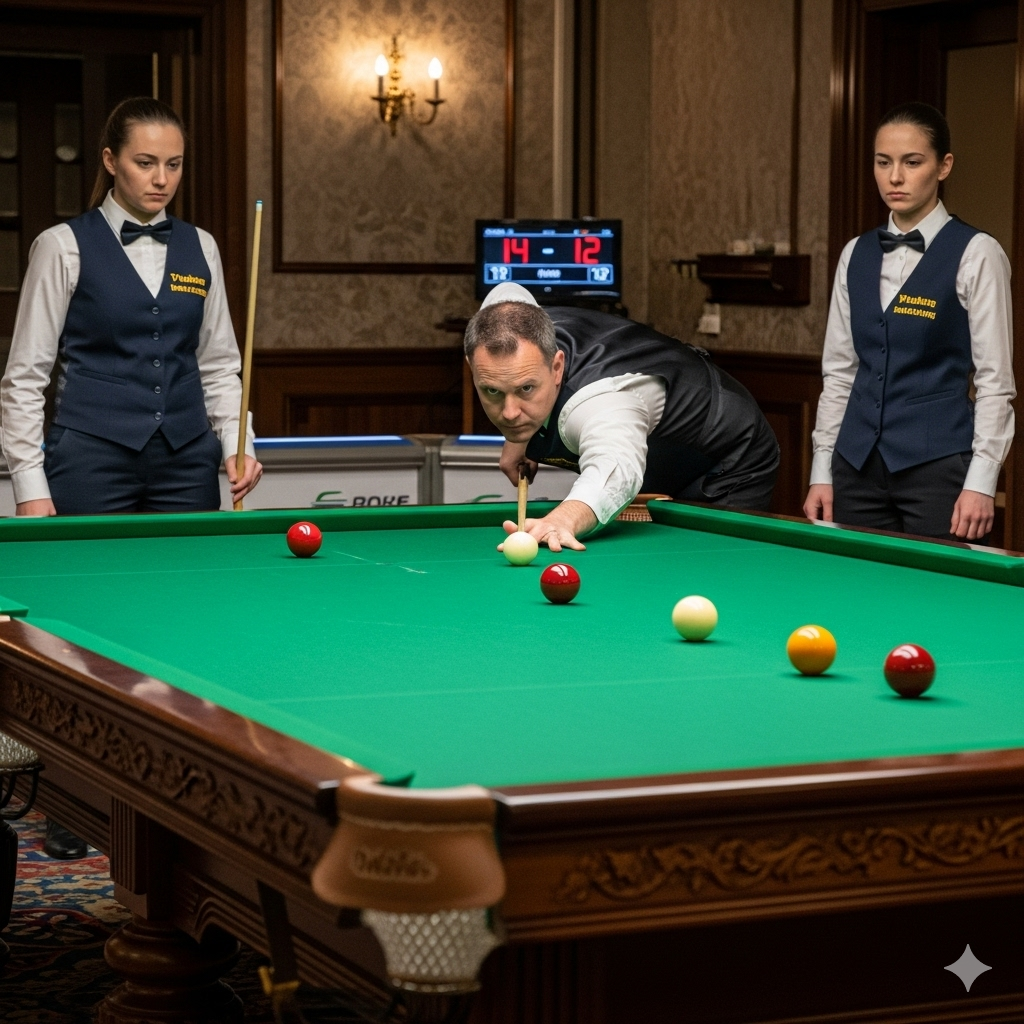
The rules distinguish it from other cue sports. The game is played on a pocketless billiard table, typically 10 feet by 5 feet. Only three balls are used: a white cue ball, a yellow cue ball (for the second player), and a red object ball.
The main objective is to score points by completing a successful carom. A valid shot requires the cue ball to strike both object balls. Additionally, the cue ball must hit at least three cushions before contacting the second object ball.
Each successful carom scores one point. The player continues shooting until failing to score. Matches are played to a predetermined number of points, often 25, 40, or more, depending on the format.
Strategy is crucial. Players must plan shots carefully to ensure cushion contact. Precision, speed control, and angles all play critical roles.
Fouls occur if the cue ball does not meet the cushion requirement, fails to hit both object balls, or leaves the table. No points are awarded on fouls, and the opponent resumes play.
Tournament formats vary. In professional events, matches may include set play or point goals. Time limits per shot also keep games moving at a steady pace.
The complexity of the rules makes the game challenging. Unlike pool, where pockets are the target, Three Cushion Billiards demands imagination. Every shot becomes a puzzle requiring exact calculation.
Why the Sport Endures
The enduring appeal lies in its balance of difficulty and beauty. Watching skilled players is mesmerizing. The cue ball glides across the cloth, weaving around cushions with elegance.
Fans appreciate the artistry involved. Unlike fast-paced pool games, Three Cushion Billiards is a test of patience. Each point is hard-earned, which makes success more satisfying.
Players value the mental challenge. Strategy, physics, and creativity blend together. Few sports demand the same mix of skill and intellect.
Communities embrace it as both competition and social activity. For many, evenings in the billiard hall provide friendship and relaxation.
Globally, the sport continues to grow. New leagues, youth programs, and international exposure expand its reach. Its cultural importance ensures it will remain a respected cue sport for generations.
Final Word
Three Cushion Billiards has traveled a long road from its 19th-century origins. Today, it thrives as a global sport with deep cultural roots. Its amateur and professional levels continue to attract players of all ages. With rich history, complex rules, and social meaning, the sport remains unique among cue games.
The combination of precision, creativity, and strategy makes Three Cushion Billiards timeless. Whether in Europe, Asia, Latin America, or the United States, it continues to inspire admiration. As long as players seek challenges that test both body and mind, this sport will never fade.