
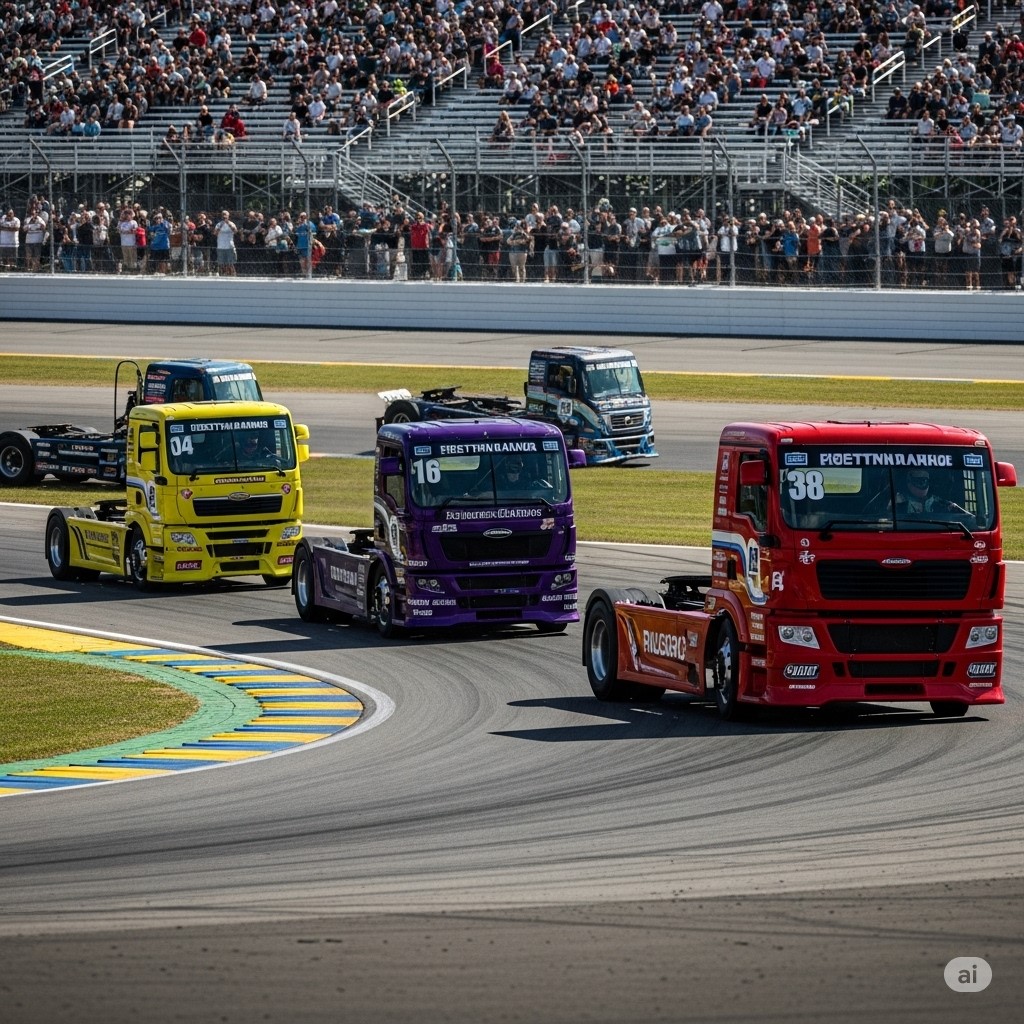
Truck Racing: The Thunderous World of High-Speed Giants
Truck Racing is a sport unlike any other in motorsports. It combines the brute power of massive machines with the finesse of skilled drivers. This high-octane discipline has evolved from simple industrial utility into a global motorsport phenomenon. While it may not have the same visibility as Formula 1 or NASCAR, Truck Racing offers a unique blend of speed, spectacle, and community. In this post, you’ll dive deep into the origins, global appeal, amateur scene, professional leagues, rules, and social impact of Truck Racing.
The Origins of Truck Racing
It began in the United States in the late 1970s. It was initially seen as a promotional event. Truck manufacturers showcased the capabilities of their vehicles in a competitive format. These early races took place on short circuits and involved modified commercial trucks.
The first official Truck Racing championship was held in 1979. Organized by the American Truck Racing Association (ATRA), it drew local attention and proved popular with fans. The novelty of large trucks moving at high speed thrilled audiences. Soon, other countries noticed the potential of the sport.
By the mid-1980s, Europe embraced it. The British Truck Racing Championship (BTRC) began in 1984 and attracted a loyal following. Germany and France followed, establishing their own circuits. The European Truck Racing Championship (ETRC) was born in 1985 under the governance of the FIA.
Truck Racing Expands Across the Globe
Following its early success, it spread globally. Today, races take place in South America, Australia, India, and parts of Asia. Brazil hosts several regional championships. These races draw thousands of spectators to circuits like Autódromo Internacional Ayrton Senna.
Australia’s truck racing scene emerged in the 1990s. The Australian Super Truck Nationals became a staple of the motorsport calendar. Trucks there reach speeds of over 100 mph. India recently launched its own league, the T1 Prima Truck Racing Championship, in 2014.
The sport also has a presence in China and the Middle East. However, Europe’s leagues remain the most prestigious. Fans across the globe appreciate the spectacle of multi-ton trucks cornering at breakneck speeds.
Amateur Truck Racing: Grassroots to Youth
While professional Truck Racing garners media attention, the amateur scene plays a vital role. Many drivers start in grassroots competitions. Local circuits host amateur races for those with limited budgets. Some events allow private truck owners to modify and race their rigs.
In the United States, county fairs and regional festivals often include truck drag races or time trials. These events are informal but foster interest in motorsports. Canada has similar rural competitions, often tied to logging and freight industries.
Youth involvement is limited by safety regulations. However, racing programs for young drivers often include karting and small-scale truck simulators. These programs build foundational skills. Europe leads in offering junior motorsport academies that introduce mechanical training and racing tactics.
In vocational schools, especially those focused on automotive mechanics, simulation-based Truck Racing is part of the curriculum. It teaches technical knowledge and introduces students to the sport. While there are no school-based Truck Racing leagues due to safety concerns, exposure begins early through mentorship and family traditions.
Professional Truck Racing Leagues Around the World
Several professional leagues operate globally. The most prestigious is the FIA European Truck Racing Championship (ETRC). This league features races across iconic tracks like the Nürburgring in Germany and Le Mans in France. Drivers come from various countries, and the trucks are often customized to comply with FIA safety standards.
In the UK, the British Truck Racing Championship (BTRC) is extremely popular. The championship features two classes: Division 1 for highly modified trucks and Division 2 for more stock-based models. Fans pack circuits like Brands Hatch to watch these beasts battle.
The T1 Prima Truck Racing Championship in India is backed by Tata Motors. It features Indian and international drivers. Though relatively new, it has elevated awareness of the sport in South Asia.
Australia’s Super Truck Racing Series is another significant league. It includes vehicles from brands like Kenworth, Volvo, and Mack. These trucks have roll cages, tuned engines, and reinforced braking systems.
South America has national championships in Brazil and Argentina. While they lack the budget of European leagues, passion fuels competition. Drivers often maintain their own trucks and secure local sponsorships.
Rules and Regulations of Truck Racing
It adheres to strict rules to ensure safety and fairness. The FIA sets most global standards, especially in Europe. Trucks must weigh at least 5.5 tons. Speed is usually capped at around 100 mph using electronic limiters.
Races are typically held on asphalt circuits, ranging from 1.5 to 3.5 miles in length. Each race weekend includes practice sessions, qualifying, and multiple race heats. Points are awarded based on finishing position.
Trucks must feature reinforced cabins, roll cages, and fire suppression systems. Tires are limited to specific compounds. Drivers wear fireproof suits, helmets, and head restraints. Braking systems are modified to handle the truck’s mass.
Contact between trucks is monitored. Deliberate bumping or forcing another vehicle off the track can result in penalties. Race marshals ensure compliance through flagging and telemetry.
Each team includes engineers and pit crews. Quick repairs and tuning between heats can make a major difference. Some races allow pit stops, while others are sprint-style without breaks.
Social and Political Significance
It holds deep social and political meaning in many regions. The sport originated from working-class roots. Many drivers are former or current truckers. This makes the sport more relatable to everyday people.
In Europe, events celebrate transport workers and logistics. Races often include exhibitions and job fairs for the trucking industry. It’s a way to honor the people who keep economies moving.
In Brazil and Argentina, the sport offers a platform for regional pride. Local teams compete against larger, urban-backed franchises. This fuels passionate rivalries and enhances cultural identity.
India’s entry into Truck Racing reflects national ambitions. It promotes industrial development and showcases Indian manufacturing. Tata Motors uses the sport as a symbol of innovation and self-reliance.
Politically, Truck Racing has also served diplomatic functions. Events in the Middle East have been used to foster goodwill and cross-border collaboration. Governments support the sport to boost tourism and infrastructure.
Socially, the sport promotes technical education. Many teams partner with universities and technical schools. Students gain hands-on experience in real-world engineering.
Truck Racing’s Unique Culture
Beyond the track, it boasts a tight-knit community. Fans often include families connected to trucking. Spectators camp at events and share stories of life on the road.
Truck Racing festivals include music, food, and truck exhibitions. These festivals foster a carnival atmosphere. It’s more than a race—it’s a celebration.
Many fans admire the craftsmanship behind each racing truck. Unlike in some motorsports, Truck Racing places a spotlight on engineering talent. Builders and mechanics are treated like stars.
The sport also appeals to those interested in sustainability. Electric and hybrid truck prototypes are making appearances. Leagues are slowly adopting eco-friendly regulations.
Media coverage is increasing. YouTube channels and streaming platforms now offer full race weekends. This accessibility has helped build an international audience.
Challenges Facing the Sport
Despite its growth, it faces challenges. Sponsorship is harder to secure than in mainstream motorsports. Many teams operate on tight budgets.
Tracks must be adapted to handle the weight and size of racing trucks. This limits the number of viable venues. In some countries, regulatory hurdles delay development.
Youth involvement remains limited. Safety concerns and high costs deter younger participation. Simulation and e-sports may help bridge that gap.
Environmental concerns also affect the sport. Trucks consume large amounts of fuel. Leagues are exploring ways to reduce carbon footprints.
Still, the sport’s authenticity keeps it alive. Fans support it for its raw energy and emotional connection.
The Future of Truck Racing
It is evolving. Leagues are investing in new technologies. Hybrid engines and alternative fuels are on the horizon.
Digital platforms will continue to expand the audience. Augmented reality and onboard cameras offer fans immersive experiences. Broadcasting deals may increase global exposure.
Grassroots programs are expanding. Training academies and scholarships will draw more talent. Partnerships with vocational schools ensure a pipeline of skilled professionals.
Diversity is another focus. More women are entering the sport as drivers and engineers. Inclusion efforts aim to reflect the global nature of the fan base.
Truck Racing will remain unique among motorsports. Its blend of culture, competition, and community is unmatched. As long as trucks roll down highways, people will race them.
Conclusion
It is more than just fast machines and roaring engines. It’s a celebration of industrial might, human courage, and community spirit. From its American roots to its global presence, the sport continues to evolve. Professional leagues, amateur races, and youth programs all contribute to its vibrant ecosystem.
Although challenges exist, the passion of the Truck Racing community drives progress. The sport honors its blue-collar origins while embracing innovation. Whether you’re a lifelong fan or a curious newcomer, Truck Racing offers an unforgettable experience. The future promises even more excitement for those who dare to race giants.