
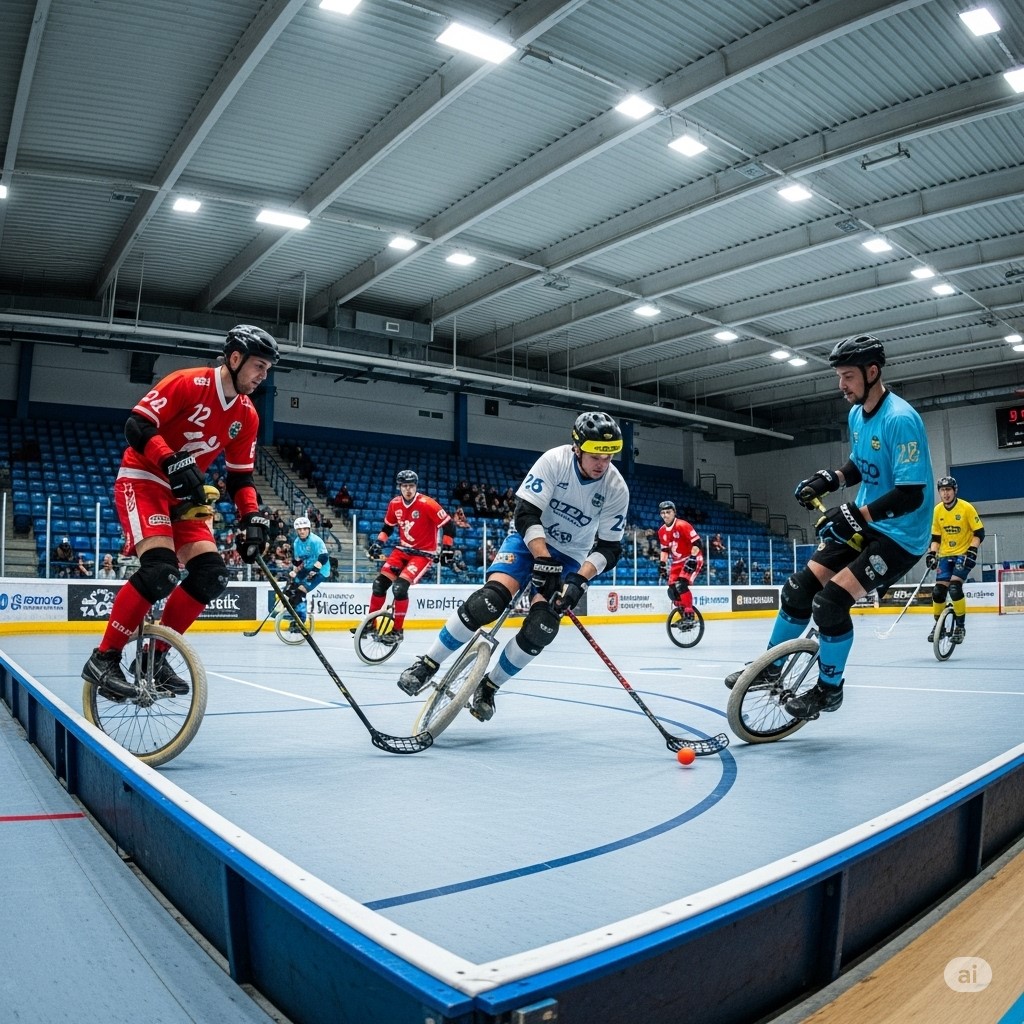
Unicycle Hockey: A Unique Sport on One Wheel
Unicycle Hockey is a rare yet captivating sport that blends balance, coordination, and strategy. Unlike traditional hockey, players ride unicycles while maneuvering a ball with sticks. It may sound unusual, but this sport has grown steadily in different parts of the world. Unicycle Hockey delivers not only athletic challenge but also unique excitement. It promotes community, agility, and innovative thinking. Across schools, local clubs, and even professional settings, this sport continues to thrive. Whether you are new to the game or a seasoned player, Unicycle Hockey opens up a world of intrigue.
The Origins and History of Unicycle Hockey
The history of Unicycle Hockey dates back further than most would imagine. References to similar activities have surfaced from the 1920s. Photographic evidence from this era in the United States shows individuals playing a rudimentary version. It lacked structure, but the essence of the game was present.
The sport began gaining traction in the 1950s and 1960s. During these decades, clubs formed in Germany, the United Kingdom, and the United States. The modern game, however, solidified in the 1980s. This period saw the standardization of rules, equipment, and gameplay. Germany led much of the sport’s formal development.
The Unicycling Society of America published one of the first structured rulebooks. Meanwhile, unicycle clubs across Europe adapted those rules. By the 1990s, international tournaments became more frequent. The International Unicycling Federation (IUF) played a crucial role in organizing these events. Over the years, participation surged, and the sport matured.
Global Popularity and Reach
Though niche, Unicycle Hockey has achieved global reach. It is actively played in countries such as Germany, the United Kingdom, Switzerland, Australia, and Singapore. Germany remains the sport’s hub. It boasts the largest number of registered clubs and players. Regular tournaments and training events foster high skill levels in the region.
In the United Kingdom, national leagues attract dozens of teams. British clubs often travel to international competitions. Switzerland and France also maintain dedicated leagues and clubs. In Asia, Singapore hosts several active teams and local tournaments. Interest has also emerged in Japan and South Korea.
Australia offers another example of growth. Unicycle Hockey forms part of community festivals and school programs. Canada and the United States show slower adoption but continue to gain traction. Social media and online communities help raise awareness across continents.
Amateur Play in Schools and Youth Communities
Unicycle Hockey thrives at the grassroots level. Many local clubs introduce young players to the sport through workshops and training camps. These sessions teach balance, control, and basic game rules. Youth engagement often begins through circus schools or juggling clubs. Once students master unicycling, they transition into hockey play.
Schools in Germany and the UK occasionally include Unicycle Hockey in physical education curricula. Youth tournaments bring together teams from different regions. Events promote sportsmanship, coordination, and team spirit.
Community centers frequently support after-school programs centered around the sport. These programs provide unicycles and safety gear to ensure accessibility. Volunteer coaches play an essential role in fostering talent and maintaining enthusiasm.
Amateur leagues serve as stepping stones to more competitive environments. Youths who show exceptional skill may join adult teams or represent their country in international competitions.
Professional Leagues and Competitive Play
While not fully professional in a commercial sense, competitive Unicycle Hockey exists at a high level. The German Unicycle Hockey League (Deutsche Einradhockeyliga) represents the most structured league worldwide. Teams from various cities compete throughout the year. Points accumulate over a season, leading to playoffs and finals.
In the United Kingdom, the British Unicycle Hockey League runs a similar structure. Monthly tournaments decide rankings. Teams from Scotland, Wales, and England frequently compete. These events draw fans and media attention.
Switzerland’s league, though smaller, maintains rigorous standards. Teams often travel to neighboring countries for extra competition. France, the Netherlands, and Denmark also have organized play. While Asia lacks a formal league, regional tournaments take place in Singapore, Japan, and Hong Kong.
International competitions form a key part of the professional calendar. The Unicon World Championship, hosted by the IUF, features Unicycle Hockey as a main event. Teams worldwide register to showcase their skills. The event rotates locations every two years. It serves as both a sporting challenge and cultural exchange.
Political and Social Impact of the Sport
Unicycle Hockey contributes to community building. It brings people together regardless of age, background, or nationality. The sport fosters inclusivity. It requires minimal infrastructure, making it accessible to communities with limited resources.
In politically tense regions, Unicycle Hockey offers a neutral ground. Youths from opposing groups often engage in shared training. The sport becomes a bridge for dialogue. Examples have emerged in areas of Eastern Europe and the Middle East. NGOs utilize the sport to support mental health and education initiatives.
Socially, Unicycle Hockey challenges stereotypes. It redefines what sport can be. Traditional athletes often underestimate its difficulty. However, once they engage, respect for the sport grows. Media coverage slowly increases as its novelty draws attention.
The sport promotes gender equality. Many teams feature mixed-gender lineups. There is no rule separating men and women. This inclusivity appeals to modern values and progressive sports culture. Parents and educators view the sport as a positive influence.
Rules of Unicycle Hockey
Unicycle Hockey follows structured rules to ensure fair play and safety. Each team has five players on the court. All players must ride unicycles. Standard ice hockey sticks and a tennis ball are used. Some leagues permit slightly modified balls for indoor surfaces.
A match typically consists of two halves. Each half lasts between 10 and 20 minutes, depending on the competition. The objective is to score by hitting the ball into the opposing team’s goal.
Contact between unicycles is allowed. However, pushing, grabbing, or interfering with sticks is prohibited. Players must keep at least one foot on the pedal while playing the ball. Falling off requires immediate dismount and remount before re-entering play.
Penalties are issued for infractions. Common penalties include obstruction, dangerous riding, and unsportsmanlike conduct. A penalty may lead to a one-minute exclusion. Serious violations may result in match disqualification.
Referees oversee the game. Most matches include two referees to monitor different sections of the court. Substitutions are allowed during stoppages or on-the-fly, depending on league rules.
Uniforms vary, but helmets, gloves, and shin guards are encouraged. Some tournaments mandate protective gear for younger players. Court size can vary, though most leagues use a space similar to a basketball court.
Conclusion
Unicycle Hockey is more than a quirky hobby. It stands as a legitimate sport with rich history, global participation, and cultural impact. From its humble beginnings to international championships, the journey has been remarkable. Its appeal lies in combining novelty with athletic skill.
Communities around the world continue to embrace the sport. They see value in its physical and social benefits. Youth programs, amateur leagues, and professional competitions highlight the sport’s versatility. It challenges norms and fosters connection.
With further support and recognition, Unicycle Hockey has potential to grow even more. Its blend of fun, inclusivity, and discipline makes it a standout among alternative sports. Whether in a school gym or on an international stage, the sport continues to roll forward with purpose and passion.