
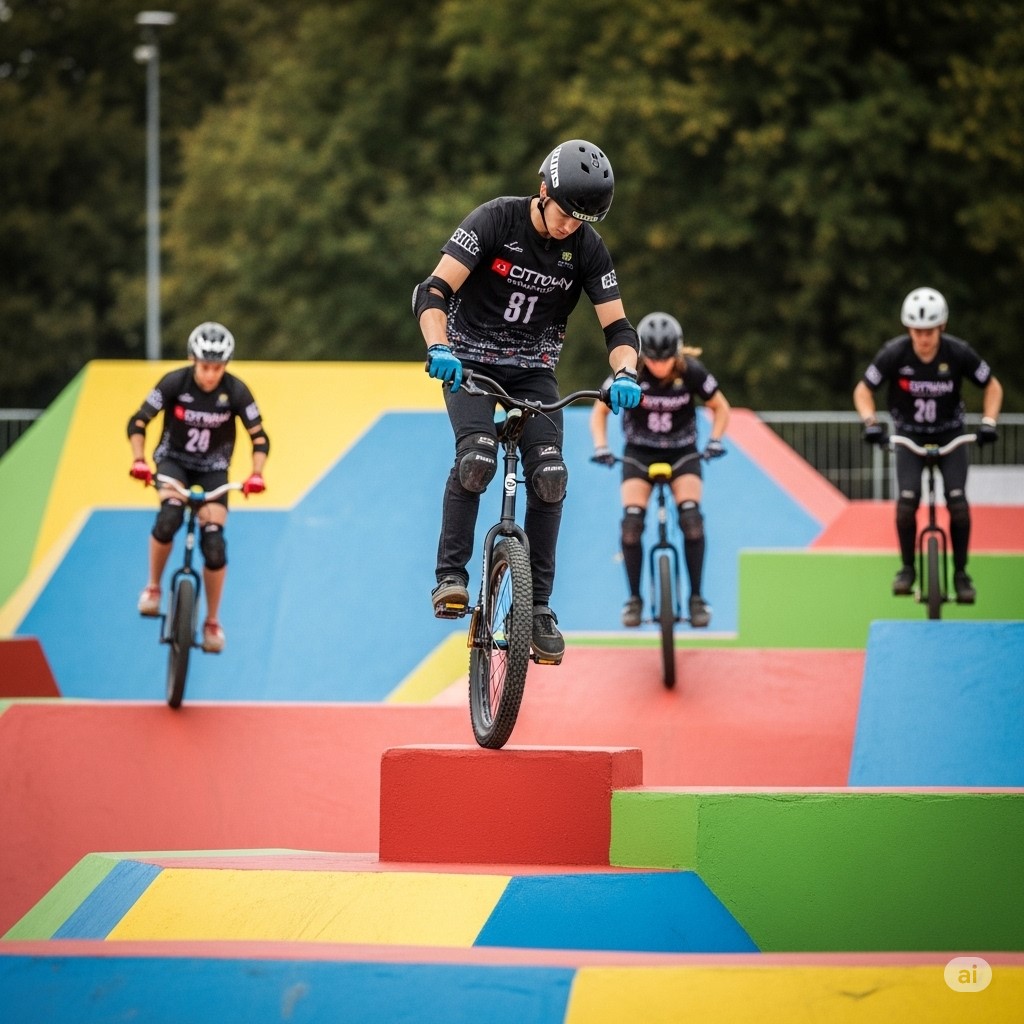
Unicycle Trials: A Thrilling Sport of Balance, Strength, and Precision
Unicycle Trials is an extreme sport that challenges balance, coordination, and creativity. Riders navigate over complex obstacles on a single-wheeled cycle, combining athleticism with finesse. The sport has gained global interest and continues to grow in popularity. In this blog post, we will explore the detailed history, global reach, amateur and professional scenes, societal impact, and rules that define Unicycle Trials. With a unique blend of artistry and grit, Unicycle Trials offers an unforgettable sporting experience.
The Origins and Evolution of Unicycle Trials
Unicycle Trials began as an offshoot of traditional unicycling. Riders wanted more than parades and circus acts. They started testing their skills on stairs, rails, and natural terrain. This evolution began in the 1990s when trials biking inspired unicyclists to push their limits.
The sport gained structure in the early 2000s. Riders from Europe and North America shared techniques and video footage online. This exchange sparked a surge of innovation. Soon, dedicated unicycle trials equipment emerged. Stronger frames, grippy tires, and reinforced pedals became standard.
As internet forums and video platforms flourished, the community expanded. Events like the Unicycle World Championship added a trials category. The International Unicycling Federation (IUF) helped establish basic rules. Riders could now compete globally under standardized conditions.
Global Popularity and Reach
Unicycle Trials has a dedicated following worldwide. Europe remains the sport’s heartbeat, especially in Germany, France, and the United Kingdom. These countries host national competitions and training camps. Clubs offer coaching for riders of all ages.
North America follows closely. In Canada and the United States, urban trials scenes thrive. Riders use city architecture to practice technical maneuvers. Competitions and showcases occur at parks and festivals.
Asia, particularly Japan and South Korea, has embraced the sport. Athletes there blend traditional precision with contemporary flair. Many riders use social media to share their skills, helping to inspire new participants.
Australia and New Zealand have also cultivated small yet passionate communities. These riders often merge mountain unicycling and trials to explore rugged terrains.
Africa and South America are newer to the sport. Nonetheless, interest is rising due to online exposure and local initiatives. As access to equipment improves, participation is expected to grow.
Amateur Scene and Youth Involvement
Amateur Unicycle Trials continues to blossom through grassroots efforts. Community clubs, schools, and youth programs play a pivotal role. These groups organize workshops and local competitions to foster engagement.
In many European countries, youth camps focus on teaching basic unicycle control and balance. As skills progress, coaches introduce trials techniques. This hands-on approach makes the sport accessible and fun.
Public schools in some regions integrate unicycling into physical education. Germany and Switzerland lead in this effort. Students learn in a safe, structured environment. Trials components are introduced as optional challenges.
In the United States, summer camps and after-school programs introduce children to unicycling. Community centers often host beginner-friendly obstacle courses. Riders compete in friendly events that reward creativity and effort.
Local clubs offer amateur competitions where newcomers can test their abilities. These events prioritize inclusivity over victory. Young riders receive mentorship from experienced athletes.
Online platforms like YouTube and Instagram also nurture amateur talent. Riders post videos, seek feedback, and challenge each other. This virtual community helps reduce geographic barriers.
Professional Leagues and Events
Unicycle Trials has yet to establish a singular global league. However, several professional events and circuits shape the competitive landscape.
The Unicycle World Championship (Unicon) is the pinnacle event. Hosted every two years, it includes a trials competition that draws elite riders. Athletes navigate complex obstacle courses and accumulate points for precision and difficulty.
In Europe, events like the European Muni and Trials Championship attract top talent. These contests include urban and natural trials segments. Winners often gain sponsorship and media coverage.
National leagues exist in countries like Germany and France. These leagues host seasonal competitions. Rankings determine national champions. The structure provides a clear path from amateur to professional status.
Japan’s professional scene emphasizes performance and style. Riders perform at festivals, exhibitions, and corporate events. Though not league-based, this format offers exposure and income.
Corporate sponsorships remain limited but are increasing. Brands related to extreme sports and outdoor gear have shown interest. Riders often act as influencers to promote products.
Social and Political Significance
Unicycle Trials holds unique social value. The sport promotes inclusivity, resilience, and environmental awareness. Riders come from diverse backgrounds and collaborate across cultures.
Community events foster friendships and teamwork. Unlike many traditional sports, unicycle trials lacks barriers related to size or strength. Success depends on technique, balance, and creativity.
The sport also encourages urban exploration. Riders often reimagine public spaces as creative canvases. This approach challenges conventional uses of city infrastructure.
Environmentally, unicycling is a low-impact activity. It requires no fuel, emits no pollutants, and uses minimal space. Many riders advocate for sustainable practices and green living.
Politically, the sport remains under the radar. However, in some cities, riders have lobbied for access to public parks and skate areas. These efforts highlight the need for inclusive recreational spaces.
Cultural exchange is another benefit. International competitions foster understanding and appreciation among participants. Language barriers fade as riders connect through shared passion.
Unicycle Trials represents more than athletic prowess. It symbolizes freedom, innovation, and resilience.
Rules and Competition Format
The rules of Unicycle Trials focus on fairness, skill, and safety. Competitions typically involve multiple sections, each with unique obstacles. Riders must navigate these sections without touching the ground.
Each rider receives points based on performance. Deductions occur for foot touches, falls, or skipped obstacles. Maximum points are awarded for clean runs—no errors from start to finish.
Sections vary in difficulty. Event organizers rate each section with a score value. Riders choose which sections to attempt based on their skill level.
Each rider has a set time to complete a section. Going over time results in penalties. Riders must also follow a specific route within the section, marked by flags or cones.
Safety is crucial. Riders must wear helmets and often additional padding. Inspectors check equipment before events. Unicycles must meet structural standards for competition.
In case of a tie, judges use bonus rounds or skill-based challenges to determine the winner. Appeals can be made, but decisions by the head judge are final.
Sportsmanship is emphasized. Unsportsmanlike behavior can result in disqualification. Riders are encouraged to support one another regardless of skill level.
The International Unicycling Federation maintains and updates official rules. Local competitions may adapt these rules slightly to accommodate different conditions.
Equipment Used in Unicycle Trials
Unicycle Trials requires specialized gear. Riders use unicycles built for strength and agility. These unicycles often feature reinforced aluminum or steel frames. Lightweight materials allow quick movements.
Tires are thick and knobby to provide traction on various surfaces. Riders need grip for both urban and natural obstacles. Tire pressure varies depending on rider preference.
Pedals are usually metal with pins for grip. Riders often wear shoes with stiff soles for better control. The saddle is narrower than standard unicycles, allowing more freedom of movement.
Protective gear is essential. Helmets, shin guards, wrist guards, and gloves are common. Riders prioritize safety without compromising agility.
Tools and spare parts are also crucial. Events often include repair stations. Riders must be ready to adjust or fix equipment on the fly.
Technology has introduced innovations. Some riders use digital apps to track performance. High-speed cameras capture techniques for later analysis.
Training Techniques and Progression
Training for Unicycle Trials involves physical and mental preparation. Riders start with basic unicycle skills. Balance, mounting, and forward riding form the foundation.
Next, they learn hopping, idling, and turning. These skills help riders navigate obstacles. Training includes both repetition and challenge-based drills.
Mental focus is critical. Riders must visualize moves and react quickly. Many practice mindfulness to enhance concentration.
Strength and flexibility also matter. Core workouts, stretching, and leg exercises improve performance. Cross-training with biking or climbing helps as well.
Coaches often design progressive routines. Riders build from simple to complex maneuvers. Feedback and video analysis help identify areas for improvement.
Group sessions foster motivation and technique sharing. Riders push each other in friendly competition. Community builds consistency and passion.
Media and Cultural Impact
Unicycle Trials has made its mark on media. Social platforms showcase daring stunts and creative lines. YouTube channels and Instagram reels highlight top performers.
Documentaries and short films explore the sport’s culture. These media pieces capture its artistry and spirit. Visual storytelling has helped attract new audiences.
Athletes often blend trials with street performance. They appear in commercials, music videos, and live events. This visibility bridges the gap between niche sport and mainstream entertainment.
Merchandise and branded content also reflect the sport’s identity. T-shirts, stickers, and accessories help fund riders and events. Fans wear gear to show support and solidarity.
As media interest grows, so does the sport’s potential. More coverage brings sponsors, fans, and young aspirants. Cultural relevance adds to its staying power.
The Future of Unicycle Trials
Unicycle Trials stands at an exciting crossroads. The sport continues to grow through community, creativity, and global exchange. Investment in youth programs will ensure sustained interest.
Technological advances may lead to better equipment and training tools. Digital platforms will connect riders across continents. Collaboration between amateur and professional levels will strengthen the sport’s ecosystem.
More cities may recognize the value of inclusive sports like Unicycle Trials. With supportive infrastructure, more people can engage safely and enthusiastically.
Inclusion in multisport festivals and niche competitions will enhance visibility. Mainstream sports networks might feature top events and documentaries.
Unicycle Trials has come a long way from circus acts and side shows. It now represents an innovative, empowering, and deeply human pursuit. The next generation of riders will carry this legacy forward, one pedal at a time.