
Vovinam: A Comprehensive Guide to the Vietnamese Martial Art
Vovinam is a dynamic martial art that blends traditional techniques with modern athleticism. Developed in Vietnam, this combat sport emphasizes self-defense, flexibility, and discipline. Over the decades, it has evolved from a national movement into a global phenomenon. In this detailed guide, we will explore its origin, history, global reach, amateur practice, professional leagues, social relevance, and rules.
Origins and History of Vovinam
Vovinam traces its roots to Vietnam in 1938. Grandmaster Nguyễn Lộc created the system as a way to empower the Vietnamese people. At the time, the country was under French colonial rule. The need for a martial art that fostered national pride was clear.
Nguyễn Lộc studied various martial arts. He blended native Vietnamese techniques with influences from Chinese, Japanese, and European styles. His goal was to create a practical system suitable for all. Vovinam means “Martial Arts of Vietnam” — a fitting name for a martial art born out of national spirit.
The early years focused on training youth in self-defense. It also promoted physical and mental development. During its early stages, the sport operated underground due to colonial restrictions. After World War II, Vovinam found a broader audience. The martial art was recognized officially and integrated into Vietnamese military and police training.
In 1960, the Vietnam Vovinam Federation was founded. This organization standardized techniques and teaching methods. However, the Vietnam War disrupted the sport’s growth. Many Vovinam masters fled the country after 1975, spreading the art globally. This diaspora led to the formation of international Vovinam schools and federations.
Global Popularity
Vovinam is now practiced in over 60 countries. From France to Algeria, and from the United States to Australia, practitioners train under a unified system. International championships have further boosted interest.
France played a vital role in popularizing the sport in Europe. Vietnamese immigrants opened dojos and trained locals. Today, France hosts multiple Vovinam schools and regularly sends competitors to global tournaments.
In Africa, Algeria and Morocco have become Vovinam powerhouses. The sport enjoys government support and wide youth participation. African athletes have won several international medals.
The United States also embraces Vovinam. Cities like San Jose, Houston, and Orange County host large Vietnamese populations. These communities sustain a vibrant martial arts culture. Several U.S.-based schools compete in international events.
Australia, Germany, Italy, and Canada have seen steady growth as well. These countries host seminars and competitions year-round. Vovinam’s appeal lies in its mix of tradition and modern sport.
The World Vovinam Federation (WVVF) has been instrumental in promoting the sport. It organizes the World Vovinam Championship, held every two years. The event rotates among different countries, showcasing the sport’s international reach.
Amateur Vovinam: Youth and School Participation
Amateur Vovinam serves as the foundation for professional development. It starts in local clubs, community centers, and schools. In Vietnam, Vovinam is part of the physical education curriculum in many schools. This approach exposes students to the sport early.
Students learn basic stances, strikes, and defense techniques. Instructors emphasize discipline, respect, and perseverance. Over time, students progress through a belt system. Each color signifies a higher level of mastery.
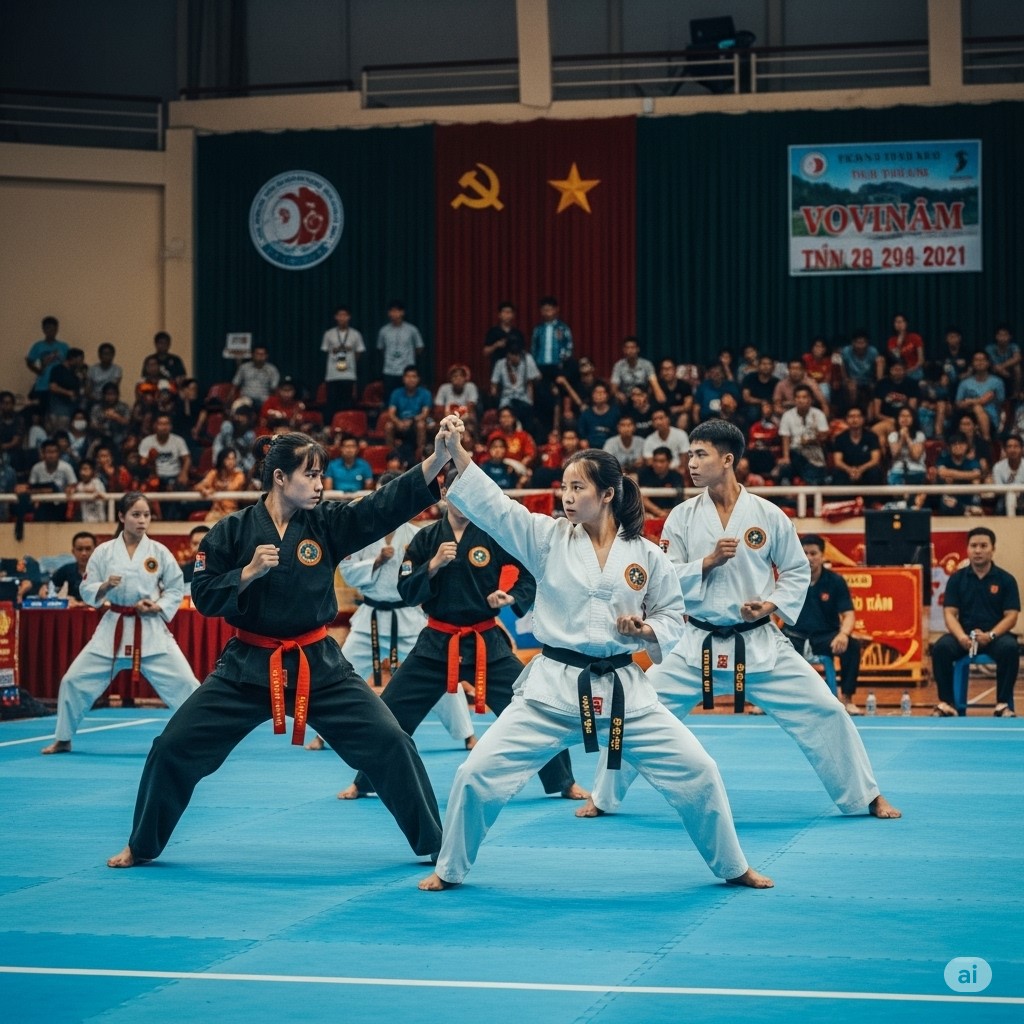
Youth tournaments offer a competitive platform. These events are organized locally, regionally, and nationally. Athletes compete in forms (quyền), sparring, and weapon techniques. Judges evaluate based on precision, power, and control.
Outside Vietnam, amateur Vovinam has gained traction. In France and Germany, some schools offer Vovinam as an extracurricular activity. Community centers and sports clubs also offer beginner classes for children and teens.
Amateur federations regulate competitions. They ensure safety, enforce rules, and promote fair play. Uniform standards exist across countries, fostering consistency in training and judging.
Annual training camps allow young athletes to learn from master instructors. These camps focus on technical development, strategy, and physical conditioning. Many participants use these events to prepare for national team selection.
Volunteer coaches often play a crucial role in amateur development. They dedicate time and resources to train youth. Many of these coaches were once competitors themselves.
Professional Vovinam Leagues Around the World
Professional Vovinam is relatively young but rapidly expanding. The Vietnam Professional Vovinam League (VPVL) is the sport’s premier professional competition. Founded in 2018, it features the nation’s top fighters. Matches are broadcast on national TV, attracting thousands of viewers.
The league uses a team format. Each team represents a region or sponsor. Fighters earn salaries, endorsements, and prize money. Matches include sparring, forms, and team routines. This format creates excitement and attracts fan engagement.
In France, the Ligue Française de Vovinam organizes high-level competitions. Though not fully professional, top French fighters receive funding and sponsorship. The league partners with regional sports federations to promote events.
Algeria and Morocco are developing similar professional circuits. These efforts are supported by national sports councils. The goal is to provide career pathways for talented athletes.
International Vovinam tournaments serve as major showcases for professionals. The World Vovinam Championship, Asian Vovinam Championship, and European Cup draw elite competitors. Athletes prepare for months, aiming to win medals and raise their rankings.
Some professional fighters travel globally to teach and compete. These athletes become ambassadors of the sport. They help bridge cultural gaps and promote international collaboration.
Efforts are underway to include Vovinam in multi-sport events. The Asian Games has expressed interest in adding it as a demonstration sport. Inclusion in events like the SEA Games and Universiade has already boosted its visibility.
Political and Social Significance
Vovinam carries deep political and social significance. In its early days, it symbolized resistance against colonial rule. It offered a cultural identity rooted in Vietnamese values. Practicing Vovinam was a statement of national pride.
During wartime, the sport was a tool for resilience. Soldiers trained in Vovinam to build strength and discipline. The art became a unifying force, cutting across regional and political divides.
In modern times, the government supports Vovinam as part of national heritage. Schools, universities, and military academies incorporate it into their programs. This endorsement reinforces the art’s cultural value.
Vovinam also promotes social cohesion. Training dojos welcome students from all backgrounds. Respect for instructors and fellow students is a core value. These principles foster mutual understanding and community building.
The sport has empowered many, especially youth and women. Female athletes compete at the highest levels and serve as instructors. Their success challenges traditional gender norms and inspires future generations.
Social programs use Vovinam to engage at-risk youth. In cities with high crime rates, martial arts offer a positive outlet. Training builds self-confidence, discipline, and purpose.
Vovinam has also contributed to Vietnam’s soft power. Cultural diplomacy efforts often include martial arts demonstrations. These exhibitions promote Vietnamese culture abroad.
Diaspora communities use the sport to stay connected to their roots. Practicing Vovinam helps second-generation immigrants understand their heritage. It serves as a bridge between old and new identities.
Rules and Structure of Vovinam Competitions
Vovinam competitions follow standardized rules to ensure fairness and safety. Events are divided into two main categories: forms (quyền) and combat (đối kháng).
Forms (Quyền):
These are pre-arranged sequences of movements. Each form showcases techniques like kicks, blocks, strikes, and throws. There are over 30 official forms, including both bare-handed and weapon-based routines.
Judges score forms based on:
- Technical accuracy
- Power and fluidity
- Balance and timing
- Expression of intent
Forms are divided into age and belt-level divisions. Some forms are performed solo, others in pairs or teams.
Combat (Đối Kháng):
Combat events pit two fighters against each other. Matches are divided by weight class, age, and gender. Each bout lasts three rounds of two minutes each.
Fighters wear protective gear, including headgear, gloves, and chest protectors. Legal techniques include punches, kicks, sweeps, and throws. Grappling and submissions are limited to specific circumstances.
Scoring criteria include:
- Clean strikes to the target area
- Effective throws or takedowns
- Defensive skill and ring control
Fouls include illegal hits, stalling, and unsportsmanlike conduct. Repeated violations result in point deductions or disqualification.
Victory can be achieved by:
- Higher score after three rounds
- Technical knockout
- Opponent disqualification
Referees are trained to enforce rules strictly. Medical staff are present at all official events. Athlete safety is a top priority.
Belt System:
Vovinam uses a belt-ranking system to signify experience. Beginners start with a blue belt. Advancement requires passing technical exams and demonstrating forms. Higher ranks include yellow, red, and white belts. Each promotion marks a deeper understanding of the art.
Conclusion
Vovinam is more than just a martial art. It is a symbol of heritage, unity, and resilience. Born out of a struggle for identity, it has grown into a global sport with deep cultural roots. Its practice strengthens the body, sharpens the mind, and uplifts the spirit.
Today, Vovinam continues to expand worldwide. From youth programs to professional leagues, the sport offers opportunities for all. Whether practiced in a school gym or on an international stage, its values remain constant — discipline, respect, and excellence.
As countries embrace Vovinam, they also embrace a piece of Vietnam’s soul. Through every form, every match, and every belt earned, the legacy lives on. It stands not just as a sport, but as a global movement built on tradition and hope.
Let the journey begin — with Vovinam.