
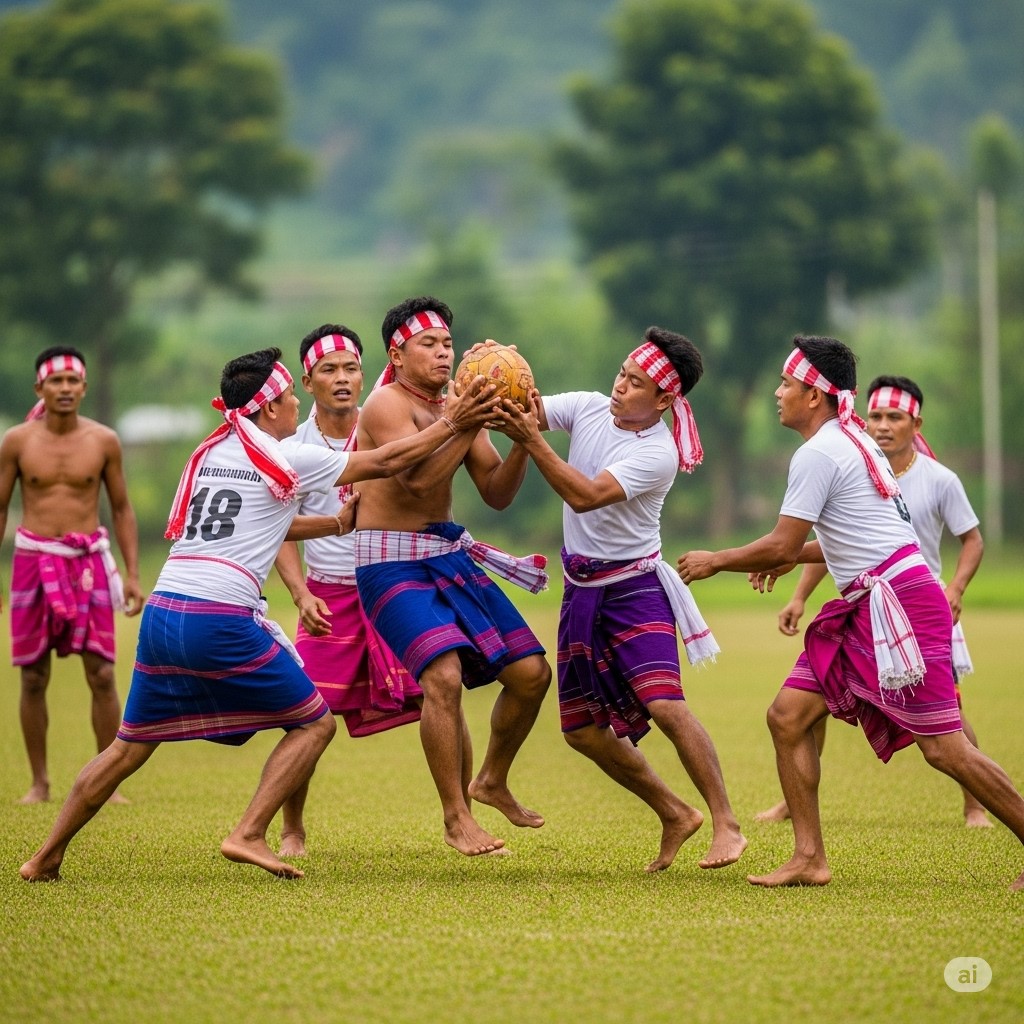
Yubi Lakpi: A Glimpse into the Ancient Sport of Manipur
Yubi Lakpi is a traditional sport from Manipur, a northeastern state in India. This fascinating game is not just a display of physical strength and agility. It also reflects deep-rooted cultural and spiritual values. While not widely known outside of its native region, Yubi Lakpi has sparked interest among enthusiasts of indigenous and ethnic sports. Today, it attracts attention for its unique blend of tradition, competition, and spectacle. In this post, we will explore the rich history, global footprint, amateur development, professional scene, social impact, and detailed rules of Yubi Lakpi.
The Origin and History of Yubi Lakpi
Yubi Lakpi, which translates to “coconut snatching,” has ancient origins. It has been played for centuries in Manipur, particularly during the Yaoshang festival, which coincides with Holi. The sport resembles modern rugby but uses a coconut instead of a ball.
Historical records suggest that Yubi Lakpi was part of royal celebrations. The king often witnessed matches held in his honor. Some believe that it was used to showcase warrior skills to the monarch. The coconut represented a divine offering, and possession of it symbolized power and favor.
Manipur’s Meitei community sees Yubi Lakpi as more than a game. It’s a ritualistic competition rooted in mythology and spiritual traditions. The game often takes place in temple grounds, indicating its sacred undertones.
Although no written records date back to its exact inception, oral history passes the legacy down generations. Elders recount tales of heroic matches played by village champions. These stories continue to inspire the youth of Manipur today.
Global Popularity of Yubi Lakpi
Yubi Lakpi has not achieved mainstream global recognition like football or cricket. However, in recent decades, efforts have been made to showcase it internationally. Cultural festivals, indigenous sports expos, and university seminars have presented the sport to wider audiences.
Interest has been growing in countries that focus on ethnographic research. Japan, South Korea, and Australia have documented Yubi Lakpi in cultural studies. Some universities even included it in their curriculum to study comparative sport sociology.
Additionally, the Indian diaspora in the United Kingdom and the United States has hosted exhibitions. These events aim to preserve and promote the traditional games of India. As a result, awareness about Yubi Lakpi has grown beyond India’s borders.
However, the sport remains mostly regional. It hasn’t yet reached the level of commercial success necessary for widespread international leagues or endorsements.
Amateur Yubi Lakpi: Youth, Schools, and Local Tournaments
In Manipur, Yubi Lakpi is often introduced to children during their school years. Local schools and youth clubs organize informal matches during cultural celebrations. These games emphasize teamwork, discipline, and respect for tradition.
Community centers and rural development programs also use the sport to engage young people. It helps them stay physically active and connected to their heritage. Training programs run by senior players or coaches are common in the Imphal Valley.
Youth tournaments take place during the Yaoshang festival, drawing large crowds. Teams represent different localities, and matches are highly competitive. Winners gain local fame and sometimes move on to more formal teams.
NGOs promoting indigenous sports sometimes sponsor youth leagues. They provide kits, training materials, and coaching support. These efforts ensure that the sport continues to thrive among the younger generation.
Several universities in Northeast India include Yubi Lakpi in intramural events. These amateur competitions serve as a bridge between local tradition and academic recognition. Enthusiastic students often take their love for the sport back to their home states, spreading its reach.
Professional Leagues and Organized Competitions
At present, Yubi Lakpi lacks a structured professional league similar to mainstream sports. However, annual competitions in Manipur have grown in scale and organization. The most prestigious match occurs at the Palace Compound during the Yaoshang festival.
The Imphal-based Traditional Games Association of Manipur has proposed forming a semi-professional league. This initiative aims to create formal teams, standardized rules, and proper athlete representation.
Several regional tournaments have started introducing cash prizes and sponsorships. These incentives attract more skilled athletes and improve the level of competition. In the future, these developments may lead to a national or even international Yubi Lakpi league.
Sports promotion councils in Northeast India have begun recognizing traditional games. They offer grants and infrastructural support for training camps. This recognition adds legitimacy to the push for professionalization.
Media coverage of major matches has also increased. Local television stations broadcast games, while online platforms stream highlights. These changes are helping to build a fan base and attract attention from outside Manipur.
Political and Social Significance of Yubi Lakpi
Yubi Lakpi holds deep political and social significance in Manipur. It is a symbol of identity and resistance. Amid efforts to preserve indigenous culture, the game represents the pride of the Meitei people.
Politicians and community leaders often attend major matches. Their presence elevates the event’s stature and aligns it with broader cultural preservation goals. The sport also promotes unity among local communities.
Socially, the game encourages youth engagement. It offers an alternative to urban distractions and promotes healthy competition. Parents often encourage their children to participate, viewing the sport as a link to their roots.
The game is sometimes used in campaigns for social awareness. Themes like environmental protection, anti-drug efforts, and community health are integrated into match-day events. This multifunctional role gives Yubi Lakpi more than just athletic importance.
In a state marked by political unrest and ethnic tension, the sport fosters communal harmony. It brings people together, offering moments of celebration and solidarity.
Rules and Gameplay
Yubi Lakpi shares similarities with rugby but follows unique traditional rules. A match usually involves seven players on each team. The main goal is to snatch a coconut soaked in oil and take it across a designated goal line.
The field measures about 45 meters in length and 18 meters in width. It’s usually a mud field to cushion falls. Players wear minimal gear, typically a loincloth or shorts.
Before the match, the coconut is ceremonially offered to the gods. It’s then handed to the chief guest, often a village elder or dignitary. This person tosses the coconut to begin the game.
Players try to grab the coconut while avoiding tackles from opponents. The player in possession must reach the goal line while adhering to the boundary lines.
No physical strikes are allowed, but aggressive blocking is common. Unlike rugby, there are no goalposts. Scoring is based on successful possession and goal-line crossing.
Referees enforce rules and settle disputes. A match typically lasts around 30 minutes, divided into two halves. The team with the most successful goal-line crossings wins.
Cultural protocols dictate player behavior. Disrespectful conduct is frowned upon and may result in disqualification. Elders and spectators expect sportsmanship and honor above all.
Teams often train together for months before major tournaments. Strategy plays a key role. Some teams focus on speed, others on brute strength. Tactical blocking, diversion, and coordination are crucial to success.
Conclusion
Yubi Lakpi is more than just a sport; it is a living cultural expression. Its rich history connects generations, while its gameplay captivates those lucky enough to witness it. Though not yet a global phenomenon, it continues to grow in popularity.
Efforts to professionalize the sport could change its trajectory in the coming years. Meanwhile, its social and political roles in Manipur remain profound. The game offers more than entertainment. It builds communities, preserves tradition, and teaches valuable life lessons.
With deeper investment and international interest, Yubi Lakpi may one day stand beside the world’s great traditional sports. Until then, it remains a cherished emblem of Meitei heritage and resilience.




