Goalie Evolution – Tech, Size, and Style Changes Over Time
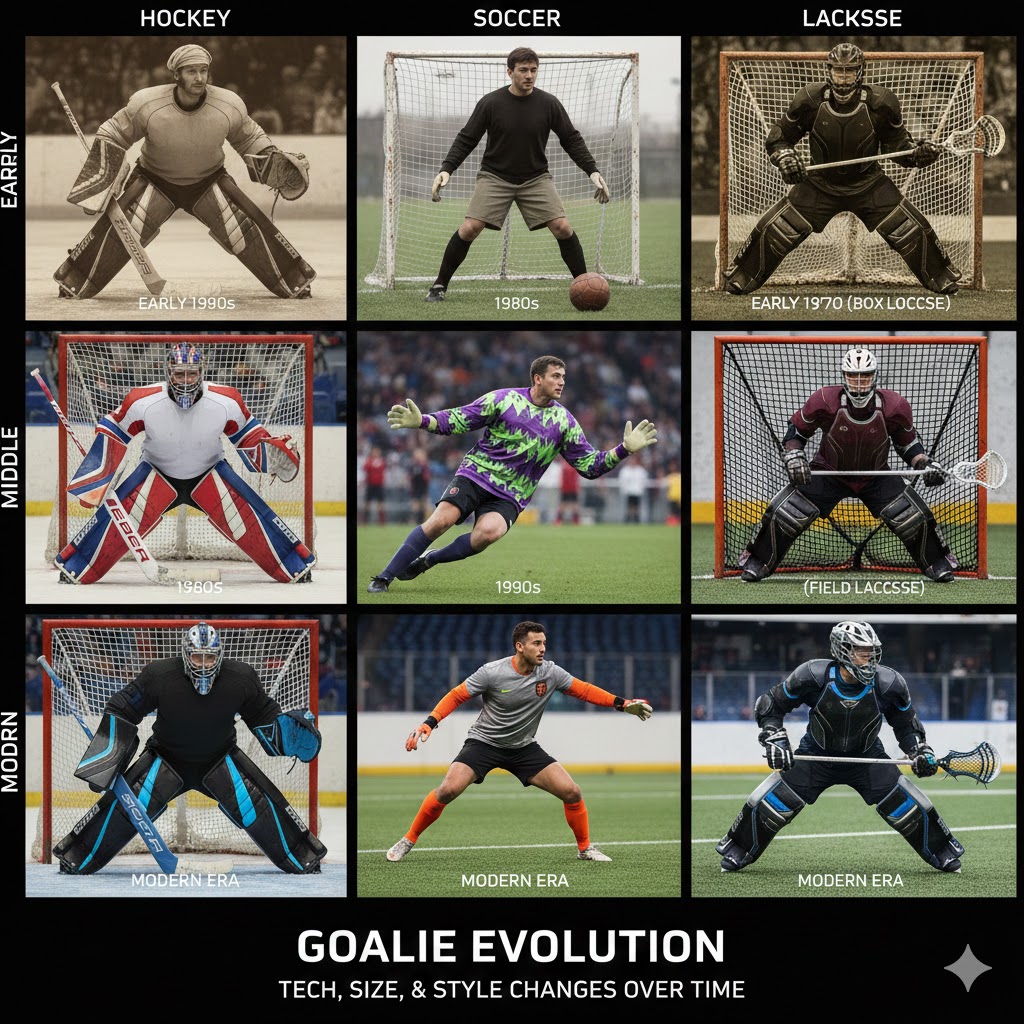
Goalie Evolution – Tech, Size, and Style Changes Over Time
Goaltending has never been static. Across multiple sports, the position has evolved faster than almost any other role on the field or ice. Watching this progression over decades, it becomes clear that goalie evolution—tech, size, and style changes over time—reflects broader shifts in athletic performance, technology, and strategy.
Goalies no longer rely solely on instinct. They rely on preparation, precision, and structure. While the position still demands creativity, the modern goalie looks very different than predecessors from even twenty years ago.
The Goalie as a Specialist
In the early years of many sports, goalies often played by feel. Technique mattered, but specialization remained limited. Training lacked structure. Equipment offered minimal support.
Today, the position demands specialization from a young age. Goalies train differently than field players. They study angles, patterns, and tendencies.
I see this specialization as the foundation of modern goalie evolution.
Technology Changed Everything
Technology reshaped goaltending more than any single factor. Equipment advances altered how goalies move, protect themselves, and cover space.
Pads became lighter. Gloves became larger. Materials improved flexibility and durability.
I believe technology transformed not only safety, but also confidence. Goalies now challenge shooters differently because equipment supports that aggression.
Hockey Goalies and Equipment Innovation
Hockey provides the clearest example of tech-driven change. Early goalies wore minimal padding. Reaction and bravery mattered most.
Modern goalies wear advanced composite pads designed for rebound control and mobility. Masks protect against high-velocity shots. Skates enhance lateral movement.
Today’s hockey goalie plays deeper into technique, relying on precision instead of desperation.
The Butterfly Revolution
The butterfly style reshaped hockey goaltending. Dropping to the knees while sealing the ice became the dominant technique.
This style prioritized angles, positioning, and patience. It reduced reliance on sprawling saves.
I see the butterfly not as a loss of creativity, but as an adaptation to faster shooters and heavier sticks.
Soccer Goalkeepers and Athletic Evolution
Soccer goalkeeping followed a different path. Early keepers focused on shot-stopping and bravery. Distribution mattered less.
Modern goalkeepers act as extensions of the defense. Foot skills matter. Decision-making matters.
I believe soccer’s evolution created the “sweeper-keeper,” blending traditional goalkeeping with field play responsibilities.
Size Matters More Than Ever
Goalie size increased across nearly every sport. Taller, longer athletes cover more space naturally.
In hockey, six-foot-four goalies became common. In soccer, height now feels mandatory at elite levels.
I see size as an advantage, but not a guarantee. Athleticism still separates good goalies from great ones.
Athleticism Defines the Modern Goalie
Modern goalies move better than ever. They slide laterally and recover quickly. They read plays faster.
Strength training, flexibility work, and mobility drills define preparation.
I believe the modern goalie resembles a hybrid athlete more than a specialist locked in the crease.
Training Science and Analytics
Training methods evolved alongside technology. Goalies now study shot charts, tendencies, and probabilities.
Analytics inform positioning. Video review sharpens decision-making.
I notice that goalies no longer guess. They anticipate based on data and repetition.
Style Changes Across Sports
Goalie style varies by sport, but trends overlap.
- Hockey emphasizes structure and angles
- Soccer emphasizes distribution and anticipation
- Lacrosse emphasizes reaction and hand-eye coordination
I see a shared emphasis on efficiency. Wasted movement no longer survives at elite levels.
Aggression Versus Patience
Older goalies often challenged aggressively. Modern goalies balance aggression with patience.
Positioning dictates movement. Overcommitting creates vulnerability.
I believe this balance defines elite goalies across sports today.
Puck and Ball Handling Skills
Goalies now initiate offense. In soccer, distribution launches attacks. In hockey, puck-handling breaks forechecks.
This evolution changed how teams build systems.
I see goalies as strategic weapons, not just last lines of defense.
Rule Changes Shaping Style
Rules influenced goalie evolution significantly. Restrictions on puck-handling altered hockey strategies. Back-pass rules transformed soccer.
These changes forced adaptation.
I believe rule adjustments accelerate innovation rather than restrict creativity.
Controversy Around Equipment Size
Equipment debates persist. Some argue gear reduces scoring. Others argue shooters adapt.
Leagues adjust regulations periodically to balance offense and defense.
I see this tension as healthy. It forces continual evolution on both sides.
Mental Game Has Never Been Bigger
Goalies face constant pressure. Mistakes feel magnified. Mental resilience defines longevity.
Sports psychology plays a larger role now. Preparation includes visualization and emotional regulation.
I believe mental toughness separates starters from backups more than physical tools.
Lacrosse Goalies and Reaction Evolution
Lacrosse goalies face extreme shot velocity. Protective gear improved safety. Technique improved efficiency.
Modern goalies rely less on reflex alone and more on positioning.
Lacrosse followed hockey’s path toward structured movement.
Youth Development and Early Specialization
Goalies now specialize earlier. Dedicated coaches guide development.
This trend raises concerns about burnout. However, it also raises skill ceilings.
I see balance as crucial. Athletic foundations still matter.
Creativity Still Matters
Despite structure, creativity survives. No two goalies look identical.
Elite goalies adapt mid-play. They read chaos effectively.
I believe structure creates freedom rather than eliminating it.
Comparing Past and Present
Older goalies played with grit and instinct. Modern goalies play with precision and preparation.
Neither era lacks greatness. They reflect different demands.
I see modern goalies as more technical and athletic, not necessarily better in spirit.
The Future of Goaltending
Future goalies will move faster. They will process information quicker. Equipment will evolve again.
Analytics will deepen. Training will refine further.
I believe goalie evolution will continue accelerating rather than stabilizing.
Why Goalie Evolution Matters
The goalie position influences entire systems. As goalies change, offenses adapt.
This relationship drives innovation across sports.
I see goalies as catalysts, not obstacles, to evolution.
Final Thoughts on Goalie Evolution – Tech, Size, and Style Changes Over Time
Looking across sports, the pattern remains clear. Goalie evolution—tech, size, and style changes over time—reflects broader athletic and strategic progress.
Modern goalies combine size, technique, athleticism, and mental discipline. They prepare differently. They perform differently.
I believe the position will always evolve because attackers never stop innovating. That constant chess match keeps goaltending one of the most fascinating roles in sports.