
Drone Racing – Is This the Next Big Competitive Sport
Drone Racing — Is This the Next Big Competitive Sport?
Every era produces a sport that feels ahead of its time. Some fade quickly. Others evolve slowly before finding their moment. Drone racing sits firmly in that uncertain space right now. It blends technology, athletic skill, speed, and spectacle in a way that feels both futuristic and strangely familiar.
I do not see drone racing as a guaranteed mainstream breakout. At the same time, I also do not see it remaining a novelty. What feels most accurate is somewhere in between. Drone racing occupies a hybrid lane, and that lane continues to widen.
The question is not whether drone racing grows. The question is how big it can realistically become.
What Drone Racing Actually Is
Drone racing is often misunderstood. Many assume it involves casual hobbyists flying toys in open fields. Competitive drone racing looks nothing like that.
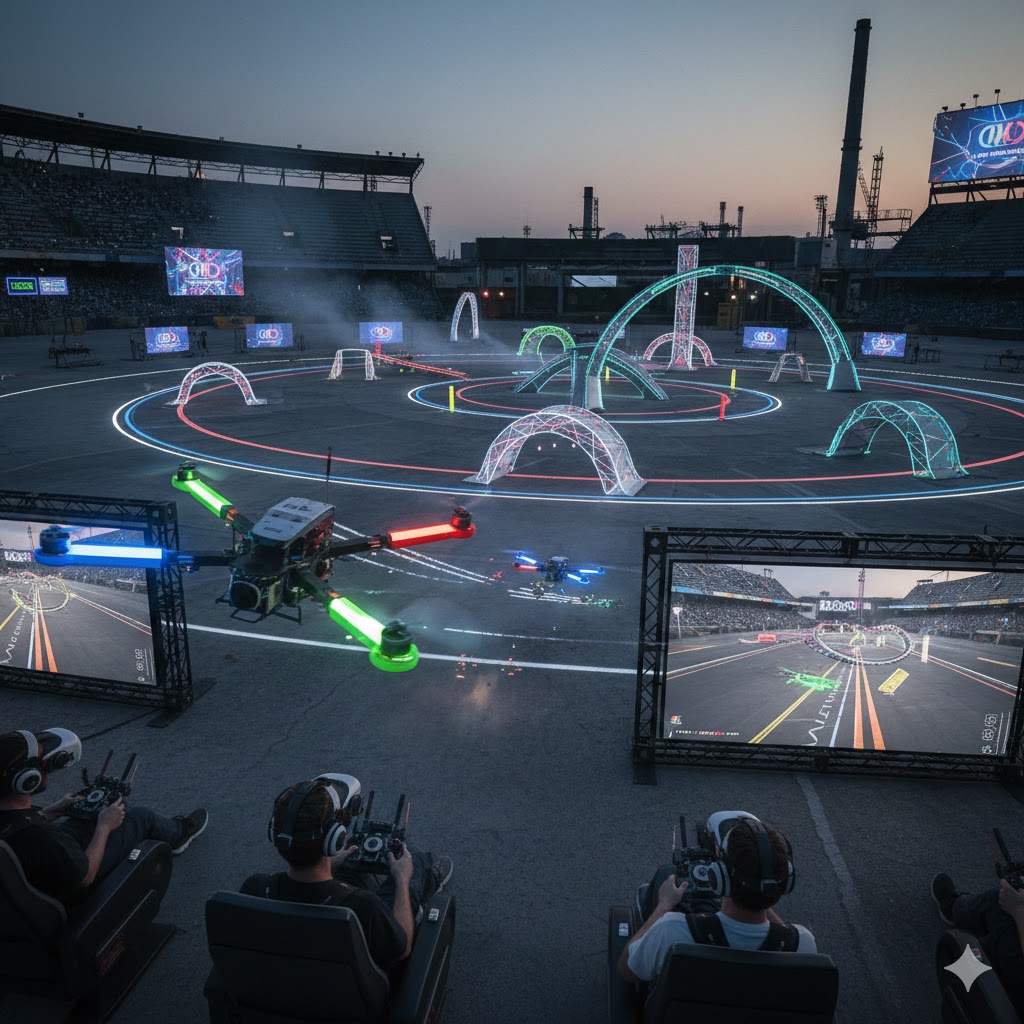
Pilots race high-performance drones through complex courses at extreme speeds. Races demand precision, spatial awareness, reflexes, and composure under pressure. One mistake ends a run instantly.
The drones move faster than the human eye can comfortably track. Pilots rely on first-person view goggles, which turns the experience into something closer to immersive simulation than traditional sport.
That uniqueness defines both the opportunity and the challenge.
The Core Appeal of Drone Racing
Speed Creates Immediate Excitement
Speed always attracts attention. Drone racing delivers speed instantly. Courses compress action into seconds. There is no downtime. There is no pacing issue.
The margin for error stays razor thin.
Technology Adds Intrigue
Drone racing feels modern because it is modern. Hardware matters. Software matters. Engineering decisions influence outcomes.
Fans interested in technology find depth. Casual viewers still appreciate spectacle.
Skill Separates Quickly
The skill gap becomes obvious immediately. Elite pilots control machines with surgical precision. Reaction times are elite. Mental focus remains constant.
This is not a gimmick. The difficulty is real.
Visual Spectacle Matters
Courses use lighting, tight angles, elevation changes, and enclosed spaces. Races look fast, chaotic, and intense.
That visual energy translates well to highlights.
Why Drone Racing Has Not Exploded Yet
Despite its strengths, drone racing faces real obstacles.
Limited Exposure Remains the Biggest Issue
Most sports fail not because they lack quality, but because people never see them. Drone racing suffers from visibility problems.
Mainstream audiences rarely encounter it organically. Coverage remains limited. Broadcast formats remain inconsistent.
Exposure drives legitimacy.
Accessibility Creates Barriers
Entry costs exist. Equipment requires investment. Learning curves are steep.
This slows grassroots growth compared to traditional sports.
Rules Can Feel Complex
To new viewers, formats feel unfamiliar. Technical language dominates explanations. Without context, races can blur together.
Clarity matters for mass adoption.
Tradition Still Matters
Sports grow faster when history supports them. Drone racing lacks generational attachment. That absence does not doom it, but it slows momentum.
Tradition builds trust.
A Hybrid Sport by Nature
Drone racing does not fit neatly into existing categories.
Motorsports Influence
Like motorsports, equipment matters. Engineering choices influence outcomes. Courses resemble circuits.
That comparison helps frame understanding.
Esports Energy
First-person view, digital interfaces, and technology-driven competition align closely with esports culture. Younger audiences connect naturally.
Drone racing feels native to streaming platforms.
Action Sports Vibe
Speed, risk, and creativity align with action sports. Personality-driven athletes thrive here. Style matters alongside results.
This hybrid identity may become its greatest advantage.
The Audience Drone Racing Attracts
Younger Fans Lead Adoption
Younger audiences embrace drone racing more quickly. They value speed, technology, and novelty. Traditional barriers feel irrelevant.
That demographic alignment matters long-term.
Tech Enthusiasts Find Depth
Fans interested in engineering, software, and innovation find layers beneath the surface. Drone racing rewards curiosity.
This depth supports loyalty.
Casual Viewers Need Guidance
Without context, casual viewers struggle. Presentation determines accessibility. Storytelling becomes essential.
Growth depends on communication.
Why Growth Feels Inevitable
I see drone racing becoming significantly bigger over the next decade.
Technology Always Moves Forward
Hardware improves. Costs decrease. Accessibility increases. These trends support expansion.
Technology rarely retreats.
Media Formats Favor It
Short-form content thrives. Highlights perform well. Social platforms reward speed and spectacle.
Drone racing fits modern consumption habits.
Integration Opportunities Expand
Drone racing integrates easily with gaming, streaming, and live events. Hybrid formats attract crossover audiences.
This flexibility creates opportunity.
What Drone Racing Needs to Level Up
Better Storytelling
Fans connect to people before formats. Pilots need narratives. Rivalries need framing. Stakes need explanation.
Storytelling builds attachment.
Clear Broadcast Standards
Consistent visuals, accessible commentary, and simplified explanations help audiences learn quickly.
Clarity converts curiosity into fandom.
Stronger Grassroots Pipelines
Youth access matters. Training programs matter. Community events matter.
Participation fuels legitimacy.
The Role of Esports in Growth
Drone racing benefits from esports infrastructure.
Streaming platforms support niche growth. Interactive viewing enhances engagement. Online communities amplify discussion.
Drone racing belongs comfortably in this ecosystem.
That alignment accelerates adoption.
Commercial Viability Is Improving
Sponsorship Makes Sense
Brands aligned with technology, energy, and innovation see value. Demographics appeal to advertisers.
Money follows relevance.
Event-Based Revenue Grows
Live events create atmosphere. Spectacle translates well in-person. Merchandise opportunities expand.
Experience matters.
Challenges That Will Persist
Drone racing will not replace traditional sports. It will not dominate television schedules overnight.
Mainstream acceptance takes time. Skepticism remains. Education remains necessary.
These challenges slow growth but do not stop it.
Why Drone Racing Matters Anyway
Drone racing represents something larger than wins and losses. It reflects how competition evolves alongside technology.
Sports adapt to culture. Culture adapts to tools. Drone racing sits at that intersection.
That alone gives it staying power.
Long-Term Outlook
Ten years from now, drone racing looks significantly bigger. It occupies a defined space rather than chasing universal approval.
Growth feels measured rather than explosive. Stability matters more than hype.
Niche does not mean small. It means focused.
Final Thoughts
Drone racing will not become the next global mega-sport. It also will not fade away. It sits in a growing middle ground where technology, competition, and entertainment overlap.
Speed draws attention. Skill earns respect. Exposure drives growth.
I see drone racing continuing to mature, refine its presentation, and expand its audience. It does not need to replace existing sports to succeed.
It simply needs to keep flying forward.