
College Football Realignment – Winners and Losers
College Football Realignment — Winners and Losers
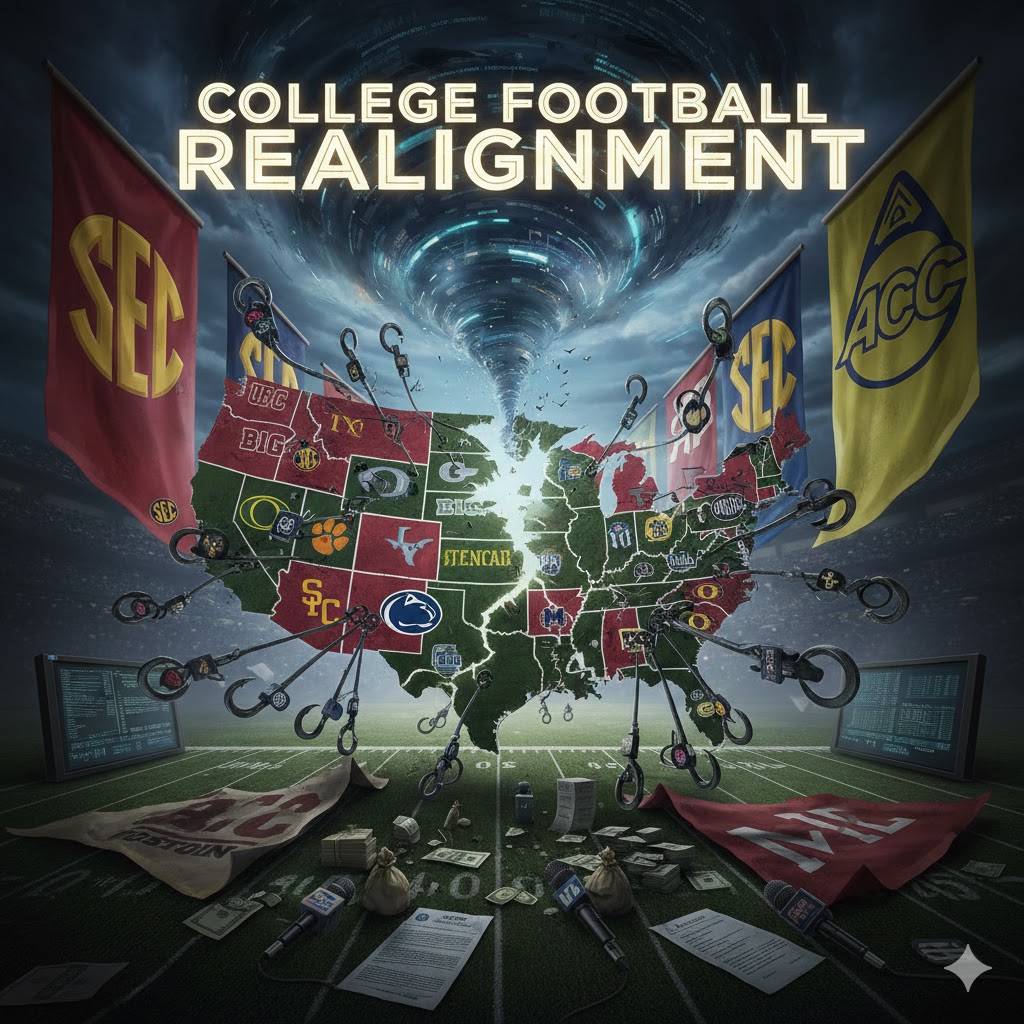
College football has never stood still, but the current wave of realignment feels fundamentally different. This is not just about geography anymore. It is about revenue, media leverage, brand power, and long-term survival. Every move seems calculated, and every decision leaves ripples across the sport.
I see realignment as a mix of progress and damage. Opportunity expands for some programs while others lose ground. Financial stability improves at the top while uncertainty grows below. The sport moves forward, but not everyone moves with it.
That tension defines this era of college football.
Why Realignment Accelerated So Quickly
Realignment did not happen overnight. Television contracts ignited it. Streaming accelerated it. Conference networks amplified it.
Money drives stability, and stability now requires scale. Conferences that fail to grow risk falling behind permanently. Universities understand this reality, even if fans struggle to accept it.
College football has entered an era where hesitation costs leverage.
The Biggest Winners of Realignment
Power Conferences Gain Control
Power conferences strengthened their grip on the sport. Expansion increases inventory, negotiating power, and media value. Larger footprints attract larger contracts.
Control consolidates at the top.
Elite Programs Secure Their Future
Blue-blood programs benefit the most. They gain access to bigger stages, stronger schedules, and guaranteed revenue streams. Recruiting improves through exposure alone.
Brand power compounds even more.
Television Networks Win Consistently
Networks orchestrate much of this movement. More high-profile matchups deliver better ratings. More inventory fills more time slots.
Content drives profit and profit dictates everything.
Universities Benefit Financially
For schools entering stronger conferences, financial security improves instantly. Revenue sharing increases. Facilities improve. Coaching salaries rise.
Survival becomes less fragile and the weak are left behind.
The Biggest Losers in the New Landscape
Mid-Major Programs Face the Steepest Climb
Mid-major programs suffer the most. Conference instability creates scheduling challenges. Recruiting gaps widen. Financial disparities grow harder to overcome.
Access narrows and the smaller leagues seem more insignifacant than ever before/
Traditional Rivalries Lose Ground
Historic rivalries lose annual relevance. Geography fades. Familiar matchups disappear or become infrequent.
Emotion gives way to economics because money rules.
Fans Absorb the Fallout
Fans lose identity anchors. Travel costs increase. Kickoff times feel less personal. Conference pride feels diluted.
Connection becomes transactional.
Student-Athletes Shoulder Uncertainty
Travel increases. Schedules tighten. Academic balance becomes harder. Stability shifts yearly.
Opportunity expands for some. Stress increases for many.
Competitive Balance Takes a Hit
Realignment reshapes competition in complex ways.
Super Leagues Begin to Form
Mega-conferences resemble professional leagues. Power concentrates. Access to championships narrows.
Parity declines as the smaller schools and conferences struggle to compete.
Depth Improves, Separation Widens
Top conferences deepen talent pools. Mid-tier conferences struggle to retain stars. Player movement accelerates.
The gap grows and grows and we are already seeing the affect.
Matchups Improve, Outcomes Become Predictable
Weekly schedules look stronger. Results become less surprising.
Drama shifts from competition to implications.
The Impact on Recruiting
Recruiting now follows exposure.
Programs in top conferences sell visibility. Recruits chase national stages. Development matters, but platform matters more.
Mid-major success stories still exist, but pathways shrink.
Financial Reality Shapes Decisions
College football no longer pretends amateur economics exist.
Revenue Gaps Expand
Top programs generate massive income. Others fight to maintain relevance. Investment follows revenue.
Equality fades into the abyss.
Facilities Arms Race Continues
Resources flow upward. Infrastructure improves for some while others struggle to keep pace.
Competitive imbalance reinforces itself.
How This Changes the Fan Experience
National Becomes More Important Than Local
College football feels less regional. National brands dominate conversation. Local identity weakens.
Tradition adapts or fades depending upon the teams and conferences.
Big Games Multiply
High-profile matchups increase. Casual viewers benefit. Hardcore fans adjust expectations.
Entertainment value rises…. or does it not?
Why Some Change Was Inevitable
Despite the damage, stagnation would have been worse.
College football needed clarity. Financial instability threatened programs. Media fragmentation demanded consolidation.
Realignment solves some problems while creating new ones. The almighy dollar controls everything.
Long-Term Outlook
Five to ten years from now, college football looks very different in my opinion.
Mega-Conferences Dominate
Two or three conferences control playoff access. Others serve developmental or regional roles.
Hierarchy solidifies and the rich get richer.
Semi-Professional Model Emerges
Player compensation grows. Roster management resembles professional sports. Governance adapts slowly.
Reality replaces pretense. College football is a business.
Revenue Gaps Become Structural
Economic tiers stabilize. Movement between tiers becomes rare.
Access becomes earned early.
Can Balance Be Restored?
Complete balance feels unrealistic. Adjustments may help.
Expanded playoffs offer opportunity. Scheduling reform helps exposure. Revenue sharing debates intensify.
Solutions exist, but incentives resist them.
Why This Era Still Matters
College football thrives on change. The sport survived scholarship limits, television expansion, and playoff debates. Realignment represents another evolution.
Growth remains possible. Identity reshapes.
The question becomes who adapts best and the quickest.
Final Thoughts
College football realignment creates winners and losers by design. Power concentrates. Opportunity narrows. Stability improves for some while uncertainty deepens for others.
I see this era as both necessary and damaging. Progress rarely arrives cleanly. Growth often sacrifices tradition.
College football continues forward because it must. Whether it carries everyone with it remains uncertain.
That tension defines the modern game.