
Cricket’s US Expansion – Can Major League Cricket Succeed
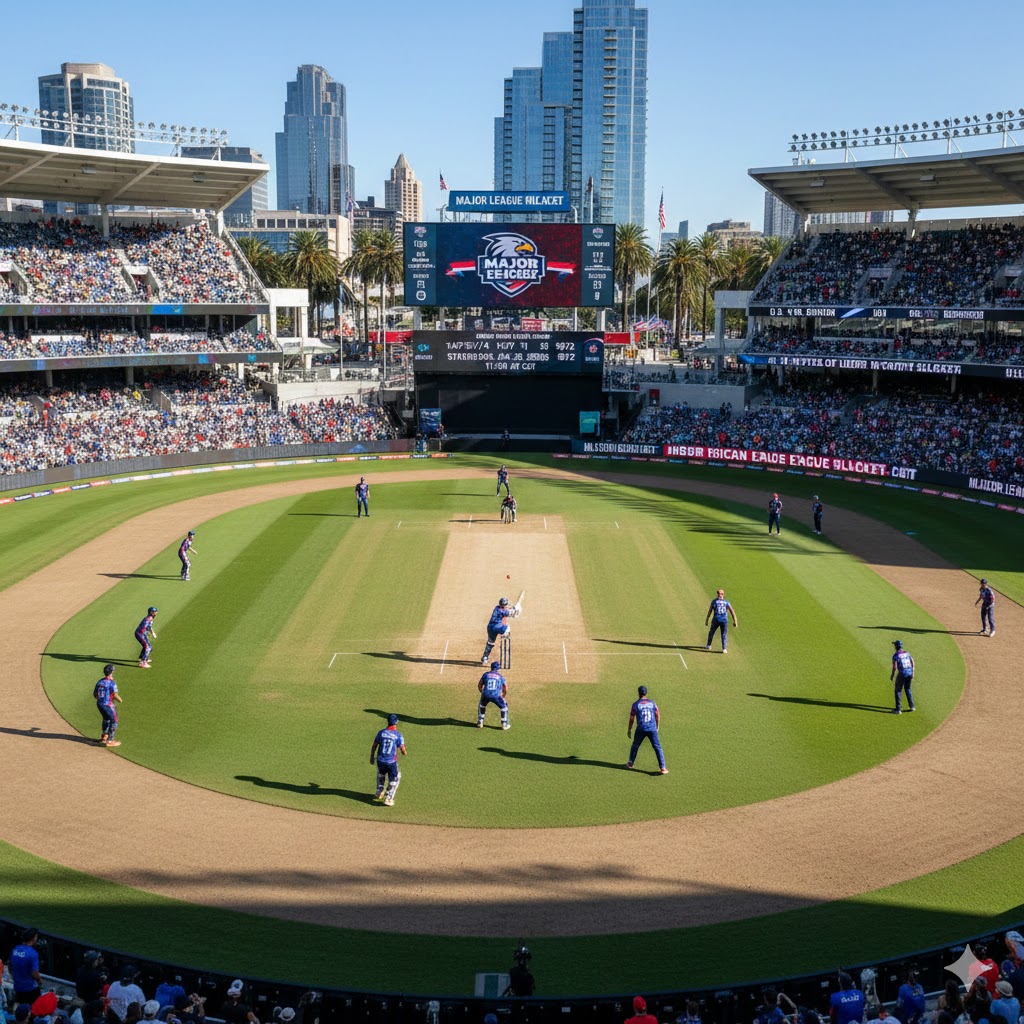
Cricket’s U.S. Expansion – Can Major League Cricket Succeed?
Cricket has long been one of the world’s most popular sports, commanding massive audiences across India, England, Australia, the Caribbean, and much of Africa. Yet in the United States, it has remained largely niche — followed passionately by immigrant communities but mostly ignored by the mainstream sports audience.
That’s starting to change.
With the launch of Major League Cricket (MLC), the sport is making its most serious push yet to establish a permanent foothold in the American sports landscape. Backed by serious investment, recognizable international stars, and a modern, U.S.-friendly format, MLC represents a bold experiment.
The question is simple but complex: Can Major League Cricket actually succeed in the United States?
Why the U.S. Market Matters So Much
From a global perspective, cracking the U.S. market is the ultimate prize. The country offers:
- Enormous media and sponsorship potential
- A massive youth sports ecosystem
- Strong ties to global entertainment and tech
- One of the most valuable sports advertising markets in the world
For cricket, success in the U.S. wouldn’t just be symbolic — it would be financially transformative.
Major League Cricket is designed specifically with that goal in mind.
What Major League Cricket Is Doing Right
1. A Format Built for American Audiences
MLC uses T20 cricket, the shortest and most explosive version of the game. Matches last about three hours, aligning closely with baseball and basketball broadcasts.
That matters. Traditional test cricket, which can last days, would never work in the U.S. sports market. T20 is fast, high-scoring, and entertainment-driven — far more accessible to casual fans.
2. Star Power and Global Credibility
MLC rosters feature internationally recognized players from top cricket nations. That instantly gives the league legitimacy and helps attract global viewers.
Just as importantly, it provides younger American players the chance to compete and train alongside elite talent, accelerating domestic development.
3. Serious Financial Backing
This isn’t a grassroots experiment. MLC has strong ownership groups, including ties to established cricket leagues and major investors.
That financial stability allows for:
- Professional facilities
- High-quality broadcasts
- Competitive player salaries
- Long-term planning
Most failed U.S. sports leagues collapse due to undercapitalization. MLC has avoided that early pitfall.
4. Built-In Fan Base
Unlike some emerging sports, cricket already has millions of passionate followers living in the U.S., particularly from South Asia, the Caribbean, the UK, and Australia.
That gives MLC a foundation most startup leagues never enjoy.
The Biggest Challenges Facing Major League Cricket
While the upside is real, the obstacles are equally significant.
1. A Crowded Sports Landscape
The U.S. sports calendar is brutal.
NFL, NBA, MLB, NHL, college sports, MLS, UFC, and now an expanding soccer presence all compete for attention. Cricket must fight not only for fans, but for media coverage, sponsors, and cultural relevance.
Even good leagues struggle to break through that noise.
2. Lack of Mainstream Understanding
Cricket’s rules, terminology, and pacing are unfamiliar to most Americans. While T20 helps, there’s still a learning curve.
For MLC to grow beyond immigrant communities, it must:
- Simplify messaging
- Invest heavily in education and storytelling
- Make the sport feel welcoming, not intimidating
That’s a long-term effort, not a one-season fix.
3. Youth Development Is Still Limited
Sustainable success requires grassroots growth. While cricket participation is increasing in pockets of the U.S., it still lacks:
- School-level integration
- Widespread youth leagues
- Clear development pipelines
Without young American-born players eventually becoming stars, mainstream adoption will be difficult.
4. Media Visibility Remains a Question
Success in the U.S. often hinges on broadcast exposure and highlight culture. Cricket must translate well to:
- Social media clips
- Sports talk shows
- Casual viewing environments
If MLC remains largely invisible outside niche platforms, growth will stall.
What Success Actually Looks Like for MLC
One key point matters here: success doesn’t mean competing with the NFL or NBA.
A realistic, sustainable version of success includes:
- Steady attendance growth
- Strong digital and streaming numbers
- Expansion into more U.S. cities
- Increased youth participation
- Gradual penetration into mainstream sports conversations
Cricket doesn’t need to dominate. It needs to belong.
MLS offers a useful comparison. Soccer didn’t explode overnight in the U.S. It grew slowly, intentionally, and patiently. Cricket’s path will likely look similar.
Why Major League Cricket Has a Real Chance
Timing matters — and MLC’s timing is better than ever before.
- The U.S. is more globally connected than at any point in history
- Streaming platforms allow niche sports to thrive without traditional TV dominance
- Younger fans are more open to international sports
- Immigration has expanded cricket’s cultural footprint
- Short-form, high-energy sports are thriving
MLC isn’t trying to Americanize cricket beyond recognition. Instead, it’s presenting cricket in a way that fits modern U.S. consumption habits.
That balance is critical.
Final Verdict: Can Major League Cricket Succeed?
Yes — but not quickly, and not easily.
Major League Cricket’s success will depend on patience, smart marketing, grassroots investment, and realistic expectations. The foundation is strong. The format makes sense. The backing is legitimate.
The biggest danger isn’t failure — it’s impatience.
If MLC commits to long-term growth rather than instant mainstream validation, it has a genuine chance to carve out a meaningful place in the U.S. sports ecosystem.
Cricket doesn’t need to conquer America.
It just needs to grow steadily — and stay.
And for the first time, that feels genuinely possible.