
How Motorsports Drivers Adapt to New Track Conditions
How Motorsports Drivers Adapt to New Track Conditions
In motorsports, the track never stays the same. Temperature shifts, weather changes, tire degradation, and evolving grip levels constantly reshape the racing surface. Drivers who succeed at the highest levels are not simply fast—they are adaptive, analytical, and composed under changing conditions.
Across Formula 1, NASCAR, IndyCar, and endurance racing, the ability to read a track in real time often determines who wins and who fades. Speed may earn pole position, but adaptation wins races.
Why Track Conditions Change Constantly
Unlike controlled indoor sports, motorsports unfold in dynamic outdoor environments. Throughout a race weekend, multiple factors transform the racing surface:
- Rising or falling air and track temperatures
- Rain, humidity, and wind
- Rubber buildup that increases grip on the racing line
- Oil, debris, or marbles off-line reducing traction
Even a perfectly tuned car on Friday can feel completely different by Sunday. Elite drivers anticipate this reality rather than react to it.
Adaptability becomes a competitive advantage before the race even begins.
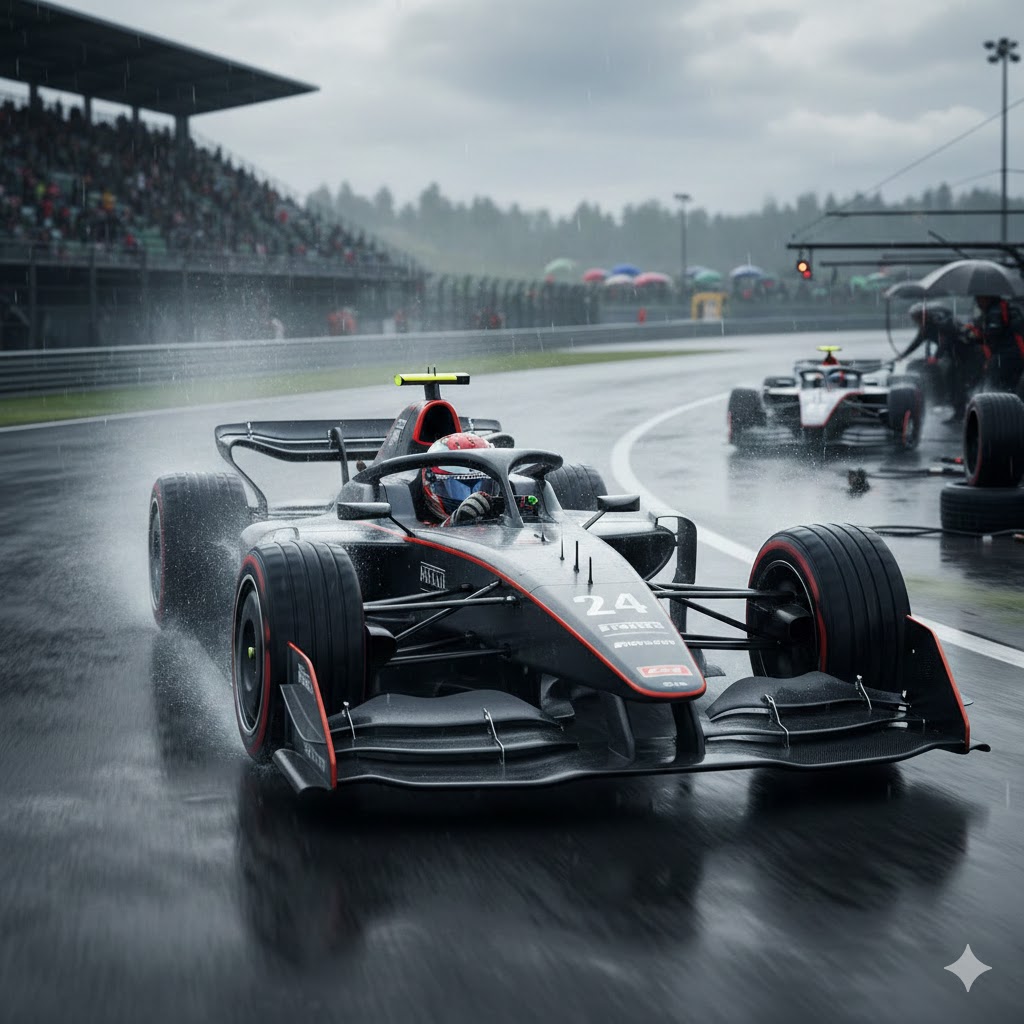
Weather: The Ultimate Game Changer
Weather remains the most dramatic variable in racing.
Rain reduces grip, extends braking zones, and punishes aggressive throttling. Drying conditions create even greater complexity, forcing drivers to judge when slick tires become faster than wet tires. This is often the most critical decision of a race.
Great wet-weather drivers share common traits:
- Smooth steering and throttle control
- Patience in low-grip corners
- Confidence attacking uncertain conditions
Historic wet races across Formula 1 and endurance racing show the same truth repeatedly. Talent becomes more visible and crucial when grip disappears.
Track Evolution and the Racing Line
As cars circulate, the track changes character.
Rubber laid down on the racing line increases grip and cornering speed. Off-line areas collect debris and tire marbles, becoming slippery and dangerous. Sun exposure and temperature shifts further alter traction from one lap to the next.
Drivers must constantly evaluate:
- Which corners are gaining grip
- Where braking points can move deeper
- When alternative lines become viable for overtaking
The fastest lap early in a race may be far from the fastest lap later.
Reading the conditions in real time separate elite drivers from the rest of the field.
Tire Wear and Strategic Adaptation
Tires connect the car to the track, making them central to adaptation.
Drivers manage:
- Grip loss over long stints
- Temperature windows for peak performance
- Degradation that changes balance and braking stability
Strategic decisions such as when to pit, which compound to select, and how hard to push often decide outcomes more than raw speed.
Endurance racing highlights this perfectly. Conserving tires while maintaining pace can produce massive gains over hours of competition.
In modern motorsports, tire intelligence equals race intelligence.
Car Setup Adjustments Across a Race Weekend
Adaptation begins before the green flag is ever waved.
Crew chiefs and drivers collaborate to refine:
- Suspension balance for grip and tire life
- Aerodynamic settings for speed versus stability
- Brake and differential tuning for corner control
What works in cool practice sessions may fail in hot race conditions. Drivers must provide precise feedback so teams can adjust quickly.
The partnership between cockpit feel and crew chief data becomes essential.
Real-Time Decision Making at Speed
During competition, adaptation happens in milliseconds.
Drivers continuously judge:
- Braking distance as grip changes
- Throttle application exiting corners
- Risk level when attempting overtakes
These decisions occur at extreme speed, often with limited visibility and intense pressure. Mental processing must remain calm, clear, and immediate.
Racing rewards those who can think as fast as they drive.
Feel and Feedback Through the Car
Technology provides data, but drivers still rely heavily on sensation.
Through steering vibration, seat movement, and tire response, drivers sense:
- Grip limits approaching
- Balance shifts between front and rear
- Surface irregularities or moisture
This physical awareness allows adjustments before telemetry confirms a problem.
Driver instinct remains a powerful tool even in this data-driven era.
Communication With Crew Chief
Adaptation is never a solo effort.
Drivers relay critical information by radio:
- Tire condition and grip level
- Weather intensity in specific corners
- Balance changes during fuel burn-off
Crew chiefs translate this feedback into strategy calls and setup tweaks. Clear, calm communication often leads to smarter decisions under pressure.
Great teams function as a single unit spread across car and pit wall.
Balancing Risk and Aggression
Changing conditions force constant risk evaluation.
Push too hard in low grip, and mistakes follow. Drive too cautiously, and positions disappear. Elite drivers find the narrow space between control and commitment.
Championship contenders consistently:
- Attack when opportunity appears
- Protect the car when conditions worsen
- Adjust mindset as races unfold
The ability to master this psychological balance defines long-term success.
Legendary Examples of Adaptation
Motorsports history is filled with drivers known for mastering changing conditions.
Wet-weather specialists, endurance legends managing tires through the night, and champions making perfect strategy calls all demonstrate the same core strength: situational awareness under pressure.
Their victories reinforce the simple lesson that raw speed starts the conversation, but adaptability finishes it.
Technology and Instinct: An Equal Partnership
Modern racing features advanced simulation, predictive weather models, and real-time telemetry. These tools sharpen preparation and guide strategy.
Yet technology cannot replace human judgment inside the cockpit. Drivers still interpret grip, choose braking points, and manage fear at 200 miles per hour.
The future of motorsports will continue blending:
- Data-driven precision
- Human instinct and courage
Neither alone is enough. Together, they create champions.
Why Adaptability Defines Great Drivers
Across every major racing discipline, the same pattern is crystal clear.
Drivers who consistently win are those who:
- Learn tracks quickly
- Adjust to weather without panic
- Protect tires while maintaining speed
- Communicate clearly with their teams
- Make smart decisions under pressure
Adaptation transforms uncertainty into opportunity and in motorsports, uncertainty is constant.
Final Thoughts
New track conditions are not obstacles as much as they are tests. Each shift in weather, grip, or tire performance challenges drivers to respond with intelligence, control, and confidence.
The greatest competitors do more than react.
They anticipate, interpret, and evolve lap after lap.
That ability to remain fast while everything changes is what ultimately separates good drivers from champions.