
What Makes a Great Tennis Doubles Team
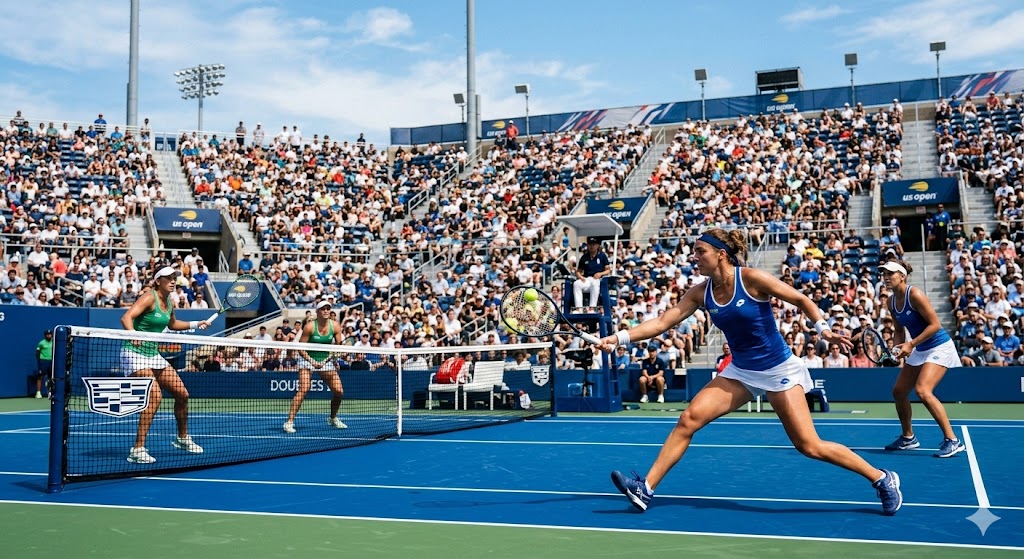
What Truly Makes a Great Tennis Doubles Team? Why Chemistry Beats Talent Every Time
At first glance, tennis doubles looks simple.
Put two talented players on the same side of the net and let them go to work.
But anyone who has watched elite doubles — or played it seriously — knows that’s not how it works.
In fact, history has proven something surprising: two great singles players don’t automatically make a great doubles team. Sometimes they don’t even make a good one.
Because great doubles isn’t about talent alone.
It’s about chemistry, role clarity, communication, and tactical discipline — all operating at high speed.
Let’s break down what actually separates average partnerships from championship-caliber teams.
Complementary Skill Sets — Not Identical Games
One of the biggest myths in tennis is that symmetry creates success.
It doesn’t.
The best doubles teams typically combine contrasting strengths that fit together like puzzle pieces.
Think about what doubles demands:
- Aggressive net presence
- Sharp reflex volleys
- Strong serve placement
- Smart return positioning
- Poaching instincts
- Court awareness
One player might dominate at the net with lightning-fast hands. The other might control points from the baseline with heavy, consistent groundstrokes.
When roles complement instead of compete, the court feels bigger — and opponents feel pressure from both sides.
Two baseline grinders? That can work.
Two serve-and-volley attackers? Sometimes.
But often, balance wins championships.
Defined Roles: Who Owns What?
Great doubles teams understand responsibility.
Who takes the middle ball on the forehand side?
Who calls serve placement on big points?
Which player leads communication during tight moments?
Uncertainty creates hesitation. And in doubles, hesitation costs points.
Elite partnerships establish:
- Clear middle-ball priority
- Designated serve patterns
- Agreed-upon poaching signals
- End-of-point communication habits
When both players know their lane, they move with conviction.
And conviction wins points.
Communication: The Hidden Weapon
You can spot strong doubles teams before the first serve.
They talk, make eye contact, and tap rackets.
They reset quickly after lost points.
Communication in doubles isn’t optional — it’s structural.
It includes:
- Pre-point strategy discussion
- Hand signals behind the back
- Quick emotional resets
- Encouragement after mistakes
Silence creates doubt.
Constant, calm communication builds rhythm and trust.
And trust is everything when two players are sharing responsibility on a 78-foot court.
Tactical Discipline Beats Hero Shots
Doubles is a chess match played at sprint speed.
Great teams don’t just hit good shots — they build patterns.
They serve wide to open the middle.
Second serves are attacked
They crowd the net on big points.
They pressure the returner’s weaker side repeatedly.
Average teams go for spectacular winners.
Elite teams create uncomfortable decisions.
That’s the difference.
Doubles rewards structure. It punishes freelancing.
Net Play Is Non-Negotiable
Here’s a simple truth: if you can’t control the net, you won’t win consistently in doubles.
The best teams close space aggressively.
They understand:
- Proper volley positioning
- Angle creation
- When to fake poach
- When to fully commit
Reaction time at the net decides matches. The player who anticipates better usually dictates the point.
That’s why many great doubles players may not be top singles stars — but their net instincts are elite.
Emotional Stability Under Pressure
Doubles magnifies emotion.
Missed shots affect two players, not one.
A slump doesn’t just stay personal — it becomes shared tension.
That’s why emotional maturity matters.
Great teams:
- Avoid visible frustration
- Reset quickly after breaks of serve
- Support rather than criticize
- Stay composed in tiebreaks
Momentum swings faster in doubles because points are shorter and breaks matter more.
Stable teams weather storms. Fragile teams unravel quickly.
Chemistry: The Multiplier
This is the part you can’t measure with statistics.
Chemistry.
Some teams just click.
They read each other’s movements instinctively. and anticipate coverage. They move in sync without speaking.
You see it in long-standing partnerships — players who trust each other’s decision-making completely.
That trust allows aggressive play.
Without trust, players hesitate.
And hesitation is deadly at the net.
Adaptability Wins Championships
The best doubles teams adjust mid-match.
If the returner starts chipping low, they modify positioning.
If opponents counter poaching, they fake and hold.
When lobs become frequent, they adjust depth.
Static teams lose.
Adaptive teams evolve point by point.
Why Singles Greatness Doesn’t Guarantee Doubles Success
It’s worth repeating.
Being a dominant singles player does not automatically translate to doubles excellence.
Singles rewards:
- Court coverage
- Physical endurance
- Baseline consistency
- Individual problem-solving
Doubles rewards:
- Coordination
- Shared decision-making
- Explosive net reactions
- Tactical precision
They are related — but not identical disciplines.
That’s why some singles legends never dominate doubles, while specialized doubles players build Hall-of-Fame careers.
Final Thought: Doubles Is About Partnership, Not Ego
At its highest level, doubles is a study in partnership.
It requires surrendering individual spotlight for collective execution.
The great teams understand something fundamental:
You don’t win doubles by trying to be the hero.
You win by being reliable, disciplined, and connected.
Talent matters.
But chemistry, clarity, and trust?
They matter more.