
How Streaming Changed Sports Broadcasting
How Streaming Changed Sports Broadcasting Forever
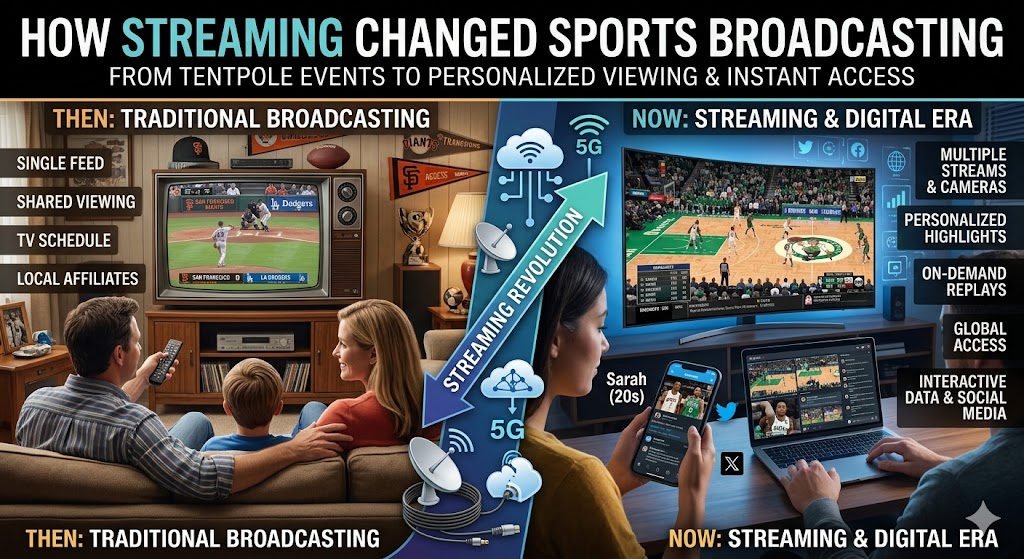
For most of the 20th century, sports broadcasting followed a predictable formula. Fans gathered around a television at a specific time, tuned into a network, and watched whatever game the schedule offered.
Then streaming arrived.
At first, it felt like a small shift. Maybe a few extra games online. A supplemental service here or there. But over the past decade, streaming hasn’t just added another viewing option—it has fundamentally reshaped how sports are produced, distributed, and consumed.
Today, fans can watch games on phones, tablets, laptops, and smart TVs from virtually anywhere. Entire leagues now rely on digital platforms to reach audiences. And traditional broadcasters are scrambling to adapt.
Streaming didn’t just change sports broadcasting. In many ways, it reinvented it.
From Fixed Schedules to On-Demand Viewing
One of the biggest changes streaming introduced is flexibility.
Traditional television forces fans to watch games at a specific time. Miss kickoff, tip-off, or the opening pitch, and you’re out of luck unless highlights appear later.
Streaming platforms changed that dynamic.
Fans can now:
- Watch games live across multiple devices
- Pause and rewind key moments
- Access condensed game replays
- View highlights almost instantly
This flexibility matters, especially for younger audiences who are used to consuming content on demand.
Instead of adjusting their schedule to watch sports, fans expect sports to adjust to their schedule.
That shift alone has altered how leagues package and distribute their games.
Global Access Expanded Overnight
Streaming also eliminated one of the biggest limitations in traditional sports broadcasting: geography.
In the past, access to games depended heavily on regional television rights. Fans outside certain markets often struggled to watch their favorite teams.
Streaming platforms opened those doors.
A fan in Europe can now follow an American team every week. A basketball fan in Asia can watch late-night games live. Smaller leagues can reach international audiences without negotiating dozens of regional TV deals.
This global accessibility has helped many sports expand faster than ever before.
Leagues once limited to local markets now operate with worldwide fanbases.
New Players Enter the Sports Media Landscape
For decades, sports broadcasting belonged to a small group of television giants.
That landscape looks very different today.
Streaming services and tech companies have aggressively entered the sports rights market, including:
- Amazon
- Apple
- YouTube
- Netflix
These companies bring enormous financial resources and global platforms.
Their involvement has driven up media rights deals and forced traditional networks to rethink their strategies.
Leagues benefit from this competition. The more bidders involved, the more valuable their content becomes.
Data and Personalization Are Now Part of the Broadcast
Streaming platforms don’t just deliver video. They collect data.
That data allows broadcasters to personalize the viewing experience in ways traditional television never could.
For example, streaming platforms can offer:
- Multiple camera angles
- Alternate commentary feeds
- Real-time statistics overlays
- Interactive viewing features
Fans can customize how they watch a game instead of receiving a single broadcast feed.
In many cases, the viewing experience is becoming more interactive and analytical at the same time.
This is especially appealing to younger viewers who grew up with digital interactivity.
Niche Sports Finally Found Their Audience
Another major effect of streaming is the rise of smaller sports.
Traditional television has limited space. Networks prioritize events that guarantee large audiences. That left many niche sports with little exposure.
Streaming removed those barriers.
Now smaller leagues and emerging sports can broadcast events directly to dedicated communities online.
That shift helped sports like:
- Pickleball
- Disc Golf
- Drone Racing
find audiences that traditional television might have overlooked.
Streaming doesn’t require millions of viewers to justify coverage. A passionate niche audience can be enough.
And those communities often grow rapidly once visibility improves.
Broadcast Production Is Changing Too
Streaming has also altered how sports broadcasts are produced.
Traditional television required massive production teams, satellite trucks, and expensive infrastructure.
Streaming technology allows some events to operate with leaner production setups.
Smaller leagues can now broadcast professionally using:
- Remote production teams
- Cloud-based editing systems
- Digital distribution networks
This reduces costs and allows more events to be televised than ever before.
In some cases, entire leagues operate almost entirely through digital broadcasting.
Younger Fans Expect Streaming First
Perhaps the most important long-term shift involves audience expectations.
Younger viewers often prefer streaming platforms over cable television.
They expect:
- Mobile access
- Short-form highlights
- Interactive features
- Personalized content
For many younger fans, streaming isn’t an alternative. It’s the default.
Leagues that fail to adapt to that expectation risk losing the next generation of sports fans.
That reality is shaping broadcast negotiations across every major sport.
Traditional Networks Are Adapting
Despite the rapid rise of streaming, traditional television isn’t disappearing.
Instead, many broadcasters are blending television and digital distribution.
Networks now operate their own streaming platforms alongside traditional broadcasts.
Some games still air on television, while others stream exclusively online.
The goal is simple: meet fans wherever they prefer to watch.
The future of sports broadcasting will likely involve a hybrid model where television and streaming coexist.
Final Thoughts
Sports broadcasting has always evolved alongside technology.
Radio expanded the reach of games in the early 20th century. Television turned sports into global entertainment. Cable networks created 24-hour sports coverage.
Streaming represents the next major transformation.
It expanded access, introduced new competition in media rights, empowered niche sports, and gave fans unprecedented control over how they watch.
The result isn’t just a new delivery system.
It’s an entirely new sports viewing experience.
And in many ways, we’re only at the beginning of that transformation.