
Why Adaptive Sports Are Growing Globally
Why Adaptive Sports Are Growing Globally
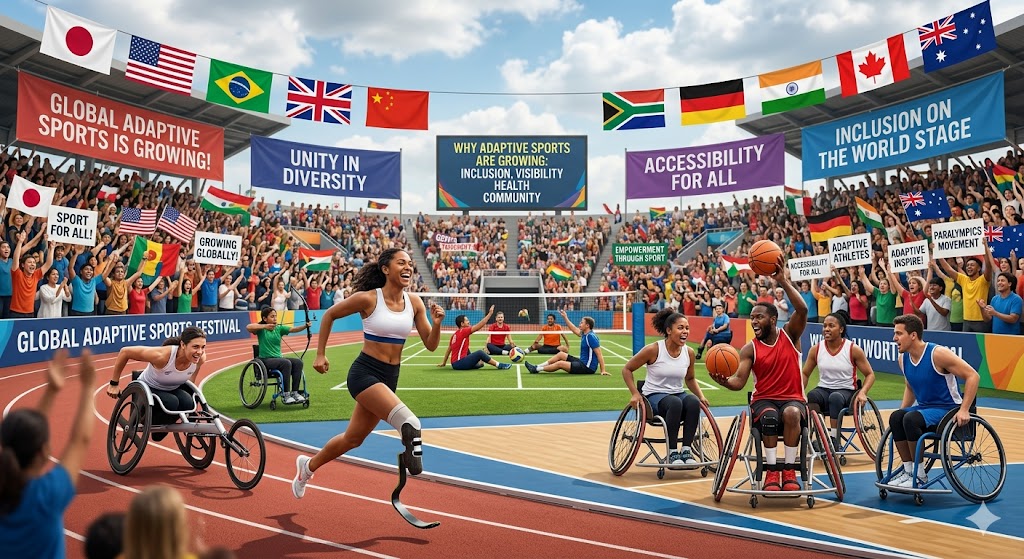
Adaptive sports are no longer a niche segment of the athletic world. Instead, they are rapidly becoming one of the most inspiring and fastest-growing movements in global sports today. From grassroots programs in small communities to international competitions watched by millions, adaptive sports are changing how people view ability, competition, and inclusion.
In recent years, participation has surged. Media coverage has expanded. Technology has advanced. At the same time, public perception has shifted in a powerful way. Together, these factors have fueled remarkable global growth.
So, why exactly are adaptive sports growing so quickly across the world? Let’s break it down.
What Are Adaptive Sports?
Adaptive sports are athletic activities modified to meet the needs of individuals with physical, sensory, or intellectual disabilities. These modifications can involve equipment, rules, or environments.
For example:
- Wheelchair basketball uses specialized sports chairs
- Blind soccer uses audible balls
- Sit-skiing allows athletes to compete on snow using seated equipment
The goal is simple. Provide equal opportunity for competition, recreation, and achievement.
However, adaptive sports are not just about participation. They are about performance, excellence, and pushing limits.
Increased Global Awareness
One of the biggest drivers of growth is awareness. People simply know more about adaptive sports today than ever before.
Major international events have played a huge role. The Paralympic Games, in particular, have seen record-breaking viewership in recent years. Millions of fans now follow adaptive athletes with the same passion they bring to traditional sports.
Social media has also accelerated this trend. Athletes share their stories directly with audiences. These stories are powerful. They show determination, resilience, and elite-level skill.
As a result, adaptive sports are no longer hidden. They are visible, celebrated, and respected.
Changing Perceptions of Disability
Another key factor is the shift in how society views disability.
In the past, disability was often associated with limitation. Today, the narrative is changing toward capability and potential.
Adaptive athletes are at the center of this shift. They demonstrate that physical challenges do not prevent high-level competition. In many cases, they redefine what athleticism looks like.
This change in mindset has encouraged more participation. It has also increased support from communities, sponsors, and organizations.
In short, perception has evolved. That evolution fuels growth.
Advances in Technology
Technology has transformed adaptive sports in dramatic ways.
Modern equipment is lighter, stronger, and more specialized. This allows athletes to perform at higher levels than ever before.
Consider a few examples:
- Carbon fiber prosthetics designed for running
- High-performance sports wheelchairs built for speed and agility
- Adaptive skiing equipment that enhances balance and control
These innovations do more than improve performance. They expand access.
Athletes who may not have been able to compete in the past can now participate fully. That alone has contributed significantly to global growth.
Greater Accessibility and Inclusion
Accessibility has improved across many areas of life, and sports are no exception.
Schools, community centers, and local organizations are increasingly offering adaptive programs. These programs often start at the youth level, which is critical.
Early exposure leads to long-term participation.
Additionally, many traditional sports organizations now include adaptive divisions. This integration helps normalize adaptive competition and brings it into the mainstream.
Inclusion is no longer an afterthought. It is becoming a standard.
Government and Organizational Support
Support from governments and non-profit organizations has played a major role in expansion.
Funding for adaptive sports programs has increased in many countries. This funding supports:
- Equipment purchases
- Coaching development
- Facility upgrades
- Athlete travel for competitions
International organizations also promote adaptive sports on a global scale. They create opportunities for competition and set standards for growth.
This structured support system allows adaptive sports to thrive rather than simply survive.
Media Coverage and Storytelling
Media coverage has improved dramatically over the past decade.
Major networks now broadcast adaptive sporting events. Streaming platforms make competitions accessible worldwide. Documentaries highlight athlete journeys.
These stories matter.
They connect with audiences on a human level. They showcase not only competition but also perseverance and triumph.
As coverage grows, so does interest. As interest grows, so does participation.
It becomes a cycle of expansion.
The Role of the Paralympics
The Paralympic Games remain the most influential force behind the growth of adaptive sports.
Held shortly after the Olympic Games, the Paralympics provide a global stage for elite adaptive athletes. The level of competition is extraordinary.
Records are broken. New stars emerge. Nations invest more in their programs.
Importantly, the Paralympics inspire the next generation. Young athletes see what is possible. They begin their own journeys.
This ripple effect extends far beyond the event itself.
Grassroots Programs Are Expanding
While global events grab headlines, grassroots programs drive long-term growth.
Local clubs and community initiatives introduce adaptive sports to beginners. These programs are often the first step for new athletes.
They provide:
- Coaching and mentorship
- Access to equipment
- A supportive environment
Grassroots efforts also build communities. Athletes form connections, share experiences, and support one another.
This foundation is essential. Without it, elite competition would not exist.
Health and Rehabilitation Benefits
Adaptive sports offer significant physical and mental health benefits.
For many participants, sports are part of rehabilitation. They help improve strength, coordination, and mobility.
Beyond physical health, there are psychological benefits:
- Increased confidence
- Reduced stress
- Stronger sense of identity
Participation also encourages independence and social interaction.
Healthcare professionals increasingly recognize these benefits. As a result, adaptive sports are often recommended as part of recovery programs.
This medical support further contributes to growth.
Corporate Sponsorship and Investment
Corporate interest in adaptive sports has increased substantially.
Brands are recognizing the value of inclusion and diversity. Supporting adaptive athletes aligns with these values.
Sponsorship deals provide:
- Financial support for athletes
- Increased visibility
- Professional opportunities
Companies also benefit. They connect with audiences in meaningful ways and demonstrate social responsibility.
This partnership between business and sport creates a powerful engine for growth.
Global Expansion Across Regions
Adaptive sports are expanding in both developed and developing countries.
In established markets, programs are becoming more sophisticated. Facilities improve. Coaching becomes more specialized.
In emerging regions, access is increasing for the first time. International organizations often help introduce adaptive sports to new communities.
This global reach ensures that growth is not limited to a few countries. It is truly worldwide.
Youth Participation Is Rising
Young athletes are joining adaptive sports in greater numbers.
Schools now include adaptive physical education programs. Youth leagues are forming. Families are becoming more aware of available opportunities.
This trend is critical.
Youth participation creates a pipeline of future athletes. It also normalizes adaptive sports from an early age.
As these young athletes grow, they bring new energy and talent to the global stage.
Breaking Down Barriers
Despite progress, challenges still exist. However, many barriers are being reduced.
Common obstacles include:
- Cost of specialized equipment
- Limited access to facilities
- Lack of awareness in certain regions
Efforts to address these issues are ongoing. Equipment donation programs, community funding, and advocacy campaigns all play a role.
Each barrier removed opens the door for more participation.
The Power of Community
Community is at the heart of adaptive sports.
Athletes often describe a strong sense of belonging. They support one another both on and off the field.
Families, coaches, and volunteers also form part of this network. Their involvement strengthens programs and encourages growth.
This community-driven approach creates a welcoming environment. It makes adaptive sports more accessible and sustainable.
Elite Competition Is Reaching New Levels
The level of competition in adaptive sports continues to rise.
Training methods have improved. Coaching has become more advanced. Athletes are pushing boundaries.
Records that once seemed unreachable are now being broken.
This increased competitiveness attracts more attention. Fans appreciate the high level of skill and dedication.
In turn, this visibility fuels further growth.
The Future of Adaptive Sports
Looking ahead, the future appears incredibly bright.
Several trends are likely to continue:
- Increased integration with mainstream sports
- Continued technological innovation
- Expanded global participation
- Greater media coverage
Adaptive sports will likely become even more prominent in the global sports landscape.
They will continue to challenge perceptions and inspire millions.
Final Thoughts
Adaptive sports are growing globally for many reasons. Increased awareness, changing perceptions, technological advances, and strong community support all play a role.
However, the most important factor may be the athletes themselves.
They compete with passion and overcome challenges. They redefine what is possible.
As more people discover adaptive sports, this growth will continue. And with it, the impact will only become greater.