
What Makes a Great Sixth Man in the NBA
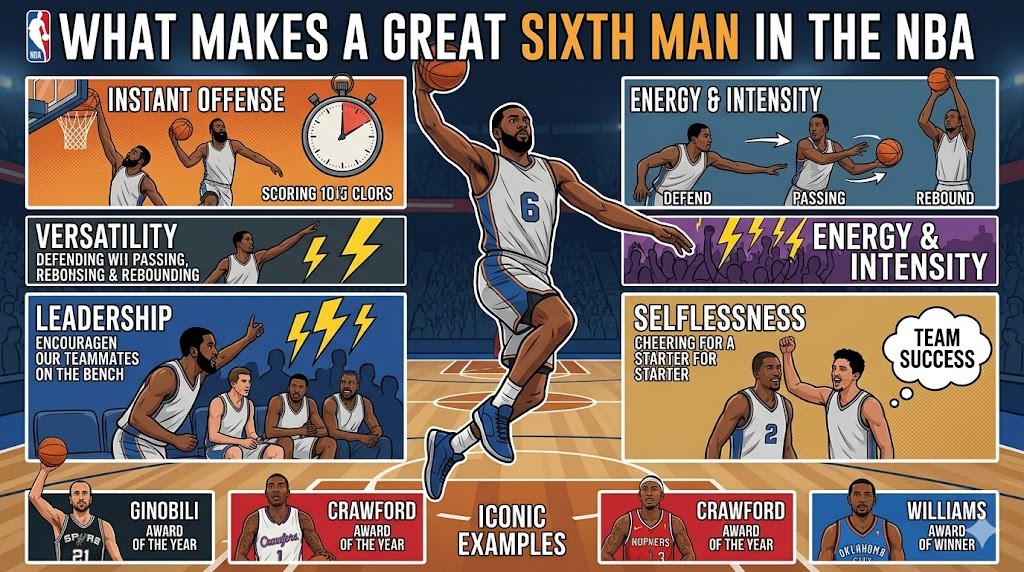
What Makes a Great Sixth Man in the NBA
In today’s NBA, the sixth man is no longer just a backup player. Instead, this role has become one of the most important pieces on a winning team. A great sixth man can change the pace of a game, swing momentum, and provide the spark that separates contenders from pretenders.
While starters get most of the attention, championship teams almost always have a reliable and dynamic player coming off the bench.
So, what exactly makes a great sixth man in the modern NBA?
Let’s break it down.
What Is a Sixth Man?
The sixth man is typically the first player off the bench. Although they are not part of the starting lineup, they often play starter-level minutes.
More importantly, they serve a specific purpose.
A sixth man is expected to:
- Maintain or elevate the team’s performance when starters rest
- Provide scoring, energy, or defense depending on team needs
- Adapt quickly to different game situations
In many ways, they are the bridge between the starting unit and the rest of the bench.
Instant Offense Is the Top Priority
The most common trait of elite sixth men is scoring ability.
When starters leave the game, offensive production can drop. A great sixth man prevents that from happening.
They do this by:
- Creating their own shot
- Attacking mismatches against second units
- Scoring quickly without needing plays designed for them
Many of the best sixth men are aggressive scorers who can heat up fast.
This ability to provide “instant offense” is often the difference in close games.
Energy and Momentum Shifts
Beyond scoring, energy is a defining characteristic.
A great sixth man changes the feel of the game the moment they step on the court.
They bring:
- Hustle plays
- Defensive intensity
- Fast-paced tempo
This energy can ignite teammates and energize the crowd.
Momentum in basketball is real. A strong bench presence can flip a game in just a few minutes.
Versatility Matters More Than Ever
The modern NBA values versatility, and sixth men are no exception.
Top bench players can:
- Play multiple positions
- Guard different types of players
- Contribute in various ways beyond scoring
This flexibility allows coaches to adjust lineups without losing effectiveness.
A versatile sixth man becomes a matchup weapon.
High Basketball IQ
Coming off the bench is not easy. Players must enter the game cold and immediately make the right decisions.
That requires a high basketball IQ.
Great sixth men understand:
- Game flow and timing
- When to be aggressive and when to facilitate
- How to exploit defensive weaknesses
They rarely force bad shots or make careless mistakes.
Instead, they play smart, efficient basketball.
Ability to Play With Different Lineups
Unlike starters, sixth men rarely play with the same group of players for extended periods.
They must adapt quickly.
This means:
- Building chemistry with both starters and bench players
- Adjusting to different roles depending on who is on the floor
- Filling gaps based on team needs
This adaptability is critical.
A great sixth man fits anywhere.
Defensive Impact
While scoring gets most of the attention, defense is equally important.
Some sixth men specialize in shutting down opponents.
They may:
- Guard the opposing team’s best bench scorer
- Provide perimeter or interior defense
- Create turnovers and fast-break opportunities
Defensive-minded sixth men are especially valuable in playoff situations.
They bring toughness and balance to the team.
Consistency Over Time
Anyone can have a good game. Great sixth men deliver consistently.
They provide:
- Reliable scoring or defense every night
- Stability when starters are off the floor
- Confidence for coaches and teammates
Consistency builds trust.
Coaches rely on sixth men to perform in critical moments. That trust is earned through steady play.
Mental Toughness and Acceptance of Role
One of the most overlooked aspects of being a sixth man is mindset.
Many sixth men have the talent to start. However, they accept a bench role for the benefit of the team.
This requires:
- Selflessness
- Confidence without ego
- Focus on winning over personal stats
A great sixth man embraces the role.
They understand their importance and take pride in it.
Clutch Performance
Sixth men are often on the floor during critical moments.
Why?
Because they produce.
Great sixth men:
- Hit big shots late in games
- Make smart decisions under pressure
- Deliver when it matters most
Their ability to perform in clutch situations adds tremendous value.
Leadership From the Bench
Leadership is not limited to starters.
Veteran sixth men often lead the second unit. They guide younger players and keep the team organized.
They:
- Communicate on the court
- Set the tone with effort and attitude
- Provide experience in high-pressure situations
This leadership strengthens the entire roster.
The Sixth Man Award and Its Impact
The NBA recognizes elite bench players with the Sixth Man of the Year award.
This award highlights the importance of the role.
Winners are typically players who:
- Score at a high level
- Impact games consistently
- Contribute to team success
Over time, the award has helped elevate the status of sixth men across the league.
Different Types of Sixth Men
Not all sixth men play the same role.
Some are:
Scoring Specialists
These players focus on putting points on the board quickly.
Defensive Stoppers
They come in to shut down key opponents.
Playmakers
They run the offense and create opportunities for others.
All-Around Contributors
They do a little bit of everything—scoring, defense, rebounding, and passing.
Each type brings value in different ways.
Why Sixth Men Are Critical to Championship Teams
Depth wins championships.
In a long season and especially in the playoffs, teams need more than just strong starters.
A great sixth man:
- Keeps the team competitive when starters rest
- Exploits weaker bench units
- Provides strategic flexibility
Many championship teams have relied heavily on their sixth man.
Without that contribution, sustained success is difficult.
The Evolution of the Sixth Man Role
The role of the sixth man has grown significantly.
In the past, bench players were seen as backups. Today, they are key contributors.
Modern trends include:
- Increased minutes for top bench players
- More offensive responsibility
- Greater emphasis on versatility
In some cases, sixth men even finish games over starters.
That shows how valuable the role has become.
The Future of the Sixth Man
Looking ahead, the importance of the sixth man will continue to rise.
As the NBA becomes faster and more skill-driven:
- Bench scoring will remain essential
- Versatility will become even more valuable
- Rotations may become more fluid
Teams that maximize their bench will have a clear advantage.
Final Thoughts
A great sixth man is far more than just a substitute. They are a difference-maker.
They score when it matters. They bring energy. They adapt to any situation. Most importantly, they help teams win.
In today’s NBA, where depth and versatility are critical, the sixth man plays a central role in success.
While they may not start the game, they often help decide how it ends.