
Fast Pitch Softball: A Deep Dive into a Globally Beloved Sport
Fast Pitch Softball is one of the most dynamic and exciting sports in the world today. Its fast-paced gameplay, strategic depth, and growing international presence have made it a beloved pastime for millions. This blog post explores the fascinating history, global appeal, rules, and significance of Fast Pitch Softball. It also examines its role in amateur and professional arenas.
The Origin and History of Fast Pitch Softball
The roots of Fast Pitch Softball trace back to Chicago in 1887. It began as an indoor variation of baseball. On Thanksgiving Day, a group of men waiting for a Harvard-Yale football game result began to play catch with a boxing glove. George Hancock, a reporter, chalked a diamond on the floor of the Farragut Boat Club. He used a broomstick as a bat and a boxing glove as a ball.
This spontaneous event laid the groundwork for what became indoor baseball. Within a few years, the sport moved outdoors. By the 1890s, it gained popularity under various names, including kitten ball and diamond ball.
In the early 1900s, the game evolved further. Underhand pitching became standard. The field and equipment were adjusted for safety and pace. Eventually, the sport split into two major types: slow pitch and fast pitch.
Fast Pitch Softball gained official recognition when the Amateur Softball Association (ASA) was founded in 1933. The ASA established standard rules and organized national competitions. This structure allowed the sport to grow rapidly, especially in schools and communities.
Women’s participation surged during World War II. Many men left for war, so women filled roles in sports. The All-American Girls Professional Baseball League emerged, but so did an increased focus on women’s Fast Pitch Softball.
Over time, international governing bodies like the International Softball Federation (ISF) and World Baseball Softball Confederation (WBSC) promoted global competition.
Global Popularity and Reach
Fast Pitch Softball enjoys widespread popularity across continents. In North America, especially the United States and Canada, the sport thrives at all levels. Schools, colleges, and professional teams attract large audiences. Japan and Australia also boast strong programs and international success.
In Latin America, countries like Mexico, Venezuela, and Puerto Rico have produced elite players and competitive national teams. In Asia, China and the Philippines actively support youth and women’s leagues.
Europe has seen steady growth. Nations like Italy, the Netherlands, and the Czech Republic have robust development programs. Each sends national teams to compete in world championships.
Africa has emerging programs in South Africa, Botswana, and Kenya. Development initiatives led by WBSC and other organizations have helped increase participation.
Softball also appears in global multi-sport events. It was introduced to the Olympics in 1996. Although removed after 2008, it returned for Tokyo 2020. Its presence on the Olympic stage has helped legitimize and elevate the sport internationally.
Youth and Amateur Fast Pitch Softball
Amateur Fast Pitch Softball is a cornerstone of the sport’s development. Youth leagues introduce children to fundamental skills, teamwork, and competition. Organizations like Little League Softball, USA Softball, and Pony Softball run structured leagues.
In the United States, girls often begin playing at age five or six. By middle school and high school, competitive travel teams form. These teams play in state, regional, and national tournaments. College scholarships are a common goal for talented players.
School-based programs are critical. High schools field varsity teams. Many states host playoffs and championships. Collegiate Fast Pitch Softball has become highly competitive. NCAA Division I programs attract national media attention and large crowds.
In Canada and Australia, school and club systems coexist. National bodies support both recreational and elite development.
Asian countries have integrated softball into physical education programs. Japan, in particular, has a structured pathway from elementary school through professional leagues.
Community leagues and amateur associations serve adult players. Local parks departments often sponsor recreational leagues. These leagues maintain community engagement and offer a lifelong connection to the sport.
Professional Fast Pitch Softball Leagues
Professional leagues are essential for player development and sport promotion. In the United States, Women’s Professional Fastpitch (WPF) is the primary pro league. It showcases elite athletes and offers young fans role models.
Japan’s JD League is one of the most successful professional softball leagues in the world. Sponsored by corporations, it includes dozens of teams and provides stable careers for players.
Australia has a national competition that highlights top talent. Its national team also competes at the highest levels internationally.
In Europe, professional opportunities are growing. Leagues in Italy and the Netherlands support domestic and international players.
The Olympics and World Games remain high-level competitive outlets. The WBSC Women’s Softball World Championship brings together top nations. These events provide global visibility and inspire the next generation of players.
Some countries also host showcase events and short-season leagues. These efforts aim to expand professional opportunities and media exposure.
Rules of Fast Pitch Softball
Fast Pitch Softball follows a set of distinct and precise rules. The game consists of seven innings. Each team bats once per inning. The objective is to score more runs than the opponent.
Teams have nine players on the field. The field includes bases arranged in a diamond: first, second, third, and home. The distance between bases is 60 feet. The pitching distance varies by age and gender but is usually 43 feet for women and 46 feet for men.
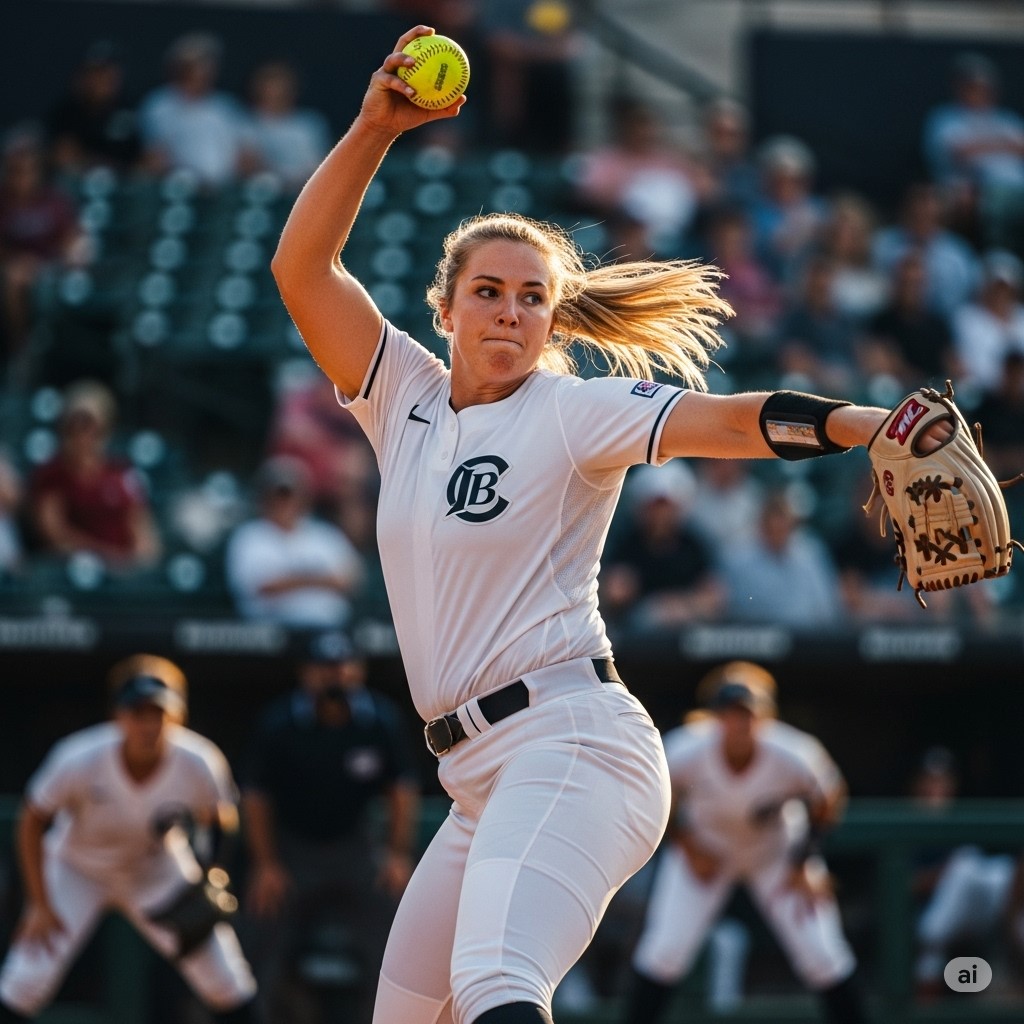
Pitchers deliver the ball underhand with a windmill motion. They must release the ball with at least one foot on the pitching rubber. Speeds can exceed 70 miles per hour.
Batters aim to hit the ball into play and reach base. They can score by circling the bases and touching home plate. Fielders attempt to record outs through catches, tags, and force plays.
Three outs end the half-inning. Common methods of making outs include strikeouts, groundouts, flyouts, and tag outs.
The strike zone ranges from the batter’s knees to their chest. Umpires enforce the rules and call balls and strikes.
Fast Pitch Softball allows for bunting, stealing bases, and hit-and-run plays. This adds strategic complexity and excitement.
Games tied after seven innings continue into extra innings. International tiebreaker rules may place a runner on second base to encourage scoring.
Substitution rules allow for re-entry. Teams often use pinch runners or hitters in key moments.
Political and Social Significance
Fast Pitch Softball holds considerable social and political importance. It has empowered women globally through sport. Title IX legislation in the United States drastically expanded female sports participation, with softball as a primary beneficiary.
The sport promotes gender equity. It provides women with scholarship opportunities and professional careers. Many former players become coaches, administrators, and advocates for equality.
Softball also fosters international goodwill. World championships and Olympic games bring together nations in friendly competition. Cultural exchange and mutual respect flourish.
In developing nations, softball programs teach life skills. Girls gain confidence, leadership, and teamwork abilities. Organizations like Right to Play and Play Like a Girl use softball as a tool for education and social change.
Politically, the fight for Olympic inclusion has mobilized federations worldwide. Persistent lobbying helped restore the sport to the Olympics in Tokyo 2020.
Events like the Women’s College World Series draw national attention. They show that women’s sports can achieve commercial success. This visibility challenges outdated stereotypes and pushes for broader media coverage.
In communities, local leagues unite people across backgrounds. They offer inclusive spaces and promote healthy lifestyles. Fast Pitch Softball teaches discipline, cooperation, and perseverance.
Conclusion
Fast Pitch Softball is much more than a game. It is a sport steeped in history, rich in strategy, and powerful in impact. From its humble beginnings in a Chicago gym to the grand stage of the Olympics, it has captivated millions.
Across continents, young players learn lessons that last a lifetime. They grow into leaders, teammates, and champions. Professional leagues showcase talent and drive visibility. Social initiatives use the sport to uplift and educate.
The rules are designed for fast action and deep thinking. Spectators enjoy thrilling matchups and dramatic moments. Coaches and athletes strive for excellence and push the game forward.
In every inning, Fast Pitch Softball tells a story of determination and progress. Its influence spans far beyond the diamond. Whether in Tokyo, Toronto, or Tulsa, the spirit of the game unites players and fans.
For anyone seeking a sport with heart, history, and hope, Fast Pitch Softball delivers every time.




