
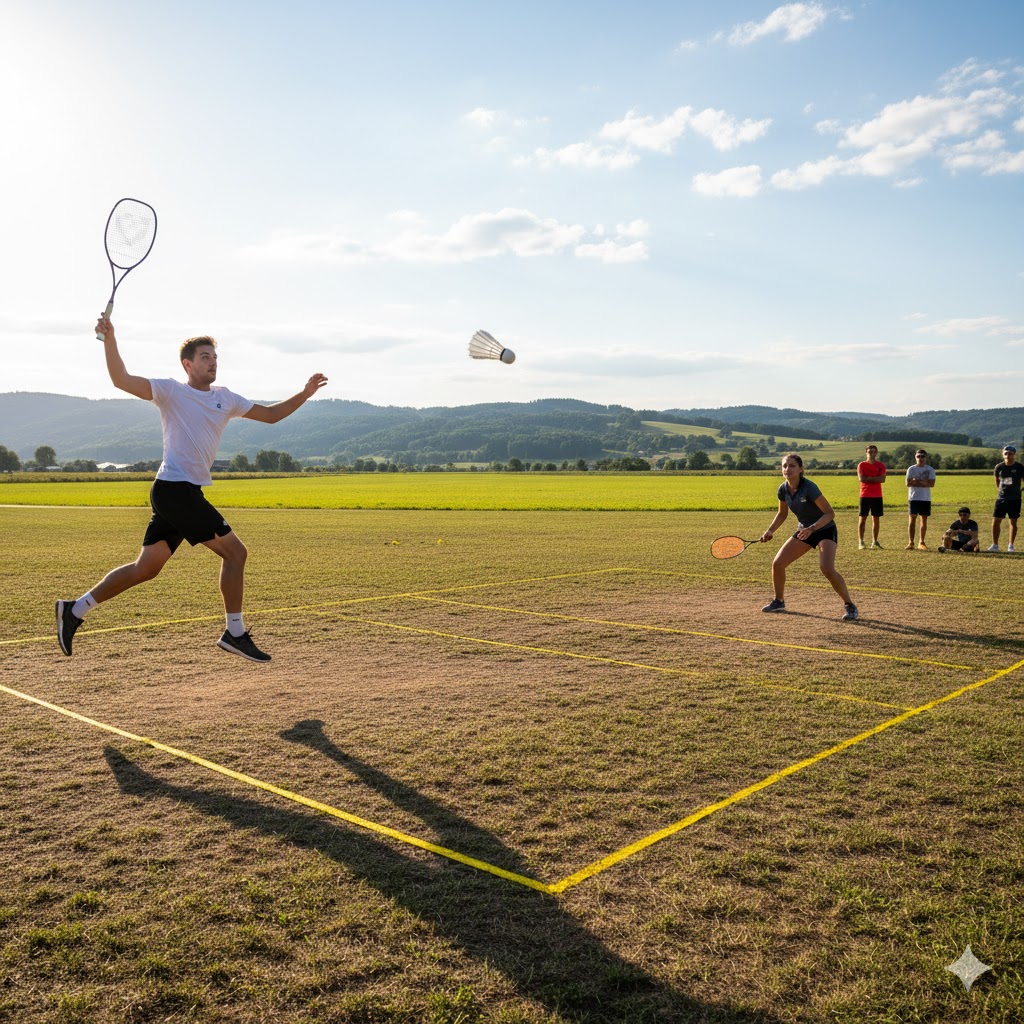
Crossminton is a fast-paced and innovative racket sport that blends elements of badminton, tennis, and squash. It was created to eliminate the limits of indoor courts and weather dependency, making it playable almost anywhere. Crossminton has grown into a global phenomenon, engaging players from various countries and age groups. The game’s simplicity, speed, and adaptability make it a favorite for both casual and competitive players. In this detailed exploration, we’ll uncover the origin and history of Crossminton, its worldwide popularity, its amateur and professional play, its political and social influence, and its official rules.
The Origin and History of Crossminton
Crossminton began in Berlin, Germany, in 2001. A man named Bill Brandes invented the game under the name “Speed Badminton.” His goal was to create a sport that could combine the intensity of tennis with the accessibility of badminton. He wanted a game that could be played outdoors without the limitations of wind or confined courts.
Brandes replaced the traditional badminton shuttlecock with a heavier, aerodynamic projectile called a “speeder.” This small change revolutionized the concept. The speeder could withstand wind and fly much faster and farther than a shuttlecock. With the new equipment and simplified court setup, players could enjoy the game in parks, beaches, gyms, or even city streets.
During the early 2000s, the sport quickly gained followers across Germany and neighboring countries. Brandes founded Speedminton GmbH to produce specialized rackets and speeders. The name “Speed Badminton” was used for the first decade of the sport’s existence. As its popularity grew, formal organizations were established to standardize play and host international competitions.
In 2011, the International Speed Badminton Organization (ISBO) was founded to oversee the global development of the sport. However, in 2016, the organization rebranded the sport’s name to “Crossminton.” The new name emphasized its independence from badminton and its versatility across different terrains. Today, the International Crossminton Organization (ICO) governs the sport and organizes tournaments worldwide.
Global Popularity of Crossminton
Crossminton has spread far beyond Germany. It is now played in over 40 countries across Europe, Asia, Africa, and the Americas. Nations such as Poland, Slovakia, Japan, Spain, and India have developed strong competitive scenes. European countries, in particular, have become the central hubs of the sport, with large tournaments drawing international participants.
The European Championships and the World Championships are the pinnacle events in the Crossminton calendar. These competitions feature players from all continents. They showcase the speed, precision, and endurance that define the game. The sport’s universal appeal lies in its accessibility. Players do not need a net, and the court can be set up virtually anywhere. This flexibility makes Crossminton attractive in urban and rural settings alike.
In North America, Crossminton is steadily gaining traction, especially in the United States and Canada. Sports clubs, schools, and fitness programs have introduced it as an alternative to traditional racket sports. In Asia, countries such as Japan, South Korea, and India have embraced it enthusiastically. Their players often dominate youth competitions. Africa and South America are also emerging regions for the sport, with new federations forming each year.
Crossminton’s growth has been fueled by social media exposure, easy-to-learn rules, and inexpensive equipment. The ICO’s efforts to promote youth programs and sustainable play have also accelerated its global expansion. The sport’s global reach continues to strengthen as more people seek inclusive, adaptable, and fun athletic experiences.
Amateur Crossminton Around the World
Amateur Crossminton thrives in schools, recreation centers, and local clubs. It provides a perfect introduction to racket sports for young athletes. Many physical education programs include it due to its simplicity and minimal setup requirements. Students only need two rackets, a few speeders, and boundary markers to begin playing.
Youth Crossminton leagues are organized in several countries, especially across Europe and Asia. These leagues teach sportsmanship, agility, and coordination while encouraging outdoor play. Coaches use Crossminton to train reflexes and endurance, often integrating it into cross-training programs for tennis and badminton players.
In Germany, Poland, and Slovakia, school tournaments attract hundreds of participants each year. Local clubs often collaborate with national federations to host training sessions for beginners. These events emphasize teamwork, respect, and fair play—values central to the sport’s philosophy.
Recreational players also enjoy Crossminton informally. Many communities organize weekend matches in open spaces, beaches, or gymnasiums. Because there’s no need for a net, players can set up courts in parking lots, gardens, or even rooftops. The sport’s adaptability ensures that anyone can participate regardless of age or athletic ability.
Amateur Crossminton also plays a role in promoting physical fitness. It offers a full-body workout, improving coordination, reaction time, and cardiovascular health. The sport’s fast pace and strategic rallies engage both the mind and body, making it a favorite among recreational athletes.
Professional Crossminton Leagues and Competitions
Professional Crossminton is governed by the International Crossminton Organization (ICO). The organization manages global rankings, event regulations, and official tournaments. The professional circuit includes international open tournaments, continental championships, and the World Championships.
The ICO Speedminton World Series serves as the premier competitive platform for professional players. Athletes from Europe, Asia, and the Americas compete throughout the year for ranking points. The series culminates in the World Championships, held every two years. This event crowns the best male, female, and doubles players in the sport.
Countries such as Germany, Poland, and Spain have national federations that coordinate professional and semi-professional leagues. These federations work closely with the ICO to maintain consistent rules and fair play standards. The European Crossminton Tour features several high-level competitions where top-ranked players earn points toward international rankings.
In addition to elite tournaments, professional Crossminton also includes mixed doubles and junior divisions. These categories foster inclusivity and encourage younger athletes to pursue the sport competitively. Many professional players began their careers in local clubs or school programs before advancing to international events.
The growth of professional Crossminton has been supported by sponsorships and televised events. Some tournaments are streamed online, increasing global exposure and inspiring new fans. Although the sport remains niche compared to tennis or badminton, its community-driven approach and fast action keep audiences engaged.
Political and Social Significance of Crossminton
Crossminton has had a meaningful impact beyond the court. Politically, it represents international cooperation and inclusivity. The ICO works closely with governments and sports ministries to promote gender equality, youth engagement, and fair access to sporting opportunities.
The sport’s non-reliance on large facilities makes it appealing for developing nations. Communities can promote healthy lifestyles without needing expensive infrastructure. This accessibility aligns with global initiatives for social inclusion and sustainable sports development.
Socially, Crossminton fosters cultural exchange. International tournaments bring together players from diverse backgrounds, promoting understanding and friendship. Athletes often describe the sport as a “bridge” between nations. Shared passion for competition transcends language and cultural differences.
Programs in schools and youth centers have used Crossminton as a tool for community building. By introducing it to young people, organizers encourage teamwork, respect, and perseverance. The sport’s low entry barriers allow children from all socioeconomic backgrounds to participate.
In recent years, Crossminton has also contributed to environmental awareness. Outdoor tournaments often adopt eco-friendly practices, using reusable materials and minimizing waste. The ICO has promoted sustainability initiatives, reflecting a broader shift toward responsible sports management.
Crossminton’s inclusive spirit continues to influence social policies that encourage equality in sports participation. It provides opportunities for both men and women to compete on equal footing. In many regions, female participation rates rival or surpass male participation, highlighting its balanced and empowering nature.
Rules of Crossminton
The rules of Crossminton are simple yet structured to ensure fairness and excitement. The game is played without a net, and the court consists of two equal squares. Each square measures 5.5 meters per side. The squares are placed 12.8 meters apart, forming a unique layout that emphasizes accuracy and agility.
Each player stands inside their square. The objective is to land the speeder in the opponent’s square while preventing it from landing in your own. The speeder must cross the distance between squares and stay within the lines to count as a valid shot.
A match typically consists of best-of-three sets. A player wins a set by reaching 16 points with at least a two-point lead. Points are scored when the opponent fails to return the speeder or hits it outside the court boundaries. If the score reaches 15–15, play continues until one player leads by two points.
The serve alternates every three points. The server must stand behind the back line of their square and hit the speeder underhand or overhand. The speeder must cross the space between the squares and land within the opponent’s area.
In doubles play, each team consists of two players positioned side by side within the same square. Communication and coordination become vital, as both players share responsibility for defending their court.
One of the most exciting aspects of Crossminton is its speed. The speeder can travel at over 280 kilometers per hour, making quick reflexes essential. Players use lightweight rackets similar to those used in squash but shorter than tennis rackets. The speeder’s design ensures stable flight even in windy conditions, allowing outdoor play without disruption.
Lighting equipment, known as “Speed Lights,” can be attached to the speeder for night play. This innovation adds a thrilling visual element, turning evening matches into glowing spectacles.
Crossminton also features clear conduct rules. Players must show sportsmanship and respect toward opponents and officials. Any misconduct, such as verbal abuse or unsportsmanlike behavior, results in warnings or penalties.
Strategy and Technique
Crossminton demands a balance of power, precision, and endurance. Players must master both offensive and defensive techniques. A strong serve can pressure opponents from the start. However, consistent returns and intelligent positioning are equally important.
Because there is no net, players rely heavily on trajectory control. The best athletes can vary their shot height and speed to force errors. Footwork plays a crucial role as well. Quick lateral movements and split steps help maintain balance and court coverage.
Strategically, Crossminton emphasizes anticipation. Players must read their opponent’s movements and respond instantly. The absence of a net encourages aggressive playstyles and extended rallies. Matches often showcase spectacular displays of athleticism and focus.
Training regimens for competitive players include strength conditioning, agility drills, and reaction training. Many professional athletes also cross-train in tennis or badminton to enhance their versatility. Coaches emphasize discipline, timing, and mental endurance to handle the sport’s fast pace.
Equipment Used in Crossminton
The core equipment includes a racket, speeders, and court markers. The racket weighs between 160 and 190 grams and is made from graphite or aluminum. Its shorter frame improves control and maneuverability.
The speeder, smaller and denser than a shuttlecock, is made from durable plastic. It comes in different types—Fun Speeder, Match Speeder, and Night Speeder—each suited for specific environments and skill levels. The Fun Speeder is ideal for beginners, while the Match Speeder is used in professional competitions.
Court boundaries can be marked using cones, tape, or portable kits. Because the court can be set up anywhere, players enjoy flexibility unmatched by most sports. Some clubs even organize “urban tournaments” where matches take place in city squares or parks.
Protective eyewear is recommended for safety, especially in high-speed rallies. Comfortable sportswear and good grip shoes complete the equipment checklist for players of all levels.
Crossminton and the Future of Sports
Crossminton continues to evolve, capturing the interest of athletes and organizers worldwide. Its blend of simplicity and excitement reflects modern sporting values—flexibility, inclusivity, and sustainability. The sport fits perfectly into the fast-paced lifestyles of today’s youth while promoting physical activity and social engagement.
Governments and schools are recognizing its benefits. Several countries have integrated Crossminton into youth development programs. These initiatives aim to combat sedentary habits and foster teamwork. Crossminton tournaments often serve as community events, strengthening bonds among players and spectators alike.
Technological advances are also shaping the future of the sport. Training apps, performance tracking tools, and digital coaching platforms now help players refine their skills. These innovations make learning more interactive and accessible for new generations.
As Crossminton expands globally, its potential as an Olympic sport is being discussed. Its universal appeal, gender balance, and outdoor versatility align with Olympic values. While not yet part of the Games, continued growth and international support could make it a strong candidate in the future.
Conclusion
Crossminton has transformed from a creative experiment in Berlin into a worldwide sport loved by millions. Its unique combination of freedom, speed, and strategy makes it stand out in the modern sports landscape. From schoolyards to professional arenas, Crossminton inspires athletes of all ages to move, compete, and connect. Politically and socially, it symbolizes inclusivity, cooperation, and sustainability—principles that resonate across borders. As its community grows stronger, Crossminton promises to continue shaping the future of global sport with its energy, accessibility, and unifying spirit.