Esports vs Traditional Sports – Where Fans Are Going
Esports vs Traditional Sports: Where Fans Are Going
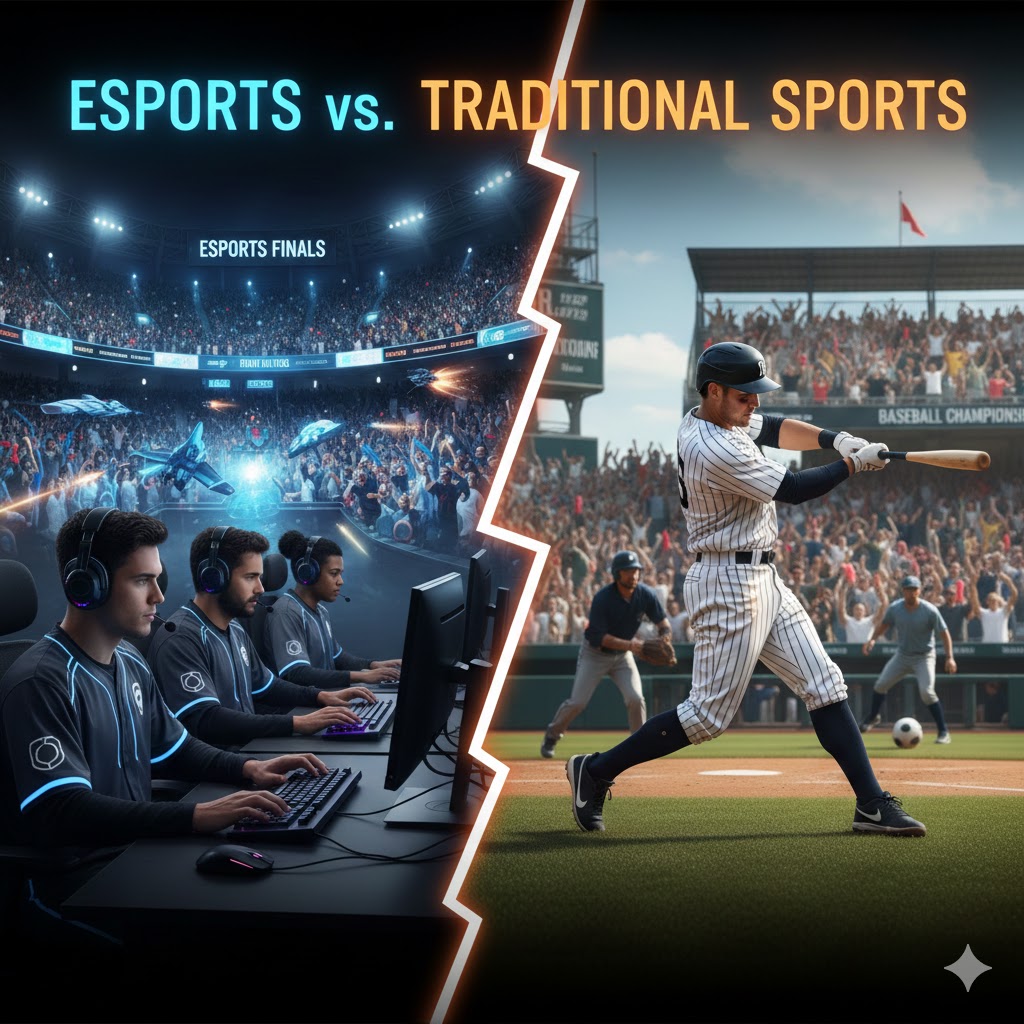
The sports landscape is changing faster than at any point in history. Technology, streaming, and shifting habits continue to reshape how fans consume competition. Watching these trends unfold, the debate around esports versus traditional sports feels unavoidable. The real question is not which one wins, but where fans are actually going.
I believe esports and traditional sports coexist. They serve different needs, different habits, and often different audiences. However, esports has undeniably captured a portion of the younger demographic that traditional sports once assumed was guaranteed.
Understanding the Fan Shift
Fans no longer consume sports in a single way. Some prefer full games. Others prefer highlights. Many want interaction rather than passive viewing.
Esports fits naturally into that shift. Traditional sports still dominate cultural moments, but consumption patterns continue evolving.
I see fan behavior fragmenting rather than migrating entirely.
Esports and Traditional Sports Serve Different Audiences
Esports does not simply replace traditional sports. It fills a different space.
Traditional sports attract fans through history, community, and physical spectacle. Esports attracts fans through accessibility, immersion, and constant availability.
Overlap exists, but separation remains clear.
Younger Audiences Are the Key Variable
Younger fans shape the future. Gen Z and younger Millennials consume content differently.
They expect on-demand access. They expect interaction and personalization.
Esports meets those expectations more naturally than traditional sports right now.
Why Esports Appeals to Younger Fans
Esports never sleeps. Content runs constantly. Global competitions happen across time zones.
Fans can watch, chat, and participate simultaneously.
I believe that level of engagement explains why esports resonates so strongly with younger audiences.
Accessibility Changes Everything
Anyone with a device can watch esports. Entry barriers remain low.
No tickets and no travel. No local allegiance required.
I see accessibility as one of esports’ biggest advantages.
Interactivity Drives Engagement
Esports invites participation. Chat features, live polls, and direct streamer interaction keep fans involved.
Viewers influence conversations. They feel present.
Interactivity creates loyalty traditional broadcasts struggle to match.
Global Reach Without Borders
Esports operates globally by default. Language barriers matter less. Time zones matter less.
Fans follow players, not regions.
I see this global identity as a defining difference from traditional sports.
Traditional Sports Still Own Cultural Gravity
Despite esports growth, traditional sports still dominate cultural relevance.
Major championships stop entire cities. Rivalries span generations.
Tradition creates emotional investment esports cannot fully replicate yet.
The Power of Live Atmosphere
Stadiums matter. Crowd noise matters. Shared experience matters.
Live sports create moments that feel communal and irreplaceable.
I see this atmosphere as a lasting advantage for traditional sports.
Physical Spectacle Still Resonates
Human physical limits captivate audiences. Speed, strength, and endurance remain compelling.
Traditional sports showcase the body under pressure.
I believe physical spectacle keeps traditional sports rooted deeply in culture.
Community Identity Still Favors Traditional Sports
Teams represent cities. Fans inherit allegiance.
That connection creates loyalty beyond performance.
This identity is something esports still struggles to replicate consistently.
Media Consumption Is Splintering
Traditional sports no longer dominate viewing habits exclusively. Streaming competes with everything.
Short-form content often outperforms full broadcasts.
I believe this fragmentation challenges both ecosystems equally.
Esports as a Parallel Ecosystem
I do not see esports replacing traditional sports. I see a parallel ecosystem forming.
Each grows independently. Each borrows elements from the other.
I think coexistence defines the future, not competition.
Traditional Sports Are Adapting
Leagues adapt slowly, but adaptation happens. Streaming partnerships expand. Social media presence grows.
Athletes build personal brands online.
Traditional sports are learning from esports without becoming esports.
Cross-Pollination Between Worlds
Athletes stream games. Esports organizations adopt professional structures.
The lines blur occasionally.
Cross-pollination strengthens both ecosystems.
Monetization Models Differ
Esports relies heavily on digital revenue. Sponsorships, subscriptions, and in-game integrations dominate.
Traditional sports rely on broadcast rights, ticket sales, and merchandising.
I see these models evolving but remaining distinct.
Attention, Not Loyalty, Is the New Currency
Modern fans multitask. They switch platforms quickly.
Holding attention matters more than locking loyalty.
I believe esports understands this reality better right now.
Why Casual Fans Matter Less Here
Casual fans float between interests. They follow trends.
This debate centers on committed fans, not casual viewers.
I see committed fan behavior shaping long-term outcomes.
Will Esports Rival Major Leagues?
Rivalry implies replacement. I do not see that happening.
Esports will grow. Major leagues will remain dominant culturally.
Parallel growth will define the next decade.
What Traditional Sports Must Protect
Storytelling matters. Rivalries matter. Identity matters.
Protecting these elements keeps traditional sports relevant.
I see authenticity as the greatest asset.
What Esports Must Improve
Longevity matters. Stability matters. Player narratives matter.
Sustaining interest beyond trends will define success.
I think maturity remains esports’ next challenge.
Fan Choice Will Remain Fluid
Fans will move between ecosystems. Interests will overlap.
Choice, not allegiance, will dominate behavior.
I see flexibility becoming normal.
Esports vs Traditional Sports: Where Fans Are Going
Looking at trends honestly, fans are not abandoning traditional sports en masse. They are adding esports to their consumption habits.
Younger audiences explore esports earlier. Traditional sports often enter later.
I believe this layered engagement defines the future.
Final Thoughts
Esports and traditional sports are not enemies. They serve different needs in a crowded attention economy.
Traditional sports retain cultural weight. Esports offers accessibility and interaction.
Both ecosystems will thrive side by side. Fans will choose based on mood, platform, and moment. That reality reshapes sports culture without erasing its past.