
How European Players Influence NHL Strategy
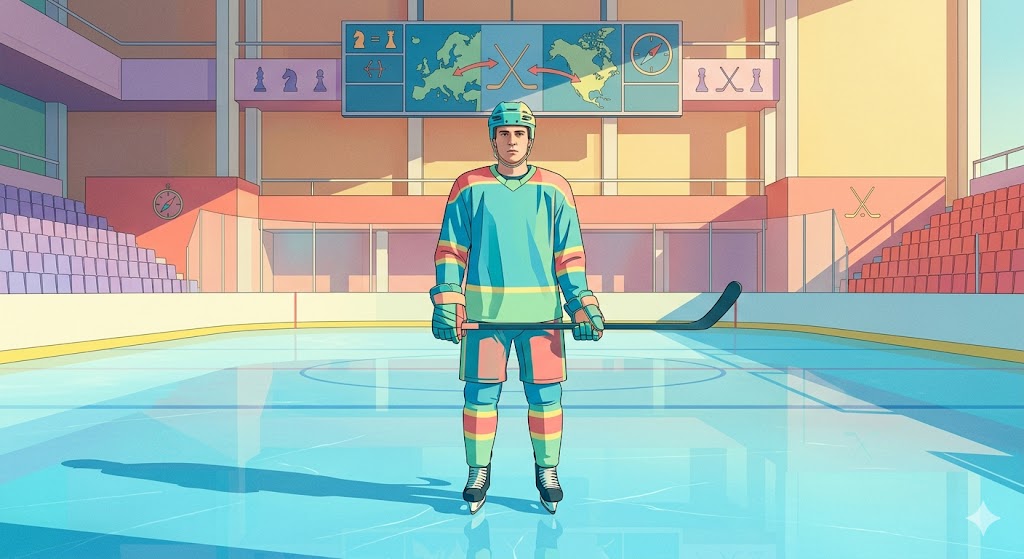
How European Players Transformed NHL Strategy
For much of its early history, the National Hockey League was dominated by a North American style of play.
The game emphasized physicality, dump-and-chase offense, and grinding battles along the boards. Skill certainly mattered, but toughness and size often defined a team’s identity.
Then European players began arriving in larger numbers.
At first, their style looked different—sometimes even controversial among traditionalists. European players often relied more on puck control, speed, and creative passing rather than brute force.
Over time, however, that style didn’t just blend into the NHL.
It changed the league’s strategy entirely.
The Early European Pioneers
European players have been part of the NHL for decades, but their influence accelerated dramatically in the 1980s and 1990s.
Players like Sergei Fedorov and Peter Forsberg showcased a level of skating skill and puck creativity that reshaped offensive play.
Their ability to maintain puck possession and create scoring opportunities through passing and movement forced teams to rethink traditional tactics.
Instead of simply dumping the puck deep and battling for it, teams began emphasizing controlled entries into the offensive zone.
That shift was a major strategic change.
Puck Possession Became a Priority
European hockey systems traditionally emphasize puck possession and structured passing.
As more European players entered the NHL, coaches realized the effectiveness of this approach.
Teams increasingly prioritized:
- Controlled zone entries
- Short, accurate passing
- Maintaining puck control under pressure
Rather than relying purely on physical forechecking, teams began building offenses around sustained possession.
This approach reduces turnovers and increases quality scoring chances.
Today, puck possession is a central part of modern NHL strategy.
Skating Speed Changed the Game
European players often developed on larger international ice surfaces.
Those wider rinks encourage skating, spacing, and fluid movement rather than constant physical contact.
As European players brought those skills to North America, NHL teams began valuing skating ability more than ever before.
Elite skaters like Connor McDavid and Leon Draisaitl represent the modern evolution of this speed-driven style.
Today’s NHL game is faster than ever, with quick transitions and rapid offensive attacks becoming the norm.
Creative Playmaking Became More Important
European hockey has long emphasized creativity and vision.
Players are encouraged to make skilled plays with the puck rather than simply advancing it deep into the zone.
This mindset influenced NHL offensive systems significantly.
Modern teams rely heavily on playmakers who can:
- Create passing lanes
- Control tempo
- Set up scoring opportunities
The rise of highly skilled European forwards helped normalize this style of play across the league.
Creativity is now a prized asset rather than a risky luxury.
Defensemen Became More Offensive
European influence also changed how defensemen approach the game.
Traditionally, NHL defensemen focused primarily on physical defense and clearing the puck out of the zone.
European-trained players introduced a different concept: defensemen as offensive catalysts.
Players like Nicklas Lidström demonstrated how defensemen could control the puck, quarterback power plays, and drive offensive transitions.
Today, mobile defensemen who can skate and move the puck efficiently are among the most valuable players in the league.
International Scouting Expanded the Talent Pool
As European players proved their value, NHL teams dramatically expanded their international scouting efforts.
Teams now scout extensively in:
- Sweden
- Finland
- Russia
- Czechia
- Slovakia
These countries produce highly skilled players who grow up in systems emphasizing skating and technical ability.
The result is a deeper global talent pool for NHL teams.
European players now make up a significant portion of NHL rosters.
Blending Styles Created the Modern NHL
The most interesting development is how North American and European styles have merged.
Modern NHL teams combine:
- North American physicality and forechecking
- European puck control and creativity
This hybrid approach creates a faster, more skill-driven version of hockey than the league had decades ago.
Coaches now design systems that balance structure, speed, and offensive skill.
The evolution of strategy reflects contributions from both hockey cultures.
The Global Game Continues to Grow
European players haven’t just changed NHL strategy.
They’ve helped turn hockey into a truly global sport.
Young players around the world now study both North American and European styles. Training methods, coaching philosophies, and development systems increasingly blend ideas from multiple hockey traditions.
That exchange continues to shape how the game evolves.
Final Thoughts
The influence of European players on NHL strategy is impossible to ignore.
What began as a stylistic contrast eventually transformed the way teams approach offense, defense, and puck possession.
Speed, creativity, and skill are now central pillars of the modern NHL game.
In many ways, the league’s evolution reflects the blending of hockey cultures from around the world.
And as international talent continues to grow, the strategic impact of European players will likely shape the NHL for generations to come.