
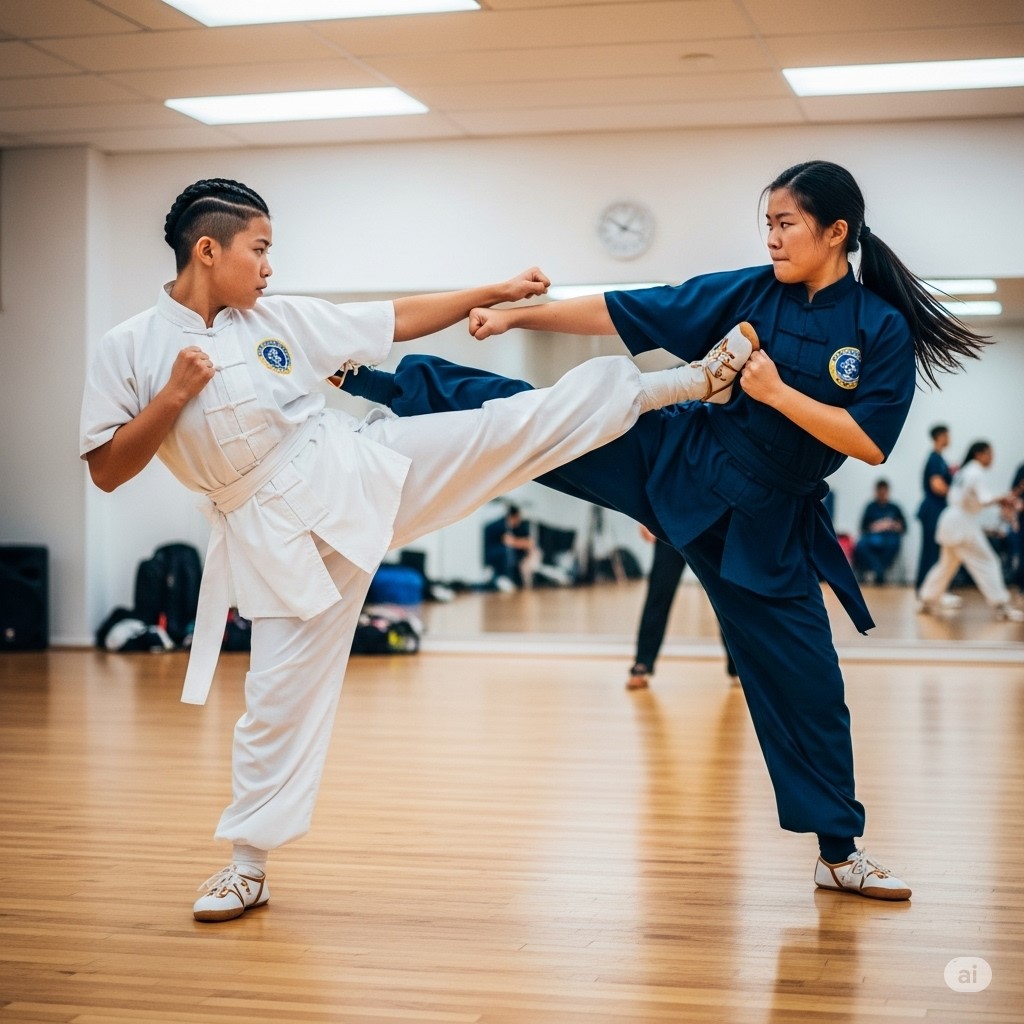
The Timeless Power and Global Reach of Kung Fu
It is more than a martial art. It is a cultural force, a sport, and a lifelong discipline. The term “Kung Fu” refers not only to Chinese martial arts but also to any skill achieved through hard work and practice. This blog post explores the deep historical roots, the worldwide appeal, and the intricate rules that govern the sport. From ancient temples to modern arenas, Kung Fu continues to thrive and evolve. The global presence, competitive structure, and social significance make it a sport worthy of exploration.
Origins and History of Kung Fu
The history dates back thousands of years. Early forms of Chinese martial arts began during the Xia and Shang dynasties. These early techniques were used for hunting, self-defense, and military training.
The rise of Kung Fu as a structured discipline happened during the Zhou dynasty. At that time, martial training became part of military and educational programs. This institutionalization marked the beginning of Kung Fu’s codified systems.
One of the most significant developments occurred during the Han dynasty. Martial arts integrated into Taoist philosophy and Chinese medicine. Techniques focused not just on combat, but also on balance and health.
However, the real turning point came with the Shaolin Temple. Established in the 5th century CE, it became the cradle of Kung Fu. Buddhist monks developed powerful martial routines to improve physical strength and mental focus. These practices combined Indian yoga, Chinese boxing, and local defensive tactics.
By the Tang and Song dynasties, Kung Fu styles diversified across regions. Schools emerged that emphasized either hard or soft techniques. Northern styles focused on powerful strikes and kicks. Southern styles specialized in hand techniques and rooted stances.
During the Ming and Qing dynasties, it evolved further. Manuals were written, and forms became more complex. Wushu, which refers to martial arts generally, became an umbrella term that includes both modern and traditional Kung Fu.
Global Popularity of Kung Fu
It gained worldwide attention in the 20th century. The main catalyst was cinema. Bruce Lee, Jackie Chan, and Jet Li brought Kung Fu to the global stage. Their films sparked international interest and inspired countless people to train.
Today, Kung Fu schools exist on every continent. In the United States, Europe, and Australia, it is taught in gyms, universities, and martial arts academies. China promotes it through government initiatives and cultural exchange programs.
Kung Fu competitions attract athletes from over 100 countries. Events like the World Wushu Championships and the World Traditional Wushu Championships feature global participation. These events are often held in cities like Beijing, Kuala Lumpur, and Toronto.
Tourism has also played a role. Visitors to China often tour the Shaolin Temple and witness live demonstrations. These performances showcase the athletic and spiritual depth of Kung Fu.
The sport is not limited to Chinese communities. Practitioners from Africa, Latin America, and the Middle East have also embraced it. Cultural festivals often include Kung Fu performances as a highlight.
Social media has extended its reach even further. Platforms like YouTube and Instagram are full of instructional videos, sparring sessions, and competition highlights. Online learning has democratized access to Kung Fu instruction.
Amateur Kung Fu: Youth and School Programs
It is not only for professionals. Teachers also teach it at the amateur level. Schools, community centers, and after-school programs offer Kung Fu classes to children and teenagers.
In China, it is often part of physical education. Some schools even specialize in martial arts training. These institutions combine academic coursework with daily practice.
Outside of China, youth programs are growing. In the U.S., organizations like USAWKF support junior divisions and youth tournaments. Local martial arts studios provide belt-ranking systems similar to other martial arts like Karate or Taekwondo.
Kung Fu helps young people develop discipline, confidence, and physical fitness. Parents enroll their children not just for self-defense, but also for character building.
Public demonstrations and school competitions are common. These events allow students to showcase their skills. They also promote cultural understanding.
In some areas, it has even been used to address youth violence. Programs in urban communities teach Kung Fu as a tool for emotional regulation and self-control.
Universities offer clubs that compete in intercollegiate tournaments. These groups often participate in cultural showcases and campus events.
The growth of amateur Kung Fu ensures that the sport remains vibrant. Youth engagement lays the foundation for future champions and lifelong practitioners.
Professional Leagues and Competitive Circuits
Kung Fu has a robust professional structure. Wushu competitions represent the sport’s formal, competitive side. The International Wushu Federation (IWUF) governs these events.
Athletes compete in forms (taolu) and sparring (sanda). Taolu involves choreographed routines judged on technique, difficulty, and presentation. Sanda is a full-contact sport combining striking and grappling.
China has a professional Wushu league featuring top athletes from various provinces. These events are broadcast nationally and draw large crowds.
Other countries also host professional tournaments. Russia, Iran, and the United States have national federations that sponsor events.
The World Games and the Asian Games include Wushu as a competitive sport. Although not yet in the Olympics, efforts are ongoing to include it in future games.
Prize money and sponsorships are increasing. Professional athletes often appear in commercials, movies, and public service campaigns.
Famous champions such as Yuan Wenqing and Zhao Changjun have become icons. Their success has inspired the next generation of fighters.
In recent years, mixed martial arts promotions have welcomed Kung Fu athletes. Fighters trained in traditional techniques compete in global events like ONE Championship.
Technology has enhanced judging and training. Motion capture and video analysis improve technique evaluation. These innovations elevate the sport’s professionalism.
Social and Political Significance of Kung Fu
It is deeply embedded in Chinese culture. It reflects philosophical systems such as Confucianism, Taoism, and Buddhism. The martial art promotes virtues like respect, humility, and perseverance.
Socially, Kung Fu fosters community. Training schools often serve as cultural centers. They offer language classes, calligraphy, and tea ceremonies alongside martial arts instruction.
During the Cultural Revolution, it faced suppression. However, it survived through underground schools and loyal practitioners. After the 1980s, it experienced a renaissance supported by the Chinese government.
Politically, Kung Fu is a soft power tool. China uses it to project cultural strength. Performances at international events and diplomatic visits often include martial arts demonstrations.
Kung Fu has also influenced civil rights movements. In the 1960s and 70s, African American communities embraced it as a symbol of resistance and pride. Kung Fu movies were shown in inner-city theaters, and schools opened in underserved areas.
In modern times, Kung Fu promotes cross-cultural understanding. Events like international festivals bring people of different backgrounds together. Shared training builds friendships and mutual respect.
The martial art also plays a role in gender empowerment. More women participate in competitions and leadership roles. Female athletes like Jiang Luxia serve as role models.
Kung Fu is a unifying force. It connects people across age, gender, nationality, and religion. Its values remain relevant in an increasingly divided world.
Rules and Structure of Kung Fu
Competitions follow strict rules. In Taolu, athletes perform routines judged on accuracy, balance, and expression. Each movement must reflect mastery and precision.
Forms are divided by style and difficulty. Judges award points based on execution, rhythm, and control. Falls or missed moves lead to deductions.
In Sanda, two fighters compete in a ring. The goal is to outscore or knock out the opponent. Legal techniques include punches, kicks, throws, and sweeps.
Protective gear is required. Fighters wear gloves, headgear, chest protectors, and shin guards. Matches consist of three two-minute rounds.
Points are awarded for clean strikes, takedowns, and ring control. Fouls include illegal strikes, grabbing the ropes, or striking after the bell.
Weight classes ensure fairness. Competitors must weigh in before each match. Referees enforce rules and can issue warnings or disqualify athletes.
In amateur settings, emphasis is on safety. Matches may be shorter, and contact is often controlled. Youth divisions have stricter protective measures.
Forms competitions also exist in amateur leagues. Categories are based on age, skill level, and style. Synchronized group routines are popular in showcases.
Each event ends with medal ceremonies. Athletes receive awards, and national anthems are played. Sportsmanship is emphasized throughout.
Officiating requires certification. Judges and referees undergo rigorous training. Transparency and fairness are critical to the sport’s credibility.
Conclusion
Kung Fu remains one of the most influential and enduring martial arts in the world. Its history stretches back millennia. Its values of discipline, respect, and perseverance transcend borders.
The sport enjoys global popularity. It is practiced by amateurs and professionals alike. Youth programs, universities, and community centers all play a role in its expansion.
Professional leagues showcase elite talent. International competitions highlight its athletic and artistic dimensions. Efforts continue to include it in global sporting events.
Culturally and politically, Kung Fu serves as a bridge. It fosters unity and understanding in diverse communities. Its legacy continues to grow in both traditional and modern contexts.
As the sport evolves, it maintains its core essence. The pursuit of excellence through effort—true to the very meaning of Kung Fu—will always inspire generations to come.