
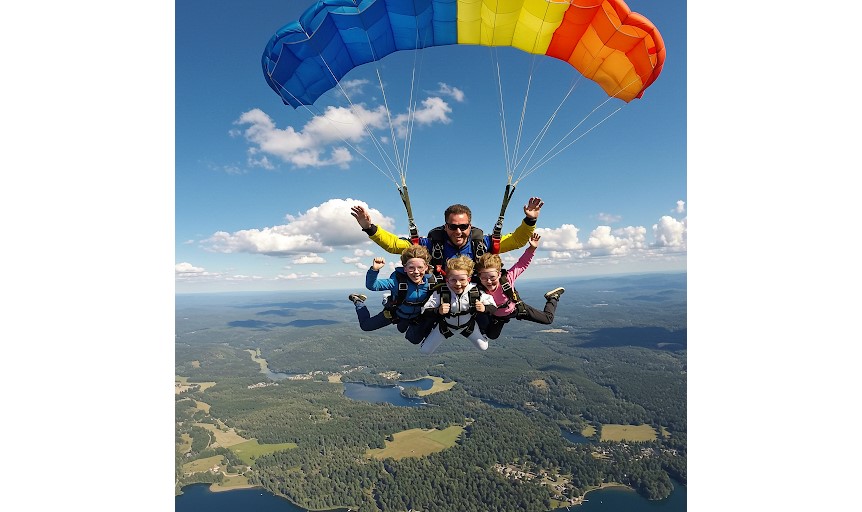
Parachuting: A Thrilling Sport with Deep Roots and Global Reach
Parachuting is an adrenaline-filled sport that continues to capture imaginations across the globe. From its adventurous beginnings to its modern-day competitions, parachuting has carved a niche in the world of extreme sports. It challenges gravity, inspires courage, and creates communities. Parachuting combines skill, precision, and thrill in a way few sports can match. Whether practiced by professionals or amateurs, parachuting leaves a lasting impression on both participants and spectators.
The Origins and History of Parachuting
The story of parachuting begins centuries ago. Leonardo da Vinci sketched the first known parachute design in the 1480s. His pyramid-shaped concept inspired generations of inventors. However, the first real jump did not occur until 1783. Frenchman Louis-Sebastien Lenormand made history with a successful descent using a rigid-frame parachute.
As time progressed, parachutes were improved for military use. In World War I and II, they became crucial for air force operations. Soldiers trained rigorously to perfect their jumps. After the wars, many veterans took their skills to civilian life. This led to the birth of recreational parachuting.
In the 1950s and 1960s, the sport began formalizing rules and organizations. The International Parachuting Commission (IPC) was formed in 1951. It played a key role in organizing global events. By the 1980s, competitions were being held in various formats, including accuracy landing and formation skydiving.
Today, parachuting continues to evolve with advancements in equipment and safety. From da Vinci’s sketch to today’s high-altitude dives, the journey has been remarkable.
Global Popularity of Parachuting
Parachuting enjoys popularity in countries across every continent. In the United States, thousands of jumpers take to the skies each year. Locations like Arizona and Florida offer ideal weather and facilities. Europe also sees strong participation, especially in France, Germany, and the United Kingdom.
In Asia, countries such as China and Japan are seeing a rise in interest. Australia’s vast open spaces make it a natural hub for the sport. South Africa and Brazil also host major events and attract thrill-seekers worldwide.
Tourism has further boosted parachuting’s reach. Travelers often include tandem skydives in their adventure itineraries. Social media has added fuel to this trend, showcasing jumps in scenic locations.
Major cities now have indoor skydiving facilities, making the experience more accessible. These wind tunnels simulate the free-fall experience without the need for an airplane.
The global nature of parachuting builds international camaraderie. Competitions often draw participants from dozens of countries, creating a unique cultural exchange.
Amateur Parachuting: Youth and School Involvement
Amateur parachuting plays a vital role in the sport’s ecosystem. Many start their journey with tandem jumps. This allows beginners to experience the thrill without formal training.
Youth programs introduce children to the fundamentals through simulated environments. Some schools and colleges offer parachuting clubs. These groups organize ground training and jumps in partnership with certified drop zones.
Universities often host competitions that foster team spirit and skills development. Training includes aircraft exit, canopy control, and landing techniques. Students gain confidence and discipline through this training.
Certification programs are also available for teens. Organizations like the United States Parachute Association (USPA) provide structured courses. These include theoretical lessons and practical jumps under supervision.
Instructors focus on safety and progression. As skills improve, jumpers move from static-line jumps to freefall experiences. Amateur jumpers often become future professionals or passionate hobbyists.
Community centers and scouting groups sometimes include skydiving modules. These efforts help demystify the sport and broaden its appeal.
Professional Leagues and Global Competitions
Professional parachuting features multiple disciplines and competitions. The Fédération Aéronautique Internationale (FAI) oversees international events. These include formation skydiving, freestyle, canopy piloting, and accuracy landing.
Teams train rigorously to master coordination and timing. Events are timed to fractions of a second. Judging involves precision, creativity, and execution.
Notable events include the World Parachuting Championships and the World Games. These showcase the highest level of skill and dedication. Countries send their best athletes to represent them.
National leagues also exist in many countries. In the United States, the National Skydiving Championships draw large crowds. France’s Parachutisme Sportif circuit is similarly respected.
Athletes often seek sponsorships to support their training and travel. Equipment brands, tourism boards, and media companies are common sponsors. Professional jumpers also work as instructors, coaches, or influencers.
Social media has become a powerful tool for these athletes. They share training routines, competition clips, and lifestyle content. This builds a fan base and encourages others to take up the sport.
Political and Social Significance
Parachuting carries significant political and social implications. Historically, it had military roots, and many countries still use it for defense training. Paratroopers symbolize elite status in armed forces.
In post-war periods, parachuting served as a tool for rehabilitation and reintegration. Veterans found purpose and community in the sport. It helped bridge the gap between military and civilian life.
Socially, parachuting promotes diversity and inclusion. Drop zones welcome people from all walks of life. The sport breaks down barriers and fosters mutual respect.
Women have made significant strides in the sport. Female athletes regularly compete and win at the highest levels. Organizations now promote gender equality and equal representation.
Community outreach programs use parachuting to engage at-risk youth. These initiatives teach responsibility, discipline, and confidence. They also introduce career paths in aviation and aeronautics.
Parachuting also supports charitable causes. Fundraising jumps raise money for medical research, disaster relief, and education. These events draw public attention and build goodwill.
Rules and Regulations of Parachuting
Parachuting follows a strict set of rules to ensure safety and fairness. New jumpers must complete training programs. These cover equipment use, emergency procedures, and jump techniques.
A key rule is maintaining altitude awareness. Jumpers must deploy their parachute at the correct height. Altimeters, both visual and audible, assist with this.
Equipment checks are mandatory before every jump. Parachutes, harnesses, and reserve systems must meet safety standards. Rigging must be done by certified professionals.
Airspace regulations are crucial. Parachuting zones must coordinate with aviation authorities. This prevents conflicts with aircraft and ensures safe drop zones.
In competitions, specific formats dictate the scoring. For example, in formation skydiving, teams earn points for completed formations within a set time. Judges use video footage for evaluation.
Tandem jumps have their own guidelines. The tandem master is responsible for both jumpers’ safety. They control the exit, descent, and landing.
Weather conditions must be suitable for jumping. High winds, rain, or poor visibility can delay or cancel jumps. Safety officers have the final say.
Each country has a governing body that enforces these rules. The USPA, British Parachute Association (BPA), and Australian Parachute Federation (APF) are a few examples.
Rules evolve with technology. Automatic Activation Devices (AADs) are now standard. These devices deploy the reserve parachute if the main one fails.
Conclusion
Parachuting continues to captivate hearts and minds around the world. Its origins are steeped in innovation and courage. The sport has grown to include amateurs, professionals, and enthusiasts of all ages.
It brings people together across cultures and borders. From school clubs to global championships, parachuting offers opportunities for growth, adventure, and connection. With its strict rules, evolving technology, and vibrant community, the sport stands as a testament to human aspiration.
Parachuting is more than a sport. It is a lifestyle, a challenge, and a celebration of the human spirit.