
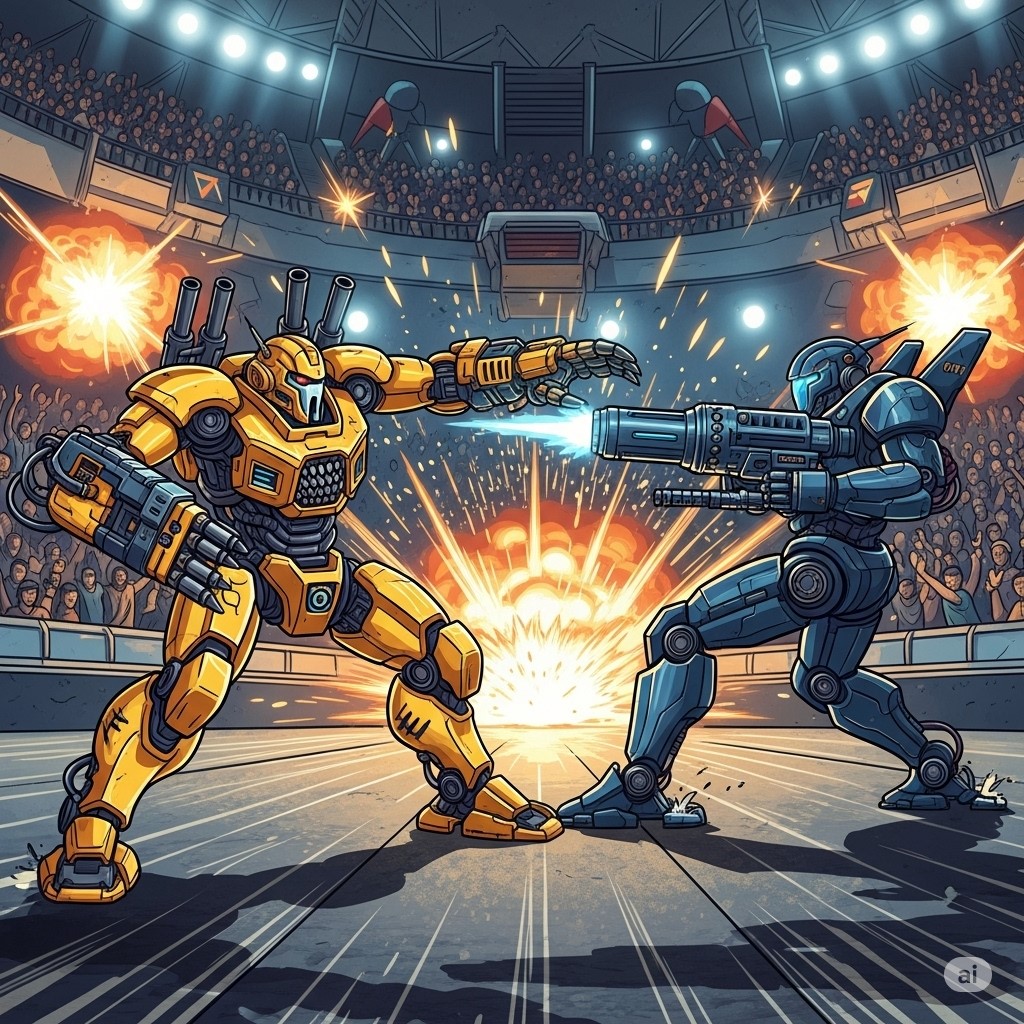
The Thrilling World of Robot Combat
Robot Combat is a captivating sport that merges engineering, strategy, and entertainment. This electrifying competition features robots battling in arenas, showcasing creativity and ingenuity. From its humble beginnings to global popularity, the journey of Robot Combat highlights its transformative impact on technology and culture.
The Origins of Robot Combat
The concept dates back to the late 20th century. Early iterations appeared as tech enthusiasts and engineers sought innovative ways to merge mechanics with entertainment. The first official Robot Combat competition, “Robot Wars,” began in 1994 in San Francisco, California. Marc Thorpe, an engineer and visionary, spearheaded this event. He aimed to create a platform where engineers could test their robotic creations in a competitive environment.
The format quickly gained traction, leading to televised broadcasts in the United Kingdom by the late 1990s. Shows like “Robot Wars” and “BattleBots” brought the sport into mainstream consciousness. As audiences marveled at spinning blades, crushing arms, and flame throwers, the sport evolved. It embraced technological advancements, becoming more sophisticated and diverse in its designs.
Global Popularity of Robot Combat
It has transcended its niche origins to achieve global recognition. Countries worldwide host tournaments, from local gatherings to international spectacles. In the United States, “BattleBots” remains a flagship program, attracting millions of viewers annually. Meanwhile, the United Kingdom continues its legacy with “Robot Wars,” inspiring a new generation of roboticists.
In Asia, nations like Japan and China have embraced Robot Combat as a cultural phenomenon. Events like “RoboGames” and “King of Bots” demonstrate the region’s passion for this sport. Additionally, Australia, Canada, and parts of Europe host thriving Robot Combat communities, emphasizing collaboration and competition.
Social media platforms have played a pivotal role in spreading awareness. Enthusiasts share battles, tutorials, and robot-building guides, fostering a global community. As a result, Robot Combat has become a universal language that transcends borders.
Amateur Robot Combat: A Grassroots Movement
Amateur Robot Combat serves as the sport’s foundation, nurturing talent and passion. Enthusiasts of all ages participate in local competitions, testing their skills and creativity. Community events often feature beginner-friendly formats, encouraging newcomers to try their hand at robot design.
Youth involvement is a significant aspect of amateur Robot Combat. Schools and educational programs integrate robotics into their curriculums. Organizations like the Robotics Education and Competition (REC) Foundation promote STEM learning through competitive robotics. By participating in events such as VEX Robotics and FIRST Robotics competitions, students gain hands-on experience.
These initiatives extend beyond technical skills. Young competitors develop teamwork, problem-solving abilities, and confidence. Parents and educators recognize the sport’s potential to inspire future innovators, fostering a lifelong love for engineering.
Professional Leagues and Tournaments
The professional Robot Combat scene is a testament to the sport’s growth. Leagues and tournaments around the world showcase elite-level competition. These events feature cutting-edge robots, advanced technology, and skilled operators.
“BattleBots,” based in the United States, remains a cornerstone of professional Robot Combat. It features meticulously crafted robots battling in high-stakes matches. Competitors, including engineers, hobbyists, and tech enthusiasts, vie for the coveted championship title.
In the United Kingdom, “Robot Wars” continues to captivate audiences. Its emphasis on design, strategy, and spectacle has solidified its status as a premier league. Japan’s “Robo-One” focuses on humanoid robots, blending athleticism and combat prowess. Similarly, China’s “King of Bots” showcases the nation’s engineering excellence.
These leagues attract sponsorships, media attention, and substantial prize money. Professional Robot Combat has become a lucrative industry, inspiring innovation and pushing technological boundaries.
Political and Social Significance
Robot Combat’s impact extends beyond the arena, influencing society and politics. The sport has become a symbol of technological progress and innovation. Governments and educational institutions recognize its potential to drive STEM education and workforce development.
It fosters international collaboration. Teams from different countries often exchange ideas, techniques, and technology. These interactions promote cultural understanding and unity. In some cases, the sport has been used as a diplomatic tool, emphasizing shared goals and mutual respect.
Socially, Robot Combat breaks barriers. It attracts participants from diverse backgrounds, emphasizing inclusion and accessibility. Women, underrepresented in engineering fields, have found a supportive community in the sport. Initiatives like “Women in Robotics” aim to bridge the gender gap, empowering aspiring female engineers.
Rules and Regulations of Robot Combat
It operates under strict rules to ensure fairness and safety. Competitions typically occur in enclosed arenas, protecting participants and spectators. Robots are categorized by weight classes, ranging from lightweight to heavyweight. This classification ensures balanced matchups.
Each match has a time limit, usually three minutes. During this period, robots attempt to incapacitate or outscore their opponents. Points are awarded for aggression, control, damage, and strategy. Judges evaluate performance, determining the winner if no knockout occurs.
Certain weapons and tactics are prohibited to maintain safety. For instance, explosive devices, entanglement tools, and projectile weapons are restricted. Robots must adhere to specific design criteria, such as size, weight, and power limits.
Maintenance and repair between matches are integral to the sport. Teams often work against the clock to restore their robots. This aspect adds an element of drama, showcasing competitors’ resilience and resourcefulness.
Conclusion
Robot Combat combines engineering excellence, strategic thinking, and entertainment. From its origins in San Francisco to global prominence, the sport continues to inspire. Amateur competitions nurture talent, while professional leagues showcase elite-level battles. Beyond the arena, it influences education, politics, and society, shaping a more innovative and inclusive future.
The sport’s growth demonstrates the limitless potential of human ingenuity. As technology evolves, so will Robot Combat, captivating audiences and inspiring generations. By participating in or supporting the sport, individuals contribute to a global movement that celebrates creativity, collaboration, and progress.