
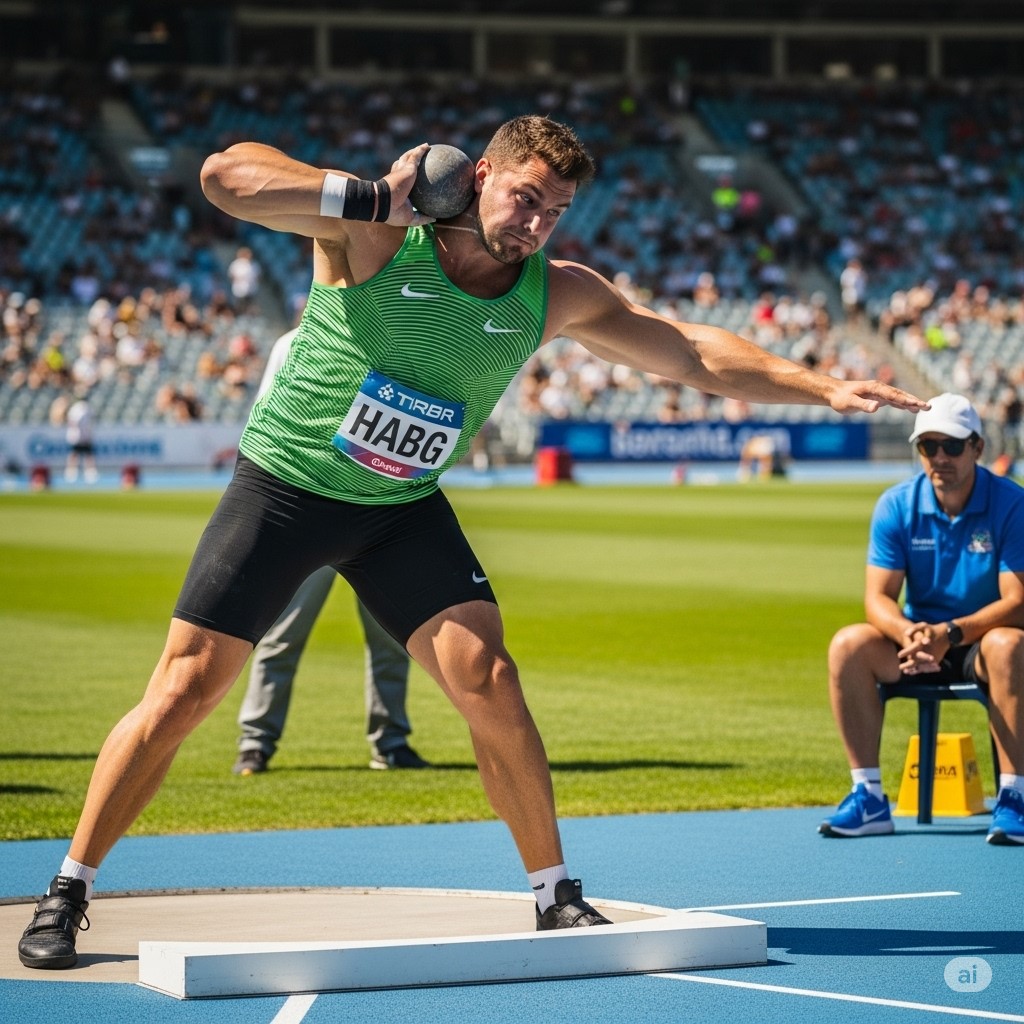
The World of Shot Put: A Deep Dive Into a Powerful Sport
Shot Put stands as one of the oldest and most respected track and field events. Athletes train for years to develop strength, technique, and precision. This sport combines explosive power and technical skill in ways that few others can. Shot Put plays a central role in both amateur and professional athletics worldwide. From schoolyards to Olympic stadiums, this discipline demands commitment and grit.
Origins and History of Shot Put
The history of Shot Put dates back thousands of years. It finds its roots in ancient Scotland where warriors hurled stones to show strength. Highland Games participants used rounded stones for early versions of the sport. These competitions predate modern athletics by centuries.
Later, the Greeks incorporated similar events in their early Olympic Games. However, their throws lacked the rules and uniformity we see today. During the Middle Ages, soldiers in Europe tossed cannonballs as part of military training. These training drills gradually evolved into formalized contests.
Modern Shot Put began taking shape in the 19th century. England, Germany, and Scotland codified the rules. These efforts transformed a chaotic strength trial into an organized sport. Shot Put joined the Olympic Games in 1896 for men. Women’s Shot Put was introduced in the 1948 London Olympics. Since then, the sport has steadily grown in prestige.
Global Popularity of Shot Put
Shot Put has a strong presence in global athletics. It enjoys consistent visibility during the Summer Olympic Games. Athletes from the United States, Germany, New Zealand, and China frequently dominate the medal tables.
In Eastern Europe, nations like Poland and Hungary produce elite throwers. Their national training systems emphasize early specialization in track and field. African nations have also joined the competitive field, with South Africa and Nigeria producing international contenders.
Asia has seen rapid growth in interest. China and India invest heavily in track and field development programs. Their participation in international meets has expanded Shot Put’s global audience.
Although not a mainstream sport like soccer or basketball, Shot Put maintains dedicated followings. Enthusiasts often gather around national championship meets, college contests, and Olympic qualifying trials.
Amateur and Youth Participation
Amateur Shot Put flourishes at local levels. Schools and clubs around the world offer opportunities for youth athletes. In the United States, middle schools and high schools often include Shot Put in track programs. Students compete in both indoor and outdoor seasons.
Coaches emphasize strength training and technique. Young athletes learn proper form early to prevent injuries. Rotational and glide techniques are both taught based on the athlete’s ability and body type.
In Europe, junior athletics associations help train children from an early age. These organizations provide certified coaching and safe equipment. Many countries sponsor youth leagues, ensuring broad access regardless of income.
South American and African nations have also launched youth outreach initiatives. Programs in Brazil and Kenya encourage participation in all throwing events. Their goal is to develop well-rounded track and field teams for future international competition.
School sports festivals in Asia often include Shot Put. Indian and Japanese school systems promote athletics as part of holistic education. Government support has further elevated the sport’s visibility in schools.
Professional Leagues and Competitions
Several elite leagues host professional Shot Put competitions. The World Athletics Diamond League includes Shot Put events in its annual series. This league attracts the best global talent and offers substantial prize money.
The World Athletics Championships occur every two years. Shot Put remains a featured event, drawing media coverage and fan interest. These contests often serve as proving grounds for future Olympic champions.
In the United States, the USATF (USA Track & Field) National Championships determine qualification for global meets. Athletes must meet strict performance standards to participate.
European countries maintain their own national leagues. Germany’s Bundesliga Track and Field, the British Athletics League, and Russia’s National Championships all include Shot Put.
College athletics also play a key role. In the United States, NCAA competitions provide a platform for young throwers. Success at this level often leads to professional careers. Universities in Canada, Australia, and South Africa offer similar opportunities.
Asia and the Middle East are developing their own league structures. Countries like Qatar and Saudi Arabia now invest in indoor training centers. Their goal is to create year-round training environments for throwers.
Political and Social Significance
Shot Put, like many sports, has transcended competition. It often reflects broader political and social dynamics. During the Cold War, Soviet and American throwers faced off in ideological showdowns. These athletes symbolized national strength and unity.
Women’s inclusion in Shot Put marked a turning point for gender equality in sports. The 1948 Olympics featured the first women’s Shot Put competition. Since then, female athletes have shattered stereotypes and set world records.
Shot Put also serves as a pathway to education for many youth athletes. Scholarships help students from underprivileged backgrounds attend college. This creates a bridge between athletics and academic achievement.
In some regions, participation promotes peace and cooperation. Multinational meets encourage athletes from rival nations to engage respectfully. Sports diplomacy has proven effective in easing tensions and building bridges.
Social inclusion programs use Shot Put as a tool for community building. These initiatives welcome athletes with disabilities and promote adaptive throwing events. Paralympic Shot Put competitions showcase human resilience and athletic excellence.
Rules and Techniques of Shot Put
Understanding the rules is essential for fans and participants. The event takes place inside a 2.135-meter diameter circle. Athletes must launch the shot—a heavy metal ball—from within this circle.
Men throw a 7.26-kilogram shot. Women use a 4-kilogram version. Youth and senior divisions often use lighter implements.
Athletes may use one of two techniques: the glide or the spin (rotational) technique. In the glide, the thrower slides across the circle in a linear motion. In the spin, the thrower rotates similar to a discus motion. Both techniques aim to generate maximum power and speed.
Before the throw, the shot must rest against the athlete’s neck. The thrower pushes, rather than throws, the shot forward. The arm must not drop below shoulder level during the push.
The shot must land within a 34.92-degree sector marked on the ground. Stepping outside the circle or committing a foul results in a disqualified throw.
Each athlete usually gets six attempts during a competition. Only the longest legal throw counts. Ties are broken using second-best throws.
Officials measure from the inside edge of the circle to the nearest mark in the landing area. Precision is key, and measurement is performed with tape or laser devices.
Training and Conditioning for Shot Put
Success in Shot Put requires more than brute strength. Athletes train to develop speed, balance, and body coordination. Weightlifting forms a central component of training routines. Squats, bench presses, and deadlifts build the necessary foundation.
Flexibility exercises help prevent injury. Mobility in the hips, shoulders, and spine supports proper technique. Shot putters also engage in plyometric drills. These exercises build explosive strength and reaction time.
Technical training takes place in throwing circles. Coaches use video analysis to refine form. Athletes practice footwork, release angles, and shot trajectory.
Mental preparation is equally important. Throwers often work with sports psychologists. Confidence, focus, and stress management contribute to competition performance.
Recovery is a crucial part of training. Athletes follow detailed nutrition plans and sleep schedules. Massage, cryotherapy, and stretching help maintain peak physical condition.
Famous Shot Put Athletes
Many athletes have become icons in the sport. American Parry O’Brien revolutionized Shot Put with the glide technique. His innovation led to multiple Olympic gold medals.
Randy Barnes, also from the United States, held the world record for decades. His power and consistency set new standards.
New Zealand’s Valerie Adams has dominated the women’s scene. Her multiple Olympic and World Championship titles reflect years of discipline.
Germany’s David Storl and Poland’s Tomasz Majewski are European legends. They consistently performed at top levels for over a decade.
Today’s stars include Ryan Crouser of the United States. He broke the long-standing world record and continues to raise the bar.
Chase Ealey, also from the U.S., has made waves in the women’s division. Her victories have inspired young throwers globally.
Shot Put’s Future and Innovation
The future of Shot Put looks promising. New training technologies are changing how athletes prepare. Smart sensors, AI-assisted form analysis, and virtual coaching tools are becoming standard.
Environmentally sustainable equipment is under development. Eco-friendly shot materials and reusable surfaces aim to reduce the sport’s carbon footprint.
Diversity and inclusion efforts continue to grow. More women, disabled athletes, and youth from underserved communities are joining Shot Put programs.
Broadcast technology brings Shot Put to wider audiences. High-definition cameras and real-time analytics make the event more engaging.
The sport remains relevant by embracing change. Coaches and organizations focus on athlete health and well-being. Competitions become more inclusive and accessible each year.
Conclusion
Shot Put is much more than a test of strength. It represents tradition, skill, and perseverance. Across the globe, amateurs and professionals alike dedicate themselves to this timeless discipline. Shot Put will continue to evolve, adapt, and inspire future generations. Whether in schools, stadiums, or global arenas, it remains a cornerstone of athletic excellence.