
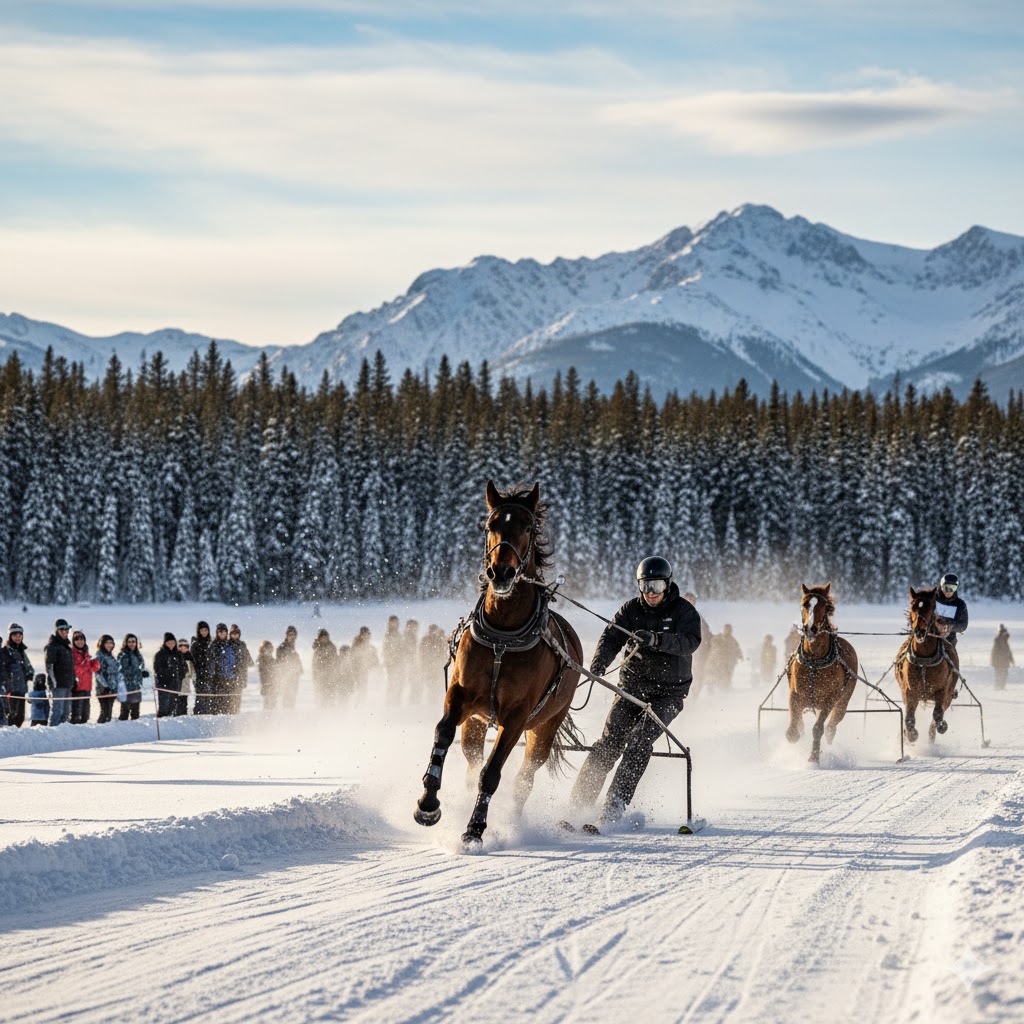
The Thrilling World of Skijoring: A Deep Dive into the Sport’s History, Growth, and Impact
Skijoring is one of the most thrilling and unique winter sports in the world. Combining speed, teamwork, and nature, it challenges both human and animal athletes to perform in harmony. The sport blends skiing with the power of a horse, dog, or even a motor vehicle pulling the skier across snow. This fascinating combination of endurance and coordination has captured attention globally. In this article, we will explore the origin and history of Skijoring, its worldwide popularity, amateur and professional play, political and social significance, and the rules that define it.
The Origin and History of Skijoring
The roots of Skijoring trace back several centuries to the snowy regions of Scandinavia. Early versions of the sport emerged as a means of winter transportation rather than recreation. Nordic villagers used reindeer to pull skiers across frozen terrain. These early methods allowed travelers to move swiftly through snow-covered landscapes when other forms of transport failed. Over time, what began as a practical solution evolved into a competitive and recreational pursuit.
By the late 19th century, Skijoring began taking shape as an organized sport. In Norway, it became a part of winter festivals, showcasing the strength of reindeer and the skill of skiers. The sport spread across northern Europe, particularly in Sweden and Finland, where horse-drawn versions gained popularity. Riders would steer their horses while skiers held on behind, racing across frozen lakes and open fields.
During the early 1900s, Skijoring made its way to Central Europe. Switzerland embraced the sport with enthusiasm, especially in St. Moritz, where it became a highlight of the annual winter games. There, the sport evolved into a more refined version known as “equestrian Skijoring,” with professional riders and skiers competing on snow-covered racecourses. This version emphasized elegance, control, and speed.
In North America, Skijoring took a slightly different turn. Settlers and ranchers in the northern United States adapted the sport using horses on snow-packed roads. By the 1920s, competitive events appeared in states such as Colorado and Montana. American-style Skijoring incorporated jumps, gates, and obstacles, turning it into an adrenaline-filled spectacle. Over the next decades, it grew into a staple of winter festivals and rodeo-style events.
Modern Skijoring now features several variations, including horse-pulled, dog-pulled, and motorized formats. Each type demands a unique set of skills but shares the same core principle—speed, coordination, and trust between partners. What began as a form of transportation has transformed into a global sport that celebrates winter adventure and athletic excellence.
The Global Popularity of Skijoring
Today, Skijoring enjoys international recognition as both a competitive and recreational activity. The sport thrives in countries with strong winter traditions, such as Norway, Sweden, Finland, Switzerland, and Canada. Each region has developed its own unique approach, influenced by local culture, terrain, and available animals.
In Scandinavia, the sport remains closely tied to cultural heritage. Reindeer Skijoring events are still held annually, particularly in Norway’s Sami regions. These events preserve indigenous traditions while attracting tourists fascinated by the ancient connection between people and reindeer.
Switzerland maintains a luxurious image of Skijoring, particularly at the White Turf event in St. Moritz. This high-profile competition draws elite riders, skiers, and spectators from around the world. Participants compete for substantial prizes, while attendees enjoy a glamorous mix of sport and social celebration. The Swiss version emphasizes precision and aesthetics as much as speed.
In North America, Skijoring has developed a rugged and exciting identity. States like Montana, Colorado, and Wyoming host major competitions every winter. The National Skijoring Championships attract skilled athletes who compete for national titles and sponsorships. Events often feature Western themes, blending rodeo culture with high-speed skiing. Spectators line the snow-packed tracks to witness daring jumps, sharp turns, and thrilling finishes.
Canada also boasts a growing Skijoring community, especially in provinces such as Alberta and Quebec. With its vast snowy landscapes and equestrian traditions, Canada provides an ideal setting for both competitive and recreational Skijoring. Local clubs organize events that encourage new participants to experience the sport safely and enjoyably.
Dog Skijoring has also gained widespread appeal worldwide. It is particularly popular in the United States, Canada, Russia, and parts of Europe. Dog owners participate in recreational events or local races, using one to three dogs to pull them across trails. This variation makes Skijoring accessible to families and individuals who may not have access to horses or snowmobiles. It combines exercise, companionship, and outdoor adventure, contributing to the sport’s expanding popularity.
In recent years, motorized Skijoring has gained traction in some regions. Snowmobiles replace animals as the pulling force, creating high-speed competitions for adrenaline enthusiasts. This version appeals to younger audiences and has even inspired extreme sports events in ski resorts across the globe.
Overall, Skijoring’s worldwide popularity continues to grow. Its adaptability, inclusivity, and thrilling nature make it appealing to people of all ages. As winter sports evolve, Skijoring maintains a unique place where tradition meets modern excitement.
Amateur Skijoring Around the World
Amateur Skijoring plays a vital role in maintaining the sport’s global presence. Across many countries, local clubs and communities organize friendly events that introduce newcomers to the sport. These gatherings foster camaraderie and encourage skill development without the pressure of professional competition.
In Scandinavia, children often learn Skijoring through family traditions. Parents teach their kids how to handle small reindeer or dogs safely, emphasizing respect for the animals and teamwork. Youth events encourage sportsmanship and appreciation for winter culture. Schools in snowy regions sometimes incorporate Skijoring into physical education programs, especially in rural communities where it remains part of daily life.
In the United States, numerous winter festivals feature amateur divisions for both horse and dog Skijoring. Beginners participate in shorter, simplified courses designed to emphasize fun and safety. Local associations such as Skijor USA and regional clubs offer workshops to help participants learn essential skills, including harnessing, skiing control, and communication with animals.
Canada’s approach to amateur Skijoring focuses on accessibility. Family-friendly clubs organize community races, where participants of all skill levels compete in a supportive environment. These events promote outdoor activity and build awareness of animal care and welfare. Youth programs often partner with ski schools and pet organizations to introduce Skijoring safely to young athletes.
Dog Skijoring is particularly popular among amateurs because it requires minimal equipment. Enthusiasts often begin by using cross-country skis, a harness, and their family dog. Trail systems across Europe and North America have adapted designated routes for dog Skijoring, providing safe and scenic areas to practice. Social media communities have also contributed to the sport’s growth, allowing beginners to share tips, find local partners, and celebrate their progress.
Amateur Skijoring offers more than just recreation. It teaches teamwork, builds confidence, and strengthens the bond between people and animals. It also serves as a gateway for those who later pursue professional competition.
Professional Leagues and Competitions
Professional Skijoring leagues have emerged across the world, transforming the sport into an organized and competitive spectacle. In the United States, the Skijoring America circuit oversees many major events, including the World Invitational Skijoring Championships. These competitions attract top athletes who combine speed, agility, and precise control. Courses feature jumps, slalom gates, and timed sections that test both skier and horse.
The National Skijoring Association also coordinates events that rank competitors based on skill, accuracy, and consistency. Points accumulated during the season determine national standings, and top performers often receive sponsorship deals. Professional riders and skiers work together to refine their timing and coordination, demonstrating the sport’s demanding nature.
In Europe, the White Turf event in Switzerland remains the crown jewel of professional Skijoring. Held annually since 1907, it combines athletic excellence with high society glamour. Skilled riders compete on thoroughbred horses while skiers reach speeds exceeding 50 kilometers per hour. The event’s prestige and scenic backdrop have helped cement Skijoring as a symbol of winter sophistication.
In Scandinavia, national championships for reindeer Skijoring attract both professional athletes and indigenous participants. These competitions highlight cultural pride and athletic talent. Norway and Finland have integrated the sport into winter sports festivals, showcasing it alongside cross-country skiing and biathlon.
Dog Skijoring also maintains professional recognition through international federations. The International Federation of Sleddog Sports (IFSS) includes Skijoring as one of its main disciplines. Athletes compete in global championships featuring solo and team events. These competitions demand endurance, speed, and strong bonds between dogs and handlers. Training regimens emphasize both athletic performance and animal welfare, ensuring that dogs remain healthy and happy participants.
Motorized Skijoring has found professional footing in extreme sports circuits. Snowmobile-assisted races feature daring stunts and tight turns, creating thrilling visual spectacles. Competitors perform jumps and tricks similar to freestyle motocross, attracting large audiences and media coverage.
Professional Skijoring continues to evolve as technology, safety, and training improve. Its diversity—from reindeer heritage to high-speed equestrian racing—keeps the sport dynamic and inclusive on the global stage.
Political and Social Significance of Skijoring
Beyond competition, Skijoring holds deep political and social significance. In Scandinavia, it represents cultural identity and heritage. For the Sami people, reindeer Skijoring preserves ancient traditions and reinforces their connection to the land. Events celebrating the sport provide visibility for indigenous cultures and promote understanding of their history and lifestyle.
In Switzerland, Skijoring has become a symbol of luxury tourism and national pride. The White Turf event contributes significantly to the local economy, attracting international visitors and boosting the country’s reputation as a premier winter destination. It also underscores the role of winter sports in promoting regional identity and economic sustainability.
In North America, Skijoring reflects the spirit of the Western frontier. It merges ranching culture with winter athletics, celebrating resilience and adventure. Local governments often support Skijoring events as part of tourism initiatives that stimulate small-town economies. These festivals bring communities together, create seasonal employment, and preserve regional traditions.
Dog Skijoring carries social benefits as well. It promotes outdoor activity, animal companionship, and physical fitness. Participants form strong social networks based on shared interests and mutual respect for animals. The sport also supports animal welfare organizations, as events often raise funds for shelters and rescue groups.
Politically, Skijoring has contributed to discussions on environmental and animal protection. Advocates emphasize sustainable event practices, humane training methods, and respect for wildlife habitats. The sport’s reliance on natural snow conditions has also drawn attention to climate change. Organizers increasingly focus on reducing carbon footprints and supporting ecological awareness.
Socially, Skijoring unites people from diverse backgrounds. Whether practiced by indigenous communities, elite athletes, or casual adventurers, it fosters a sense of shared excitement and respect for nature. The combination of human and animal effort symbolizes cooperation and mutual trust—a message that resonates far beyond the snow-covered tracks.
Rules and Structure of Skijoring
While Skijoring comes in various forms, the basic rules remain consistent. The sport involves a skier being pulled by a horse, dog, or motor vehicle over a snowy course. Competitions are timed, and speed, precision, and teamwork determine success.
In horse Skijoring, the skier holds onto a rope attached to the saddle or harness of a horse. Riders guide their horses through courses that include jumps, gates, and sometimes slalom sections. Distances vary but typically range between 600 and 1,000 meters. The skier must navigate obstacles while maintaining control and balance. Penalties occur if gates are missed, obstacles are knocked down, or the skier falls.
In dog Skijoring, one or more dogs pull a skier wearing a waist belt connected by a bungee line. Competitions follow cross-country skiing formats, with distances from 3 to 20 kilometers. Dogs must remain in front of the skier, and handlers may use voice commands but no physical contact during races. Races are judged by time, and equipment must meet safety standards to protect both human and canine athletes.
Reindeer Skijoring follows similar principles. Reindeer are harnessed to pull the skier in a straight sprint over short distances. Timing and control are key, and competitors often reach impressive speeds on packed snow tracks.
Motorized Skijoring introduces additional safety requirements. The skier is towed behind a snowmobile and must navigate sharp turns and jumps. Helmets, goggles, and protective gear are mandatory. Judges score based on time, technique, and sometimes style during freestyle events.
Across all variations, safety remains paramount. Courses are inspected before races, and animal welfare is closely monitored. Competitors undergo equipment checks, ensuring harnesses, ropes, and skis meet standards. In professional leagues, veterinarians and officials oversee animal conditions before, during, and after races.
Spectators enjoy the fast-paced action and the skillful coordination between skier and animal. The unpredictable nature of the sport—where weather, terrain, and teamwork all play crucial roles—adds to its appeal.
Conclusion
Skijoring stands as one of the most captivating winter sports ever developed. From its ancient origins in Scandinavian survival to its modern role in international competitions, the sport has evolved with creativity and respect for tradition. Its global reach reflects its versatility, uniting cultures, animals, and people in a shared pursuit of adventure.
Amateurs continue to sustain Skijoring’s growth through community events and youth programs. Professionals push its limits on world stages, bringing attention to athletic excellence and cultural heritage. Politically and socially, it embodies cooperation, environmental respect, and cultural pride. The sport’s diverse formats—horse, dog, reindeer, and motorized—ensure it appeals to audiences across generations and continents.
At its heart, Skijoring celebrates the enduring bond between humans, animals, and the snowy landscapes they share. Its future looks bright as more enthusiasts discover the thrill of gliding across winter terrain powered by teamwork, courage, and trust.