
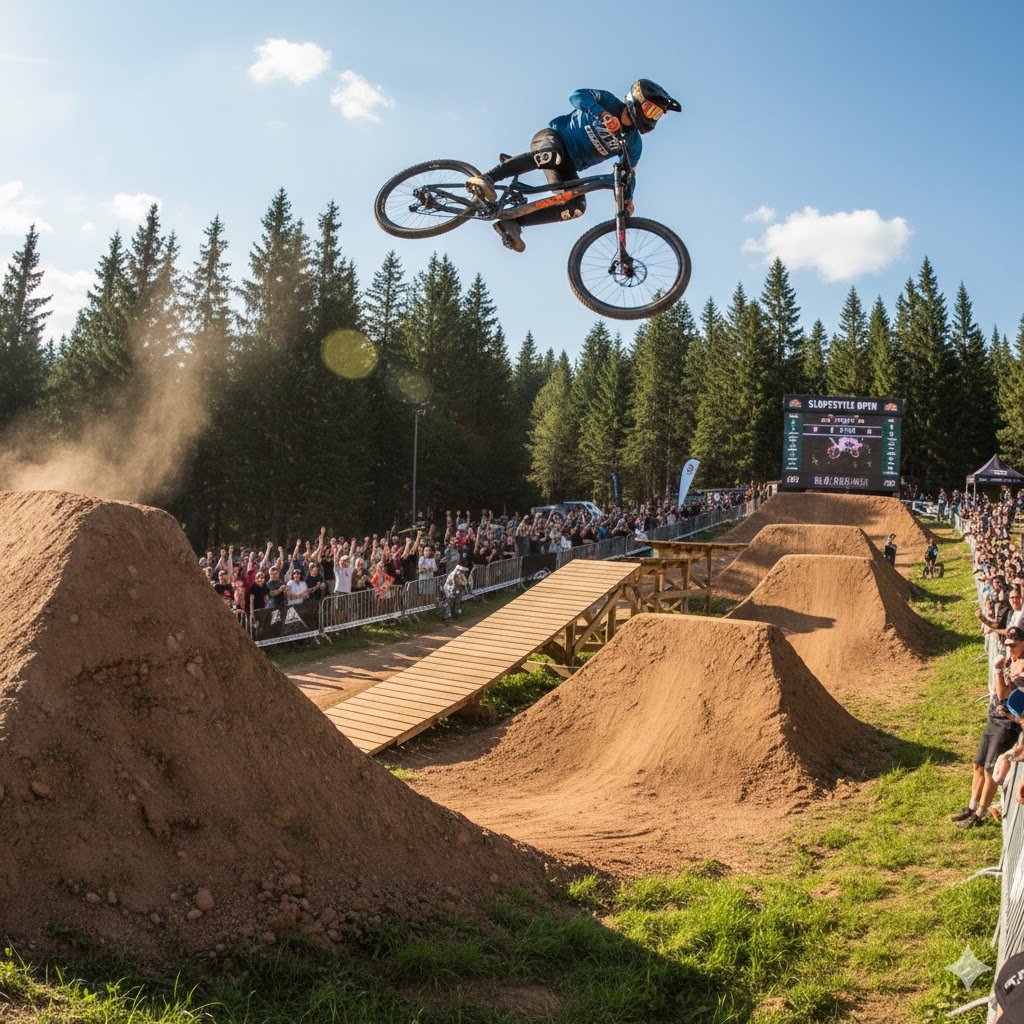
Slopestyle Biking: The Thrill of Gravity and Creativity Combined
Slopestyle Biking is one of the most electrifying and visually stunning disciplines in the world of extreme sports. It blends the skill of freestyle BMX, the courage of downhill mountain biking, and the creativity of skateboarding. Riders soar through the air, performing flips, spins, and intricate tricks across a course filled with jumps, drops, and ramps. This adrenaline-fueled spectacle captures the imagination of both athletes and spectators. In this blog, we’ll explore the full story of Slopestyle Biking—from its humble beginnings to its global popularity, its role in amateur and professional levels, its social and political significance, and its defining rules.
The Origin and History of Slopestyle Biking
The story of Slopestyle Biking begins in the late 1990s and early 2000s when mountain bikers started experimenting with freestyle tricks. These pioneers took inspiration from BMX dirt jumping and skateboarding. They began modifying mountain bikes to handle massive jumps and hard landings. At that time, traditional downhill and cross-country mountain biking were already well established. However, some riders wanted a new form of expression—something that allowed them to show creativity rather than just speed.
Early Slopestyle events emerged organically at freeride mountain bike gatherings. Riders built courses filled with ramps, wooden ladders, dirt jumps, and wall rides. These homemade tracks were the proving grounds for the sport’s first innovators. In Canada, especially in British Columbia, this style found a home in the rugged forests and bike parks. The Whistler Mountain Bike Park became a central location for experimentation. It was here that the first major organized Slopestyle competitions began.
By the early 2000s, Crankworx Whistler—a now legendary mountain bike festival—introduced Slopestyle as a marquee event. It quickly became the sport’s version of the Super Bowl. The competition attracted the best riders from around the world. The format combined technical tricks, amplitude, and flow, setting the tone for how future competitions would be judged.
The sport grew rapidly as action sports networks began broadcasting highlights. Riders like Cam McCaul, Brandon Semenuk, and Brett Rheeder helped push boundaries with increasingly complex tricks and smoother style. These athletes transformed the sport from a niche pursuit into a legitimate professional discipline.
The Global Popularity of Slopestyle Biking
Today, Slopestyle Biking is recognized around the world. Its growth has mirrored the global rise of mountain biking as a lifestyle and recreational activity. From North America to Europe, and even in parts of Asia and Oceania, dedicated parks and facilities have emerged.
In North America, Canada remains the spiritual home of Slopestyle. The Whistler Crankworx event continues to set the global standard. The United States has also built a strong following, with cities like Colorado Springs, Bend, and Salt Lake City fostering both amateur and professional riders.
In Europe, the sport’s popularity exploded in countries such as Austria, Germany, and Sweden. The European Crankworx events—held in Innsbruck and previously in Les Deux Alpes—helped bring world-class competition to European soil. European riders developed distinct styles emphasizing technical precision and creativity.
In Oceania, New Zealand’s Queenstown has become a mecca for Slopestyle riders. The annual McGazza Fest honors the late Kelly McGarry, one of the sport’s pioneers. Local riders continue his legacy by hosting jam sessions and competitions that draw international attention.
In Asia, the sport remains in its early stages but is gaining momentum. Japan and South Korea have built mountain bike parks catering to freestyle and Slopestyle disciplines. The youth market, combined with a growing adventure tourism scene, is driving the sport’s expansion.
Social media has amplified this growth tremendously. Platforms like Instagram and YouTube allow riders to share content instantly. As a result, even small local events now reach a global audience. Fans from around the world follow their favorite riders, creating a vibrant online community around Slopestyle Biking.
Amateur Slopestyle Biking and Youth Participation
Amateur Slopestyle Biking forms the foundation of the sport’s future. Across the world, youth and beginner riders are embracing this discipline with passion. Local bike parks are introducing Slopestyle features into their layouts to attract new enthusiasts.
In North America, many high school and youth programs are incorporating freestyle and Slopestyle training. The National Interscholastic Cycling Association (NICA) focuses on cross-country racing but has started to acknowledge freestyle as a complementary skill. Kids learn balance, control, and confidence by riding jump lines and pump tracks. Local bike shops and clubs often organize jam sessions where young riders can safely practice tricks.
In Europe, specialized camps and schools teach Slopestyle fundamentals. Facilities like the Dirt Jump Academy in Germany and La Poma Bike Park in Spain provide safe, progressive environments. Coaches emphasize progression—riders start with small features before attempting larger jumps. Safety gear and bike setup are also taught from the beginning.
In New Zealand and Australia, youth development programs have taken cues from snowboarding and BMX training models. Riders begin on dirt jumps or foam pits before moving onto full Slopestyle courses. National mountain biking associations are beginning to recognize Slopestyle as a legitimate discipline for juniors.
In Asia, the scene is emerging. Bike parks in Japan and Thailand now offer Slopestyle courses. Youth participation is rising, with many inspired by global events and online videos. Equipment availability and cost still present barriers, but the growing community spirit helps overcome these challenges.
Amateur Slopestyle Biking thrives because it emphasizes creativity and individuality. Every rider develops their own style. Competitions often reward not only technical difficulty but also flow and originality. This open, expressive culture attracts a diverse range of participants.
Professional Slopestyle Biking Leagues and Competitions
Professional Slopestyle Biking has evolved into a structured, international circuit. The Crankworx World Tour stands at the top of the professional scene. It features multiple stops each year in locations like Whistler, Innsbruck, and Rotorua. Riders earn points toward the King or Queen of Crankworx title. The event includes Slopestyle as its crown jewel.
Another major organization is the Freeride Mountain Bike (FMB) World Tour. It was created to unify competitions under one ranking system. Riders accumulate points at Bronze, Silver, Gold, and Diamond-level events. The FMB World Tour helps identify the best riders globally and provides pathways for amateurs to turn professional.
The Red Bull Joyride, held at Crankworx Whistler, remains the most prestigious single event in Slopestyle Biking. It features the biggest jumps, the most challenging course designs, and the highest level of competition. Winning Joyride is considered the ultimate achievement.
Other events like Audi Nines in Europe and District Ride in Nuremberg also contribute to the professional circuit. These events emphasize creativity and media coverage, often blending Slopestyle with freeride elements.
In recent years, women have begun entering the Slopestyle scene more prominently. Female riders such as Caroline Buchanan and Casey Brown are breaking barriers. Dedicated women’s categories are emerging at major events, signaling a more inclusive future.
Sponsorships play a huge role in the professional scene. Major bike brands such as Trek, Canyon, and Specialized support top athletes. Energy drink companies and outdoor gear brands also invest heavily. This commercial support helps riders travel, train, and compete globally.
Professional Slopestyle Biking combines athleticism, artistry, and showmanship. Riders must be at peak physical and mental condition. They often train year-round, fine-tuning tricks in foam pits and air bags before executing them in live competitions.
The Social and Political Significance of Slopestyle Biking
Slopestyle Biking extends beyond sports—it’s a cultural movement. It embodies freedom, creativity, and environmental connection. The sport encourages people to spend time outdoors and engage with nature. It also promotes community building through shared spaces like bike parks and events.
Socially, the sport appeals to those who value self-expression. Riders don’t just perform tricks—they tell stories through movement. Each run reflects personality and style. This artistic side helps Slopestyle stand out among other action sports.
In many communities, bike parks have become vital youth hubs. They provide positive outlets for energy and creativity. Local governments and non-profits recognize their role in promoting healthy lifestyles. Building a bike park can also rejuvenate underused public spaces. Cities from Canada to the Czech Republic have invested in Slopestyle facilities as part of urban renewal projects.
Politically, Slopestyle Biking connects with environmental and sustainability discussions. The sport relies on natural terrain and outdoor venues, fostering respect for nature. Many events promote eco-friendly practices, from trail conservation to carbon-neutral logistics. Riders often advocate for protecting wilderness areas that host trails and parks.
Furthermore, the sport’s independence from traditional institutions gives it a grassroots identity. Riders often build their own jumps and organize community events. This self-driven spirit reflects values of freedom and cooperation. It also challenges conventional notions of what “organized sport” should look like.
Globally, Slopestyle Biking has also helped strengthen tourism economies. Mountain towns benefit from hosting events and attracting riders. Resorts now operate year-round, offering summer biking to complement winter skiing. This economic impact helps justify investments in trail infrastructure and public recreation areas.
Culturally, the sport bridges gaps between generations. Parents who grew up skateboarding or snowboarding now share similar experiences with their children through biking. It’s a sport that encourages lifelong participation and community engagement.
The Rules and Structure of Slopestyle Biking
Slopestyle Biking competitions follow a clear set of rules to ensure fairness and safety. While courses differ from event to event, the core principles remain consistent.
Each course typically consists of a downhill line filled with multiple jumps, ramps, drops, and features. Riders must complete their run from top to bottom without falling or missing key features. Judges score based on several criteria, including trick difficulty, execution, amplitude, flow, and overall impression.
- Difficulty measures how complex and dangerous the tricks are.
- Execution evaluates how cleanly each trick is landed and performed.
- Amplitude looks at the height and distance achieved during jumps.
- Flow considers how smoothly the rider connects features.
- Overall impression rewards creativity, originality, and style.
Competitions generally have two or three runs per rider. The best score counts toward the final result. The rider with the highest score wins.
Safety regulations are strict. Riders must wear helmets, and most use full-face protection. Pads, gloves, and neck braces are recommended. Before events, course inspections and practice sessions ensure familiarity and minimize risk.
Course design plays a crucial role. Builders construct jumps and features using dirt, wood, and metal ramps. Each element must allow riders to perform tricks safely while maintaining visual excitement. Designers balance difficulty with flow to create entertaining runs.
Time management also matters. Riders must complete their run within a specific window, usually under two minutes. Judges penalize missed features or incomplete runs. Crashes typically end a run, although minor mistakes can still allow a rider to post a score.
Slopestyle Biking also includes jam-format events, where riders have multiple attempts in a set timeframe. These sessions emphasize fun and progression rather than strict competition. Jam formats are especially popular at amateur and community levels.
Technology has influenced judging and performance analysis. High-speed cameras and digital scoring systems help ensure accuracy. Fans can follow scores in real-time, adding excitement to live events.
The Future of Slopestyle Biking
The future of Slopestyle Biking looks bright. The sport continues to attract new audiences, sponsors, and athletes. With advancements in bike technology, tricks are becoming more complex and safer to perform. Frames are lighter, suspension systems more responsive, and safety gear more advanced.
There is also talk of Slopestyle Biking eventually joining the Olympic Games. While not yet official, the inclusion of BMX Freestyle in the Olympics has paved the way. The International Cycling Union (UCI) has expressed interest in expanding its mountain biking disciplines on the global stage.
Environmental sustainability will remain a central theme. Future events will likely adopt greener practices, including recycled materials for ramps and renewable energy for event operations. Riders themselves continue to be ambassadors for responsible trail use and conservation.
The digital landscape will also shape the sport’s trajectory. Social media content, live streams, and virtual competitions create new ways to engage audiences. Younger fans discover the sport online long before attending live events.
Diversity and inclusion are gaining momentum too. More women, adaptive athletes, and underrepresented groups are joining the scene. This expansion ensures the sport reflects a broader audience and remains culturally relevant.
Ultimately, Slopestyle Biking thrives because it celebrates human creativity and courage. Riders push limits with every jump, inspiring others to embrace adventure and expression. The sport’s combination of athleticism, innovation, and artistry ensures it will continue captivating hearts and minds worldwide.
Conclusion
Slopestyle Biking has evolved from a fringe experiment into a global phenomenon. It blends technical mastery, creativity, and risk in a way few sports can match. From its early days in Canadian forests to massive international events, it continues to embody the spirit of progression.
Amateur riders, professional athletes, and fans all share the same passion—for flight, freedom, and flow. Its social impact, environmental awareness, and economic contributions highlight its significance beyond sport. The rules, structure, and competitions give it form, but the community gives it soul.
Whether you’re watching from the sidelines or hitting the jumps yourself, Slopestyle Biking reminds us that limits are meant to be challenged—and that every leap begins with courage.