
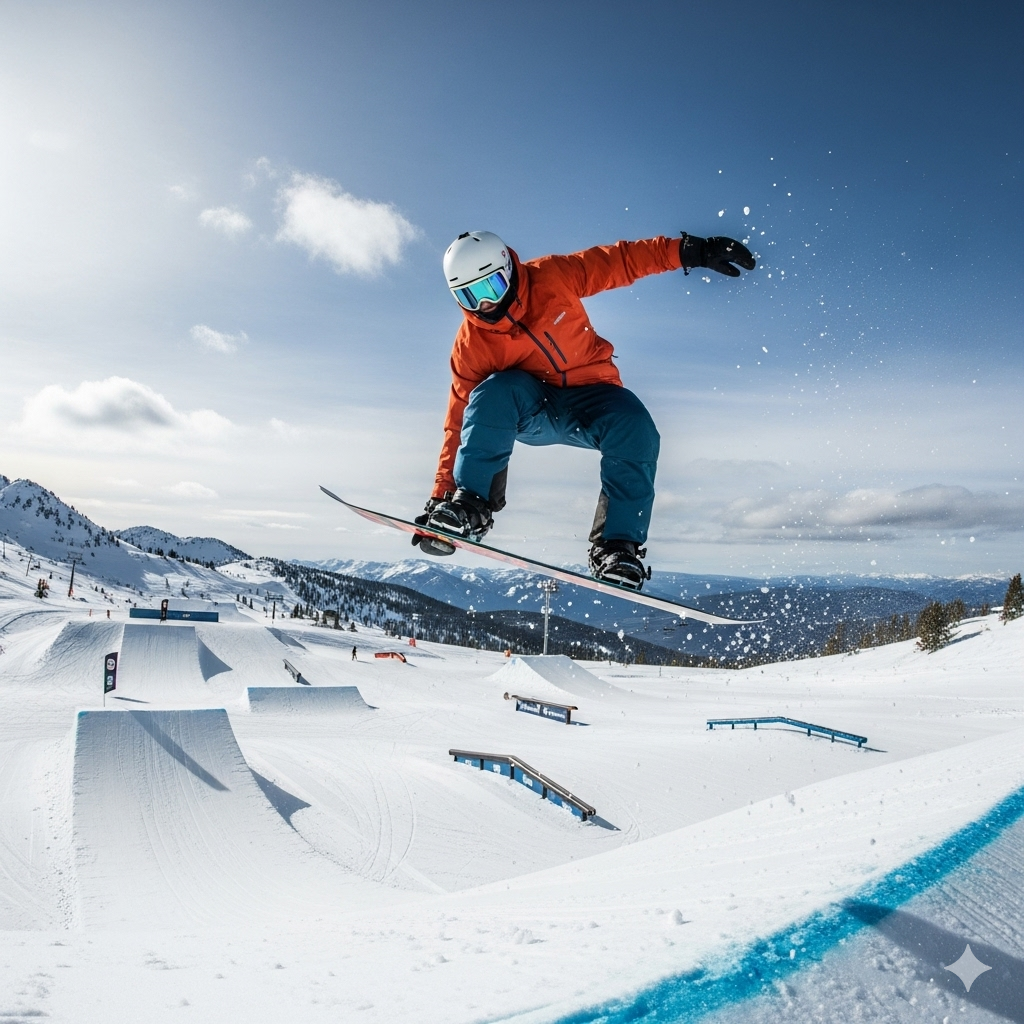
Snowboarding Slopestyle: A Complete Guide to the Sport
Snowboarding Slopestyle is one of the most exciting winter sports in the world today. It combines creativity, technical skill, and fearless energy into one breathtaking competition. Riders launch off massive jumps, grind rails, and spin through the air in dazzling displays of athleticism. This modern discipline has captured the imagination of athletes, fans, and organizers worldwide. Snowboarding Slopestyle has grown from underground roots to Olympic prestige, making it one of the most celebrated winter sports on the planet.
The Origin and History of Snowboarding Slopestyle
Snowboarding itself traces back to the 1960s in the United States. Early enthusiasts strapped wooden planks or surfboards to their feet to glide down snowy hills. Sherman Poppen, an engineer from Michigan, built the “Snurfer” in 1965. This toy combined surfing and skiing concepts. It became a local craze and inspired future snowboard innovators.
Throughout the 1970s and 1980s, snowboarding began to develop into a structured sport. Jake Burton Carpenter and Tom Sims were central to this growth. They designed boards, sponsored riders, and pushed ski resorts to open their slopes to snowboarders. Resorts initially resisted, fearing damage and reckless riding. However, snowboarding’s popularity forced acceptance. By the 1990s, most resorts welcomed snowboarders.
Slopestyle specifically emerged during the late 1980s and early 1990s. Riders looked for creative ways to showcase tricks beyond simple downhill runs. Inspired by skateboarding, they began building jumps, rails, and halfpipes in terrain parks. Ski resorts realized the appeal and started developing specialized freestyle parks. These parks allowed snowboarders to innovate endlessly.
Competitions soon followed. Early slopestyle contests were grassroots events, often sponsored by snowboard brands. By the late 1990s, organizations like the Winter X Games helped broadcast slopestyle to millions. The format was a perfect television product: fast, thrilling, and visually spectacular. Athletes such as Shaun White, Travis Rice, and Jamie Anderson became household names.
The International Ski Federation (FIS) officially recognized slopestyle as a competition category in the early 2000s. Its inclusion in the 2014 Winter Olympics in Sochi marked a historic milestone. For the first time, slopestyle riders competed for Olympic medals. This recognition elevated the sport globally and encouraged more youth to pursue it competitively.
Global Popularity of Snowboarding Slopestyle
Snowboarding Slopestyle enjoys popularity across continents. In North America, the United States and Canada are dominant hubs. Colorado, Utah, British Columbia, and Quebec host world-class terrain parks. Resorts such as Breckenridge, Whistler, and Mammoth Mountain are iconic training grounds.
Europe has also embraced slopestyle passionately. Switzerland, Austria, and France offer stunning alpine resorts with cutting-edge freestyle facilities. The Laax Open in Switzerland is one of the most prestigious slopestyle competitions in the world. Scandinavia, particularly Norway and Sweden, has also produced legendary slopestyle riders.
In Asia, Japan has established itself as a snowboarding paradise. Resorts like Niseko and Hakuba attract international athletes. China has invested heavily in winter sports infrastructure, especially after hosting the 2022 Winter Olympics in Beijing. Slopestyle is now gaining traction among Chinese youth.
Australia and New Zealand provide southern hemisphere options. Their winter seasons occur during the northern off-season, allowing professional riders to train year-round. Resorts in Queenstown, Wanaka, and Perisher are hotspots for international training camps.
Television and online streaming have made Snowboarding Slopestyle accessible globally. The sport has a dedicated fan base across South America, Eastern Europe, and even regions with limited snowfall. Indoor snow parks in Dubai, Germany, and the Netherlands make the sport available in unexpected places.
Amateur Snowboarding Slopestyle
Amateur participation plays a crucial role in developing the sport. Local resorts often host beginner-friendly terrain parks. These parks feature smaller jumps and rails, allowing young riders to practice safely. Ski schools and snowboarding camps teach children the fundamentals of balance, carving, and trick execution.
In North America, youth programs thrive. Many schools in snowy regions integrate snowboarding into their physical education. Clubs organize weekend training sessions for kids, preparing them for competitions. The United States of America Snowboard and Freeski Association (USASA) runs grassroots competitions nationwide. These events give young athletes experience before moving to professional circuits.
Europe has similar systems. National snowboarding federations collaborate with ski clubs to nurture young riders. Scandinavian countries excel at this, combining government support with private sponsorships. Youth development programs emphasize safe training and creativity.
Japan’s snowboarding culture is particularly strong among young people. Local schools often organize winter trips to nearby resorts. Youth riders frequently progress from recreational snowboarding to slopestyle competitions.
Amateur competitions also exist worldwide. Community events attract families and local sponsors. These grassroots gatherings often provide the first stage for future professionals.
Professional Leagues and Competitions
Professional Snowboarding Slopestyle thrives under a mix of organizations and event series. The most famous include:
Winter X Games
Held annually in Aspen, Colorado, the Winter X Games is the premier stage for slopestyle riders. It has been instrumental in shaping the sport’s identity. Riders like Mark McMorris, Jamie Anderson, and Marcus Kleveland have built legacies here.
FIS World Cup
The International Ski Federation organizes a series of World Cup events. These contests occur across Europe, Asia, and North America. They serve as qualifiers for the Olympic Games and World Championships.
Dew Tour
Launched in 2008, the Dew Tour blends snowboarding competition with music and culture. It emphasizes creativity and progression. Many professional riders consider it a highlight of their season.
Burton US Open (historic)
Although discontinued in 2020, the Burton US Open was once the most prestigious snowboarding event. Hosted in Vail, Colorado, it showcased the best slopestyle riders globally.
Laax Open
Held in Switzerland, this competition is Europe’s crown jewel. The slopestyle course at Laax is widely respected for its technical features and fair judging.
Professional riders often travel between continents to compete in these events. Prize money, sponsorship deals, and media coverage fuel their careers.
Social and Political Significance
Snowboarding Slopestyle carries deep social meaning. The sport reflects values of freedom, creativity, and individuality. Unlike traditional winter sports, slopestyle emphasizes style as much as technical precision. Riders often express their personalities through clothing, trick choices, and music.
Socially, the sport has inspired youth worldwide. It offers a sense of community and belonging, especially for those who feel disconnected from traditional athletics. The inclusive and artistic culture of snowboarding resonates with diverse audiences.
Politically, the sport’s Olympic inclusion was significant. Countries invested millions into training facilities and programs to compete for medals. Governments recognized the global influence of action sports. In nations like China, slopestyle is used to promote youth participation in winter sports.
The sport also intersects with environmental politics. Snowboarding depends on cold weather and snowy conditions. Athletes and brands have become vocal advocates for climate action. Organizations like Protect Our Winters (POW) highlight how global warming threatens the future of snowboarding. Many professional riders support these initiatives publicly.
Rules of Snowboarding Slopestyle
Snowboarding Slopestyle follows a structured set of rules to ensure fairness and safety.
Course Layout
A slopestyle course consists of jumps, rails, and other features arranged in sequence. Riders must perform tricks on each feature during their run. Courses vary but typically include three to five major elements.
Judging Criteria
Judges evaluate each run based on several categories:
- Difficulty: Technical level of tricks attempted.
- Execution: Clean landings, smooth spins, and control.
- Variety: Using different tricks across multiple features.
- Amplitude: Height and distance achieved on jumps.
- Flow: How smoothly the run connects from feature to feature.
- Creativity: Unique approaches to common features.
Scoring
Each rider receives a score out of 100. The best score across multiple runs counts toward the final standings.
Competition Format
Most events allow riders two or three runs. The highest single run determines placement. Qualifying rounds reduce the field before finals.
Safety Requirements
Riders must wear helmets. Some competitions mandate back protectors. Course inspections are mandatory before each contest to identify hazards.
Run Order
The starting order is often randomized. In finals, reverse order from qualifiers is used, with top qualifiers riding last.
Tie-Breaking
If riders tie, judges review overall impression or best trick execution to determine rankings.
Conclusion
Snowboarding Slopestyle has transformed from a grassroots movement into a global phenomenon. Its blend of athleticism and creativity has redefined winter sports. From its origins in 1960s America to its Olympic spotlight, the journey has been remarkable. Youth participation ensures a strong future, while professional circuits showcase the sport’s highest levels. Its cultural influence is undeniable, connecting riders worldwide. Politically, it has gained recognition and funding, while socially, it inspires individuality and inclusivity.
The rules maintain fairness while allowing riders to express creativity. With climate challenges and continued growth, the sport faces both obstacles and opportunities. Yet Snowboarding Slopestyle continues to captivate audiences and empower athletes. It represents not only competition but also lifestyle, identity, and passion.