
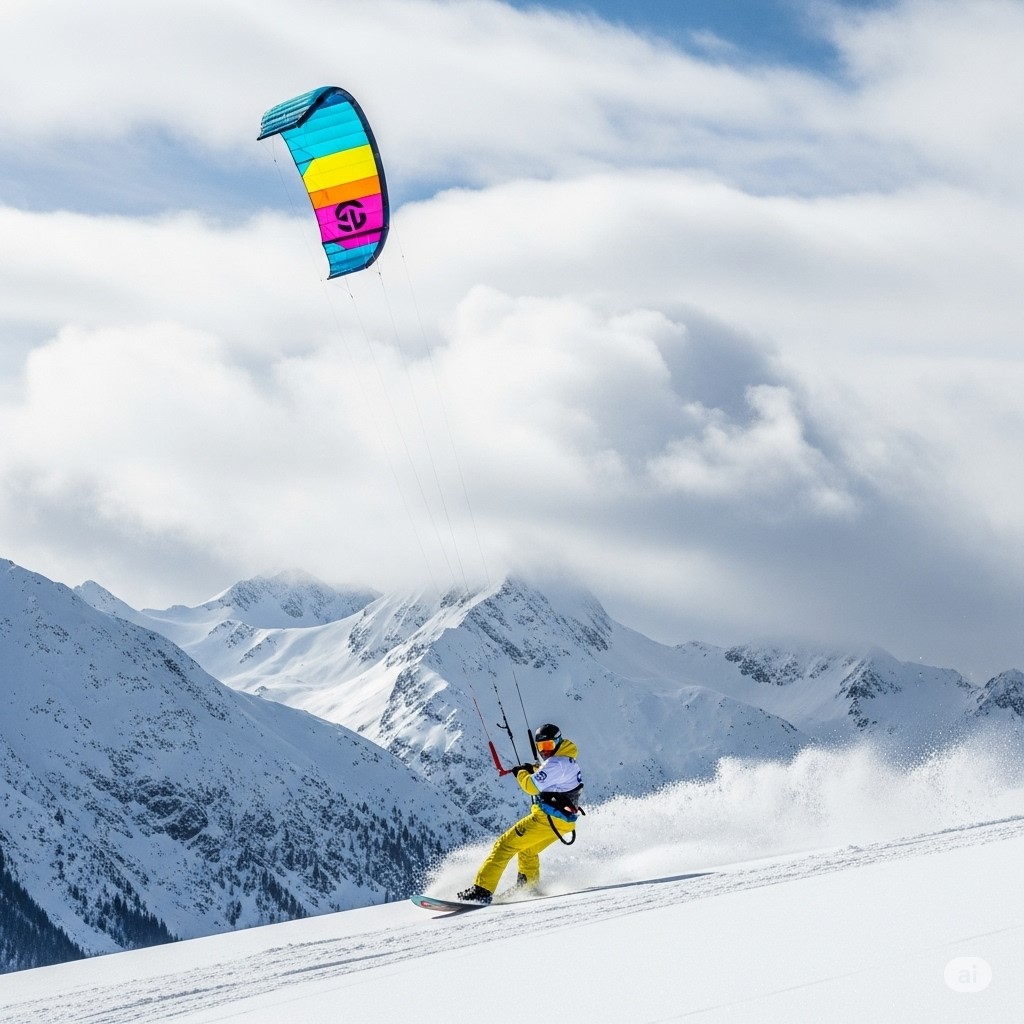
Snowkiting: The Thrill of Gliding Through Snow with the Power of Wind
Snowkiting is an extreme winter sport that combines elements of kiteboarding and snow sports like skiing or snowboarding. The participant uses a kite to harness wind power and glide across snowy landscapes. Unlike traditional winter sports, Snowkiting allows riders to travel both uphill and downhill using the force of the wind. The sport has gained significant momentum in recent decades and continues to attract thrill-seekers worldwide.
Origins and History of Snowkiting
The roots can be traced back to the early 1960s. Adventurers began experimenting with parachutes to pull themselves across frozen lakes. These early innovators sought ways to combine skiing with wind power. In the 1980s, technological advancements in kites and skis helped the sport evolve rapidly.
French and Swiss alpinists started using rectangular parafoils to cross snow-covered mountain terrain. This method proved more efficient than hiking through snow. Around the same time, kite skiing became popular in Scandinavia. These pioneers laid the foundation for what would later become modern Snowkiting.
By the late 1990s, the first dedicated Snowkiting kites and gear were developed. The sport began to see formal organization, including races and freestyle competitions. With improved safety equipment and better kite control systems, it became accessible to more people.
Global Popularity of Snowkiting
Over the past two decades, Snowkiting has expanded from niche to mainstream in several countries. Enthusiasts in Canada, Norway, Russia, and the United States have helped the sport flourish. In these regions, wide open snowy terrain and consistent wind conditions provide ideal settings.
Europe remains a hotspot for Snowkiting. Norway’s Hardangervidda Plateau is a favorite location, offering expansive snowfields and reliable wind. Similarly, Austria, France, and Switzerland host popular Snowkiting resorts and festivals. Russia’s vast Siberian plains and frozen lakes attract dedicated snowkiters from across the globe.
In North America, the Rocky Mountains and Great Lakes region offer top-tier Snowkiting conditions. Locations in Colorado, Utah, and Montana are especially favored. Canada, with its long winters and open terrain, boasts multiple Snowkiting schools and competitions.
Asia has also seen rising interest, particularly in Mongolia and northern China. Although still growing, these regions host amateur events and provide training facilities. New Zealand and Antarctica have even hosted Snowkiting expeditions, showcasing the sport’s global reach.
Amateur Snowkiting Around the World
Amateur Snowkiting has grown in popularity as equipment has become more affordable and training more accessible. Local clubs and schools offer beginner lessons and gear rentals. These resources help newcomers learn the basics safely.
In the United States, several programs introduce young people to Snowkiting. Schools in snowy regions sometimes include it in their winter sports curriculum. These programs emphasize safety, physical fitness, and environmental awareness.
European countries like Norway, Sweden, and France integrate Snowkiting into youth sports initiatives. Clubs often host weekend training camps for children and teenagers. These camps combine education with hands-on experience in the snow.
Amateurs also enjoy community events and local competitions. These gatherings foster camaraderie and skill development. Enthusiasts often share tips, review gear, and explore new locations together.
Thanks to social media, amateur Snowkiting has built an international community. Riders from different continents connect online, share videos, and organize meetups. This virtual network encourages participation and continuous growth of the sport.
Professional Snowkiting Leagues and Competitions
As Snowkiting matured, formal competitions and professional leagues began to form. The International Snowkiting Federation (ISKF) leads global efforts to promote and standardize the sport. ISKF organizes annual world championship events and sets guidelines for competition formats.
One of the most prestigious events is the Red Bull Ragnarok in Norway. Held on the Hardangervidda Plateau, this marathon-style race covers up to 100 kilometers. Athletes from over 30 countries compete in extreme wind and snow conditions.
Europe hosts several national Snowkiting tours. These include the French Snowkite Masters and the Swiss Snowkite Tour. These events feature both race and freestyle disciplines. Judges evaluate tricks, control, and style in freestyle categories.
Russia and Kazakhstan have growing Snowkiting leagues. Riders from these countries have achieved international recognition. Professional circuits also exist in North America, particularly in the U.S. and Canada. Events are often timed with winter festivals to attract spectators.
Sponsorships and media coverage have helped professional Snowkiting gain visibility. Competitions are streamed online and featured in extreme sports magazines. Professional riders often work with brands to test and promote new gear.
Political and Social Significance of Snowkiting
Beyond adrenaline and competition, it holds political and social relevance. In some remote regions, it offers a sustainable way to travel over snow. Arctic researchers and explorers have adopted Snowkiting techniques for transportation.
The sport also promotes environmental awareness. Snowkiters must respect nature and minimize their ecological footprint. Many Snowkiting organizations advocate for climate change awareness and the preservation of winter landscapes.
Socially, it fosters inclusivity and community. It attracts people of various backgrounds who share a love for the outdoors. Unlike some winter sports, Snowkiting does not require expensive infrastructure. This accessibility encourages participation from diverse socio-economic groups.
Several non-profits use Snowkiting to engage at-risk youth. These programs teach resilience, teamwork, and environmental stewardship. By connecting with nature, participants often gain a deeper sense of purpose and well-being.
In politically sensitive regions, Snowkiting has even served as a peaceful means of expression. Demonstrations on frozen lakes have highlighted issues like indigenous rights and environmental justice.
Rules and Regulations of Snowkiting
It involves specific rules to ensure safety and fairness. Riders must always wear helmets, harnesses, and protective gear. Kite control is critical. Participants should maintain a safe distance from each other.
Right-of-way rules help prevent collisions. The rider on a starboard tack (right hand forward) has the right of way. Overtaking riders must yield. Riders should avoid fixed obstacles and be aware of wind direction changes.
For competitions, rules vary slightly based on discipline. In races, participants follow marked courses. They must pass through checkpoints and complete laps within set time limits. Penalties apply for missed checkpoints or safety violations.
Freestyle events have different judging criteria. Judges score tricks based on difficulty, execution, and style. Riders must stay within designated areas. Safety officials monitor weather and can halt events if conditions worsen.
Licensing or certification is not always required, but training is strongly recommended. Many schools offer safety courses that cover kite handling, weather assessment, and emergency procedures.
Land access regulations may apply depending on the location. Riders should check local rules and obtain permission if required. National parks and protected areas often have specific guidelines.
Conclusion
Snowkiting combines athleticism, technology, and a profound connection with nature. Its rich history and growing popularity reflect the universal appeal of harnessing wind power to explore snowy landscapes. From amateur enthusiasts to elite professionals, Snowkiting unites people across cultures and continents. As the sport continues to evolve, it will inspire new generations to embrace adventure, respect nature, and push the boundaries of what’s possible on snow.