
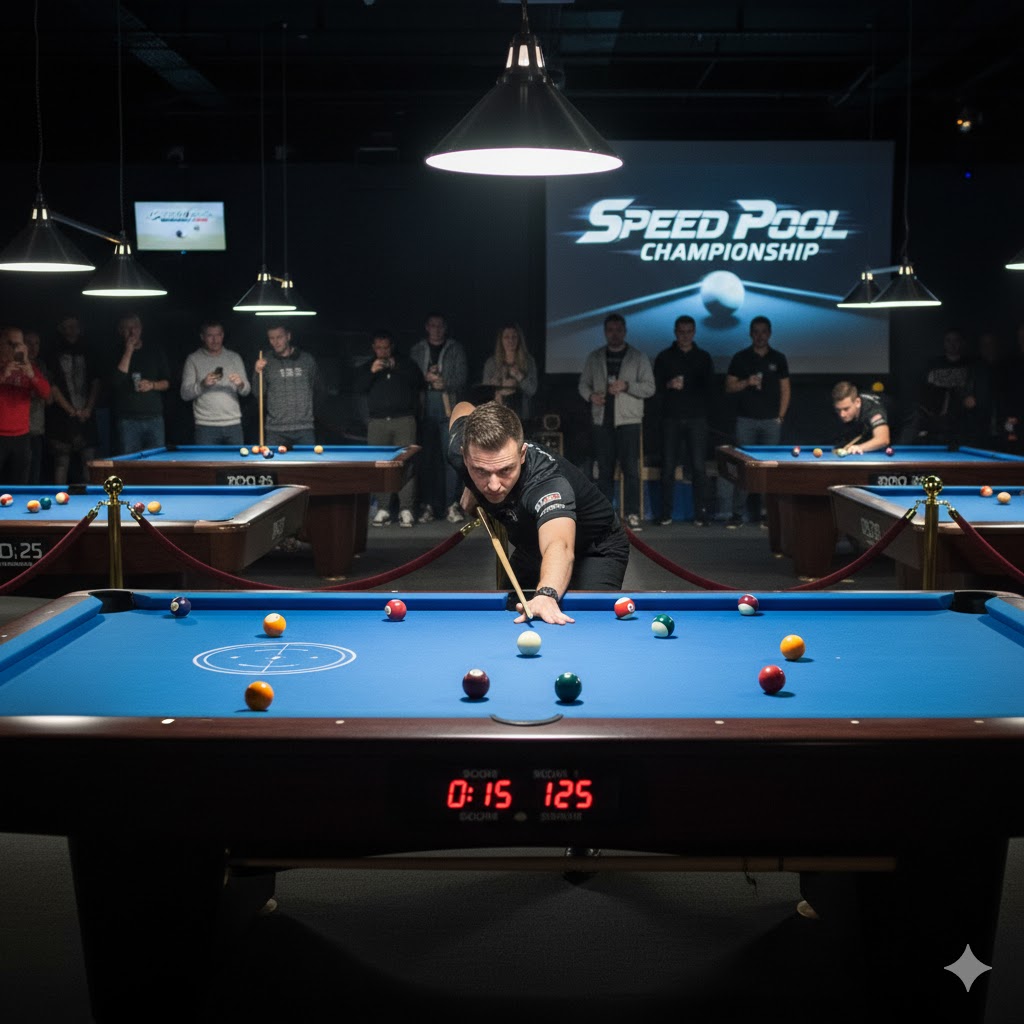
Speed Pool Billiards is a thrilling, high-energy variation of traditional pool that combines precision, speed, and mental focus. Unlike classic pool games where strategy and patience dominate, this sport demands lightning-fast decision-making and relentless accuracy. Players race against the clock to sink all balls in record time. Over the years, Speed Pool Billiards has evolved from a niche challenge into a recognized form of competitive entertainment worldwide. Its unique combination of athleticism, coordination, and concentration has made it a favorite among both players and spectators.
The Origin and History of Speed Pool Billiards
The roots of Speed Pool Billiards trace back to the late 20th century when professional pool players and tournament organizers sought to inject excitement into traditional billiards. Regular matches often stretched for hours, which limited spectator interest. Innovators in the billiard community wanted a faster-paced version that appealed to television audiences and younger fans.
Early versions of timed pool challenges appeared in exhibitions during the 1980s. Players such as Steve Mizerak and Earl Strickland occasionally raced to clear tables for promotional events. However, these informal displays evolved into structured competitions in the 1990s. The rise of cable sports networks gave billiards new visibility, and “speed” became the key to entertainment. Organizers soon formalized Speed Pool Billiards with defined rules and competitive formats.
The International Speed Pool Challenge, launched in the early 2000s, marked a major turning point. This televised event introduced a global audience to the sport. Contestants competed head-to-head or against the clock, attempting to clear an entire rack faster than their rivals. The sport’s emphasis on timing, reflexes, and endurance captivated viewers. What began as a novelty transformed into a legitimate professional discipline with fans across continents.
The Global Popularity of Speed Pool Billiards
Today, Speed Pool Billiards enjoys popularity in countries across North America, Europe, and Asia. The United States remains a leading hub, largely because of its strong billiards culture and history of televised tournaments. American pool halls regularly host timed events that attract both amateurs and seasoned professionals. ESPN and other networks have broadcast speed pool competitions, boosting the sport’s visibility.
In Europe, the United Kingdom, Germany, and the Netherlands have embraced Speed Pool Billiards enthusiastically. Many European players appreciate the mix of athletic intensity and precision. European leagues often include speed pool as part of their billiards circuits. The sport has also gained ground in Asia, particularly in the Philippines, China, and Japan. These nations already boast vibrant billiards communities, and the fast-paced variant fits their passion for skill-based competition.
In Australia and Canada, Speed Pool Billiards thrives in pubs, recreation centers, and sports clubs. Local tournaments are often tied to charity events or community gatherings. The accessibility of pool tables worldwide has helped the sport spread organically. Anyone with access to a table, a cue, and a stopwatch can practice, making it one of the most inclusive cue sports.
Social media has also accelerated the sport’s growth. Viral videos featuring lightning-fast table clears regularly attract millions of views. This exposure inspires new players to challenge themselves and join local competitions. As technology continues to connect enthusiasts, Speed Pool Billiards has evolved into a global phenomenon.
Amateur Play and Youth Involvement
Amateur Speed Pool Billiards forms the foundation of the sport’s global community. Local leagues, community centers, and recreation programs organize events that allow players of all ages to test their skills. The format’s simplicity makes it appealing for casual play while providing structure for serious competitors.
Schools and youth programs increasingly recognize the benefits of Speed Pool Billiards. The game improves focus, hand-eye coordination, and time management. Some high schools and colleges have integrated billiards into extracurricular activities, emphasizing the sport’s mental discipline. Students learn to plan shots quickly, anticipate ball movement, and remain calm under pressure. These skills translate well to academics and other sports.
Amateur tournaments often feature various divisions based on skill level and age. Young players begin with relaxed time limits, allowing them to develop accuracy before advancing to faster formats. Local recreation leagues provide guidance and coaching. Experienced players mentor beginners, ensuring the sport maintains its inclusive and community-driven atmosphere.
Weekend tournaments in community centers or pool halls often draw families and fans. Friendly rivalries develop, and players gain confidence before moving to regional competitions. Many professionals began in these grassroots circuits, proving that dedication and practice can lead to recognition.
Technology has further boosted amateur play. Apps and digital timers allow players to track and share their best times. Online communities organize virtual competitions where participants submit video recordings of their games. These innovations have broadened access and engagement, helping the sport thrive even outside formal venues.
Professional Leagues and Global Competitions
Professional Speed Pool Billiards leagues bring together the world’s fastest and most precise players. The International Speed Pool Challenge remains one of the most recognized events. Competitors from multiple continents gather to test their skill under intense time constraints. The atmosphere combines the tension of a sprint with the precision of a chess match.
In the United States, the American Poolplayers Association (APA) and other organizations have introduced timed events within their tournaments. Some professional tours feature special “speed rounds” that determine bonus prizes or rankings. Players such as Bobby McGrath, known for record-breaking times, have helped popularize the sport through high-profile performances.
Europe hosts its own versions of professional speed competitions. The European Pocket Billiard Federation (EPBF) occasionally includes timed formats in its championship schedule. In Asia, tournaments sponsored by cue manufacturers and sports networks bring together elite talent from China, the Philippines, and Japan. These events often draw large audiences both in person and online.
Televised and streamed tournaments provide dramatic viewing experiences. Cameras capture every movement, and commentators highlight the strategy behind rapid shot sequences. Sponsors appreciate the format’s appeal because it delivers action and suspense in a short time frame. The sport’s broadcast-friendly nature has made it a consistent feature in billiard programming.
Prize money in professional Speed Pool Billiards continues to grow. Major championships offer cash rewards, equipment endorsements, and global recognition. Professional players often tour internationally, representing their countries and inspiring the next generation. The combination of entertainment value and skill-based competition ensures that professional leagues will remain strong for years to come.
Political and Social Significance
Speed Pool Billiards carries unique political and social significance that extends beyond entertainment. The sport promotes values such as equality, discipline, and international cooperation. Players from diverse backgrounds compete on equal footing, proving that skill and dedication outweigh privilege or status.
Politically, billiards has historically represented working-class recreation. Pool halls often served as gathering spots for people seeking community and relaxation. The modern evolution of Speed Pool Billiards maintains that tradition while elevating it into a respected competitive sport. Governments in several countries, including China and the Philippines, have supported billiards programs as tools for youth engagement and national pride.
In multicultural societies, Speed Pool Billiards serves as a bridge between generations and cultures. It provides common ground where language barriers fade and mutual respect develops through competition. Community tournaments often include participants from various ethnic and social groups, creating a sense of inclusion and unity.
Socially, the sport also addresses issues such as youth development and accessibility. Because pool tables are relatively inexpensive and widely available, young people from all economic backgrounds can participate. The structured nature of Speed Pool Billiards teaches goal setting and time management. Many nonprofit organizations use billiards programs to mentor at-risk youth, giving them positive outlets and new opportunities.
Additionally, gender representation in Speed Pool Billiards has improved steadily. Female players compete alongside men in both amateur and professional events. Mixed-gender tournaments highlight the sport’s emphasis on skill rather than physical strength. These inclusive policies strengthen its social impact and attract broader participation.
Speed Pool Billiards also plays a role in charitable and diplomatic efforts. Exhibitions often raise funds for causes like education, health, and disaster relief. In international events, players act as informal ambassadors, fostering goodwill and sportsmanship. The sport demonstrates how entertainment and ethics can work hand in hand to strengthen communities worldwide.
Rules and Gameplay of Speed Pool Billiards
Speed Pool Billiards follows specific rules that prioritize time and accuracy. The objective is simple: clear the table as fast as possible. However, mastering the task requires exceptional control, planning, and endurance.
A standard match uses the same equipment as eight-ball or nine-ball billiards. Players compete on a regulation pool table with a cue ball and object balls. The clock begins once the player strikes the cue ball for the opening shot. From that moment, every second counts. The player must pocket all balls in any order unless a specific sequence is required by tournament rules.
In most competitions, players are allowed to break from any position behind the head string. Once the break is complete, the player continues shooting until all balls are pocketed or the timer expires. Each miss adds penalty time, usually two to five seconds, depending on the event’s rules. Fouls such as scratching or failing to hit a ball also incur time penalties.
Speed Pool Billiards requires continuous motion. Players cannot pause to chalk their cues or plan extended strategies. The emphasis lies on instinct, precision, and rhythm. A successful competitor must maintain composure under intense pressure while adapting to unpredictable ball patterns.
Timers vary by tournament. Some formats use a fixed goal, such as clearing 15 balls within two minutes. Others feature head-to-head races, where two players compete simultaneously on adjacent tables. The winner is determined by the fastest total time after multiple rounds.
Judges monitor for accuracy and fairness. They ensure balls are properly racked, time penalties are enforced, and no shortcuts are taken. Some tournaments use electronic timing systems for precision. Cameras and instant replays assist in verifying results.
A player’s strategy involves balancing speed with accuracy. Shooting recklessly can cause missed shots or poor positioning, leading to costly delays. Conversely, excessive caution wastes valuable time. Elite players find a rhythm that combines smooth transitions and efficient cue ball control.
Spectators find the game exhilarating because of its nonstop pace. Every shot contributes to the drama. The tension builds as players approach the final ball, knowing a fraction of a second can determine victory. This intensity separates Speed Pool Billiards from all other cue sports.
The Athletic and Mental Demands of the Game
Although billiards is often seen as a leisure activity, Speed Pool Billiards demands athletic conditioning. Players must move rapidly around the table, maintaining balance and focus. Endurance becomes essential during long matches or multi-round tournaments. Hand-eye coordination, muscle control, and breathing techniques play critical roles in success.
Mentally, the game tests decision-making under stress. Each shot involves rapid calculation of angles, spin, and force. Players must think several steps ahead while maintaining speed. Concentration lapses can ruin an otherwise perfect run. The combination of physical and mental intensity gives Speed Pool Billiards its distinctive appeal.
Training routines often include agility exercises, visualization techniques, and repetitive drills. Top professionals practice clearing tables hundreds of times each week to develop instinctive control. Their reflexes become finely tuned, allowing near-automatic responses during competition. This blend of athleticism and mental discipline mirrors the demands of racing or martial arts.
Technological Influence on Modern Play
Technology has transformed Speed Pool Billiards in recent years. High-speed cameras and digital timers ensure accurate scoring. Streaming platforms have expanded audiences worldwide. Viewers can watch live tournaments, follow professional players, and even interact through chat and commentary.
Cue technology has also advanced. Lightweight shafts, low-deflection tips, and ergonomic grips allow faster, more accurate shooting. Table manufacturers design surfaces with consistent bounce and friction, ensuring fairness across competitions. Electronic scoring systems and smart tables may soon become standard, further professionalizing the sport.
Online training programs and virtual coaching platforms now connect players globally. Aspiring competitors can analyze their performance frame by frame, identifying areas for improvement. These tools make high-level training accessible to everyone, regardless of location or income level.
The Future of Speed Pool Billiards
The future of Speed Pool Billiards looks bright. As audiences demand faster, more engaging sports content, this discipline fits perfectly into modern entertainment. Short, intense matches suit television and digital streaming formats. New tournaments continue to emerge in major cities around the world.
Developing youth programs will play a major role in sustaining growth. By promoting the sport in schools and community centers, organizers can cultivate the next generation of champions. Partnerships with educational institutions may expand access to equipment and training.
In the coming years, the integration of augmented reality and interactive scoring could make Speed Pool Billiards even more dynamic. Spectators might view real-time statistics, shot speed, and player heart rates. Such innovations will deepen fan engagement and bring the sport to new audiences.
Ultimately, the game’s appeal lies in its perfect balance of simplicity and challenge. Anyone can understand the goal—clear the table fast—but mastering it requires dedication and talent. As global communities continue to embrace the sport, Speed Pool Billiards will remain a symbol of focus, agility, and human potential.
Conclusion
Speed Pool Billiards stands as one of the most exciting evolutions of traditional billiards. Its blend of strategy, speed, and skill captivates players and fans alike. From its origins as a creative experiment to its current global stature, the sport represents innovation and inclusivity. Amateur and professional players around the world continue to push boundaries, setting new records and inspiring others to join the movement. As technology advances and youth participation grows, the game’s future shines even brighter. In every sense, Speed Pool Billiards embodies the spirit of precision, determination, and the relentless pursuit of excellence.