
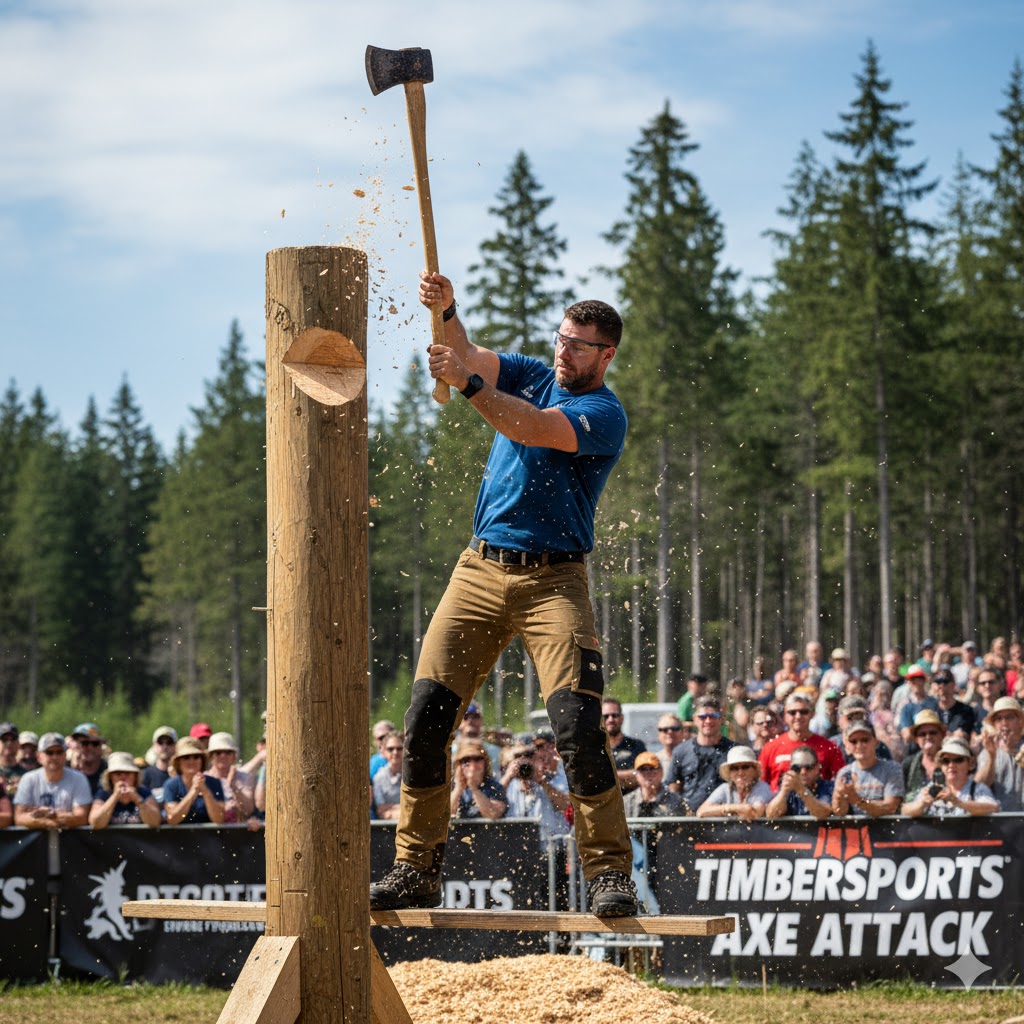
Springboard Chopping: The Ultimate Test of Strength and Precision
Springboard Chopping is one of the most exciting and visually thrilling lumberjack sports in the world. Combining balance, speed, and raw power, this discipline challenges athletes to climb a tree-like pole using boards inserted into notches they chop themselves—then cut through the top block of wood as fast as possible. The sport draws from the rich history of forestry and logging culture, where chopping skills were once a daily necessity. Today, Springboard Chopping has evolved into a respected competitive event, celebrated by athletes and spectators alike. The sport’s heritage, international appeal, and growing presence in both amateur and professional arenas make it a captivating subject for anyone interested in athleticism rooted in tradition.
The Origin and History of Springboard Chopping
Springboard Chopping began in the late 19th century within the rugged logging camps of North America. Loggers needed efficient ways to cut down massive trees that were too wide or had thick bases. To reach the narrower parts of the trunk, they inserted wooden planks—called springboards—into notches they chopped into the tree. These boards allowed them to stand several feet above the ground to make the final cuts more effectively.
What began as a practical logging technique quickly transformed into friendly competition among lumberjacks. Workers prided themselves on their chopping skill and balance, often challenging one another to see who could cut through a log fastest. By the early 1900s, organized timber sports emerged, and Springboard Chopping became one of the main events.
As logging declined as a manual profession, the sport survived as a tribute to that heritage. It evolved into a competitive spectacle, featured in timber festivals and lumberjack shows across Canada, the United States, Australia, and New Zealand. The skill of chopping combined with the danger of balancing high on springboards made it a crowd favorite from the start.
Growth of the Sport and Its Global Popularity
Springboard Chopping spread from North America to the rest of the world in the early 20th century. The sport gained a strong foothold in Australia and New Zealand, where forestry also played a major economic and cultural role. The first formal competitions outside North America appeared at agricultural fairs and forestry exhibitions. By the mid-1900s, Australia had established dedicated woodchopping associations, ensuring standardized rules and official competitions.
In North America, lumberjack competitions became televised events, helping the sport reach new audiences. The U.S. and Canadian logging festivals in Oregon, British Columbia, and Quebec regularly attract large crowds. Athletes from these regions became national celebrities within timber sports communities.
Today, Springboard Chopping is featured in international events like the STIHL TIMBERSPORTS® Series, the Royal Easter Show in Sydney, and the New Zealand Axemen’s Association championships. The sport also appears in European timber sports circuits, especially in countries like Germany, Austria, and Switzerland, where forestry traditions remain strong.
The global spread of the sport demonstrates the universal admiration for skill-based, heritage-driven athletics. While it remains niche compared to mainstream sports, its fan base continues to grow through live events, online streaming, and social media.
How Amateur Springboard Chopping Is Played
At the amateur level, Springboard Chopping serves as both a learning platform and an entry point into professional competition. Enthusiasts usually start in local lumberjack clubs or community fairs where safety and technique are emphasized.
Youth programs have emerged in areas with strong forestry traditions, especially in Canada, the Pacific Northwest of the U.S., and rural Australia. Students learn basic woodcutting skills before progressing to balance training and advanced axe control. Schools in regions such as Tasmania and British Columbia sometimes include lumberjack sports as part of cultural and physical education programs.
Amateurs compete in smaller-scale events that often use lighter logs and shorter poles to minimize risk. Competitors practice cutting precise notches, placing the springboards securely, and maintaining balance while swinging their axes. These fundamentals ensure they can safely participate in higher-level events later.
Many amateur competitions also focus on teamwork, pairing participants to encourage mentorship between experienced and new choppers. This spirit of collaboration reflects the sport’s roots in camaraderie among loggers.
Training and Equipment
Success in Springboard Chopping depends on conditioning, precision, and understanding wood behavior. Athletes train their upper body strength, core stability, and foot coordination. Balance training is crucial since one misstep can send a competitor tumbling from the springboard.
Equipment quality plays a vital role in performance. Competitors use razor-sharp racing axes designed for speed and efficiency. Each axe is carefully maintained, often customized for wood type and grain direction. The springboards themselves are usually made from sturdy, lightweight timber that can support a person’s full weight without bending or cracking.
Competitors also wear protective gear such as spiked boots, safety helmets, and leg guards. Even at the amateur level, adherence to safety protocols is strict, reflecting the potential danger of working with sharp tools at height.
Rules and Competition Format
Understanding the rules of Springboard Chopping is essential to appreciate its complexity. Each competitor begins with a vertical pole or “spar” fitted into a sturdy base. At the top of the spar is a horizontally mounted block of wood—usually a section of hardwood like poplar or aspen.
Here’s how a typical competition unfolds:
- Starting Position: The competitor stands at the base of the spar with their axe ready. The clock starts when the first chop is made.
- First Notch: The competitor chops a deep notch into the side of the spar about waist height.
- First Springboard: A springboard is inserted into the notch. The athlete climbs onto it to gain elevation.
- Second Notch: From this elevated position, another notch is chopped higher up.
- Second Springboard: A second board is inserted, allowing the athlete to climb even higher, typically around eight to nine feet off the ground.
- Top Block Cut: Once balanced on the top board, the athlete begins chopping through the horizontal block fixed at the top. The competitor who cuts completely through it the fastest wins.
Judges ensure fair play by inspecting notches and board placement. Improperly placed boards or unsafe chopping angles can result in disqualification. Precision and technique matter as much as speed.
The event combines athleticism and craftsmanship. Every swing of the axe must be efficient. Too much force without control risks breaking the springboard or missing the mark, while too little slows progress. The best competitors maintain rhythm, timing each blow perfectly.
Professional Leagues and Major Competitions
Professional Springboard Chopping has grown significantly, thanks to organized leagues and international events. The most recognized global platform is the STIHL TIMBERSPORTS® Series, established in 1985. It features elite competitors from over 20 countries and includes Springboard Chopping as one of its six core disciplines. Athletes compete in national championships before qualifying for the international series.
Australia and New Zealand also host prestigious tournaments such as the Sydney Royal Easter Show and the New Zealand Axemen’s Championships. These events draw top talent and thousands of spectators. In the United States, major competitions occur at state fairs and logging festivals, including the Lumberjack World Championships in Wisconsin and the U.S. STIHL TIMBERSPORTS® Championships.
European leagues have expanded the sport further. Countries like Germany and Sweden host regional competitions, while the European TIMBERSPORTS® Championship brings together the continent’s best woodchoppers. These events showcase not only athletic skill but also cultural heritage and craftsmanship.
Professional athletes often travel globally, creating a network of highly skilled competitors. Sponsorships, prize money, and endorsements have elevated the sport’s profile, turning what was once a local logging skill into a recognized professional pursuit.
The Social Significance of Springboard Chopping
Springboard Chopping carries deep social importance in the communities that practice it. The sport celebrates hard work, resilience, and respect for nature—values rooted in forestry culture. For rural areas dependent on logging, these competitions preserve historical identity and foster community pride.
Local festivals centered on lumberjack sports serve as social gatherings where generations connect. Families attend to watch relatives compete, while children learn about their heritage. This intergenerational connection strengthens community bonds and keeps the traditions alive.
In addition, the sport’s emphasis on safety and teamwork builds strong social cohesion among participants. Choppers often share equipment, train together, and help each other refine technique. Even at the professional level, camaraderie remains a defining characteristic.
Springboard Chopping also promotes environmental awareness. Many competitions use sustainably sourced wood and highlight forest management practices. Organizers often collaborate with forestry organizations to educate spectators about conservation and reforestation.
Political and Economic Significance
Politically, Springboard Chopping reflects the economic and cultural weight of forestry industries. Governments in regions like Canada, Australia, and Scandinavia support timber sports as part of rural economic development. Sponsorships, tourism, and local business growth often follow major competitions.
In Australia, for instance, the sport is integrated into agricultural shows supported by government and local councils. These events draw international visitors, boosting rural economies. In Canada, provinces with strong forestry industries use such events to showcase sustainable logging practices and local craftsmanship.
The sport has even served diplomatic purposes. International lumberjack competitions have been used to strengthen cultural exchange between countries with shared forestry heritage. Athletes from different nations compete not just for medals but for mutual respect and collaboration in managing forest resources.
Politically, Springboard Chopping also underscores the tension between industrial modernization and traditional craftsmanship. It reminds policymakers and the public that skills once vital for survival still hold relevance in a world focused on technology. By preserving these sports, societies honor their working-class history.
Women and Diversity in the Sport
Traditionally dominated by men, Springboard Chopping has become increasingly inclusive. Women have entered both amateur and professional levels, competing in separate divisions or mixed events. Female athletes bring new visibility and balance to the sport, breaking stereotypes about physical strength and capability.
Diversity within the sport has also expanded geographically. Competitors from non-traditional regions—such as Japan, South Africa, and parts of Europe—have joined the international circuit. This growth has enriched the cultural fabric of the sport and brought innovative training techniques and styles.
Inclusivity initiatives have emerged within major leagues to ensure equal access to training facilities and competitions. As more young people witness athletes of all backgrounds participating, the sport gains vitality and sustainability for future generations.
The Spirit of Competition and the Athlete’s Mindset
Springboard Chopping is as much a mental game as it is a physical one. Athletes must conquer fear, maintain balance, and stay calm under pressure. The height, sharp tools, and time constraints create an adrenaline-charged atmosphere where focus is everything.
Top competitors train year-round. Their routines combine physical fitness with technical drills that simulate real competition. Visualization and mindfulness techniques help athletes maintain composure. During events, every second matters, and hesitation can mean defeat.
The sound of an axe biting into wood, the crowd’s roar, and the rush of climbing a swaying springboard—these elements create an experience unlike any other sport. For participants, it’s not just about victory; it’s about honoring the tradition and craftsmanship that define their identity.
Modern Innovations and Media Exposure
Technology has transformed how fans experience Springboard Chopping. High-definition cameras, drone footage, and slow-motion replays have made televised competitions more engaging. Social media has further amplified its reach, with clips of dramatic chops and near-misses going viral.
Training tools have modernized as well. Motion sensors and strength trackers help athletes optimize their swings. Virtual reality simulations even allow for balance and technique practice without the physical risks.
Global brands like STIHL, Husqvarna, and TimberPro sponsor events, providing both financial backing and technological resources. This corporate involvement has boosted professionalism and standardized safety measures worldwide.
Despite these modern advancements, the sport retains its authenticity. The basic elements—an axe, a pole, and a block of wood—remain unchanged. That balance between heritage and innovation keeps fans connected to its origins.
Environmental Responsibility and Sustainability
As the sport celebrates forestry traditions, environmental stewardship has become a priority. Organizers ensure that logs used in competitions come from sustainable sources. Reforestation projects often accompany major events, symbolizing respect for nature.
In regions facing deforestation challenges, timber sports serve as educational platforms promoting responsible forest management. Competitors often act as ambassadors for conservation, demonstrating how humans and forests can coexist sustainably.
This alignment with environmental values has strengthened the sport’s public image. Fans see that honoring the past doesn’t mean ignoring the future—it means learning from it.
Conclusion: A Tradition That Stands Tall
Springboard Chopping represents more than just athletic competition. It embodies the history, strength, and spirit of the logging world. From its origins in North American forests to its presence on global stages, the sport bridges past and present with every swing of the axe.
Its continued growth across continents shows that traditions rooted in hard work and respect for nature never lose relevance. Whether performed by amateurs learning their first notch or professionals balancing ten feet high, each event celebrates human determination and skill.
Springboard Chopping thrives because it connects generations, cultures, and nations. It reminds us that even in a digital age, people still crave authenticity, craftsmanship, and the thrill of a challenge that tests both body and mind.
With its blend of heritage, competition, and community, Springboard Chopping will continue to inspire athletes and audiences worldwide—standing, quite literally, tall above the rest.