
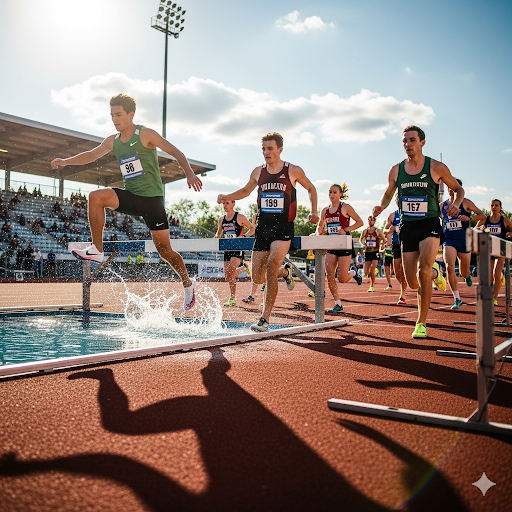
Obstacles, and History
Steeplechase is one of the most unique and demanding sports in the world. It blends endurance, speed, and strategy in ways that test every athlete. Originating centuries ago in rural landscapes, the sport has developed into both an Olympic track event and a celebrated equestrian race. Over time, Steeplechase has earned respect not only as a competition but also as a cultural and social tradition. Today, it thrives across continents, attracting runners, riders, fans, and communities. Understanding Steeplechase requires exploring its history, its global presence, its amateur and professional levels, and its lasting influence on society.
The Origin and Early History
The roots of Steeplechase stretch back to 18th-century Ireland. Riders would race horses across open countryside, using church steeples as landmarks. Those towering structures were visible from miles away and served as natural finish lines. The races took competitors over streams, hedges, and stone walls, creating the foundation for the obstacle-based format.
In the early 19th century, the sport moved into more organized settings. The first recorded Steeplechase event took place in 1752, between two Irish horsemen racing from Buttevant Church to St. Leger Church in County Cork. That journey covered approximately 4.5 miles and introduced the concept of a course that combined speed with natural barriers.
As the sport spread to England, it became more structured. Landowners designed closed courses that mimicked the countryside but within controlled environments. The famous Grand National, launched in 1839 in Liverpool, England, quickly became the most recognized horse Steeplechase in the world. The race’s reputation grew because of its challenging fences, long distance, and dramatic unpredictability.
At the same time, the athletic version of Steeplechase emerged. By the mid-19th century, universities in England adopted a running version that featured barriers and water jumps. The event resembled cross-country but took place on a track. By the late 1800s, Steeplechase running entered international competitions, laying the groundwork for its Olympic debut in 1900 in Paris.
Global Popularity of Steeplechase
The dual nature of Steeplechase—both equestrian and athletic—has allowed the sport to reach diverse audiences. Each variation thrives in different regions, giving the sport a truly global footprint.
In Europe, horse Steeplechase remains iconic. The United Kingdom, Ireland, and France hold the most prestigious races. The Grand National in England, the Cheltenham Festival, and France’s Grand Steeple-Chase de Paris attract huge crowds every year. Betting traditions, royal patronage, and media coverage have kept the sport popular for centuries.
Athletic Steeplechase has found its strongest presence in international track and field. The event is now a fixture in the World Athletics Championships and the Olympic Games. East African nations, particularly Kenya and Ethiopia, dominate the sport. Kenyan athletes have won nearly every Olympic medal in the 3000-meter Steeplechase since the 1960s. Their success has made the sport a source of national pride and identity.
Beyond these regions, Steeplechase continues to grow. In North America, horse Steeplechase races take place in states such as Maryland, Virginia, and South Carolina. The Maryland Hunt Cup and the Carolina Cup are celebrated traditions that blend sport and community festivals. In Asia, Japan has incorporated Steeplechase into its horse racing calendar, with races held at tracks like Nakayama.
Athletic Steeplechase is also gaining attention in schools and universities worldwide. Many youth athletics programs include barrier and water jump variations to develop endurance and agility. As track and field evolves, more athletes are testing themselves in this event, creating a steady pipeline of competitors.
Amateur Steeplechase Around the World
Amateur Steeplechase thrives on both the equestrian and athletic sides. Communities, schools, and clubs organize events that encourage participation and build grassroots interest.
In equestrian Steeplechase, amateur riders compete in point-to-point races. These are popular in rural Ireland and England. They feature local horses and community gatherings rather than professional stables. The atmosphere is festive, with families attending races as social events. These competitions often serve as training grounds for future professional riders and horses.
In athletic Steeplechase, schools and universities play a crucial role. Many youth programs introduce the event with modified barriers. Coaches use smaller hurdles and shallow water pits to ease young athletes into the sport. This builds confidence and technique before they transition to full-sized competition.
College athletics in the United States, for example, often feature Steeplechase as part of track meets. Athletes gain experience competing against peers, preparing them for national championships. Similarly, European universities maintain Steeplechase events within their track and field programs, creating opportunities for young runners to develop.
Community races also keep amateur Steeplechase alive. Local track clubs sometimes organize barrier races during summer meets, bringing together youth and adult runners. These amateur events preserve the accessibility of the sport and ensure its growth beyond elite circles.
Professional Leagues and Major Competitions
Professional Steeplechase operates in two worlds: equestrian racing and track and field. Both feature well-established leagues and prestigious events that draw global attention.
In equestrian racing, the National Hunt calendar in the United Kingdom stands out. Events such as the Cheltenham Festival showcase elite horses and riders. The Cheltenham Gold Cup and Champion Hurdle are highlights of the season. Across the Irish Sea, Ireland’s Punchestown Festival is equally renowned.
France hosts the Grand Steeple-Chase de Paris at Auteuil, a demanding race that tests stamina and jumping ability. Japan’s horse racing circuit includes the Nakayama Grand Jump, which has become one of the world’s richest Steeplechase races.
In the United States, the National Steeplechase Association oversees the sport. Its calendar includes races like the Colonial Cup and the Iroquois Steeplechase in Nashville, which attract both professional riders and fans.
On the athletic side, World Athletics governs international competition. The 3000-meter Steeplechase is a standard event at both the Olympics and World Championships. Professional runners compete in the Diamond League series, which features Steeplechase races across Europe, Asia, and North America.
Kenya has produced the most dominant professionals. Athletes like Ezekiel Kemboi, Conseslus Kipruto, and Brimin Kipruto have become legends in the sport. Their performances inspire future generations and showcase the tactical depth required to master the event.
Political and Social Significance of Steeplechase
Steeplechase carries deep political and social significance. Its influence goes beyond competition, touching culture, national pride, and community traditions.
In countries like Kenya, Steeplechase has become a symbol of identity. The dominance of Kenyan runners has elevated the nation’s status in global athletics. Victories inspire youth and create a sense of unity. The sport also highlights regional training grounds, such as the Rift Valley, as iconic symbols of endurance.
In Europe, equestrian Steeplechase connects to heritage and class traditions. Events like the Grand National attract massive betting markets, influencing the economy. Political debates sometimes arise regarding animal welfare, sparking discussions about the future of the sport. These conversations highlight the balance between tradition and modern values.
In the United States, Steeplechase races double as social gatherings. Festivals surrounding races bring communities together, raising funds for charities and strengthening civic pride. The sport becomes more than competition—it becomes a cultural celebration.
Globally, the sport reflects resilience and adaptation. From rural fields in Ireland to Olympic stadiums, Steeplechase demonstrates how sports can bridge tradition and innovation. Its persistence in different forms shows how society values endurance, challenge, and communal experiences.
Rules of Steeplechase
The rules of Steeplechase vary between equestrian and athletic forms, but the essence remains the same: overcome obstacles while maintaining speed and endurance.
Athletic Steeplechase Rules
- The standard distance is 3000 meters.
- Each race includes 28 hurdle jumps and 7 water jumps.
- Barriers stand at 91.4 cm for men and 76.2 cm for women.
- The water pit follows each barrier, starting at 3.66 meters in length.
- Athletes must clear each obstacle; skipping or knocking down barriers results in disqualification.
- Contact with other runners must remain fair. Pushing or interference leads to penalties.
- The winner is the first runner to cross the finish line.
Equestrian Steeplechase Rules
- Courses range from 2 to 4.5 miles, depending on the event.
- Horses must clear fences, ditches, and water jumps positioned throughout the track.
- Riders must remain mounted throughout the race.
- Falls or refusals at obstacles can result in elimination.
- The use of whips and riding techniques must follow strict welfare guidelines.
- The winner is determined by the first horse and rider to finish.
Both formats demand discipline, strategy, and stamina. Unlike flat races, Steeplechase requires careful pacing to manage obstacles while preserving strength for the final sprint.
Conclusion
Steeplechase has evolved from rural church-to-church races to one of the most celebrated sports in the world. Its dual identity—equestrian and athletic—makes it unique in global competition. From Ireland’s countryside to Olympic stadiums, Steeplechase continues to inspire athletes and fans alike.
The sport’s history reveals resilience. Its global popularity proves its adaptability and its amateur and professional structures ensure continued growth. Its political and social importance highlights its cultural weight and its rules keep the challenge pure.
Steeplechase remains more than an event. It is a story of endurance, tradition, and human connection across borders. As long as athletes and communities value challenge, the sport will continue to thrive.