
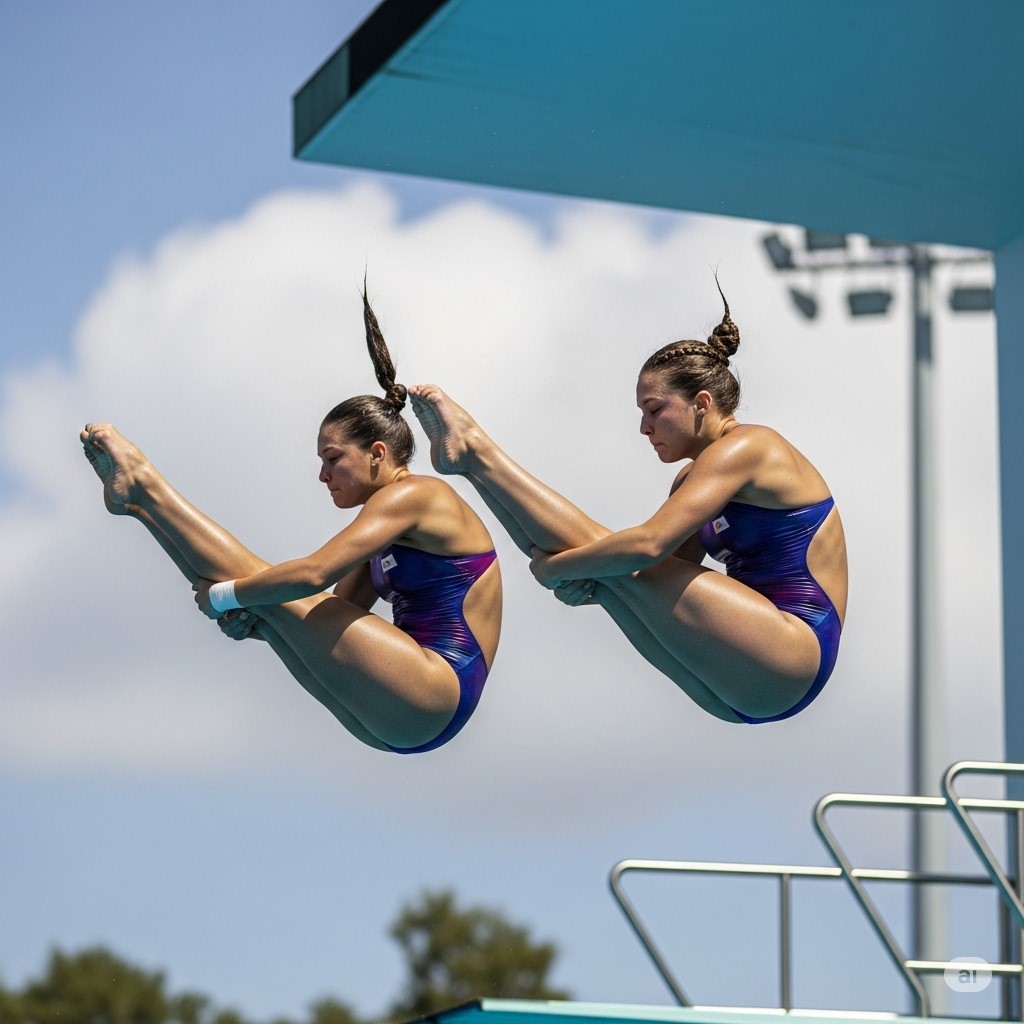
The Art and Athleticism of Synchronized Platform Diving: A Global Phenomenon
Synchronized Platform Diving is a sport that blends grace, strength, and teamwork. This captivating event requires two athletes to perform dives simultaneously from a platform 10 meters above the water. Their movements must mirror each other flawlessly. From the Olympics to local youth leagues, the sport has grown in popularity worldwide. Synchronized Platform Diving continues to draw spectators with its blend of artistry and athleticism. This blog will explore the sport’s origin, evolution, global reach, amateur participation, professional leagues, political significance, and official rules.
The Origins and History of Synchronized Platform Diving
Diving as a sport dates back centuries. Ancient Greek and Roman societies practiced rudimentary forms of diving. However, modern diving developed in Europe during the late 19th century.
Synchronized Platform Diving, as a competitive event, began much later. It was first introduced in the 1990s. The idea stemmed from traditional diving but added a new layer: synchronization. Two divers had to perform identical routines with impeccable timing.
The sport gained international recognition in 2000. That year, Synchronized Platform Diving made its Olympic debut at the Sydney Games. This marked a turning point. The event instantly became one of the most watched aquatic competitions.
Since then, governing bodies like FINA (the International Swimming Federation) have refined the rules. More countries have developed training programs. Today, synchronized diving events exist in almost every major international aquatic championship.
Global Popularity and Participation
Synchronized Platform Diving enjoys widespread popularity, especially in countries with strong aquatic sports traditions. China dominates the sport. Their national diving program has produced world-class synchronized divers for decades.
In Europe, countries like Russia, Great Britain, and Germany boast competitive synchronized diving teams. North American nations, including the United States and Canada, also participate actively. Their athletes consistently reach finals in world events.
Australia and Japan have also invested heavily in aquatic sports infrastructure. Their synchronized diving programs have improved steadily.
The global reach of the sport has grown with television and social media coverage. Major diving competitions receive prime-time slots in many countries. The beauty of the sport lies in its universal appeal. Audiences everywhere can appreciate the precision and artistry involved.
Youth and Amateur Involvement
Synchronized Platform Diving is not just for elite athletes. Youth programs around the world offer entry points for children and teenagers.
In the United States, USA Diving oversees youth competitions. Regional clubs provide training from an early age. Children start on springboards before progressing to platforms. Once they master individual techniques, they begin synchronized routines.
Schools in China have specialized sports academies. These institutions identify talent early. Students train rigorously in both individual and synchronized diving. These academies have been instrumental in China’s success.
In Europe, diving clubs operate in both urban and rural areas. These clubs often collaborate with schools to introduce young students to the sport. National federations support these grassroots initiatives.
South American countries like Brazil and Mexico have recently expanded youth diving programs. Their aim is to build a stronger presence in international competitions.
Amateur diving meets provide platforms for young divers to gain experience. These events often mimic professional competitions. They follow similar rules and scoring methods.
Participation at the amateur level fosters discipline, confidence, and teamwork. It also serves as a feeder system for national and professional teams.
Professional Leagues and Competitions
Though not structured like traditional team sports leagues, synchronized diving has several high-profile competitions. These events feature the best athletes in the world.
The FINA World Championships include synchronized diving as a marquee event. Held every two years, this competition attracts global talent. Medals here are highly coveted.
The Olympic Games remain the pinnacle. Nations often spend years preparing their synchronized diving teams for Olympic qualification.
The FINA Diving World Series also features synchronized events. These tournaments occur annually in different host cities. They offer cash prizes and ranking points.
Some countries, like China and Russia, have national leagues. These leagues host internal competitions that double as Olympic qualifiers. Athletes compete for national rankings and sponsorship opportunities.
Professional divers also participate in exhibition tours. These events are less formal but attract large audiences. They help promote the sport to new fans.
While not a league in the traditional sense, synchronized diving maintains a competitive circuit. Athletes travel globally, representing their nations in a variety of prestigious competitions.
Political and Social Significance
Synchronized Platform Diving holds more than just athletic value. The sport has become a symbol of international cooperation and friendly competition.
At the Olympics, synchronized diving events often serve as unifying moments. Athletes from rival nations compete side by side. Their sportsmanship sends a message of peace and collaboration.
Countries like China use the sport to showcase national strength. A gold medal in synchronized diving becomes a point of national pride.
The sport also helps break down gender barriers. Men and women compete in separate events but receive equal attention and resources. This promotes gender equity in sports.
Socially, synchronized diving promotes inclusivity and teamwork. Athletes must trust each other completely. Their partnership demonstrates how cooperation leads to success.
In many countries, synchronized diving programs receive government support. This investment goes beyond athletics. It aims to inspire youth and foster discipline.
Additionally, the sport offers a platform for individual stories. Many synchronized divers come from humble beginnings. Their journeys inspire fans around the world.
Official Rules and Judging Criteria
Synchronized Platform Diving follows specific rules set by governing bodies like FINA. Understanding these rules enhances appreciation for the sport.
Each synchronized diving pair performs a series of dives from a 10-meter platform. The routine usually includes five to six dives.
Judges evaluate both execution and synchronization. Execution refers to the technique of each diver. This includes takeoff, form in the air, and entry into the water.
Synchronization is judged separately. This includes timing of takeoff, movement through the air, and water entry. Judges must see near-perfect unity.
Each dive has a degree of difficulty (DD). More complex dives receive higher DD scores. However, a higher DD alone won’t guarantee victory.
Seven judges score each synchronized dive. Two judges assess Diver A, two assess Diver B, and three assess synchronization. The highest and lowest scores are dropped.
The remaining scores are added and multiplied by the dive’s DD. This produces the final score for that dive.
Pairs may not repeat dives with the same DD. They must demonstrate variety and mastery of different techniques.
Teams have limited time between dives. Delays may result in penalties. Divers must also adhere to strict attire and conduct rules.
Coaches cannot provide instructions once the dive begins. Any interference results in disqualification.
Safety remains a top priority. Divers must meet physical fitness standards. Medical staff are present at all events.
Conclusion
Synchronized Platform Diving stands as one of the most visually stunning and technically demanding sports. Its journey from a niche event to a global phenomenon reflects its unique appeal.
The sport combines discipline, artistry, and trust. Its presence in youth programs and professional circuits ensures continual growth. Global participation speaks to its universal charm.
With roots in ancient diving practices and a strong foothold in modern athletics, synchronized diving bridges history and innovation. The sport’s social and political significance only adds to its depth.
By understanding the sport’s rules, fans gain a deeper appreciation. Watching a flawless synchronized dive is more than entertainment; it’s witnessing the peak of human coordination.
As we look toward future competitions, Synchronized Platform Diving will continue to inspire. Its athletes remind us of what is possible when talent meets dedication. From the youth leagues to the Olympic podium, the journey is nothing short of extraordinary.