
The Sport of Synchronized Skating: A Complete Guide
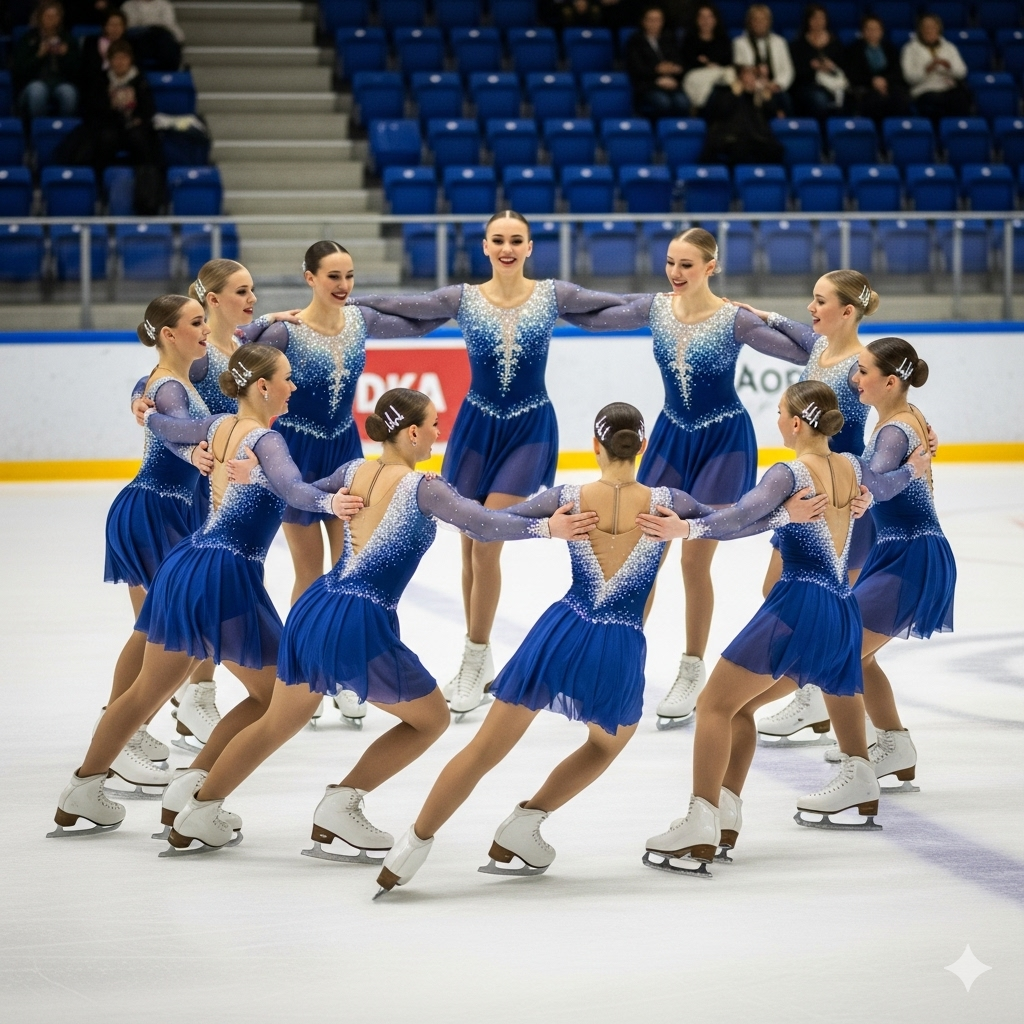
Synchronized Skating is a sport that combines grace, speed, and teamwork on ice. Athletes move in unison, creating formations that dazzle audiences worldwide. The discipline demands precision, stamina, and artistry, making it one of the most complex team sports on ice. In this article, we will explore its origin, history, global popularity, amateur play, professional leagues, social and political significance, and rules. By the end, you will understand why Synchronized Skating continues to grow across generations.
The Origin and History of Synchronized Skating
The story of Synchronized Skating begins in the mid-20th century. In 1956, Dr. Richard Porter of Ann Arbor, Michigan, organized the first team. His creation, the “Hockettes,” entertained hockey crowds during intermissions. Skaters performed synchronized patterns, lines, and wheels, inspiring a new competitive activity.
The idea spread quickly through the United States. Colleges and community clubs began forming teams. The sport moved beyond entertainment into structured competitions. By the late 1970s, the first national championships were staged. Coaches refined techniques, emphasizing sharp footwork and seamless transitions.
In the 1980s and 1990s, the discipline crossed borders. Canada, Finland, and Sweden embraced the concept and formed their own programs. These nations helped elevate the sport to international recognition. The International Skating Union (ISU) officially accepted Synchronized Skating as a discipline in 1994.
Since then, the sport has grown exponentially. Annual world championships showcase the best teams, attracting fans from around the globe. The possibility of Olympic inclusion has fueled further development. Although not yet part of the Winter Games, momentum continues to build.
Global Popularity of the Sport
Today, Synchronized Skating thrives in more than 30 countries. North America remains a central hub, with the United States and Canada producing elite teams. Events like the U.S. Synchronized Skating Championships draw thousands of fans each year.
In Europe, the sport is even more prominent. Finland and Sweden boast some of the most successful teams. Helsinki Rockettes and Team Unique are household names among figure skating enthusiasts. Russia, France, and Switzerland also support strong programs.
Asia has embraced the discipline as well. Japan, with its deep figure skating tradition, has invested heavily in synchronized teams. South Korea and China are also developing competitive squads.
Australia and South America contribute smaller but growing communities. Brazil and Argentina hold national events that feed into regional competitions. The global presence of the sport continues to expand yearly.
Television coverage and streaming platforms have increased visibility. Social media also plays a role, allowing fans to follow their favorite teams worldwide. As a result, interest spreads beyond traditional skating audiences.
Amateur Synchronized Skating: Youth and Schools
Amateur Synchronized Skating introduces children to teamwork on ice. Youth programs often start at basic levels with small formations and simple steps. Skaters learn timing, posture, and awareness of group movement.
Schools in many countries offer opportunities to participate. In the United States, collegiate synchronized skating is especially strong. Universities such as Miami of Ohio and the University of Michigan have nationally ranked teams. These programs recruit talented skaters from across the country.
Youth leagues also thrive in Europe. Finland and Sweden run development programs from elementary school through high school. Young athletes compete in regional events, building toward senior-level teams.
Canada operates similar structures. Local clubs feed into provincial and national competitions. Families often support their children’s involvement from an early age.
The amateur pathway emphasizes both competition and community. Children gain skills beyond skating, including communication and leadership. These values prepare them for professional competition or lifelong participation in the sport.
Professional Leagues and Competitions
At the highest level, professional synchronized skating showcases athletic mastery. The International Skating Union governs most competitions. The pinnacle is the ISU World Synchronized Skating Championships, held annually since 2000.
Elite teams like Marigold IceUnity of Finland, Les Suprêmes of Canada, and Paradise of Russia dominate the global stage. These teams train year-round, often with daily sessions lasting several hours.
Leagues vary by country. In Finland, a robust national league system ensures consistent high-level competition. Canada also maintains a structured league with teams across multiple provinces.
In the United States, senior-level teams compete for national titles and international assignments. Collegiate competitions add another dimension, providing a stepping stone to professional ranks.
Other global competitions, such as the French Cup in Rouen and the Spring Cup in Italy, attract international teams. These events serve as preparation for the world championships.
Although there is not yet a unified global professional league, the international circuit effectively functions as one. Top teams travel frequently, ensuring that fans see high-caliber performances throughout the season.
Social and Political Significance
Synchronized Skating holds unique social and political importance. It promotes gender inclusivity, as teams often include skaters of all identities. Although historically female-dominated, more men now participate, broadening representation.
The sport also strengthens international relations. Competitions bring together athletes from dozens of nations. Friendships form across borders, fostering cultural exchange. In times of political tension, such connections become valuable.
On a community level, the sport builds cooperation and discipline. Teams cannot succeed without trust and communication. These qualities extend beyond the rink into education, careers, and family life.
Politically, advocates push for Olympic recognition. Supporters argue that the sport’s global popularity and technical demands merit inclusion. Each attempt to add it to the Winter Games sparks debate, highlighting how sports reflect broader cultural priorities.
Synchronized Skating also empowers women in sport. Many female athletes transition into coaching, officiating, or leadership roles. This pathway increases visibility and contributes to gender equity within athletics.
Rules of Synchronized Skating
Understanding the rules reveals the sport’s complexity. Teams consist of 8 to 20 skaters, depending on division. Most senior teams use 16 skaters.
Programs must include specific elements. Lines, circles, wheels, intersections, blocks, and moves in unison are required. Each element is judged for precision, speed, and artistic impression.
Skaters must stay synchronized at all times. Timing errors reduce scores significantly. Transitions between formations must appear seamless, with no visible gaps or stumbles.
Technical panels and judges oversee performances. The scoring system mirrors figure skating’s International Judging System (IJS). Points are awarded for difficulty and execution. Artistic impression also plays a major role.
Music selection is critical. Teams perform routines to a wide range of genres, from classical symphonies to modern pop. Choreography must reflect both rhythm and theme.
Costumes enhance the presentation but must remain appropriate and safe. Sequins, colors, and fabrics vary widely, but movement cannot be restricted.
Programs are timed. Senior free skates usually last four and a half minutes. Any deviation results in penalties.
Falls, collisions, or missed steps impact both technical and artistic scores. Teams practice tirelessly to minimize such risks. Judges look for flow, energy, and harmony in every second.
The Future of Synchronized Skating
The future looks promising. Advocates continue to lobby for Olympic inclusion. Growing participation worldwide strengthens their case.
Technology also enhances training. Video analysis, performance tracking, and virtual choreography improve precision. Coaches rely on these tools to refine programs.
Youth engagement ensures longevity. More schools and clubs invest in development, securing the next generation of athletes.
Fans increasingly turn to digital platforms. Streaming services broadcast competitions globally. Social media builds excitement year-round.
The sport’s combination of athleticism, artistry, and teamwork makes it appealing to modern audiences. As visibility grows, so will participation and recognition.
Conclusion
Synchronized Skating stands as one of the most dynamic and inspiring team sports. Its origins trace back to a single idea in Michigan, but its reach now spans the globe. From amateur youth leagues to professional world championships, the discipline continues to thrive.
The sport’s impact extends beyond the rink. It fosters unity, discipline, and cultural exchange. Athletes learn values that enrich both personal and community life.
With Olympic ambitions and global momentum, the future remains bright. Synchronized Skating is not just a spectacle but a testament to what humans can achieve together.